Babson College: Admissions, Rankings, and Student Life Guide
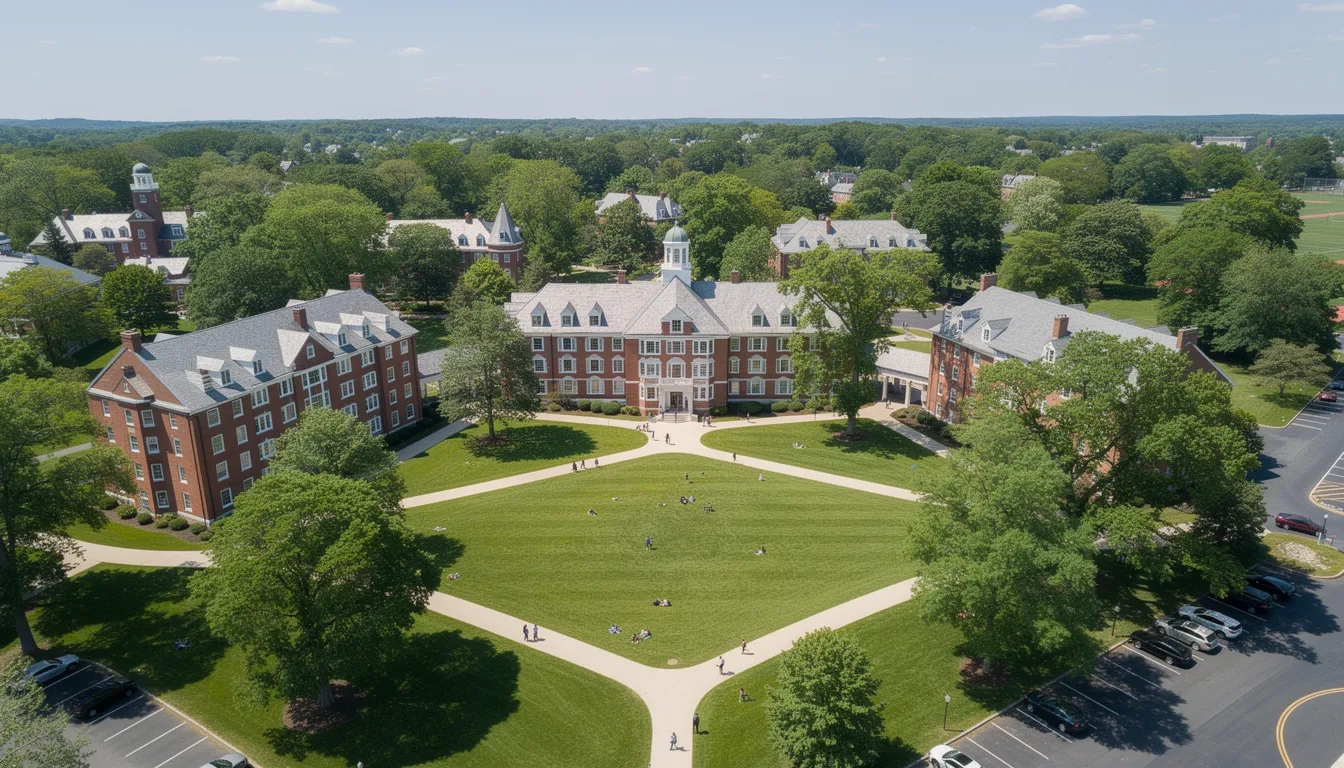
Walk around Babson's 370-acre campus in Wellesley, Massachusetts on a Tuesday afternoon in October and you'll probably bump into a group of first-year students nervously presenting their business pitch. Not a hypothetical. A real one, with real customers, real revenue, and an actual product they've been building since September. That's the detail that separates Babson from every other school marketing itself as "entrepreneurial."
What Actually Makes Babson Different
Babson is a business school, full stop. It doesn't offer engineering, pre-med, or English literature. Every student graduates with a Bachelor of Science in Business Administration, with concentrations ranging from Finance and Marketing to Technology Entrepreneurship and Social Impact. That singular focus is either a huge asset or a dealbreaker, depending on who you are.
Most business schools graft entrepreneurship onto a traditional MBA or undergraduate curriculum as an elective track. Babson treats it as the operating system. The school's philosophy, called "Entrepreneurial Thought and Action," runs through every course, not just the ones with "entrepreneurship" in the title.
The result is a culture that's hard to replicate. Students think in terms of market gaps, customer validation, and resource constraints even when studying accounting or organizational behavior.
Rankings: What the Numbers Actually Mean
Numbers tell a cleaner story here than at most schools.
U.S. News & World Report has ranked Babson the No. 1 undergraduate program for entrepreneurship for 29 consecutive years — a streak with no parallel in any other business school specialty ranking.
That's not a quirk of methodology. It reflects consistent faculty depth, alumni founder outcomes, and the structure of the curriculum itself. For context, the next-longest streak in any single U.S. News specialty ranking belongs to programs with far more institutional resources.
Beyond entrepreneurship, here's how Babson stacks up:
| Ranking | Organization | Year |
|---|---|---|
| No. 2 Best College in the U.S. | Wall Street Journal / College Pulse | 2026 |
| No. 1 Business School, Highest-Earning Graduates | Forbes | 2025 |
| No. 1 for Entrepreneurship (Undergrad), Northeast | Princeton Review / Entrepreneur Magazine | 2026 |
| No. 3 Top Undergraduate Entrepreneurship (National) | Princeton Review / Entrepreneur Magazine | 2026 |
The Wall Street Journal ranking is worth lingering on. The WSJ/College Pulse methodology weights outcomes heavily — graduate salary, student experience, and diversity. Babson earned No. 2 for the second year in a row, ahead of schools with student bodies ten times its size and endowments that dwarf its own.
The Forbes finding is probably the most actionable stat for families weighing ROI. Babson beats schools like Harvey Mudd and MIT for median earnings among graduates. For a school with roughly 2,400 undergraduates and no engineering department, that's remarkable.
Admissions: What It Takes to Get In
Babson has gotten meaningfully more selective over the past decade. The acceptance rate has dropped from a 10-year average of 23.70% down to 17.09% for the most recent entering class, placing it in competitive territory alongside schools like Lehigh, Tulane, and Wake Forest.
Here's a snapshot of the admitted student profile:
- Average SAT: 1405 (Math ~730, Evidence-Based Reading and Writing ~675)
- Average ACT: 32
- Middle 50% SAT range: approximately 1320–1480
- Application deadlines: Early Decision I (November), Early Decision II (January), Regular Decision (January)
A few things worth knowing about the process. Babson is test-optional, and the school means it — applicants who don't submit scores are not penalized in any measurable way according to the admissions office. That said, students who do submit scores tend to cluster in the top 10–15% nationally.
Babson looks hard at demonstrated interest in business and entrepreneurship. Generic essays about "passion for leadership" will not move the needle. What works: specificity. A student who built a small Etsy operation in 10th grade and can articulate what they learned about customer acquisition has a genuinely different application than one who lists "business club president" without context.
Early Decision applicants have a real advantage. Babson fills a significant portion of each class through ED rounds, and the acceptance rate for ED applicants runs noticeably higher than the overall rate. If Babson is your clear first choice, applying ED I is probably the highest-leverage move in your application strategy.
The admissions team also evaluates:
- Academic rigor (AP and IB course load in context of what's available)
- Recommendation letters that speak to intellectual initiative, not just grades
- Evidence of entrepreneurial thinking, even outside business contexts
- Essays that show self-awareness and a clear "why Babson" beyond rankings
What It Costs (and the Financial Reality)
This is where prospective students and families often need a reality check.
Sticker price for 2025-2026:
| Cost Category | Amount |
|---|---|
| Tuition & Fees | $58,560 |
| Room & Board | ~$22,346 |
| Books, Personal Expenses | ~$2,220 |
| Total Cost of Attendance | ~$83,126 |
That's a significant number. But the more relevant figure for most families is the net price after financial aid: $34,790 on average for students who qualify for need-based assistance. About 34% of incoming students receive need-based aid, with the average grant totaling $51,791.
Babson meets demonstrated financial need for admitted students. It does not guarantee to meet 100% of demonstrated need, so families should run the Net Price Calculator on Babson's site (or the MyinTuition quick estimator) before submitting applications.
One note for merit aid seekers: Babson does offer merit scholarships, but the amounts are typically modest compared to what flagship state schools or schools trying to recruit top students might offer. If merit money is a primary decision factor, Babson's aid package may disappoint.
Student Life on Campus
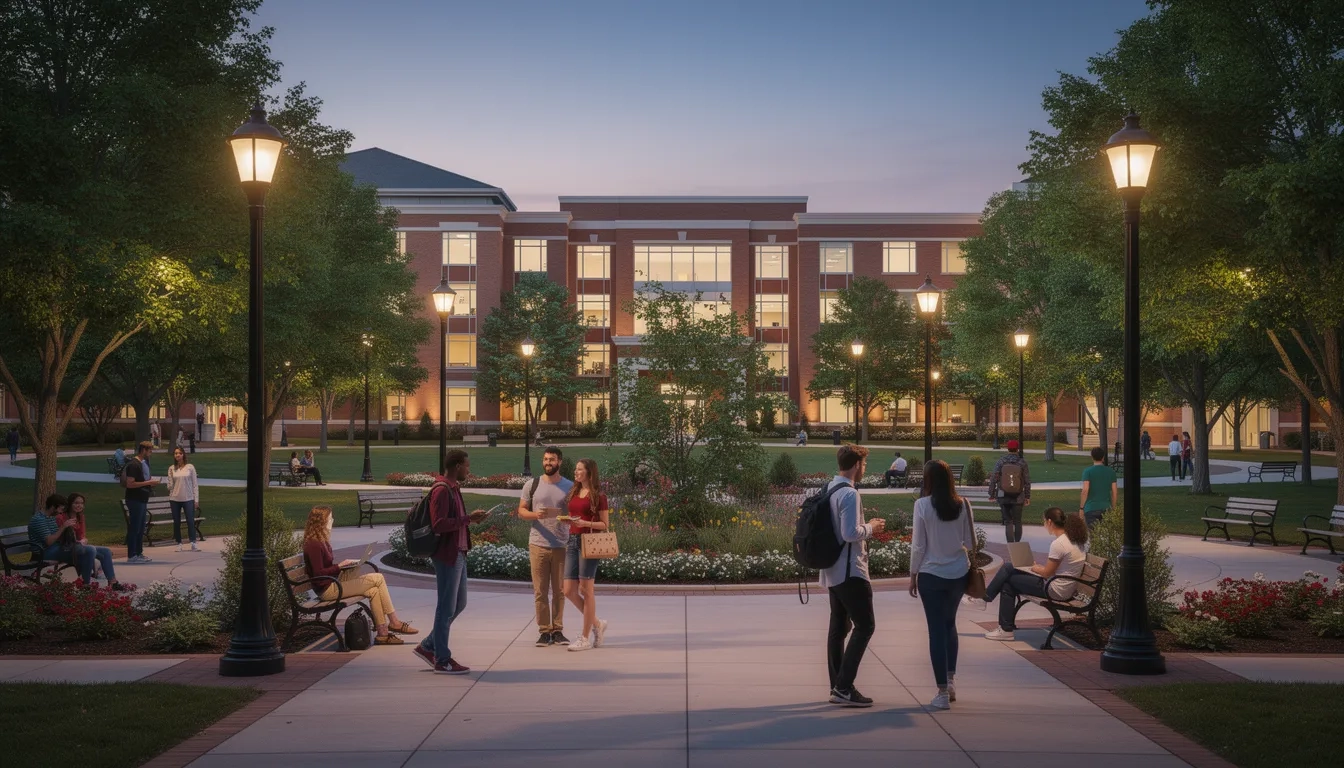
Babson's campus in Wellesley is 37 minutes by commuter rail from downtown Boston, which matters more than people expect. Students get a genuinely suburban, tight-knit residential experience while having access to internship markets, restaurants, and cultural life in one of the country's best college cities.
Housing is primarily on campus for the first two years, and the 17 residence halls range from traditional dorms to suite-style apartments. The school has added gender-inclusive housing options in recent years. Most students describe the residential experience as close-knit, partly because Babson's small size (around 2,400 undergrads) means you recognize most faces within a semester.
Student organizations and activities include:
- Over 25 student-run clubs and organizations
- Varsity athletics across 14 sports (Division III, NCAA)
- Intramural and club sports for students who want competitive play without varsity time commitments
- Performing arts (drama, chorus)
- Cultural organizations representing the school's roughly 80 countries of student origin
- Annual pitch competitions where teams compete for prize pools of up to $20,000
The international student population gives the campus a genuinely global character. In a given study group, you might work alongside students from India, Brazil, Germany, and Nigeria — each bringing different assumptions about markets, regulation, and consumer behavior. That friction is useful when you're building something real.
97.8% of the Class of 2025 was employed, continuing their education, or in volunteer or service programs within six months of graduation, according to Babson's outcomes data. That statistic gets cited often, and it has held near that level for years, which is harder to sustain than most people realize.
Babson also has cross-registration agreements with Wellesley College and Olin College of Engineering — so students can take courses at neighboring institutions if they want exposure to a more traditional liberal arts curriculum or technical engineering coursework. The Olin collaboration is particularly useful for students building tech products who want deeper engineering grounding than Babson's curriculum alone provides.
The FME Experience: Your First Year
No single feature defines Babson's educational identity more than FME — Foundations of Management and Entrepreneurship. Every single first-year student takes it. There are no exceptions.
The structure is simple to describe and genuinely hard to execute. You're placed on a team. Your team creates a real business. You launch it, operate it through the fall and spring semesters, and then you liquidate it and donate the profits to charity at the end of the year. You're supported by two faculty members and upperclass student mentors, but the decisions are yours.
Past FME businesses have ranged from custom T-shirt companies to campus food delivery services to tutoring platforms. One team a few years back built a dog-walking operation serving Wellesley residents and cleared several thousand dollars in profit before handing off the proceeds. Another built a candle company that (accidentally) went viral on a small Instagram account and had to scramble to handle order volume.
The experience teaches things that case studies cannot. Cash flow anxiety. The moment when a supplier ghosts you two weeks before launch. The awkward conversation when a team member stops pulling their weight. These aren't simulations.
Babson recently integrated generative AI into FME, requiring students to use it for market research, competitor analysis, and business plan iteration from day one. That's a meaningful signal about how the school is positioning its graduates relative to a rapidly changing employment market.
After FME, students move into the traditional concentration curriculum, choosing from 22+ options. But the habits of mind from that first year tend to stick. Students report thinking differently about problem identification and resource constraints in courses like Accounting and Operations that have nothing to do with venture creation.
Bottom Line
Babson makes the most sense for students who already know they want to be in business and want to learn by doing, not just by reading case studies. If you're undecided about your field of study, the narrow focus will frustrate you.
- Apply Early Decision if Babson is your first choice — it's the highest-leverage move given how much of the class fills through ED rounds.
- Run the net price calculator before making cost judgments. The $83,126 sticker price and the $34,790 average net price for aided students are two very different numbers.
- Demonstrate entrepreneurial thinking in your application — not just business club membership, but evidence that you've noticed problems and tried to solve them.
- The Wall Street Journal No. 2 ranking and the Forbes earnings data are the most outcome-oriented signals here. For a school this size, those outcomes suggest the network and curriculum genuinely translate to professional results.
If you want a school that will hand you frameworks for thinking about markets and then actually make you use them while you're still a freshman, Babson earns that reputation honestly.
Frequently Asked Questions
Is Babson College only for students who want to start a company?
No, and this is probably the most common misconception. Many Babson graduates go into finance, consulting, marketing, and corporate roles at large companies — not just startups. The entrepreneurial curriculum trains students to be resourceful and opportunity-focused, which is useful in any professional context. About half of each graduating class enters corporate employment rather than founding something immediately after graduation.
What GPA do you need to get into Babson College?
Babson doesn't publish a single cutoff GPA, but competitive applicants typically have a weighted GPA of 3.7 or higher, with strong performance in math-related coursework. The admissions office evaluates GPA in the context of course rigor — a 3.6 in a demanding AP-heavy curriculum often reads better than a 3.9 in lighter coursework.
Can I get into Babson without submitting SAT or ACT scores?
Yes. Babson is test-optional and has maintained that policy consistently since the pandemic era. Applications without test scores are reviewed holistically with no explicit penalty. That said, students submitting scores tend to cluster in the 1320–1480 SAT range or 30–34 ACT range, which gives you a sense of the academic caliber of the admitted class.
How does the cross-registration with Wellesley College and Olin work?
Babson undergraduates can enroll in courses at Wellesley College (one of the country's top liberal arts colleges) and Olin College of Engineering through a formal cross-registration agreement. There are enrollment caps and some priority given to each institution's own students, but the access is real and used regularly by Babson students seeking broader academic exposure.
Is Babson worth it financially?
For students who receive need-based aid, the average net price of around $34,790 is competitive with many private universities. Forbes ranking Babson No. 1 for graduate earnings among business schools suggests the ROI is real at the aggregate level. The honest caveat: individual outcomes vary enormously based on concentration, networking effort, and career choices — no ranking guarantees any individual student's salary.
What is the social scene like at Babson?
Greek life is present but not dominant. Most social life revolves around clubs, entrepreneurship events, and proximity to the Boston area. The small campus size means social circles can feel tight (some would say too tight), but many students appreciate knowing their classmates and professors by name. The international student body adds cultural variety to campus events throughout the year.
Sources
- Babson Tops Entrepreneurship Ranking for 29th Consecutive Time
- No. 2 Again: Wall Street Journal Ranks Babson No. 2 Best College for Second Year in a Row
- Foundations of Management and Entrepreneurship (FME) – Babson College
- Why Babson College is a Top Undergraduate Business School
- Undergraduate Babson Student Life, Athletics, Events & Clubs
- Babson College Tuition & Fees, Net Price – College Tuition Compare
- Babson College Acceptance Rate – AcceptanceRate.com
- Babson Named No. 1 for Entrepreneurship in the Northeast – Princeton Review / Entrepreneur