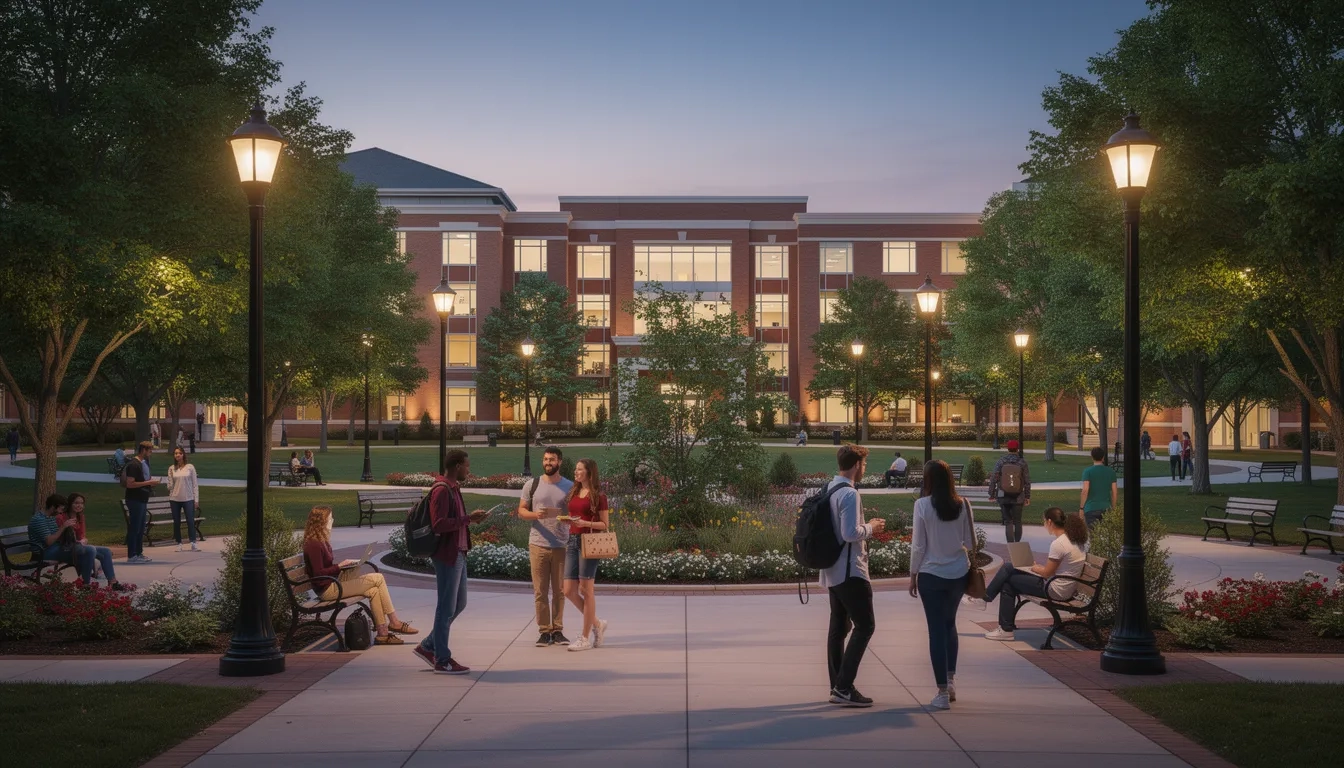
How Campus Architecture Reflects University Values
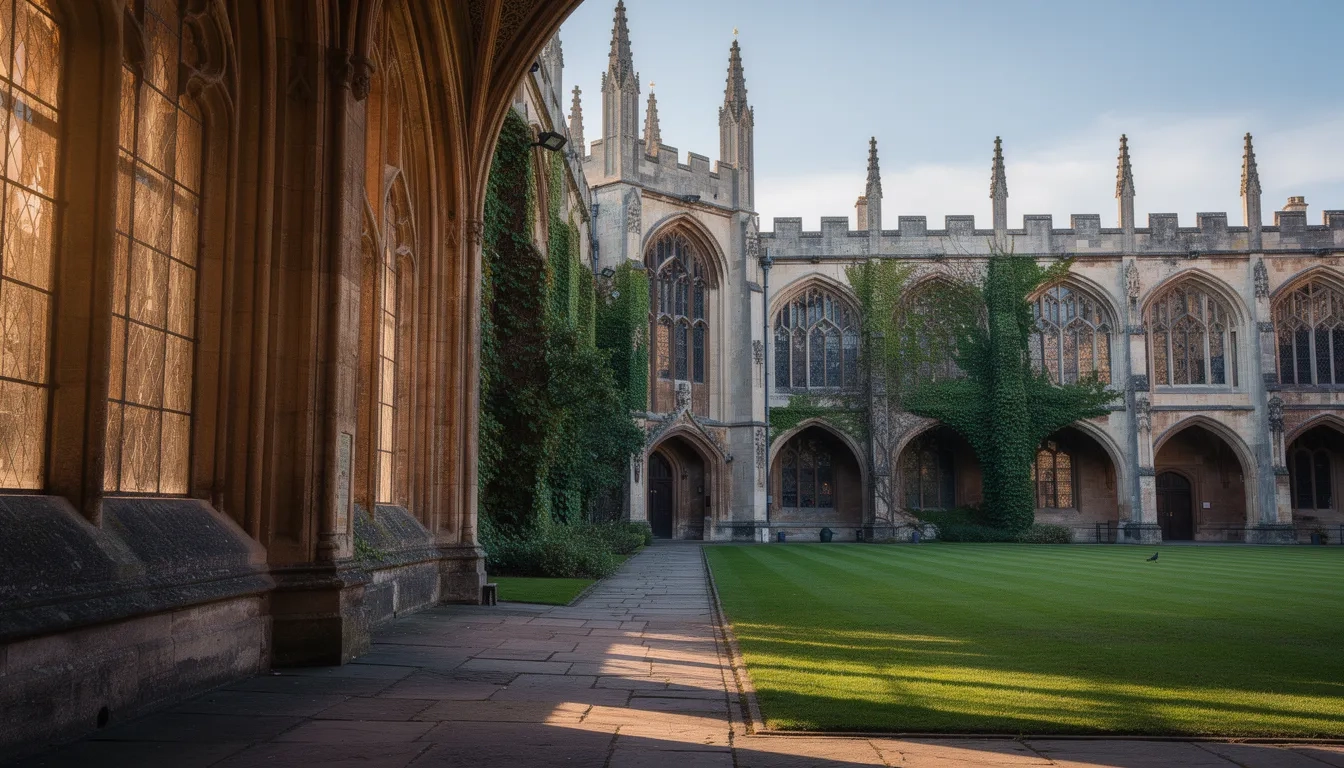
Walk onto Princeton's campus and you'll pass buildings clad in a specific gray-gold stone quarried so consistently that architects just call it "Princeton Stone." Walk onto a community college built in 1974 and you'll likely find poured concrete, low ceilings, and a parking lot bigger than the quad. Neither happened by accident. Buildings are budgets made visible, and budgets are where institutions tell the truth about what they actually value — regardless of what the mission statement says.
That's the thing about campus architecture. A strategic plan can say "we value sustainability" or "we value community" in a PDF nobody reads twice. A building says it for eighty years, in a language every visitor can parse instantly, whether they went to architecture school or not.
The Gothic Playbook: Buying Legitimacy in Stone
In the 1890s, a handful of young American universities had a problem: they were rich but new, and prestige doesn't compound overnight. So they borrowed it, architecturally, from Oxford and Cambridge.
Architects Walter Cope and John Stewardson pioneered the fix at Bryn Mawr College in the late 1880s, then carried it to the University of Pennsylvania (1895–1911) and Princeton (1896–1902). John D. Rockefeller's money bankrolled an entire Gothic skyline at the University of Chicago — towers, gargoyles, buttresses, the whole medieval toolkit — for a school that was, at the time, barely older than its own students' grandparents.
The logic was blunt: pointed arches and stained glass borrow eight centuries of scholarly gravitas for a campus that's only been open for eight years. Yale's Sterling Memorial Library, completed in 1931 with thousands of stained-glass windows, still functions this way — it doesn't just house books, it performs "seriousness of learning" at every visitor who walks past its nave-like reading room.
Here's the part most campus tours skip: Collegiate Gothic wasn't really about religion or nostalgia. It was branding, decades before anyone used that word for a university. And it worked so well that newer schools are still borrowing the same trick — Rhodes College in Memphis, founded in 1848, keeps building in Gothic idiom today, threading modern lab requirements into limestone facades so the campus reads as one unbroken century instead of four disjointed ones.
The writing is on the wall — literally, carved into limestone — for any school that wants visitors to assume it's older and more established than it is.
When Segregation Forced Architecture to Do More Work
Not every American campus had Rockefeller money or centuries to borrow from. Historically Black colleges and universities, most founded in the decades after emancipation, built under a completely different constraint: segregation cut them off from public infrastructure and municipal investment, so campuses had to become self-sufficient.
The result is architecturally fascinating in a way Gothic quads rarely are. Many HBCU campuses were designed to function as complete small towns — housing, chapel, classrooms, and social space all within a short walk, because there was no surrounding "town" they could rely on to fill the gaps.
Dignity was the design brief, not an afterthought. The architectural firm McKissack & McKissack, founded by descendants of enslaved builders, designed campus buildings at Fisk University, Tuskegee University, and Tennessee State University that intentionally matched the Classical Revival and Colonial vocabulary being used at well-funded white institutions of the same era — a direct architectural rebuttal to the idea that Black students deserved lesser buildings.
At Howard University, land scarcity in urban Washington, D.C. forced vertical academic buildings and tight courtyards — a constraint that, decades later, reads as exactly the kind of walkable, densely social campus planning that newer universities now pay consultants to engineer on purpose. Constraint produced foresight nobody was trying for.
The National Trust for Historic Preservation flagged HBCUs collectively as one of America's 11 Most Endangered Historic Places back in 1998, and preservation groups are still fighting to keep these buildings from demolition-by-neglect. That fight is itself a values statement: whether a university protects an inconvenient, expensive-to-maintain building says as much about its priorities as any new construction does.
Sustainability as a Line Item You Can See
If Gothic architecture was the 20th century's way of signaling prestige, LEED certification is the 21st century's version — except this one comes with a number attached, which makes it much harder to fake.
Cornell has certified 33 green buildings on campus since adopting a LEED Silver policy in 2008: 5 Platinum, 18 Gold, 1 Silver, and 2 standard Certified. Weill Hall alone saves more than 6,000 tons of greenhouse gas emissions a year. That's not a marketing claim — it's an auditable figure a prospective donor or ranking agency can check.
| Institution | Signal | Concrete Evidence |
|---|---|---|
| Cornell University | Environmental stewardship as core identity | 33 LEED-certified buildings; 5 at Platinum level since 2008 |
| UC Irvine | Regulatory-driven net zero commitment | Net Zero energy LEED Platinum student housing |
| University of Mary Washington | Preservation over demolition | 45,687 sq ft Virginia Hall renewal reused 65%+ of original structure, LEED-NC Silver in 2024 |
| Princeton University | Long-horizon carbon accountability | Campus plan tied to carbon emissions, energy, and water efficiency targets |
The tell isn't the plaque by the door — it's what a university chooses to renovate instead of demolish. Tearing down and rebuilding is almost always cheaper than a deep energy retrofit of a century-old building. When a school pays the premium to save the old structure and green it instead, that's a values choice, not a budget one. UMW's Virginia Hall renovation reusing two-thirds of its original structural elements is a much stronger signal than a shiny new "innovation building" with solar panels bolted on for the campus tour.
One limitation worth naming: LEED certification measures the building, not the institution's actual energy mix. A campus can rack up Platinum plaques while still buying grid power generated by coal a few states over. Read the sustainability office's Scope 2 emissions data, not just the certification count, if you want the full picture.
The Anatomy of Belonging: Small Moves, Big Signals
Some of the clearest value statements in campus design aren't in the flagship library — they're in details easy to walk past.
The University of Chicago built its residential commons as three-story "houses" with staggered floor plates instead of one monolithic dorm tower, a deliberate choice to keep community units small enough that students actually recognize each other's faces. Tulane's Residential Village uses local St. Joe brick and was designed around preserving existing oak trees rather than clear-cutting the site, tying student life physically to New Orleans instead of dropping in a generic dorm that could exist anywhere. Princeton's newer Hobson College borrows gabled roofs and Princeton Stone from buildings a century older, so a freshman moving in doesn't feel like they landed in a different institution than the one on the admissions brochure.
None of these are expensive gestures relative to the total construction budget. That's the point.
A campus that gets this right feels distinctive without you being able to say exactly why. As one campus design analysis put it, buildings shaped this way are "not interchangeable; they belong to their place" — and that specificity is what students describe, imprecisely, as a school "feeling right" during a campus visit.
The mistake schools make here is treating belonging as a landscaping problem — more benches, more banners — instead of a structural one. A courtyard surrounded by blank walls doesn't create community no matter how many Adirondack chairs you put in it. A courtyard framed by windows, entrances, and sightlines does, because people linger where they can see and be seen.
The Generic Campus Problem
Here's the uncomfortable counterpoint: a lot of campus construction from the last thirty years communicates nothing at all.
Design firm BHDP calls this out directly — glass facades and clean lines look contemporary in a rendering, but when every research university's new science building looks like every other research university's new science building, the architecture has stopped saying anything about the institution and started saying something about risk-averse building committees instead.
This happens for a boring reason: function-only design decisions are easier to defend to a board than character-driven ones. A generic glass box is hard to criticize. A bold architectural statement is easy to criticize, which makes it a harder sell in a budget meeting, even when it's the right long-term brand investment.
A few schools have pushed back successfully:
- Ohio Northern University used typography, color, and campus-wide timelines to reinforce its hands-on, engineering-first identity in spaces that would otherwise be interchangeable classrooms.
- Galen College of Nursing unified branding across multiple physical campuses under a single "Pure Nursing" design philosophy, so a student transferring between locations still recognizes the institution.
- University of Saint Francis embedded specific Franciscan value statements — "Respect creation" among them — directly into collaboration spaces, turning a hallway into a mission statement you walk through rather than read.
Before greenlighting new construction, the institutions doing this well ask three questions: what actually differentiates us from the school down the road, what behaviors do we want this specific space to encourage, and which existing traditions would this building support or accidentally erase? Skip those questions and you get a technically excellent, forgettable building.
Reading a Campus Like a Text
If you're touring a school — as an applicant, a parent, or just an architecture nerd — you can decode institutional priorities faster than any admissions brochure will admit to, once you know where to look.
- Check what got the money first. A campus that renovated the library before the athletic facility, or vice versa, told you something about internal priorities that no viewbook will say out loud.
- Look at what's old and still standing. Preservation costs more than demolition. A maintained 100-year-old building is a values statement; a maintained 100-year-old building nobody bothered to fix is a warning sign.
- Notice who the courtyards face. Buildings turned inward toward shared green space signal community design. Buildings that present blank walls to campus and glass to the street signal the opposite.
- Ask what's LEED-certified and what isn't. A single showcase green building next to twenty untouched 1970s structures is optics. Certification spread across dorms, labs, and admin buildings is policy.
- Compare the newest building to the oldest. Does the new one reference the old one's materials and massing, or does it look like it teleported in from a different campus entirely? That answer tells you whether the institution sees itself as continuous or reinventing itself every decade.
Bottom Line
- Treat campus architecture as primary-source evidence, not decoration — it tells you what an institution funds, preserves, and prioritizes more reliably than its mission statement does.
- Weigh preservation choices heavily. Renovating an old building at a premium instead of demolishing it is one of the strongest values signals a university can send.
- Distinguish showcase sustainability from systemic sustainability by checking how many buildings are certified, not just whether the flagship one is.
- Watch for generic glass-box construction as a sign of risk-averse decision-making rather than genuine institutional confidence.
- If you're evaluating a school, walk the campus with the five-question framework above before you trust the brochure.
Frequently Asked Questions
Does newer campus architecture mean a university has more money, or more values-driven design?
Neither, necessarily. New construction can reflect a genuine mission shift, or it can just be the easiest thing for a building committee to approve. Check whether new buildings echo the campus's existing materials and layout, or whether they look interchangeable with any other university's — that distinction tells you more than the construction date does.
Is Collegiate Gothic architecture just about looking old, or does it serve a real function?
Both. The pointed arches, stone, and towers were chosen specifically to borrow the visual authority of Oxford and Cambridge for American schools that hadn't earned centuries of reputation yet. But the style also produced genuinely functional spaces — high windows and thick masonry that predate modern HVAC and still perform reasonably well thermally.
How can I tell if a university's sustainability claims are real or just marketing?
Look past the single showcase green building. Check how many buildings across the whole campus carry LEED or equivalent certification, and ask the sustainability office for actual emissions data rather than certification counts. A school with 30+ certified buildings across dorms, labs, and administrative space is doing something systemic; a school with one glossy eco-building is likely doing a photo op.
What should I actually look for on a campus tour if I care about institutional values?
Follow the five-step framework in this article: check what got renovated first, look at what old buildings are still standing and maintained, notice which way courtyards face, ask about certification spread rather than a single flagship building, and compare the newest building to the oldest one on campus.
Why do so many HBCU campuses feel architecturally distinct from other American universities?
Segregation cut most HBCUs off from public infrastructure investment when they were founded, so many were designed as self-contained small towns with housing, chapels, and classrooms within walking distance. Firms like McKissack & McKissack also deliberately matched the architectural dignity of well-funded white institutions, making the buildings themselves an argument against the idea that Black students deserved lesser facilities.
Is it a myth that "older equals more prestigious" in campus architecture?
Mostly, yes. Collegiate Gothic proved that prestige-signaling architecture can be manufactured relatively quickly with enough funding — University of Chicago's Gothic skyline went up decades after the school opened, not centuries. Age matters less than whether an institution has consistently invested in maintaining and extending a coherent architectural identity over time.
Sources
- Resonating with Place: How Architecture Shapes Campus Identity
- Designing Campus Spaces that Reflect Your Culture and Brand
- 5 ways architecture defines the university brand
- Collegiate Gothic Architecture and the Ivy League
- Green Buildings - Sustainable Campus - Cornell University
- Black History Month Reveals the Hidden Design Legacy of HBCU Campuses
- Community by Design | AAC&U