Columbia University: What the Rankings Don't Tell You About Getting In and Living There
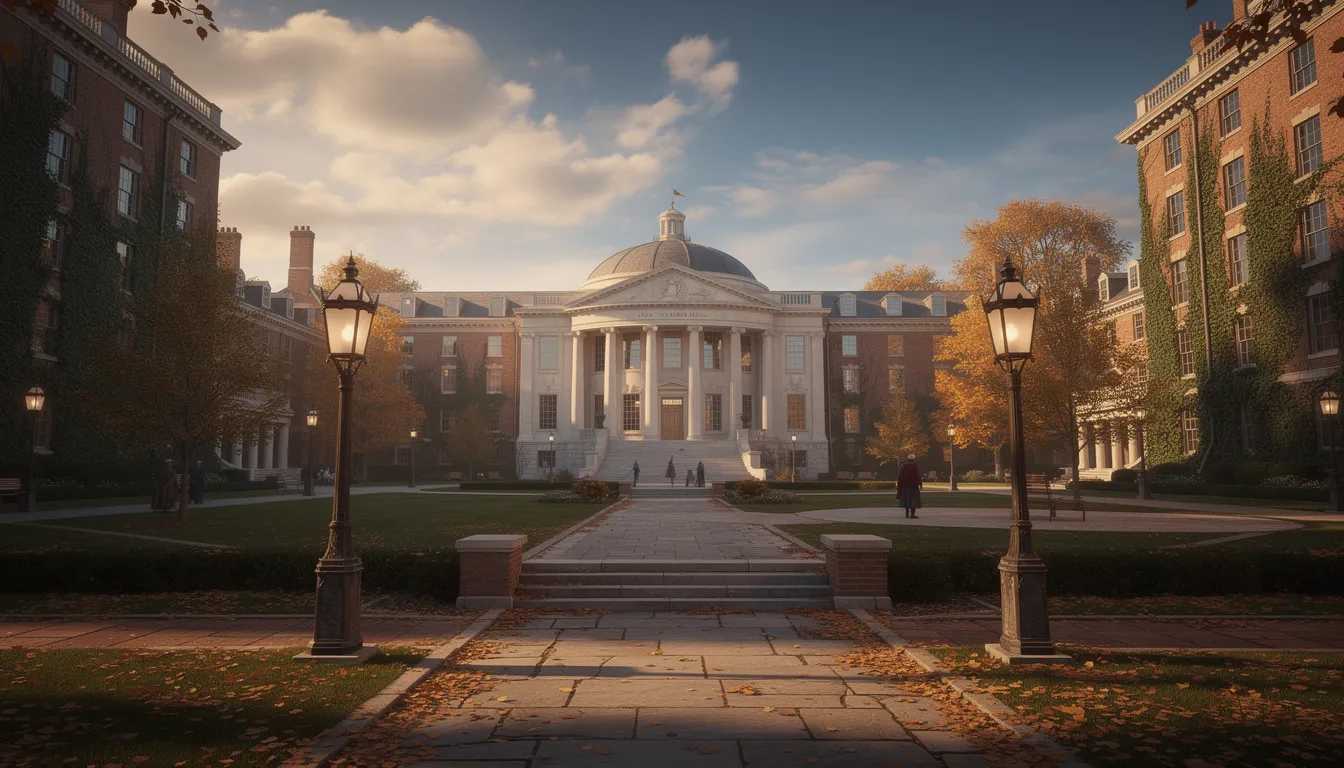
Columbia University spent 2022 through 2025 doing something almost no elite school does voluntarily: falling in the rankings on purpose. It admitted to fudging class-size data, got booted from second place down to 18th, and then walked away from U.S. News reporting altogether. Now it's back in the rankings at No. 15, the lowest of any Ivy — and yet its acceptance rate for the Class of 2029 sat around 4.9%, tighter than it's ever been. Prestige and rank, it turns out, aren't the same currency.
That gap between "where it ranks" and "how hard it is to get into" is the whole story of Columbia right now. Here's what's actually true, not what the SEO listicles repeat.
The Ranking Scandal, and Why No. 15 Doesn't Mean What You Think
In 2022, Columbia math professor Michael Thaddeus published a public teardown of the data his own university had submitted to U.S. News. He found Columbia claimed 83% of undergraduate classes had fewer than 20 students — the real figure was closer to 57%.
U.S. News pulled Columbia's ranking entirely, then reinstated it at No. 18 for 2023, down from No. 2 the year before. Columbia stopped submitting data on its own terms after that. For 2026, U.S. News rebuilt Columbia's ranking using federal NCES data instead of school-submitted numbers, landing it at No. 15 — its lowest position of any Ivy League school, according to the Columbia Spectator.
Here's the part worth sitting with: U.S. News explicitly says it's still "evaluating" whether to keep including Columbia at all, because the university still hasn't been transparent about the original false submission. That's a strange asterisk to carry into a ranking that high schoolers treat as gospel.
Meanwhile, Forbes ranked Columbia No. 2 in its 2026 "America's Top Colleges" list — using 2022-23 data. So depending which outlet you check, Columbia is either 15th or 2nd. Rankings measure different inputs and lag by years; treat any single number as one data point, not a verdict.
| Ranking source | 2026 position | What it's actually measuring |
|---|---|---|
| U.S. News (NCES-based) | No. 15 | Federal data, no self-reporting |
| Forbes | No. 2 | 2022-23 self-reported metrics |
| QS World University Rankings | Top 25 globally | Research output, employer reputation |
The deeper issue is methodological, not just political. U.S. News weighs inputs like peer assessment surveys (reputation among deans and provosts at other schools, which barely moves year to year), financial resources per student, and graduation-rate performance relative to predicted outcomes. Forbes weights alumni salary outcomes and return on investment more heavily, using older cohorts because salary data takes years to mature. QS leans hardest on research citations and international faculty ratios — categories where a school heavy in graduate research like Columbia does structurally well regardless of undergraduate class sizes. None of the three methodologies actually measure "is the undergraduate experience good," which is precisely the thing the 2022 scandal was about. If you're choosing a ranking to trust, ask what it's built from before you ask what number it produced.
Admissions Reality: Under 5% and Getting Tighter
For the Class of 2029, Columbia received 59,616 applications and initially admitted 2,557 students — a 4.29% acceptance rate before waitlist movement pushed the final admit count to 2,946 (4.9%). The incoming class, at 1,806 first-years, was the university's largest ever.
The split between early and regular admission is where the real strategy lives:
- Early Decision: roughly 10-12% acceptance rate — still brutal, but more than double the regular rate
- Regular Decision: roughly 3-4% acceptance rate
- Applicant pool: nearly 60,000, meaning Columbia rejects more qualified 4.0-GPA students than most schools ever see applications from
If you're weighing ED against RD at Columbia, the math isn't subtle: applying early roughly triples your odds. The tradeoff is you're locked in before comparing financial aid offers.
That waitlist gap — 2,557 initial admits swelling to 2,946 after the cycle closed — is itself an underrated data point. It means roughly 400 students, or about 15% of the eventual admitted class, came off the waitlist. For applicants, that translates into a concrete strategy: a waitlist offer at Columbia isn't a courtesy gesture, it's a real second door, and students who send a compelling letter of continued interest with updated grades or an additional recommendation materially improve their odds of being part of that late wave.
Legacy status and recruited athletics still move the needle, though Columbia has never published exact multipliers the way some peer schools' internal data has leaked. What's more measurable is the split between domestic and international applicants: international students make up a meaningfully larger share of the applicant pool than the admitted class, since Columbia — unlike a handful of peer schools — is need-aware for a portion of international applicants, meaning financial need can factor into admission decisions for students without U.S. citizenship or permanent residency. Domestic applicants, by contrast, are admitted need-blind.
The Testing Policy Whiplash
Columbia is the last Ivy League school still test-optional with no end date announced — Harvard, Yale, Dartmouth, and the rest have all reinstated SAT/ACT requirements. That's not an oversight; it's a deliberate holdout, and it means Columbia's applicant pool skews toward students who either don't test well or are betting the essay and transcript carry more weight.
That said, don't mistake "optional" for "doesn't matter." Admitted students who do submit scores still cluster in the 1520-1560 SAT range — submitting a 1400 probably hurts more than staying silent. The edge case worth naming: strong students from under-resourced high schools with limited AP or honors course access are typically better served by omitting scores and letting the transcript's rigor-relative-to-opportunity carry the file, while students at highly competitive prep schools with modest scores often get more scrutiny for the omission, since the assumption is they'd have submitted a strong score if they had one.
What Columbia Actually Costs (Spoiler: Not $92,000)
The sticker price for 2025-2026 is ugly on paper — tuition and fees around $72,944, and total cost of attendance near $91,045 once you add housing, meals, and fees. Nobody serious pays that number, though, and treating it as the real cost is the single most common mistake families make when they cross Columbia off their list early.
Columbia expanded its free-tuition threshold from families earning under $60,000 to families earning under $150,000 with typical assets — a change that quietly moved Columbia from "aid for the poor" to "aid for the upper-middle class" in one policy shift. Families under $66,000 pay nothing toward tuition, housing, or meals at all.
The numbers that actually matter for a real budget:
| Metric | Figure |
|---|---|
| Sticker cost of attendance (2025-26) | ~$91,045 |
| Free-tuition income threshold | Under $150,000 (assets-adjusted) |
| Zero parent contribution threshold | Under $66,000 |
| Undergrads receiving Columbia aid | ~86% |
| Average first-year grant | ~$76,265-$77,908 |
| Actual average net price | ~$19,500/year |
Columbia awards more than $225 million in grants annually. That $19,500 average net price is lower than many in-state public university bills — a fact that rarely makes it into the "Columbia is only for the rich" narrative that dominates Reddit threads.
The honest edge case is the band just above the free-tuition cutoff — families earning $150,000 to roughly $250,000, sometimes informally called the "donut hole" of elite-school financial aid. These families are too well-off for the free-tuition guarantee but not wealthy enough to absorb a six-figure bill without real strain, since Columbia's aid formula still expects a rising parent contribution as income climbs through that range. Assets matter as much as income here: two families earning identical salaries can receive very different aid packages depending on home equity, retirement savings, and whether a family owns a business. Anyone in that middle band should run the actual net price calculator with real numbers rather than assuming either "it's free" or "it's full sticker" — the real answer is almost always somewhere in between, and it's the range where an ED application (which locks you into whatever aid package Columbia offers, without the ability to compare against other schools) carries the most financial risk.
International students face a narrower aid picture: Columbia meets full demonstrated need for admitted international students, but far fewer international applicants make it through the need-aware admission stage in the first place compared to domestic need-blind applicants.
The Core Curriculum: Columbia's Actual Differentiator
Forget the rankings noise for a second, because this is the part that genuinely separates Columbia from peer schools. Every Columbia College student, regardless of major, takes the same sequence: Literature Humanities (starting with the Iliad, ending somewhere around Toni Morrison's Beloved), Contemporary Civilization, Art Humanities, Music Humanities, and Frontiers of Science.
It's not a distribution requirement you can dodge with an easy elective. It's a shared 12-15-book, two-year sequence in small discussion seminars, and it means a computer science major and an art history major have both argued about justice and mortality in the same texts.
The practical upside: it manufactures common ground on a campus where 500-plus clubs otherwise fragment students into a hundred subcultures. The downside — and it's real — is that pre-med and engineering students carrying Core requirements alongside organic chemistry report genuinely brutal semesters. This isn't a curriculum you coast through.
Two practical wrinkles applicants rarely learn about until they've already enrolled. First, AP and IB credit generally cannot be used to place out of Literature Humanities or Contemporary Civilization — a 5 on the AP Literature exam doesn't buy you an exemption the way it might satisfy a general-education requirement elsewhere, because the Core's value proposition is the shared cohort experience, not just content mastery. Second, there's a "Global Core" requirement layered on top of the Western-canon-heavy original sequence, requiring students to take courses examining non-Western traditions and civilizations — a response to decades of criticism that the original Core was too Eurocentric for a university this globally diverse.
It's worth naming who the Core is a harder sell for: transfer students and students in Columbia's School of General Studies, who arrive with more advanced standing or nontraditional academic backgrounds, sometimes chafe at being slotted into freshman-level seminars regardless of their prior coursework. For a straight-from-high-school first-year, though, the seminar format is frequently cited as the single most memorable academic experience of the degree.
A Non-Obvious Effect
Because every student reads the same texts at the same pace, Core discussion sections become one of the few places at a 30,000-student research university where you get a 15-person seminar with a professor who knows your name freshman year. That's the opposite of what the 2022 class-size scandal implied was happening.
Which Columbia Are You Actually Applying To?
Here's a confusion that trips up more applicants than the acceptance rate itself: "Columbia" isn't one undergraduate school. Columbia College and Columbia Engineering (the School of Engineering and Applied Science, or SEAS) share the Core Curriculum, the same campus, and largely the same admissions office and acceptance rate. Barnard College, across the street, is a separate, women's liberal arts college with its own admissions process, its own endowment, and its own acceptance rate — considerably higher than Columbia College's — but Barnard students cross-register for classes, live adjacent, and receive a Columbia degree co-sponsored transcript. The School of General Studies (GS) serves nontraditional and returning students — those with a gap in their education, military veterans, or career-changers — and has its own separate, generally less competitive admissions pathway, despite GS students sitting in the exact same classrooms as Columbia College students.
The practical implication: acceptance rate statistics reported in the press almost always refer to Columbia College and SEAS combined via the Common Application. If a "Columbia acceptance rate" figure sounds inconsistent with what a family friend experienced, the difference is often which of these four undergraduate divisions they actually applied to.
Housing and Daily Life: Manhattan as Campus
About 90% of Columbia undergrads live on campus, and housing is guaranteed all four years — which is not universal among urban schools, where housing guarantees often expire after sophomore year. First-years land in one of five residence hall communities; upperclassmen can move into Special Interest Communities like Casa Latina or Writers House, or into apartment-style buildings and actual Harlem brownstones a short walk from the main quad.
After freshman year, room assignments shift to a lottery-based room-selection process, where students draw numbers and pick from available rooms and suites in order of their draw position — a system that rewards forming a compatible suitemate group early and can be genuinely stressful for students without an established friend group by the spring of freshman year. This is one of the less-discussed stress points of the sophomore transition: unlike the guaranteed, assigned housing of first year, students suddenly have to self-organize into housing groups, and a bad draw number can mean ending up in a less desirable building or configuration than friends who drew earlier slots.
Dining runs on a Flex-dollar system usable at neighborhood restaurants, grocery stores, and via Grubhub — a practical acknowledgment that Morningside Heights, not a dining hall, is the real cafeteria. First-years are required to pick one of three meal plans offering 12 to 19 meals a week.
The tradeoff of Manhattan-as-campus: you get an actual city — actual subway, actual jobs, actual off-campus culture — but you lose the cloistered, everyone-knows-everyone quad life of a rural liberal arts school. Some students thrive on that friction. Others find it isolating that "campus" bleeds into a city of 8 million with no clear edge. Columbia's more than 500 student organizations — spanning club sports, cultural and identity groups, 28 fraternities and sororities, pre-professional societies, and campus media like the Spectator — exist partly to recreate the small-community feeling that a residential quad would provide automatically, and partly to give students a foothold into the city's much larger professional and cultural networks that a fully enclosed campus couldn't offer.
Bottom Line
- Don't use a single ranking to decide. U.S. News (No. 15, NCES-based) and Forbes (No. 2, lagging self-reported data) disagree by 13 spots — check what each is actually measuring before you weight it.
- Run the net price calculator before assuming Columbia is unaffordable. At $150,000 household income you may pay nothing; the ~$19,500 average net price beats plenty of state schools. If you're in the $150K-$250K "donut hole," get real numbers before deciding ED is worth the binding risk.
- If Columbia is a genuine first choice, apply Early Decision — the acceptance rate roughly triples versus Regular Decision, but only commit if you don't need to compare aid offers.
- Know which Columbia you're applying to. Columbia College, SEAS, Barnard, and General Studies have different admissions pools and different acceptance rates despite sharing a campus.
- Weigh the Core Curriculum honestly. It's Columbia's real differentiator and its real workload risk, especially stacked against a STEM course sequence, and AP credit generally won't exempt you from it.
- Expect a city, not a quad. Housing is guaranteed and 90% live on campus, but daily life spills into Manhattan whether you want it to or not, and sophomore-year room selection is its own stressor worth planning for.
Frequently Asked Questions
Is Columbia University's ranking drop a sign the education quality declined?
No. The drop to No. 15 reflects a switch to federal NCES data after Columbia's 2022 admission that it submitted inflated class-size figures — it's a data-integrity correction, not a quality collapse. Faculty, research funding, and the Core Curriculum are unchanged by the ranking shuffle.
Does Columbia require the SAT or ACT?
Not yet. Columbia remains the only Ivy League school with no end date on its test-optional policy, though it has announced that first-year and transfer applicants for Fall 2028 enrollment will need to submit scores starting August 2027.
What's the real acceptance rate difference between Early Decision and Regular Decision?
Early Decision runs roughly 10-12%, while Regular Decision sits around 3-4% for recent cycles. That's more than double the odds, but ED is binding, so you forfeit the ability to compare financial aid packages across schools.
How do I figure out what Columbia will actually cost my family?
Use Columbia's Tuition & Fees Tool and net price calculator with your actual household income and assets rather than the sticker price. Families earning under $150,000 with typical assets often pay little to nothing toward tuition, and the average net price across all aid recipients is roughly $19,500 a year. Families in the $150,000-$250,000 range should run the calculator carefully, since aid there varies significantly with assets, not just income.
Is Columbia's Core Curriculum the same as general education requirements at other schools?
No — most schools let you choose from a menu of electives to satisfy distribution requirements. Columbia's Core assigns every student the same specific texts and seminars (Literature Humanities, Contemporary Civilization, Art Humanities, Music Humanities, Frontiers of Science), creating a shared intellectual reference point across the entire undergraduate class. AP and IB credit typically cannot be used to skip the Core's foundational courses.
Is on-campus housing guaranteed at Columbia?
Yes, for all four years, and about 90% of undergraduates live in university housing, ranging from traditional dorms to apartment-style buildings and Harlem brownstones. After freshman year, students move through a lottery-based room-selection process rather than automatic assignment.
Is Columbia College the same as "Columbia University"?
Not exactly. Columbia University encompasses several undergraduate divisions — Columbia College, the School of Engineering and Applied Science (SEAS), the School of General Studies for nontraditional students, and affiliated Barnard College — each with its own admissions process and acceptance rate, even though students share the same campus, the Core Curriculum (for CC and SEAS), and many classes.
Sources
- Columbia drops to No. 15 in U.S. News Best National Universities ranking, lowest of the Ivies
- Columbia University says it gave incorrect data for U.S. News rankings
- Columbia is the last Ivy League university to remain indefinitely test-optional
- Columbia reinstates SAT, ACT requirements for 2027-28
- Cost & Aid | Columbia Undergraduate Admissions
- Housing & Dining | Columbia Undergraduate Admissions
- Clubs & Organizations | Columbia Undergraduate Admissions
- Core Curriculum | Columbia College Bulletin

