Ohio State University: Admissions, Rankings, and Student Life
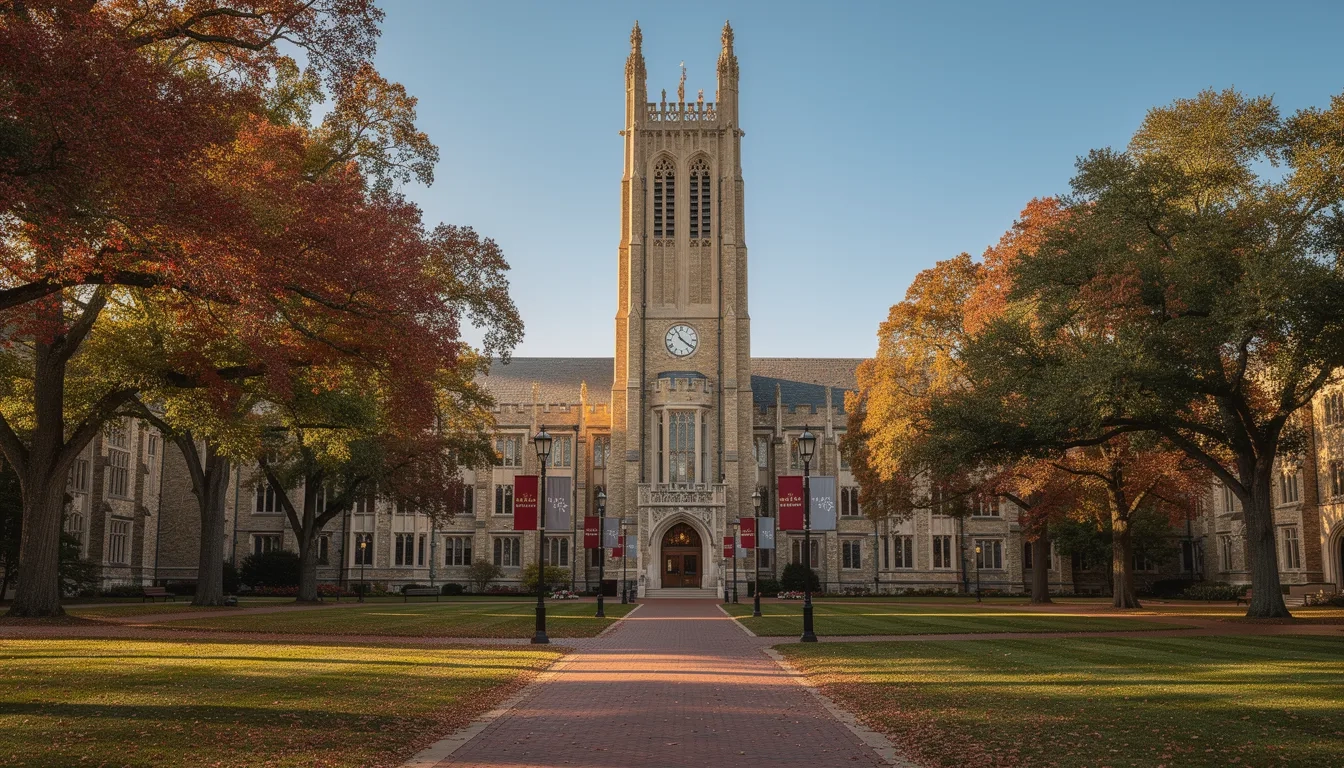
Ohio State sent out acceptance letters to 44,116 students for its Class of 2028 — and still had to cap enrollment because nearly 8,000 of them said yes. That's the story of Ohio State in one stat: it's a public university getting harder to read as "safe," even though the overall acceptance rate still sits around 60%. If you're evaluating Ohio State for yourself or your kid, the honest picture is more layered than "big public school, easy in, football on Saturdays." Let's get into what actually matters.
The Acceptance Rate Is Misleading (And That's the Point)
Ohio State's Columbus campus admitted about 60.6% of the 72,829 students who applied for the Class of 2028. On paper, that reads as "moderately selective," comfortably higher than flagship rivals like Michigan or UNC. But that headline number hides two very different admissions games happening at once.
In-state applicants face a real but forgiving process. Ohio residents get priority consideration and Ohio State openly says it wants to serve the state first. Out-of-state applicants see something closer to 35% to 40% acceptance, which is a different tier of selectivity entirely, closer to what you'd expect from a mid-tier private school than a "safety" state school.
Then there's the program layer. General admission to Ohio State and admission to the Fisher College of Business, the College of Engineering, or the Honors Program are not the same fight. A student can get into the university and still get shut out of the major they actually wanted, because those units run their own competitive review on top of the university-wide bar.
Ohio State reviews applications case by case and publishes no hard minimum GPA or class rank — but 94% of admitted first-years still ranked in the top quarter of their high school class.
That gap between "no official cutoff" and "here's what actually got in" is the single most useful thing to understand before you build a college list around Ohio State.
Where Ohio State Actually Ranks in 2026
Rankings arguments are mostly noise, but Ohio State's 2026 U.S. News numbers are worth knowing because they contradict the "just a big state school" stereotype some applicants still carry around.
| Ranking category | Ohio State's position |
|---|---|
| National Universities (overall) | No. 41 |
| Top Public Schools | No. 15 |
| Nursing (BSN) | No. 1 among publics, No. 4 nationally |
| Fisher undergrad business | No. 6 among publics, No. 12 nationally |
| Supply chain management | No. 4 among publics, No. 5 nationally |
| Undergraduate engineering | No. 15 among publics, No. 28 nationally |
| Most Innovative Schools | No. 21 among publics |
President Walter "Ted" Carter Jr. called the 2026 result confirmation that Ohio State sits "in the top tier of American public higher education," which is the kind of quote every university president gives every year. But the nursing and supply chain numbers back it up with something more concrete than spin. A No. 1 public program in nursing is not a rounding error; it's a genuine draw for a specific kind of applicant.
Here's the honest read, though: overall rank and program rank tell you almost nothing about each other. A student chasing the engineering ranking (No. 28 nationally, solid but not top-10) needs a different mental model than one eyeing supply chain management, where Ohio State is genuinely one of the five best programs in the country. Don't pick a school off the overall number and assume every department inherited the same prestige.
What It Actually Costs
Sticker price scares off a lot of families before they check whether it applies to them. For 2025-2026, Ohio resident undergrads pay $13,641 in tuition and fees. Out-of-state students pay $40,022, roughly triple.
The detail that matters more than either number is Ohio State's Tuition Guarantee: it locks in tuition, housing, and dining rates for each incoming class's full four years. So a freshman entering in autumn 2025 pays the same base rate as a senior in 2029, with no year-over-year tuition shock stacked on top of already-tight family budgets.
- In-state: $13,641 tuition and fees, locked for four years
- Out-of-state: $40,022 tuition and fees, locked for four years
- Neither figure includes room, board, books, or personal expenses; plan for several thousand more on top
Because the Tuition Guarantee freezes the rate a student enters under, the effective annual increase for currently enrolled students runs under 1%. That's worth factoring in if you're comparing four-year cost against a school with no such lock, where sticker price often climbs 3-5% a year and quietly outpaces financial aid growth.
What It Takes to Get In
Ohio State is test-optional, which means the scores below describe what admitted students submitted, not a required bar.
Test Scores and Academic Profile
The middle 50% of admitted first-years posted SAT scores between 1280 and 1470 and ACT composites between 27 and 33. Translation: a 1350 SAT or a 29 ACT lands you comfortably in range, not on the edge.
Academically, the class skews strong even without hard cutoffs:
- 94% ranked in the top quarter of their high school class
- 64% ranked in the top 10%
- 99% exceeded the university's math course recommendations
- 89% exceeded natural science recommendations
- 85% exceeded foreign language recommendations
The Application Reality
Fall 2024 brought in the largest freshman class in Ohio State's history, which tells you demand is climbing even as the acceptance rate holds fairly steady. That combination (more applicants, similar admit rate, bigger enrolled class) usually means a university is expanding capacity rather than tightening the door, and Ohio State has been doing exactly that with new residence halls and expanded sections in high-demand majors.
My honest take: treat Ohio State's general admission as a match school for a solid B+/A- student with a 1300+ SAT, but treat Fisher, Engineering, and the Honors program as reach-tier commitments requiring separate, stronger applications. Conflating the two is the most common mistake I see in how families size up this school.
Student Life: Bigger Than It Looks From Outside
With more than 1,400 student organizations, the practical challenge at Ohio State isn't finding something to join. It's narrowing down from too many options. The Student Involvement Fair, held before autumn classes start, throws every club at incoming students at once, and yes, it's overwhelming by design.
Housing follows a similar logic of scale plus structure. Ohio State organizes residence halls into themed communities rather than just stacking students into generic dorms, and the university's own research points to a link between living on campus and better first-year outcomes, both academically and socially.
Dining reflects the same "options over defaults" philosophy: more than 30 dining locations spread across campus, ranging from all-you-can-eat halls to grab-and-go spots for students sprinting between classes on a campus that's genuinely enormous to cross on foot.
Athletics is where the "big public school" stereotype is actually accurate, for better or worse. Ohio State competes in the Big Ten as an NCAA Division I program, and football Saturdays function as a campus-wide social institution more than a sporting event. It's the connective tissue that a commuter-heavy campus this size would otherwise lack.
On safety, the university has put real money behind it rather than just messaging: more than $35 million invested since autumn 2023 in lighting, surveillance cameras, and other campus security infrastructure. That's a response to a genuine concern that comes with placing 60,000-plus students inside an urban core, not a marketing line. Columbus is a real city, not a sealed-off campus bubble, and Ohio State's safety spending reflects that tradeoff directly.
The Tradeoff Nobody States Plainly
Here's the thing prospective students rarely hear stated outright: Ohio State's size is simultaneously its best feature and its biggest risk for the wrong student. A campus with 61,326 students on the Columbus campus alone offers a genuinely unmatched range of majors, clubs, research labs, and social scenes.
But that same size means nothing is handed to you. Professors won't chase down a student who stops showing up to a 300-person lecture. Housing communities and academic advising exist specifically because the default experience can otherwise feel anonymous fast.
A student who thrives at Ohio State is usually one who shows up ready to seek out a smaller community inside the larger one (a specific dorm cohort, a major-specific club, a research group) rather than waiting for the university to shrink itself down to a comfortable size. Students who wait for that get lost in the shuffle; students who go looking for their people tend to say it was the best decision they made.
Bottom Line
- Apply Ohio-resident aware: in-state applicants face a meaningfully easier path (roughly 60% overall) than out-of-state applicants (35-40%), so factor that into how you build your college list.
- Separate general admission from program admission. Fisher, Engineering, and Honors run their own competitive review; don't assume a strong SAT gets you into all three just because it gets you into Ohio State broadly.
- Use the Tuition Guarantee to your advantage by locking in year-one rates and comparing true four-year cost against schools without a similar freeze.
- If applying, aim for the middle-50% range (1280-1470 SAT, 27-33 ACT) as your target, not your ceiling; remember Ohio State doesn't require scores at all.
- Plan to seek out a smaller community on move-in week, whether that's a themed residence hall, one of the 1,400+ student orgs, or a major-specific cohort. Size is Ohio State's biggest asset only if you actively use it.
Frequently Asked Questions
Is Ohio State hard to get into?
It depends heavily on residency and program. Overall the university admits around 60% of applicants, which is moderate, but out-of-state applicants see closer to 35-40% acceptance, and competitive programs like Fisher Business and Engineering run additional selective review on top of general admission.
Does Ohio State require SAT or ACT scores?
No. Ohio State is test-optional, meaning applicants choose whether to submit scores. Admitted students who did submit scores landed in the 1280-1470 SAT range and 27-33 ACT range for the middle 50%, which is useful as a benchmark even though it isn't a requirement.
Is Ohio State ranked higher for certain majors than others?
Yes, significantly. In the 2026 U.S. News rankings, Ohio State's nursing program ranks No. 1 among public universities, and its supply chain management program ranks No. 4 among publics, while the university's overall national rank sits at No. 41. Pick a school based on the specific program ranking, not just the headline number.
How much does Ohio State actually cost after fees?
Base tuition and fees run $13,641 for Ohio residents and $40,022 for out-of-state students in 2025-2026, not including room, board, or books. The university's Tuition Guarantee locks that base rate for all four years of enrollment, which limits the risk of tuition increases that many other schools apply annually.
What is Ohio State's campus safety record like?
Ohio State has invested more than $35 million since autumn 2023 in safety infrastructure, including expanded lighting and surveillance systems, reflecting the realities of an urban campus embedded directly in Columbus. Prospective students should weigh this against any large urban-campus environment rather than treating it as unique to Ohio State.
Is it easy to get lost on a campus this large?
It can be, and that's the most common complaint from transfer students who leave. Ohio State counters this with themed residential communities, 1,400+ student organizations, and program-specific advising, but the burden is on the student to opt into a smaller community rather than wait for one to appear.
Sources
- Who Gets In - Columbus Campus First-Years, Ohio State Undergraduate Admissions
- Ohio State Maintains Position as One of Nation's Top Public Universities in New Rankings, Ohio State News
- The Ohio State University (OSU) - Profile, Rankings and Data, U.S. News & World Report
- Life on Campus, Ohio State Undergraduate Admissions
- Ohio State Sets Tuition and Fees for the 2025-2026 Academic Year, Ohio State News
- Ohio State's Fall 2024 Freshman Class Is the Largest in University History, AOL/Columbus Dispatch