What a Psychology Degree Really Pays You in 2026, by Level

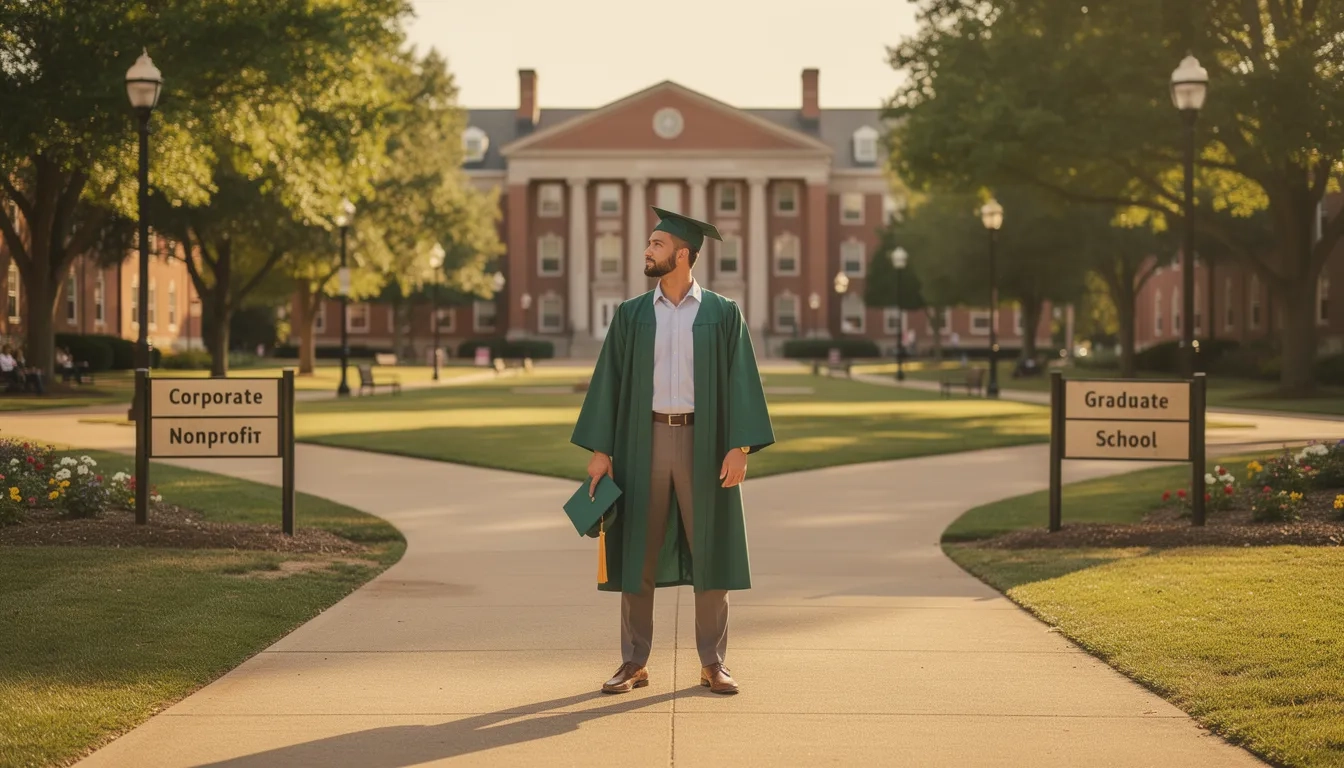
A psychology major and a business major can graduate from the same college, walk the same stage, and land ten years later in completely different tax brackets. Not because one of them worked harder. Because psychology's job market splits hard by degree level, and almost nobody explains that before you declare the major.
Here's what the actual numbers say about each rung of the ladder, from a four-year degree to a doctorate with a license number attached.
Bachelor's Degree: The Reality Check
Here's the uncomfortable part first. According to the American Psychological Association's own guide for undergrads, the psychology bachelor's degree "does not uniquely qualify a person for any particular job." Only 14 percent of psychology bachelor's holders go on to earn a graduate degree in psychology at all.
So where does everyone else go? The APA's career-tracking data shows graduates scatter into sales (20 percent), professional services (17 percent), management and supervision (16 percent), and teaching (11 percent).
That's not a psychology career. That's a liberal-arts degree that happens to teach statistics and how people think.
The bachelor's-level jobs that actually touch the field pay modestly. A human resources specialist earns a median $75,940 a year, and a market research analyst earns $78,760, according to the Bureau of Labor Statistics' 2025 wage data. Substance abuse, behavioral disorder, and mental health counselor roles (one of the few counseling-adjacent titles open to bachelor's holders) median out at $59,350.
Skip the "average psychology salary" numbers you'll see on aggregator sites claiming $90,000-plus. Those blend job titles that merely contain the word "psychology," including plenty of roles nobody with a fresh bachelor's is walking into. I'd treat any of those averages with real suspicion.
The bachelor's degree is a foundation, not a credential. It gets you in the room. It doesn't let you diagnose anyone, treat anyone, or call yourself a psychologist in any of the fifty states.
The common misconception is that a psych degree qualifies you for entry-level counseling work everywhere. It doesn't, not for licensed, independent practice — that requires a graduate degree plus supervised hours, full stop.
Think about it this way. A twenty-two-year-old with a psychology bachelor's and a twenty-two-year-old with a business degree can both apply for the same HR coordinator opening.
The psych grad might actually have an edge on the interpersonal side, but neither one is doing therapy, testing, or diagnosis. That's graduate-school territory, no shortcuts.
Master's Degree: Where the Money Starts Making Sense
Two more years changes the math considerably, and it opens three genuinely different doors.
Path One: Licensed Counseling
A master's in clinical mental health counseling or marriage and family therapy sets you up to become a Licensed Professional Counselor (LPC) or LMFT. Most states require 2,000 to 3,000 hours of post-master's supervised practice plus a national exam before you can practice independently. Pennsylvania, for instance, requires 3,000 hours completed over no less than two years.
Path Two: Applied Behavior Analysis
Board Certified Behavior Analyst (BCBA) roles, built on a master's in ABA, now average around $89,000 a year. Demand is genuinely booming: one industry job-posting analysis found BCBA-required listings jumped 28 percent year over year, driven mostly by rising autism diagnoses and school-based therapy contracts.
Path Three: Industrial-Organizational Psychology
This is the one nobody warns you about. The BLS reports I-O psychologists typically need only a master's degree — and their median wage is $193,950, nearly double what a doctorate-holding clinical psychologist makes.
That's the non-obvious pattern hiding in the BLS data: the single highest-paying job with "psychologist" in the title requires the least amount of school. It sits inside corporate HR, consulting, and workforce-analytics teams, not a therapy office.
- LPC/LMFT: 2-3 years grad school, 2,000-3,000 supervised hours, state license
- BCBA: 1-2 years grad school plus supervised fieldwork, national certification exam
- I-O psychologist: 2-year master's, no clinical license required, corporate hiring track
Doctorate: PhD vs PsyD and the Licensing Bottleneck
Clinical and counseling psychologists earn a median $100,580, per the BLS. Getting there takes considerably longer than that number suggests.
A PhD emphasizes research and typically ends in a dissertation; a PsyD focuses on clinical practice with clients from day one. Both, per the BLS, require a doctoral degree plus supervised experience through an internship or postdoctoral placement before a state will hand over a license.
Then comes the Examination for Professional Practice in Psychology, the national licensing exam every state uses in some form.
Add it up: four years undergrad, five to seven years doctoral, one to two years supervised postdoc, then the exam. You're looking at roughly a decade from freshman orientation to your first fully licensed paycheck.
That gap between "I have a doctorate" and "I can bill insurance as a psychologist" is the field's real bottleneck, and almost none of the recruiting brochures mention it.
Here's my honest take: for most people who just want to see clients and don't care about running a lab, a PsyD or a master's-level license gets you to the same exam room years sooner and often with less debt drama, since PhD programs are usually funded through assistantships while PsyD programs frequently aren't.
And a doctorate doesn't have to mean a couch. Adam Grant, the Wharton School professor and organizational psychology PhD who now writes bestsellers and hosts a podcast on workplace behavior, is proof the degree scales into research, consulting, and media just as easily as clinical practice.
Not every psychologist treats patients. Plenty never do.
There's another hurdle worth naming before you apply anywhere: the internship match. Doctoral candidates apply for a limited number of accredited internship slots through APPIC, the national matching system, and landing one isn't guaranteed just because your coursework is finished.
Fail to match, and your timeline slides another year. Programs rarely advertise that part on the brochure.
School Psychology: The Overlooked Middle Path
Nobody mentions school psychology at career day, and that's a mistake. It sits at a master's or education-specialist (Ed.S.) level, no doctorate required, yet it pays a median $95,990, per BLS 2025 data. That's within striking distance of a doctorate-holding clinical psychologist's $100,580, for years less school and debt.
The path combines education and psychology coursework with a supervised internship, then a state credential. Demand keeps climbing because schools are chronically understaffed for the mental-health caseloads they're now expected to carry, a problem that predates any single headline and isn't going away soon.
Common misconception: people assume "school psychologist" means testing kids for learning disabilities and little else. In practice it's crisis intervention, behavioral consultation with teachers, and increasingly, frontline mental health triage for students who have nowhere else to go.
If the licensing bottleneck of clinical doctoral work sounds like too long a haul, this is the trade worth considering seriously. It's arguably the best pay-per-year-of-schooling ratio in the entire field, and almost nobody outside education circles talks about it that way.
The Full Comparison, Side by Side
| Education Level | Example Roles | Time to Practice | Median Salary (BLS 2025) | Licensing Requirement |
|---|---|---|---|---|
| Bachelor's | HR specialist, market research analyst | 4 years | $75,940–$78,760 | None; no clinical title |
| Bachelor's | Substance abuse/mental health counselor (entry) | 4 years | $59,350 | Varies by state; often master's needed for independent practice |
| Master's | LPC / LMFT | 6–7 years total | ~$59,350–$75,000+ range by setting | 2,000–3,000 supervised hours, national exam |
| Master's | BCBA | 6 years total | ~$89,075 | National certification exam, supervised fieldwork |
| Master's | I-O psychologist | 6 years total | $193,950 | None (no clinical license required) |
| Master's/Ed.S. | School psychologist | 6–7 years total | $95,990 | State credential, supervised internship |
| Doctorate (PhD/PsyD) | Clinical/counseling psychologist | 9–12 years total | $100,580 | Postdoc hours, EPPP exam, state license |
Numbers pulled from BLS Occupational Employment and Wage Statistics, May 2025, and the BLS Occupational Outlook Handbook.
Picking Your Path: A Decision Framework
Ask yourself three questions before you commit to another degree.
- Do you want to sit across from clients, or design the systems around them? Clients mean counseling, clinical psych, or school psych. Systems mean I-O, market research, or HR.
- Can you tolerate a decade-long runway for a license? If not, cross clinical PhD/PsyD off the list and look at master's-level counseling or BCBA instead.
- Does debt terrify you? PhD programs are usually funded through teaching or research assistantships. PsyD and most master's programs generally are not, and that gap compounds over a decade of interest.
- Do you need income sooner rather than later? A two-year master's gets you earning in your mid-twenties. A doctorate often means your late twenties or early thirties before your first full paycheck as a licensed professional, once postdoc hours and the internship match are factored in.
So the field really splits into two very different bets: a fast, cheaper master's route into I-O, ABA, or school psychology, versus a slow, expensive doctoral route into independent clinical practice or academia. Neither is wrong. They're just different games with different payout schedules.
Bottom Line
- If you're choosing a bachelor's major, treat psychology as a skills degree (research, writing, statistics), not a job guarantee, and plan your first job search around adjacent fields like HR or market research.
- If six figures with the least schooling is the goal, look hard at industrial-organizational psychology; a master's gets you there, per BLS wage data.
- If therapy is the calling, price out the full timeline honestly: doctorate plus postdoc plus the EPPP exam, generally a decade, before independent licensed practice.
- If that decade feels like too much, master's-level counseling licensure or school psychology delivers real clinical work years sooner.
- Whatever you pick, check your state's specific supervised-hours and exam requirements before enrolling. They vary enough to change your timeline by years.
Frequently Asked Questions
Can I work as a therapist with just a bachelor's degree in psychology?
No, not independently. Bachelor's holders can work as case managers, psychiatric technicians, or behavioral health techs under supervision, but every state requires a graduate degree plus supervised hours and a license for independent counseling or clinical work.
How do I actually become a licensed psychologist, step by step?
Earn a bachelor's degree, then a PhD or PsyD in clinical or counseling psychology (five to seven years), then complete a supervised internship and postdoctoral hours required by your state, then pass the EPPP. Only after your state board approves your application can you legally call yourself a licensed psychologist.
Is a PsyD worth it compared to a PhD?
It depends on your goal. If you want to practice clinically and don't care about running research, a PsyD gets you there with a practice-focused curriculum, though it's frequently less funded than PhD programs, so weigh the debt against the years saved.
What's the highest-paying psychology career?
Industrial-organizational psychology, according to BLS 2025 wage data, at a median $193,950, and it typically requires only a master's degree, not a doctorate, which surprises most people.
Do I need a license to call myself a "psychologist"?
Yes. Every state restricts the title "psychologist" to people holding a doctoral degree and a state license. Unlicensed practitioners with master's degrees use titles like counselor, therapist, or behavior analyst instead.
Is school psychology a good alternative to clinical psychology?
For many people, yes. It pays a median $95,990 at the master's/Ed.S. level, per BLS data, without the doctoral timeline or the EPPP exam, and the day-to-day work involves real behavioral and mental-health support for students.
Sources
- Psychologists, Occupational Outlook Handbook
- Substance Abuse, Behavioral Disorder, and Mental Health Counselors, Occupational Outlook Handbook
- Market Research Analysts, Occupational Outlook Handbook
- Human Resources Specialists, Occupational Outlook Handbook
- Preparing to Use Your Bachelor's Degree in Psychology, American Psychological Association