Rensselaer Polytechnic Institute: What Applicants Should Know
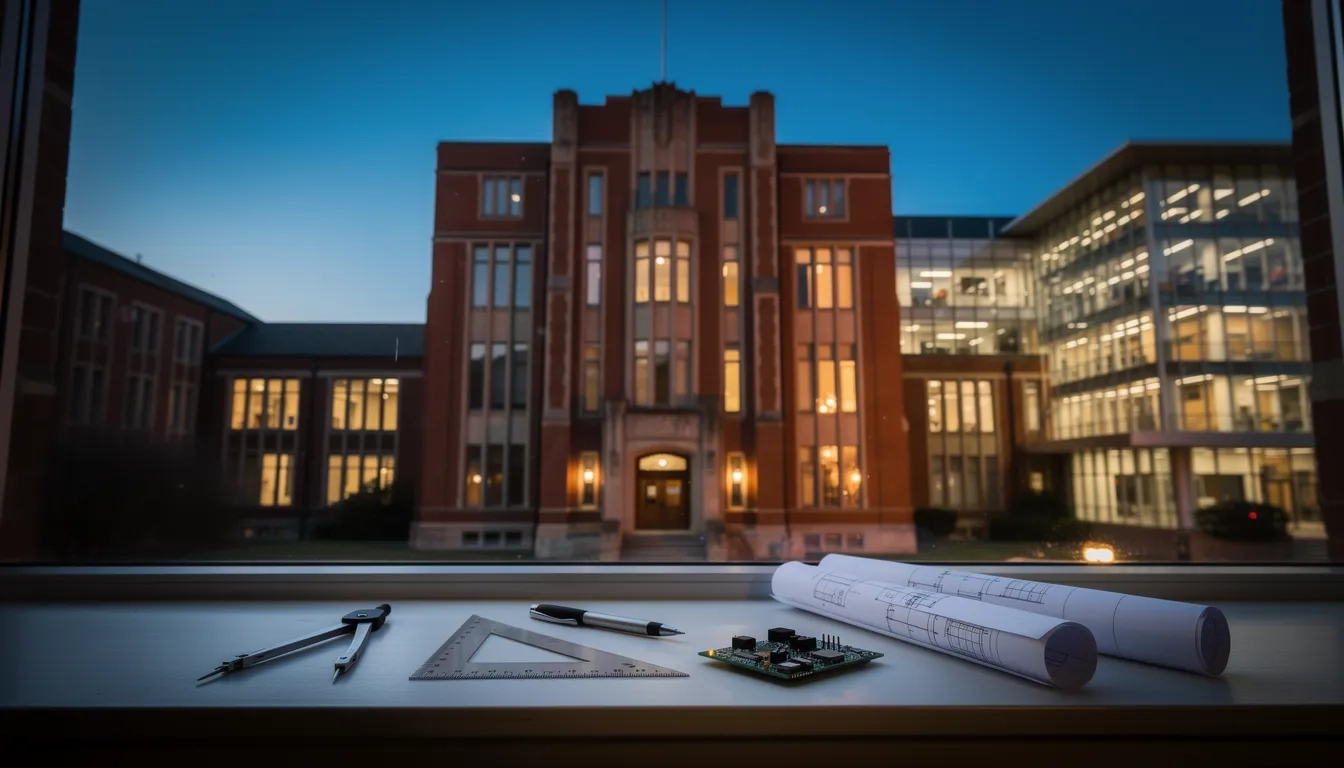
Ask someone from Troy, New York what RPI stands for and you'll get two answers. One is "Rensselaer Polytechnic Institute." The other, muttered by sophomores at 2 a.m. in the Folsom Library, is some variation on "Rensselaer Puts you through It." Both are true, and if you're trying to figure out whether this school belongs on your list, the workload reputation and the 1824 founding date by Stephen Van Rensselaer tell you almost everything you need to know before you even look at a single statistic.
Getting In: What RPI's Numbers Actually Show
RPI admitted 10,906 students out of 17,193 applicants for its most recently reported class, an acceptance rate of 63%. That number gets thrown around as proof RPI is "easy," which misreads what's actually happening in the applicant pool.
The GPA and class rank data tell a tighter story than the headline rate does. Enrolled students averaged a 3.8 GPA, 68% carried a 3.75 or higher, and 56% ranked in the top tenth of their graduating class. Early Decision applicants got in at 58%, barely below the regular rate, which is unusual for a school this selective.
| Metric | Data point |
|---|---|
| Applicants | 17,193 |
| Acceptance rate | 63% |
| Early Decision acceptance rate | 58% |
| Enrolled student average GPA | 3.8 |
| Top 10% of HS class | 56% |
| SAT middle 50% | 1390–1500 |
| ACT middle 50% | 30–34 |
| Yield rate | 12% |
A 12% yield rate isn't a warning sign. It just means RPI shares its applicant pool with MIT, Carnegie Mellon, and Georgia Tech, and most of those kids only say yes to one school on that list.
RPI renewed its test-optional policy for the current cycle, but only about 60% of applicants actually submitted scores. My honest take: if your SAT lands anywhere near 1450 or your ACT near 32, submit it. This is an engineering-heavy applicant pool where quantitative signal still carries weight, whatever the official policy says.
RPI also runs the Rensselaer Medal, a merit award for standout math and science students nominated by their high schools, with 132 recipients enrolling in a recent class. It's worth asking your counselor about early if math and science are genuinely your thing.
Academics: Where RPI Actually Leads
Engineering gets top billing, and it should. But RPI's strongest programs aren't always the ones people assume.
The Lighting Research Center, founded in 1988, is the largest university-based lighting research center in the country and offers graduate degrees you can't get almost anywhere else. Students study solid-state lighting, transportation safety, and light's effects on human health, work that feeds directly into industry and federal research contracts.
The School of Architecture ranked 13th nationally in the last major DesignIntelligence survey, respectable territory for a school most people associate with circuits and code, not studio critiques. Then there's the Games and Simulation Arts and Sciences program (GSAS), launched in 2007 and ranked among the top 10 game design programs nationally.
Here's the part that surprises people: GSAS lives in the School of Humanities, Arts, and Social Sciences, not computer science. That's a deliberate bet that game design is as much about psychology, narrative, and human-computer interaction as it is about rendering pipelines. A few things worth knowing before you assume RPI is a one-trick engineering school:
- Architecture, game design, and the Lally School of Management all pull from research centers most STEM-only schools don't have.
- Cross-registration between schools is common — an engineering major can genuinely minor in game studies without fighting the registrar.
- The Arch program (more on this below) restructures the calendar around co-op-style industry stints, not just summer internships.
Rankings, Translated
RPI sits at #64 among national universities and #50 (tied) for graduate engineering in the current US News rankings. Neither number screams "elite," and that's exactly the point of reading rankings correctly instead of just quoting them.
A #50 graduate engineering ranking next to a top-10 median starting salary tells you the ranking is measuring the wrong thing for most applicants. US News weighs research expenditure and peer reputation surveys heavily; it says very little about what happens to a 22-year-old with a Rensselaer diploma in a Lockheed Martin hiring pipeline. Treat the ranking as one input, not the verdict.
Undergraduate national rank matters more for name recognition with parents and recruiters outside the Northeast than it does for actual outcomes. If you're cross-shopping RPI against Worcester Polytechnic, Case Western, or Rochester Institute of Technology, the ranking gap between them is smaller than the culture gap. Visit before you decide.
Campus Life: Grand Marshal Week, the Union, and Hockey Nights
Student life at RPI runs on traditions with real institutional weight behind them, not manufactured school spirit.
The Grand Marshal is the highest elected student position on campus, a role that's existed since 1865, when the first officeholder was handed a ceremonial sword. Grand Marshal Week each spring is part campaign season, part campus festival, and it's one of the few times the whole undergraduate population pays attention to student government at once.
The Rensselaer Union, dating back to 1890, funds and houses more than 170 student clubs, which is a lot of institutional infrastructure for a school with roughly 6,200 undergraduates. Add in:
- EMPAC (the Experimental Media and Performing Arts Center), a genuinely striking building that hosts everything from Honors Convocation to touring performance artists.
- Big Red hockey, where student sections at Houston Field House turn Friday nights into the closest thing campus has to a football Saturday.
- A dense cluster of engineering project teams (Formula SAE, RPI Rocket Society) that function like varsity sports for people who'd rather build a chassis than watch one race.
None of this makes RPI a party school, and it isn't trying to be one. It's a place where the social life and the academic identity are the same thing, for better and occasionally for worse when nobody sleeps during finals week.
What It Costs, What Comes Back
Sticker price for 2025–26 sits at $66,024 in tuition, with total cost of attendance (tuition, fees, housing, food, books) reaching $85,291. That number should make you wince a little, because it should.
Financial aid meaningfully changes that math for most families who actually get in. Average aid packages run around $46,936, and a majority of undergraduates receive some form of institutional or need-based support. Still, run your own numbers through RPI's net price calculator before you fall in love with the campus — don't take the sticker price at face value, and don't assume the aid letter will match a friend's.
A blunt opinion here: RPI is not the move if you're chasing a name-brand line on a resume and don't have a clear STEM direction. It's the move if you know you want engineering, architecture, or a research-heavy science track and you're willing to pay a premium for the Lighting Research Center, the Arch program connections, and the density of project teams that actually ship hardware.
Career Outcomes: The Arch Program and the Money Question
This is where RPI's numbers stop looking merely respectable and start looking genuinely strong.
The median starting salary for Rensselaer graduates is $68,400, placing RPI in the top 10 among national universities, tied with Princeton and ahead of Georgia Tech, against a national average of $51,784 across ranked universities. Computer science majors specifically clear well past $90,000 to start, and roughly 84% of graduates land a job within six months.
RPI's Arch program restructures the undergraduate calendar so students complete a professional experience, often a paid stint with a major employer, before senior year rather than squeezing an internship into one summer. Corporate partners include Amazon Robotics, Lockheed Martin, and ExxonMobil, which tells you which industries actually show up to recruit on this campus.
- The Lally School of Management reports a 96% placement rate within six months, with starting salaries near $65,000, decent for a business program riding on an engineering school's reputation.
- Ten years after enrollment, average earnings hit $82,500, which is 141% above the national median.
- The pattern holds across majors: RPI degrees convert to income faster than the university's mid-pack national ranking would suggest.
Bottom Line
- Don't read the 63% acceptance rate as a green light to slack on rigor. The GPA and class-rank data behind it are demanding.
- Submit your SAT or ACT scores if they're strong, even under test-optional policy. This applicant pool still leans quantitative.
- Look past the US News overall ranking of #64. The salary and placement data matter more for a STEM-focused degree than the reputation survey does.
- Ask specifically about the Arch program during your visit. The corporate partner list (Amazon Robotics, Lockheed Martin, ExxonMobil) is more informative than any brochure.
- Run the net price calculator before assuming $85,291 is your real number. Aid changes the math for most admitted students.
Frequently Asked Questions
What GPA and test scores do I need to get into RPI?
Enrolled students average a 3.8 GPA, and more than half rank in the top 10% of their high school class. If you submit scores, aim for the SAT 1390–1500 range or ACT 30–34 to sit comfortably in the middle 50%.
Is RPI just an engineering school?
No, and that's a common misconception. RPI's architecture program ranks 13th nationally, its game design program (GSAS) sits in the top 10, and the Lally School of Management posts a 96% placement rate, alongside the engineering core.
How do I decide whether to apply Early Decision?
Apply ED only if RPI is genuinely your first choice, since it's binding, and know that the acceptance rate advantage is modest (58% versus 63% regular). Use it as a signal of intent, not a loophole around your GPA.
Does RPI's test-optional policy mean scores don't matter?
Scores still matter in practice. About 60% of applicants submit them anyway, and strong scores help in a pool this quantitative, so I'd submit if yours are competitive rather than betting on the optional policy.
Is RPI worth the cost compared to a state engineering school?
It depends on your major and your aid package. The median starting salary of $68,400 and the Arch program's employer pipeline make a stronger case for engineering, architecture, or CS majors than for undecided students paying full sticker price.
What is Grand Marshal Week?
It's RPI's annual student government election tradition, running since 1865, when the winning candidate was given a ceremonial sword. It's now a campus-wide spring event blending campaigning with school spirit.
Sources
- How to Get Into RPI: Acceptance Rate and Strategies
- Starting Salaries for Rensselaer Graduates Are Among Nation's Highest
- How Does Rensselaer Polytechnic Institute Rank Among America's Best Engineering Schools
- Cost of Attendance - RPI Financial Aid
- Rensselaer Polytechnic Institute Game Design Program Among Top 10 Nationwide
- Rensselaer Architecture Ranks 13th Best School in the U.S.