The World's Top Climate Research Universities in 2025
Climate science has a geography problem. The foundational research that governments cite when building policy, that engineers rely on when designing infrastructure, that journalists reference when explaining what's coming—most of it originates from a small cluster of institutions. Not hundreds. Maybe two dozen. And within that group, a handful stand so far ahead that calling them peers of everyone else is generous.
Knowing which universities actually lead this field matters. It matters for prospective PhD students who will spend five years inside one research culture. It matters for policymakers who want to know which findings deserve weight. And it matters for anyone trying to understand where climate knowledge actually comes from before deciding how much to trust it.
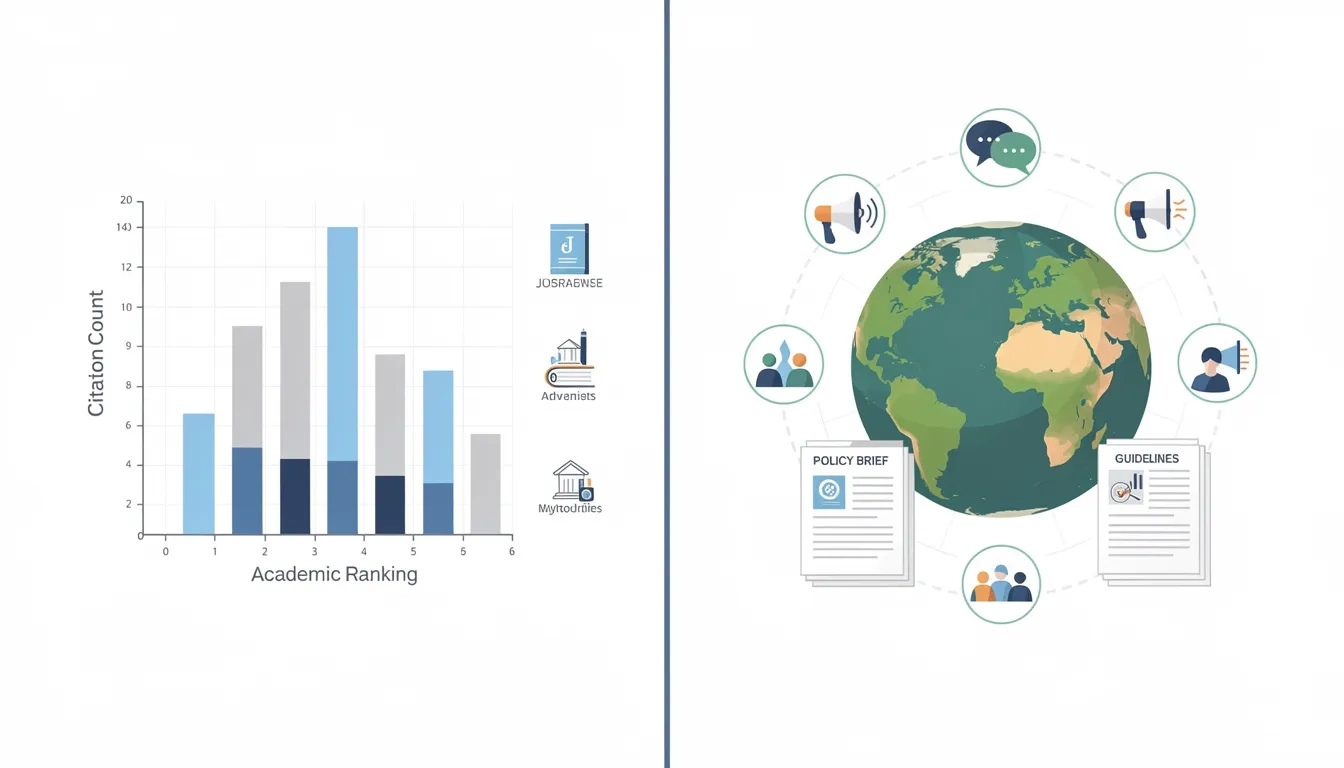
Two Ways to Measure Climate Research Quality
There are two methodologies for ranking climate institutions, and confusing them produces bad decisions.
The first tracks academic output: publications, citations, research funding, and faculty reputation. US News, QS, and the Shanghai Rankings all use this approach. By these measures, the top tier is dominated by MIT, Harvard, Columbia, Stanford, ETH Zurich, and—increasingly—Peking University. These schools generate the original research that feeds into IPCC assessment reports.
The second tracks institutional climate action, measured by the Times Higher Education Impact Rankings. This evaluates whether the university itself is decarbonizing, partnering with governments on climate, and conducting research aligned with the UN's Sustainable Development Goals. Here, the University of Tasmania and UNSW Sydney regularly outrank MIT. Surprising to many Americans, but not incorrect.
Research impact asks what new knowledge a place is generating. Sustainability impact asks whether the institution is actually living by its own findings. For researchers and PhD students, the first question usually dominates.
The American Research Leaders
MIT takes the most technically ambitious approach. The MIT Energy Initiative (MITEI) coordinates climate and energy research across 10 departments, drawing on federal grants and corporate partners including Amazon, Airbus, and Apple through the MIT Climate and Sustainability Consortium. The university's Fast Forward Climate Action Plan targets net-zero direct emissions on campus—a goal they've framed for this decade, not 2050.
What makes MIT distinctive is its engineering-forward culture. The Center for Global Change Science focuses on atmospheric chemistry, oceanography, and paleoclimatology, while the Joint Program on the Science and Policy of Global Change puts economists and climate modelers in the same seminars. That combination produced Form Energy, a long-duration battery company that spun out of MIT research and may matter more to the clean energy transition than most published papers.
Harvard brings policy influence rather than engineering depth. The Salata Institute for Climate and Sustainability, launched with a $200 million gift from Wendy and Eric Schmidt in 2022, explicitly funds research designed to reach policy tables rather than just journal archives. The Harvard Center for the Environment has been coordinating interdisciplinary climate work since 2001.
The joint Harvard-MIT Global Climate Policy Project is the clearest recent example of what research-to-policy can look like at scale. Their researchers found that a voluntary coalition of countries coordinating carbon pricing for heavy industry could cut global emissions sevenfold compared to current policies while generating nearly $200 billion in annual revenue for climate action. That specific proposal is now on Brazil's COP30 agenda in 2025. Publishing a paper is one thing. Getting it into international climate negotiations is something else entirely.
Columbia made the boldest institutional bet in American higher education when it launched the Columbia Climate School in 2020—the first school in the world dedicated exclusively to climate. Not a department. Not a center. An entire degree-granting school with its own deans, budget authority, and more than 25 transdisciplinary research units.
Behind that headline sits the Lamont-Doherty Earth Observatory, Columbia's crown jewel. Founded in 1949, Lamont operates research vessels across six continents, maintains monitoring networks from the Arctic to the Antarctic, and contributed foundational work on ocean circulation and ice core paleoclimate records. When IPCC Working Group I cites long-term ocean temperature data, Lamont's records are usually somewhere in those footnotes. Columbia postdoctoral researchers earn a base salary of $71,640 with a $12,000 research stipend over their two-year appointment—among the more competitive compensation packages in academic climate science.
Stanford approaches the field from a different angle: connecting research to decision-makers faster than almost anyone. The Stanford Doerr School of Sustainability (renamed from the Earth System Science program) and the Stanford Woods Institute for the Environment both explicitly focus on moving findings into corporate and government adoption. The Precourt Institute for Energy handles the economics of clean energy transitions. Stanford graduates show up disproportionately in climate tech startups and policy shops—not by accident, but by design.
UC Berkeley rounds out the American tier, particularly for the economics and social science dimensions of climate change. The Energy and Resources Group is one of the oldest interdisciplinary environmental programs in the United States. Several of its alumni went on to design California's cap-and-trade system, which became a model for emissions markets worldwide. The university's College of Natural Resources and affiliated Lawrence Berkeley National Laboratory also contribute significant climate modeling capacity.
Cornell deserves a mention for applied climate work. The Cornell Climate Smart Solutions program and the Atkinson Center for Sustainability take an explicitly solutions-oriented approach, connecting climate research to agriculture, food systems, and rural infrastructure—areas that other elite research programs often neglect in favor of atmospheric and ocean science.
European Institutions Setting the Standard
ETH Zurich is the clearest leader outside the United States. QS has ranked it first globally in earth sciences and geophysics for multiple consecutive years, and it has held the top position among non-Anglo-Saxon universities in the THE World University Rankings for four years running. Its research strategy organizes explicitly around global challenges including climate change, food security, and human health.
What sets ETH apart is its translation pipeline. The Swiss government's proximity and the Federal Institute of Technology's mandate mean researchers feel direct accountability for real-world outcomes. Scientists there are not just modeling what will happen—they're expected to work toward deployable solutions, and the institutional culture reflects that expectation.
Vrije Universiteit Amsterdam is less globally famous but operates a genuinely world-class climate risk operation. The Institute for Environmental Studies (IVM) employs more than 100 researchers and focuses specifically on low-probability, high-impact disasters: coastal flooding, ocean acidification, and extreme weather patterns. With 50 PhD researchers and more than 150 graduate students enrolled at any given time, IVM is one of the most concentrated climate risk research groups anywhere. For anyone focused on adaptation rather than mitigation, this program deserves serious consideration.
The Tyndall Centre for Climate Change Research—spanning Oxford, Manchester, and East Anglia—has been producing integrated climate scenario models used by the UK government since 2000. It is less a single university and more a network, but its policy-facing work has been cited in more UK government documents than any other academic climate program. The Oxford Environmental Change Institute contributes similarly on water systems and food-climate interactions.
International Schools Making Real Impact
University of Tasmania consistently ranks near the top of THE's Impact Rankings for climate action—sometimes first globally—not because it has the most prestigious labs, but because it delivers on what it claims. The second Australian university to receive carbon neutral certification, Tasmania's Climate Futures Research Group produces regional climate projections that local and national governments in the Asia-Pacific actually use for infrastructure planning. The gap between generating climate knowledge and applying it is something many elite institutions still haven't closed; Tasmania has.
University of British Columbia is the Canadian standout. Between 2010 and 2020, UBC reduced its greenhouse gas emissions by 33% while simultaneously growing its campus footprint—and their Bioenergy Research and Demonstration Facility converts 8,800 tons of wood waste annually into thermal energy, supplying more than 25% of campus heating needs. Their campus is a functioning laboratory for applied sustainability research, giving students access to real-world data sets from a live institutional experiment.
Tsinghua University and Peking University now rank in the top 10 for environmental sciences by several global metrics. Chinese government investment in climate research is substantial, and these institutions are the primary recipients. Whether research output translates into domestic policy change remains a harder question—but for sheer publication volume and atmospheric modeling capacity, both belong in any honest global accounting.
A Framework for Choosing the Right Program
The right climate research university depends almost entirely on what kind of work you want to do—and the table below reflects that reality.
| Research Goal | Best Fit | Reason |
|---|---|---|
| Atmospheric modeling & climate science | MIT or ETH Zurich | Engineering infrastructure, modeling depth |
| Climate policy and governance | Harvard or Columbia | Policy networks, IPCC contributor faculty |
| Ocean and Earth systems research | Columbia (Lamont-Doherty) | 75 years of continuous data, global research fleet |
| Clean energy economics | UC Berkeley or Stanford | Strong economics programs integrated with climate |
| Coastal flooding and climate risk | VU Amsterdam (IVM) | 100+ dedicated researchers in exactly this specialty |
| Sustainability as a living campus lab | University of Tasmania or UBC | Top Impact Rankings, working sustainability programs |
Three things the published rankings rarely surface:
- Interdisciplinary design actually determines output quality. Programs that force atmospheric scientists, economists, and engineers into shared spaces consistently outperform programs that claim interdisciplinarity without building it into the structure. MIT and Columbia both designed their programs this way on purpose.
- Horizon Europe changed the funding math. Since 2021, European institutions have access to significantly larger pools of EU climate research funding. The grant environment at ETH Zurich or VU Amsterdam now rivals what American researchers access through NSF and DOE—and the overhead costs are often lower.
- Picking a university based on its overall brand rather than the specific research center is one of the more common mistakes prospective students make. A PhD student at Lamont-Doherty is doing fundamentally different work than one down the hall in Columbia's economics building, even though they share the same institution.
From Paper to Policy: What Separates Good Research from Useful Research
The most credible climate institutions share something rankings do not measure: their work feeds back into IPCC reports, national climate plans, and real investment decisions.
Lamont-Doherty data appears in IPCC Working Group I. Harvard's carbon pricing framework made it to COP30. MIT Joint Program climate scenarios are used by the World Bank for development planning. That feedback loop—from research to the bodies that actually shape policy—is the real test of impact.
In September 2024, the NIH funded 16 new exploratory research centers focused on climate and human health, directing resources to Harvard, Columbia, Brown, Emory, Drexel, Cornell, and George Washington University. That decision signals something important: American health institutions now treat climate as a public health emergency, not just an environmental one. The next wave of the most interesting climate research will come from institutions that bridge earth science and human health—and the universities already straddling that divide are the ones best positioned to matter over the next decade.
Bottom Line
- For research depth and technical rigor: MIT, Columbia's Lamont-Doherty, and ETH Zurich are the hardest to beat. Each holds longitudinal datasets and technical infrastructure that newer programs cannot replicate quickly.
- For policy impact: Harvard's Salata Institute and the joint Harvard-MIT Global Climate Policy Project are moving work from publication to negotiating table faster than anywhere else.
- For an integrated climate education: Columbia's Climate School (the only standalone climate school in the world) and Stanford's Woods Institute best connect scientists, economists, and practitioners.
- Don't sleep on Europe. ETH Zurich leads globally in earth sciences, and VU Amsterdam's IVM runs one of the world's most concentrated climate risk research programs. Horizon Europe funding has made European programs more competitive than they were five years ago.
- When evaluating programs, choose the research center over the university brand. The specific lab, its data access, and its faculty connections will shape your career more than the name on the diploma.
Frequently Asked Questions
Which university has the best climate research program in the world?
No single institution holds an undisputed claim. ETH Zurich ranks first globally in earth sciences and geophysics (QS), Columbia's Lamont-Doherty leads in oceanographic research, and MIT tops technical climate modeling. Harvard leads in policy-connected climate research. The honest answer depends on which discipline within climate science you're measuring.
Is there a difference between climate research rankings and climate action rankings?
Yes, and conflating them leads to confusion. Academic output rankings (US News, QS, Shanghai) measure research publications and citations. The Times Higher Education Impact Rankings measure whether the university itself is decarbonizing, reducing emissions, and partnering with governments. A school can publish leading climate papers while still running a carbon-intensive campus. The University of Tasmania scores near the top of impact rankings while not appearing in the top 10 of publication-based rankings.
What makes Columbia's Climate School different from other programs?
Columbia launched the Columbia Climate School in 2020 as the first school in the world dedicated exclusively to climate—not a department or research center, but a full degree-granting school with its own deans and budget. It consolidated more than 25 research units under one umbrella, including the Lamont-Doherty Earth Observatory, which has operated continuously since 1949. The significance is structural: climate research gets its own institutional authority rather than competing for resources within a broader science faculty.
How much does funding actually matter for climate research quality?
Enormously. The NIH's September 2024 decision to fund 16 new climate health research centers directed resources specifically to institutions with existing infrastructure—Harvard, Columbia, Brown, and others. Columbia's research fleet and Lamont's 75-year ocean dataset exist because funding sustained them across multiple generations of researchers. Universities with strong federal grant access and major philanthropic backing (like Harvard's $200 million Salata Institute endowment) can sustain programs that smaller institutions cannot.
Should I prioritize university prestige or specific research center when choosing a climate PhD?
Prioritize the research center, full stop. The specific lab you join—its data access, its faculty's policy connections, its funding pipeline—will shape your career more than the university's overall ranking. A PhD at VU Amsterdam's IVM puts you among 100+ colleagues all focused on climate risk. A PhD at a more famous institution where your advisor is the sole climate faculty member leaves you relatively isolated. Look at the center's recent publications, the faculty's policy advisory roles, and whether their research feeds into IPCC reports or government documents.
Are European universities competitive with American institutions for climate research?
Genuinely yes—and the gap has narrowed considerably. ETH Zurich has held the QS #1 ranking in earth sciences and geophysics for multiple years. Horizon Europe funding since 2021 has significantly strengthened European research capacity across the continent. The advantage American institutions retain is proximity to influential policy bodies like the World Bank and US federal agencies—relationships that help translate research into impact. But for scientific output quality, the distance between ETH Zurich and any American university is much smaller than it was a decade ago.
Sources
- Top Universities for Climate Action 2025 – Times Higher Education
- 5 Best Universities for Climate Action & Justice – Goodwall
- Great Colleges for Climate Action and Environmental Studies – College Kickstart
- Global Climate Policy Project – Harvard Salata Institute
- Fast Forward: MIT's Climate Action Plan – MIT Climate Portal
- NIH Exploratory Research Centers for Climate and Health – NIEHS October 2024
- ETH Zurich Still the World's Best in Earth Sciences and Geophysics – ETH Zurich
- Columbia Climate School – Earth Institute