Inside Tuskegee University: Programs, Rankings, and Student Life
Tuskegee University is the only HBCU in America that can award you a Doctor of Veterinary Medicine degree. That's not a branding line — it's a structural reality that's held since 1944. The Embark Veterinary research team put the downstream effect plainly: roughly 75% of all Black veterinarians in the United States are Tuskegee graduates. One school. Three-quarters of a profession.
That single fact reshapes how you should evaluate this institution. Tuskegee isn't a school you judge primarily through rankings pages. It's a school where certain programs have no real HBCU competition, where the institutional history is literally built into the ground you walk on, and where the outcomes data for low-income students has consistently put it near the top of its peer group.
A Legacy That Still Runs the Place
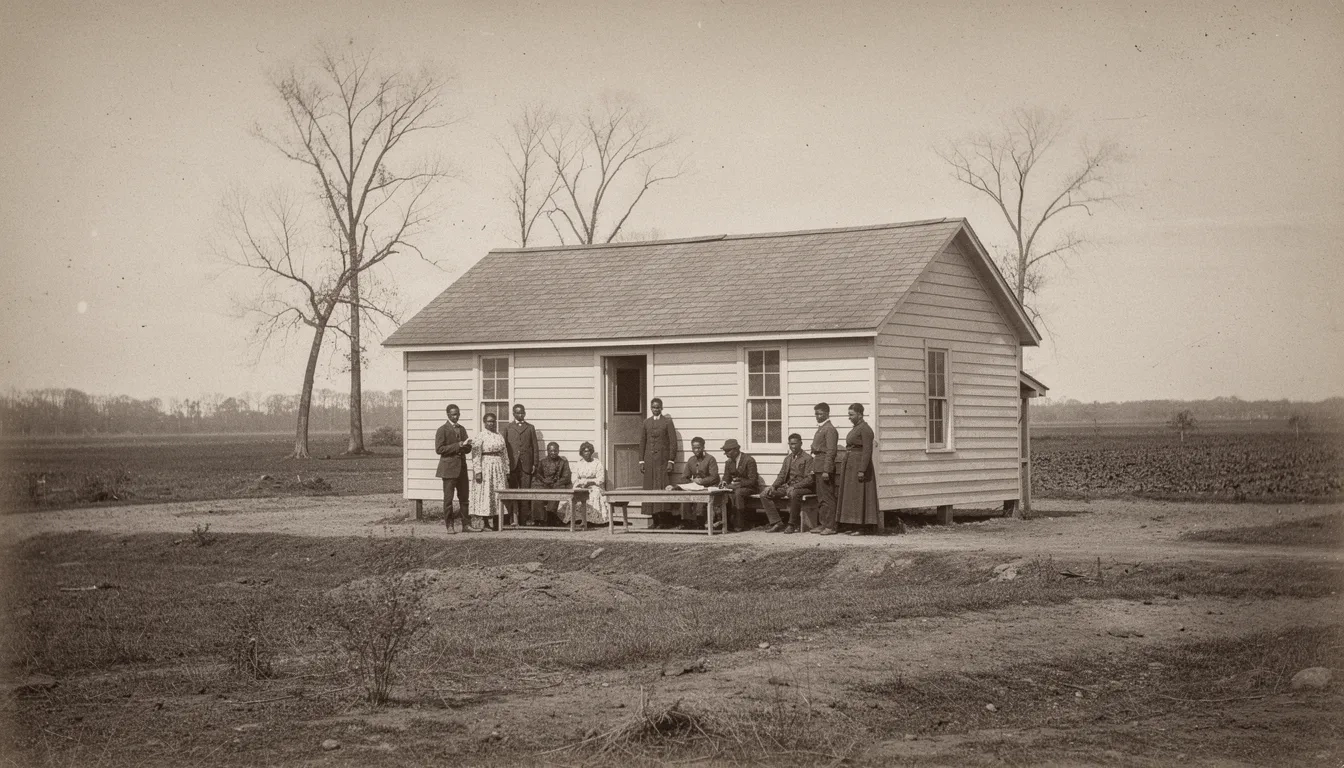
Booker T. Washington founded Tuskegee on July 4, 1881, as the Tuskegee Normal School for Colored Teachers. The date was almost certainly chosen deliberately. The original campus was a 100-acre plantation. Students didn't just study here — they constructed the buildings, earning trades as they earned degrees, which shaped the institution's philosophy for generations.
George Washington Carver joined the faculty in 1896 and spent nearly five decades developing agricultural research that transformed Southern farming. His work on peanuts, sweet potatoes, and soil restoration is still cited in agricultural science today, and the campus museum dedicated to his work draws visitors from across the country.
The physical campus carries its own historical weight. Robert Robinson Taylor — the first African American to graduate from MIT — designed Tuskegee's buildings. David Williston, the first professionally trained Black landscape architect in the United States, designed the grounds. Walking the campus means moving through what began as a plantation and became a National Historic Landmark, a designation the university has held since 1965.
The Tuskegee Airmen trained here during World War II, producing Black military aviators at a time when the U.S. military formally resisted integrating. In 1997, President Clinton traveled to this campus to apologize formally for the 40-year government syphilis experiment conducted on Black men in Macon County. The university responded by establishing the National Center for Bioethics in Research and Health Care — the first center of its kind devoted to medical ethics for underserved populations.
History isn't decorative at Tuskegee. It's embedded in the institution's values, programs, and sense of purpose.
The Academic Programs That Actually Set Tuskegee Apart
Let's be specific about what Tuskegee offers that you cannot get anywhere else in the HBCU system.
The College of Veterinary Medicine is the flagship differentiator. Dr. Frederick Douglass Patterson established the program in 1944 — the same year he co-founded the United Negro College Fund (UNCF), which tells you something about the ambition of that moment. The alumni record is striking: Dr. Erika Gibson (2001) became the first Black board-certified veterinary neurosurgeon in America. Dr. Ruby L. Perry (1977) became TUCVM's first female dean and the first Black woman to be board-certified by the American College of Veterinary Radiology. Doctors Diarra Blue, Aubrey Ross, and Michael Lavigne — all Tuskegee graduates — starred together in Animal Planet's The Vet Life, the first television program to feature three Black veterinarians running a full-service hospital.
Aerospace Engineering holds a second unique distinction. Tuskegee is the first and only HBCU to offer an ABET-accredited B.S. in Aerospace Engineering, and the program is the nation's top producer of African American aerospace engineers. ABET accreditation matters practically: it's the credential employers like NASA, Boeing, and Lockheed Martin verify before extending offers. Chemical, electrical, and mechanical engineering are all ABET-accredited too.
The full academic structure spans five colleges and two schools:
- College of Agriculture, Environment and Nutrition Sciences
- College of Arts and Sciences
- Andrew F. Brimmer College of Business and Information Science
- College of Engineering
- College of Veterinary Medicine, Nursing and Allied Health
- Robert R. Taylor School of Architecture and Construction Science
- School of Education
The architecture program runs as a five-year professional degree, fully accredited by the National Architectural Accrediting Board. Tuskegee's nursing program was the first baccalaureate nursing program in the state of Alabama, established in 1948. The university also offers 43 bachelor's degree programs, 17 master's programs, and 5 doctoral programs across these units.
One detail that doesn't get enough attention: Tuskegee is the only HBCU with a Space Force ROTC program. All four military branches are available on campus, but the Space Force addition creates a direct pipeline for students interested in aerospace or defense careers paired with military service.
What the Rankings Actually Tell You
Rankings are a blunt instrument. But read carefully, they reveal something real about Tuskegee.
"Tuskegee University Again Leads Social Mobility in U.S. News & World Report Rankings — No. 1 HBCU in the State of Alabama." — Tuskegee University, September 2025
Social mobility is where Tuskegee's story becomes genuinely compelling. In the 2026 U.S. News & World Report rankings, the university sits at #1 in social mobility among Regional Universities in the South. That metric measures how effectively a school converts students who entered college with limited financial resources into stable economic outcomes after graduation. For a school where 53% of undergraduates are classified as low-income, that ranking reflects real-world performance, not prestige signaling.
Here's the full ranking snapshot:
| Category | Ranking |
|---|---|
| Overall — Regional Universities South | #10 |
| Social Mobility — Regional Universities South | #1 |
| HBCUs Nationally | #4 |
| Most Innovative Schools (Regional South, tied) | #7 |
| Undergraduate Teaching (Regional South, tied) | #9 |
| Online MSW Programs in Alabama | #2 |
| #1 HBCU in Alabama | #1 |
The honest caveat: these are regional university rankings, not national ones. Tuskegee is not competing with Duke or Vanderbilt in these tiers. But within its actual peer group — small, regional, primarily undergraduate institutions — it sits in the top tier on the measures that predict student outcomes.
The financial picture is improving. The university's endowment reached $157 million in 2021. MacKenzie Scott donated $20 million in July 2020, described at the time as the largest single gift from a known donor in the school's history. An anonymous donor matched that amount in April 2024. Growing endowments translate to scholarships and facilities, and both of those directly affect student experience.
Current undergraduate tuition runs $25,386 for the 2025 academic year. The acceptance rate sits around 49% based on the most recent admission cycle data, making Tuskegee moderately selective.
Student Life: Inside the Golden Tiger Experience
The campus covers nearly 2,300 acres in Tuskegee, Alabama (a city of roughly 8,500 people), which means the university and the town are practically synonymous. No major city nearby. No sprawling off-campus nightlife district. What you get instead is an embedded, deeply campus-centered culture.
More than 100 student organizations span civic, professional, religious, and social categories. The Student Government Association carries real visibility on campus, and the Miss Tuskegee University pageant draws serious community engagement. Greek life operates through the National Pan-Hellenic Council — approximately 7% of men and 8% of women participate (standard proportions for an HBCU of this enrollment size).
The campus newspaper, television station, marching band, and choir groups provide cultural outlets that matter to daily campus rhythm. The Kellogg Hotel and Conference Center on campus is one of only 11 such centers in the world, and the only one located at an HBCU. External speakers, conferences, and professional events flow through here regularly, giving students unusual networking exposure for a school of Tuskegee's size.
Student reviews are consistent about a few friction points: aging residence halls, limited dining variety, and the rural location's impact on weekend options. If you're coming from Atlanta or Chicago, the adjustment is real. But students who chose Tuskegee for its culture and history tend to describe the intimacy as a feature rather than a bug.
It's worth knowing that a mass shooting on campus in November 2024 led the university to end its longstanding open campus policy. Mark Brown, who became president in May 2024 as the first Tuskegee alumnus (Class of 1986) to hold that role, has made campus safety a central institutional priority. Prospective students and families should ask specifically about current security infrastructure during campus visits.
Athletics, Traditions, and That HBCU Energy
Tuskegee competes in NCAA Division II within the Southern Intercollegiate Athletic Conference. The Golden Tigers have won 29 SIAC football championships — a remarkable number for a school with roughly 3,100 total students. The men's basketball team won the 2014 NCAA Division II regional championship.
Men's varsity sports include:
- Football, basketball, baseball
- Track and field, cross country
- Tennis, golf
Women's varsity sports include:
- Basketball, softball, volleyball
- Track and field, cross country
- Tennis, soccer
Homecoming is the main event on the annual calendar. Like most HBCUs, Tuskegee's homecoming week is an immersive cultural experience: the marching band, step shows, Greek organization strolls, the football game, and alumni flooding back to campus from across the country. Students consistently rank homecoming among their most defining college memories. Other traditions include the Choir Christmas Concert and Scholarship Night — rituals that carry a school's identity from one generation of students to the next.
Who Should Seriously Consider Tuskegee
Not every school is right for every student. Here's a straightforward way to think about fit:
Tuskegee is a strong match if you:
- Want to pursue veterinary medicine and want the deepest HBCU pipeline in the country
- Are interested in aerospace, chemical, or electrical engineering and value both ABET accreditation and an HBCU environment
- Come from a lower-income background and want a school with a proven, data-backed track record of economic mobility
- Want HBCU culture, historical depth, and a tight-knit campus community over urban proximity
- Are considering military service and want access to all four ROTC branches, including Space Force
Think carefully if you:
- Need regular access to a major city (Tuskegee is rural; a car is close to mandatory)
- Are looking for a large research university with broad graduate programs
- Prioritize national brand-name rankings over outcomes-based measures
My honest read: the social mobility #1 ranking is more meaningful than the #10 overall. Schools that move first-generation, low-income students into real economic stability after graduation are doing something harder and more valuable than schools that admit students who were already likely to succeed. Tuskegee has spent 144 years building that capacity. The data confirms it still works.
Bottom Line
- Veterinary medicine students have one clear HBCU choice: Tuskegee. The program trained 75% of Black veterinarians in America. That alumni network and professional pipeline are unmatched.
- Engineering and aerospace students get ABET-accredited degrees, the nation's top producer designation for Black aerospace engineers, and the only HBCU Space Force ROTC option.
- The #1 social mobility ranking isn't marketing. It's outcome data showing Tuskegee moves low-income students into economic stability at the highest rate among Southern regional universities.
- Visit campus, talk to current students about the rural setting and residence hall conditions, and ask directly about security updates since the 2024 policy change. Go in with clear eyes — the history and mission are genuine, and so are the trade-offs.
Frequently Asked Questions
Is Tuskegee University a good school for engineering?
Yes, with a specific caveat: the engineering programs are ABET-accredited across aerospace, chemical, electrical, and mechanical disciplines, which satisfies the baseline requirement for most engineering employers. Tuskegee is the nation's top producer of African American aerospace engineers. If your goal is to enter a major defense or aerospace firm while graduating from an HBCU, it's one of the strongest options available.
What GPA and test scores do you need to get into Tuskegee University?
The most recent data puts the acceptance rate around 49%, making it moderately selective. The university uses a holistic review process. For current GPA and test score ranges, checking directly with the Tuskegee admissions office is the most reliable approach, since institutional targets shift year to year based on application volume.
Is Tuskegee University expensive?
Undergraduate tuition for 2025 is $25,386 annually. That's below the sticker price of many private universities but above some peer HBCUs. Given that 53% of students are classified as low-income and the school ranks #1 in social mobility, financial aid packaging tends to be meaningful. The net cost after aid is frequently lower than the sticker price suggests.
What is Tuskegee University's biggest academic program?
The College of Veterinary Medicine is the most historically significant and professionally unique program. But by enrollment, the College of Engineering and the College of Arts and Sciences serve the largest student populations. Business (through the Andrew F. Brimmer College) and education are also well-populated majors.
Is Tuskegee University safe?
The November 2024 mass shooting on campus was a significant event, after which the university ended its open campus policy and increased security measures. President Mark Brown has made safety infrastructure a stated priority. Prospective students should ask specifically about current protocols during campus visits rather than relying on pre-2025 information.
What's the difference between Tuskegee University and other HBCUs?
Several things set Tuskegee apart structurally: it's the only HBCU with a veterinary medicine doctoral program, the only HBCU with an ABET-accredited aerospace engineering degree, and the only HBCU with a Space Force ROTC program. It also carries National Historic Landmark status and a physical campus history that connects directly to the Tuskegee Airmen and George Washington Carver's research legacy.
Sources
- Tuskegee University Again Leads Social Mobility in U.S. News & World Report Rankings
- Tuskegee University - Wikipedia
- Black Legacy in Veterinary Medicine: The Tuskegee University College of Veterinary Medicine
- Student Life and Development | Tuskegee University
- Tuskegee University's Online Master of Social Work Program Ranked No. 2 in Alabama
- Tuskegee University Tuition and Costs