Universities With the Best Career Services in 2026
Entry-level job postings dropped by more than 30% between 2022 and 2025, and AI began absorbing roles that used to reliably absorb new graduates. Against that backdrop, the career center at your college shifted from a mostly ignored office to something that can meaningfully change what your first two years after graduation look like. The schools that figured this out early built real infrastructure. The rest still host a job fair twice a year and call it done.
Two Very Different Ways to Rank Career Services
Before naming schools, you need to understand that the two most-cited ranking systems measure entirely different things — and conflating them leads to picking schools for the wrong reasons.
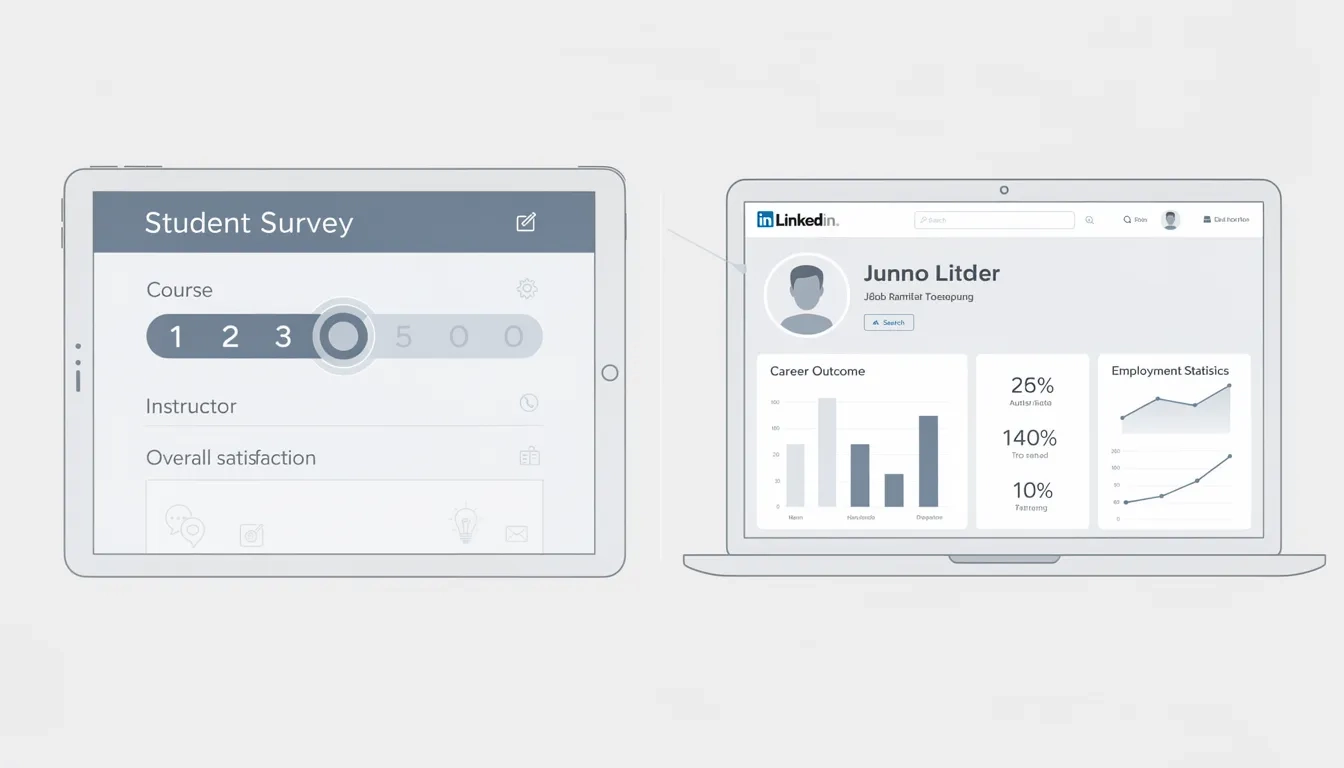
Princeton Review's 2026 Best Colleges survey is based purely on student opinion. The organization gathered responses from approximately 435 students per school across 391 institutions, totaling over 170,000 respondents, then ranked schools on how satisfied students felt with career support. So Princeton Review tells you: do students feel well-served? That's a meaningful signal, partly because students who feel supported actually use the services.
LinkedIn's Top Colleges 2025 did something structurally different. The platform analyzed data from 50 million alumni profiles, tracking five measurable pillars: job placement within one year of graduation, undergraduate internship completion rates and recruiter demand, long-term career success (C-suite attainment and entrepreneurship), alumni network strength, and knowledge breadth across fields.
A school can rank high on one list and not appear on the other at all. For someone choosing a school, the smarter approach is to use both. Princeton Review captures what the experience feels like from inside. LinkedIn captures what happens after you leave.
Princeton Review's 2026 Student-Satisfaction Leaders
Here's the top five, based entirely on what students reported:
- Bentley University — Waltham, MA (4,526 enrolled)
- Denison University — Granville, OH (2,394 enrolled)
- Washington and Lee University — Lexington, VA (1,886 enrolled)
- Wabash College — Crawfordsville, IN (897 enrolled)
- Claremont McKenna College — Claremont, CA (1,378 enrolled)
None of these are Ivy League schools. Wabash has fewer than 900 students and still outranks every flagship state university in the country for student satisfaction with career services.
The pattern is consistent: smaller schools outperform larger ones on student satisfaction because they run higher career-staff-to-student ratios. At Wabash, virtually every student knows someone at the career center personally. That kind of relationship isn't possible at a school with 30,000 undergraduates, where most students don't set foot in the career center until senior year panic sets in.
Northeastern University (#17 on this same list) stands out as a notable exception for a mid-size school. Its co-op program places students in six-month, full-time paid work rotations, alternating with academic semesters. Students typically complete two or three co-ops, graduating with up to 18 months of professional experience on their resumes.
That's structurally different from a summer internship. Most Northeastern co-op students receive full-time offers from host employers before finishing their final semester.
What LinkedIn's Outcomes Data Actually Shows
Here's where the results diverge sharply from the satisfaction list:
| Rank | School | Notable Strength |
|---|---|---|
| 1 | Princeton University | Network strength + leadership pipeline |
| 2 | Duke University | Placement rates + leadership advancement |
| 3 | University of Pennsylvania | Wharton finance pipeline |
| 4 | MIT | Engineering placement + entrepreneurship |
| 5 | Cornell University | Diverse field outcomes |
| 6 | Harvard University | Alumni network density |
| 7 | Babson College | Highest entrepreneurship rate nationally |
| 8 | University of Notre Dame | Placement + alumni loyalty |
| 9 | Dartmouth College | MBA pipeline |
| 10 | Stanford University | Tech placement; CS median salary $130k |
| 15 | Bentley University | Recruiter demand + internship rates |
| 20 | Carnegie Mellon University | CS and AI placement |
Bentley appears on both major lists. That's rare and meaningful. It's one of very few schools that scores high on what students feel AND what graduates actually achieve in measurable terms.
Babson College's #7 placement reflects its singular focus on entrepreneurship. According to LinkedIn's alumni data, no school in the country produces a higher rate of founders among its graduates. If you're planning to start something rather than join something, that's a relevant data point most rankings ignore entirely.
Stanford's computer science graduates earn a median starting salary of $130,000. That figure sits at the top across any major at any institution, and it reflects both Stanford's employer relationships and the degree's outsized signal value in the tech industry.
Schools That Don't Make Headlines But Deliver Results
Some of the most compelling career outcomes data comes from schools outside the spotlight.
Bucknell University reported that 93% of its class of 2024 secured career opportunities within nine months of graduation, with an average starting salary of $73,075 (pulled directly from their first-destination survey). Plenty of far more famous schools don't publish this kind of data at all, which itself tells you something about accountability.
Howard University earned the top HBCU ranking in LinkedIn's methodology and cracked the broader top 50 overall. Howard's alumni network concentration in government, policy, and media is unmatched among HBCUs, and LinkedIn's data shows Howard graduates advancing to leadership faster than most comparable institutions.
Arizona State University surprises people. Its job placement rate sits above 96%, ahead of UCLA and the University of Michigan in some metrics. ASU's scale gives it employer partnership breadth that smaller schools simply cannot replicate, with more than 600 companies actively recruiting on campus in recent years.
The University of Chicago (not in LinkedIn's top 20, but worth flagging) funds over 1,300 paid undergraduate internships annually through its own programs. Not a job board. Actual stipends for students to gain real work experience.
What the Best Career Centers Actually Do Differently
The gap between a mediocre career center and a great one isn't about the office or the website. It's about structure and timing.
The best career development colleges introduce students to career services in their first year and push active engagement throughout — not just in the panicked final semester before graduation.
Top career centers share several concrete operational features:
- First-year integration. Career exploration is woven into advising from day one, not offered as an optional senior workshop.
- Industry-specific staff. Top centers hire advisors who came from finance, healthcare, or tech — not generalists advising everyone on everything.
- Employer co-design. A growing 2026 trend: companies helping shape what career preparation looks like, rather than just showing up for annual recruiting days.
- Funded access. Internship grants, professional attire programs (Bentley's Career Closet is a real example), and conference travel funding remove barriers that disproportionately affect first-generation students.
- Published outcome data. Schools that release first-destination survey results within six months of graduation are held accountable. Schools that don't publish this data often have something to avoid disclosing.
How to Evaluate Career Services Before You Enroll
If you're choosing between schools right now, here's a decision framework that cuts through the marketing materials:
Step 1: Find the first-destination survey. Every serious school publishes what percentage of the most recent graduating class was employed or in graduate school within six months. If they won't release this, ask why. If they still won't say, treat that as a red flag.
Step 2: Look at staff structure. Does the career center have industry-specific advisors? A school with one generalist counselor for 3,000 students is not comparable to one with twelve advisors who came from specific sectors. Ask who the advisors are and what their backgrounds look like.
Step 3: Ask about employer access. Not "do you have a job fair" but "how many unique employers posted jobs on your platform in the last academic year, and what roles do they typically fill?" This question separates schools that can answer from schools that can't.
Step 4: Assess when engagement starts. Ask how the career center interacts with freshmen. Schools with mandatory career exploration in year one produce structurally different outcomes than schools offering optional services only when students panic.
Step 5: Search LinkedIn yourself. Look up alumni from any school you're seriously considering, filter for people who graduated five to seven years ago, and see where they work now. This is roughly the same methodology LinkedIn uses for its official rankings — and it takes about 20 minutes per school.
My honest take: prestige and outcomes correlate, but imperfectly. A student who actively uses Wabash College's career center will often outperform a peer who ignores Cornell's. The resources only matter when you actually engage with them. Pick a school where the services exist and are visible, then show up early.
Bottom Line
- Use both ranking systems. Princeton Review's 2026 list tells you how students feel about career support. LinkedIn's Top Colleges 2025 tells you what graduates actually achieved. Neither is complete on its own.
- Small schools punch above their weight. Bentley, Denison, Wabash, and Washington and Lee beat far more famous schools on both satisfaction and outcomes. Smaller staff-to-student ratios are a genuine structural advantage.
- Demand specific numbers. First-destination employment rate, average starting salary by field, and the number of unique recruiting employers are the three figures that matter most. Ask for all three from any school you're seriously weighing.
- Start using career services sophomore year. No career center, however well-funded, rescues a student who shows up two months before graduation. Students who begin building their professional network in year two are the ones who benefit most from even average career services.
The schools on this list built real infrastructure. The rest is up to you.
Frequently Asked Questions
Is the Princeton Review career services ranking based on actual job placement data?
No. Princeton Review's rankings are based entirely on student satisfaction surveys. They measure how current students feel about career resources, not whether graduates land jobs. That's why the list looks so different from LinkedIn's outcomes-based rankings, which track what alumni actually achieved over a five-year window.
Do Ivy League schools have the best career services?
Not according to student surveys. No Ivy League school appears in Princeton Review's top five for 2026, and Harvard and Yale don't crack the top ten in that category. Elite brand recognition attracts employers regardless of how the career center actually operates, which can mask mediocre services behind a prestigious name. Schools like Bentley and Wabash consistently outrank them on student satisfaction.
What's the single most important metric to look for in a college career center?
First-destination survey data, published and verifiable. Any school worth considering should release employment and graduate school enrollment rates for the most recent graduating class using National Association of Colleges and Employers (NACE) methodology. If a school can't or won't provide this breakdown, treat the absence of data as data.
How is Northeastern's co-op program different from a standard summer internship?
A standard internship runs 10 to 12 weeks, is often self-sourced by the student, and is typically unpaid or nominally compensated. Northeastern's co-op is six months, full-time, paid, and managed through formal employer relationships that the university maintains. Students complete two or three rotations and graduate with up to 18 months of full-time professional experience. Most Northeastern co-op students receive full-time offers before their final semester ends.
Can a student at a school with weak career services still get strong career outcomes?
Yes, but it requires considerably more independent effort. Building an alumni network on LinkedIn, sourcing internships through cold outreach, and creating your own mentorship relationships can compensate for an underfunded career center. The structural advantages that top centers provide (dedicated employer pipelines, funded internships, industry-specific advisors) are genuinely harder to replicate on your own — but driven students regularly close the gap.
Sources
- Best Colleges for Career Services | The Princeton Review
- LinkedIn Top Colleges 2025: 50 Best for Long-Term Career Success
- Top Colleges with Exceptional Career Services – 2026 Rankings | Colleges of Distinction
- Princeton Review's 2026 Best Colleges: Career Services Rankings | Poets&Quants
- Gen Z, Useless Degrees, and LinkedIn's Best Colleges for Career Success | Fortune
- Top US Colleges with Best Job Placement Rates: 2026 Rankings | BestJobSearchApps