UT Austin: What the Rankings Miss and What Students Actually Experience
Every year, Texas high school seniors spend months agonizing over one question: is UT Austin actually worth the fight to get in? And every year, more of them decide it is. For the 2025-2026 application cycle, UT received 90,690 first-year applications — a 22% jump from the prior year — making it one of the fastest-growing applicant pools in American public education. That's not noise. Something real is happening at 40 Acres.
The school occupies a strange position in the higher ed landscape. Too large to feel intimate, too strong academically to dismiss as a fallback option, and too Texas-specific to behave like a typical national flagship. Understanding what UT Austin really is requires looking past the headline ranking.
What the Rankings Actually Tell You
UT Austin holds the #7 spot among public universities nationally in U.S. News & World Report's 2026 Best Colleges rankings, and #30 overall when measured against public and private institutions together. That headline number gets cited in every admissions guide. The program-level data is more revealing.
Of the 37 undergraduate programs U.S. News evaluated, 24 rank in the top 10 nationally. Accounting lands at #2. Petroleum Engineering at #2. Marketing at #3. Finance at #5. Chemical Engineering at #5. That's not one strong school propping up the university average — it's real depth across business and engineering.
76 total graduate and undergraduate programs rank in the top 10, according to UT Austin's April 2026 U.S. News update. Three graduate specialties hold the #1 national ranking: Information Systems, Petroleum Engineering, and emerging computational science fields. Graduate rankings strengthened further in 2026, which signals that research investment and faculty quality are on an upward trajectory.
The Manhattan Institute's 2025 college rankings placed UT Austin at #2 nationally, right behind MIT, using metrics weighted toward graduate earnings and economic mobility. That methodology is a harder test than peer reputation surveys — and UT passed it.
The retention and graduation data is worth pausing on too. The four-year graduation rate hit 75.7% in 2025, a record. First-year retention came in at 97.1%, also a record. When 97 out of 100 freshmen come back for sophomore year, it's a strong signal that the experience holds up once students actually arrive.
The Acceptance Rate: One Number, Two Very Different Realities
UT Austin's overall acceptance rate of 26.6% for the 2024-2025 cycle sounds moderate. Manageable, even. But that single number is doing a lot of work to hide the real picture.
Texas law requires that at least 90% of each incoming class be Texas residents. That's not a preference or a soft policy — it's a statutory requirement that reshapes how admissions actually functions.
| Applicant Type | Applications | Acceptance Rate (2024-25) |
|---|---|---|
| Overall | 72,885 | 26.6% |
| Texas Residents | ~49,870 | ~41% |
| Out-of-State | 23,015 | ~10% |
| Transfer | 10,055 | 22.5% |
For Texas students, UT is selective but realistic. For anyone applying from outside the state, it's effectively an elite university — rejection rates comparable to schools most people would call reaches by default.
Application volume has surged dramatically. The 2025-2026 cycle brought in 90,690 first-year applications, up from 72,885 the prior year. Part of that growth came from UT joining the Common App platform, which made it trivially easy for out-of-state students to add UT to their list. More applicants, same number of seats, lower acceptance rate. The writing was on the wall even before the numbers came in.
Transfer applicants are feeling the squeeze too. The transfer acceptance rate dropped from 33.8% in 2022-2023 to 22.5% in 2024-2025 as applications jumped 28% in a single cycle. The side door is narrowing.
How UT Austin Actually Evaluates Applicants
The Texas Top 5% Rule is the most distinctive feature of UT's admissions process — and the most misunderstood by families outside Texas. Any Texas high school student graduating in the top 5% of their class receives automatic admission. No essay review, no scoring, no uncertainty. Just class rank. This is a legal mandate, not a preference.
The threshold has tightened steadily over the years: 7% in 2019, then 6%, and now 5% for students entering Fall 2026. UT is managing yield from the automatic pool as application volumes keep climbing.
For everyone else — students outside the top 5%, out-of-state applicants, and transfers — UT uses a full review process that weighs:
- Academic transcript and course rigor (the heaviest factor in the evaluation)
- Standardized test scores — now required; UT ended its test-optional policy as of the 2025-2026 cycle
- Two required essays plus optional short answers
- Extracurricular involvement and demonstrated leadership
- Community and school context, including resource access and family background
The return of test requirements is the biggest recent policy shift. The middle 50% of admitted students scored between 1,230 and 1,490 on the SAT, with the average near 1,360. Average admitted GPA sits around 3.83.
One misconception worth clearing up: many applicants assume that hitting the average SAT score is sufficient. It isn't. UT evaluates scores in context — a 1,350 from a student at an underfunded rural Texas school reads differently than the same number from a well-resourced prep school. The admissions office has stated explicitly that socioeconomic context shapes how scores are interpreted. Bringing above-average scores from rigorous coursework is the actual target.
Academic Life: The Programs Worth Going For
The McCombs School of Business is the most recognizable talent pipeline for Texas finance, consulting, and tech hiring. Accounting ranked #2 nationally is not coincidental — the program runs structured recruiting pipelines into the Big 4 accounting firms and competes directly with NYU Stern for regional placements. But prospective students need to understand something clearly: admission to UT is not admission to McCombs. Internal admission requires a separate application with a selective acceptance rate. Students who miss the initial cut often enter through Business Foundations and apply again after their first year.
The Cockrell School of Engineering follows the same logic. Petroleum Engineering and Chemical Engineering sit in the top 5 nationally. The Computer Science program has been rising fast (AI and CS Theory both rank top 10 at the graduate level), and Austin's tech corridor gives it tangible career advantages. Apple, Dell, Oracle, and Tesla all maintain large Austin campuses — internship access here is better than at most comparable CS programs in the country.
What applicants consistently underestimate about UT's scale is how it creates both opportunity and anonymity (sometimes simultaneously). With roughly 40,916 undergraduates as of 2024-2025, the university has nearly every resource imaginable: specialized research centers, honors programs, undergraduate research fellowships, language labs. But those resources don't come to you. UT rewards students who actively seek them out in a way that smaller schools can't force you to learn until later.
Student Life: What 40 Acres Actually Feels Like
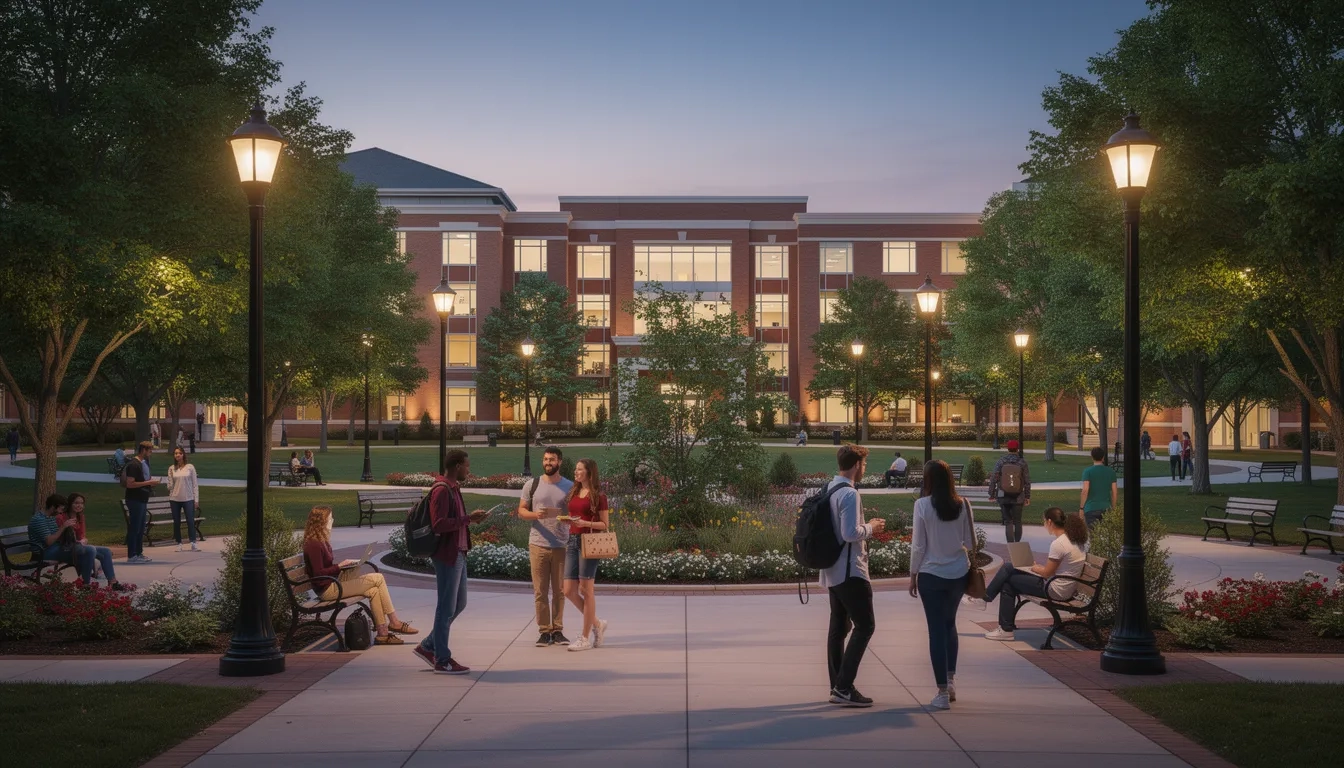
Over 1,000 student organizations operate at UT Austin. The Daily Texan — the student newspaper founded in 1900 — is one of the largest college papers in the country and has launched careers at national outlets. Campus Events + Entertainment, a student-run programming organization, handles concerts, speaker series, and cultural events throughout the year. There are 60+ Greek organizations, hundreds of intramural and club sports leagues, and an outdoor adventure program that runs trips to places most students wouldn't find on their own.
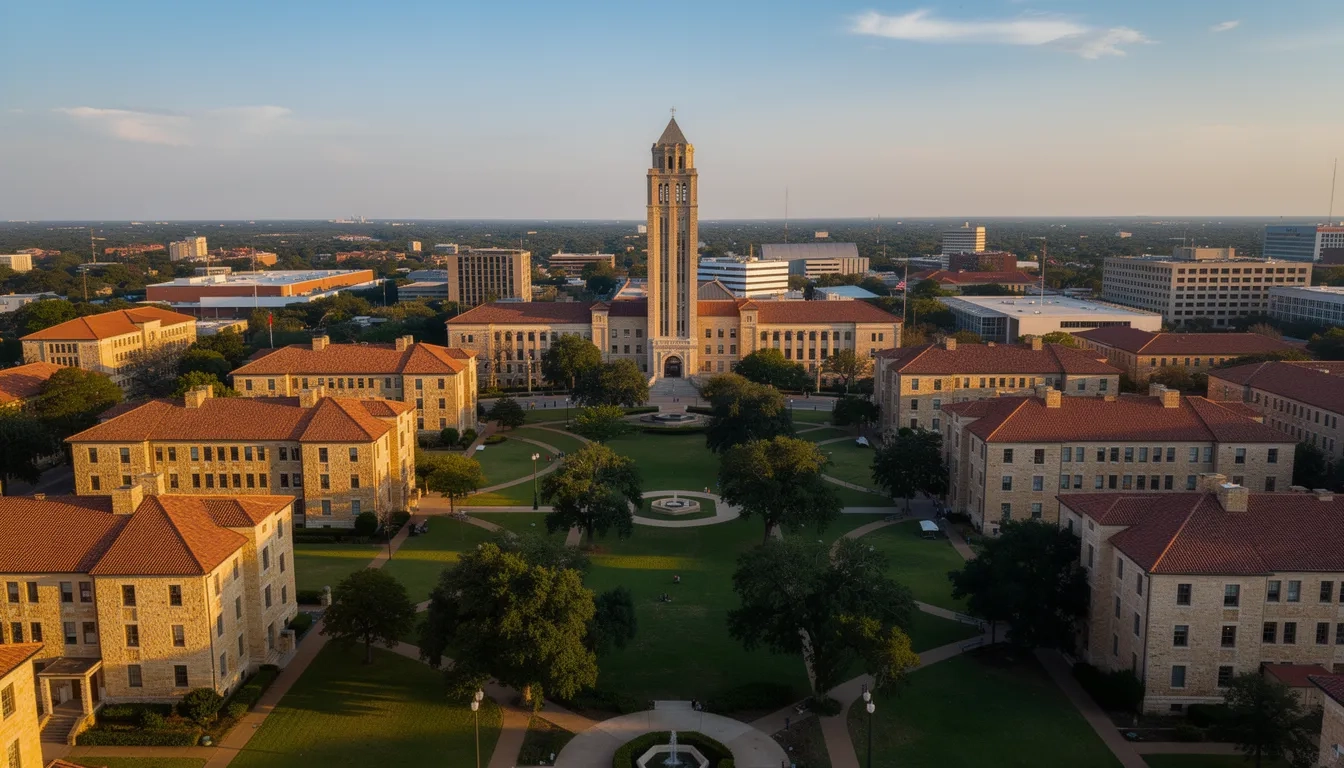
Football culture operates at a different scale here. Darrell K Royal–Texas Memorial Stadium holds 100,119 people, one of the largest stadiums in the Western Hemisphere. UT's move to the SEC in 2024 raised the competitive stakes further and added national-spotlight games to the fall calendar. On home Saturdays, the 423-acre campus doesn't just have school spirit — it transforms entirely.
The Austin location is a genuine differentiator, not just a bullet point admissions counselors use. Barton Springs, a natural spring-fed swimming pool that stays at 68 degrees year-round, is three miles from campus. The live music scene along Red River Street is embedded into how students spend weekends. The broader tech hiring market — Austin has attracted major corporate relocations every year since 2020 — means career networking doesn't require flying to a different city.
Housing deserves real attention. On-campus dorms serve freshmen but aren't guaranteed beyond that. Most upperclassmen live in West Campus, the dense apartment district directly adjacent to the university. Rents have risen sharply since 2020; a standard one-bedroom near campus runs $1,400 to $2,100 per month and should be factored into any serious cost comparison.
Cost and the Value Argument
In-state tuition and fees run approximately $11,752 per year for 2025-2026. Total cost of attendance, including room and meals, lands between $24,998 and $35,386 depending on housing choices. Out-of-state students face $64,204 to $72,916 all-in — pricing that puts UT in the same tier as many private universities, but without the same financial aid pools.
The Texas Advance Commitment program reshapes the in-state calculation. More than 12,000 current undergraduates attend UT Austin tuition-free through the program, which covers full tuition for Texas residents from families with household incomes up to $100,000 per year. Partial grants extend to families earning between $100,000 and $175,000.
My honest read: for a Texas resident who qualifies for the Advance Commitment and gains admission to McCombs, Cockrell, or the natural sciences programs, UT Austin is one of the strongest value propositions in American public higher education. Top-10 program quality at near-zero tuition is an offer most states can't replicate. For out-of-state students paying full price, the academic outcomes still hold up for nationally ranked programs — but the financial calculus requires genuine scrutiny before committing.
Bottom Line
- Texas residents in the top 5% of their high school class receive automatic admission. If you're borderline, finishing strong academically is the most reliable path in.
- Out-of-state applicants should treat UT as a reach. The ~10% acceptance rate is real, and financial aid is limited compared to private schools at similar cost.
- SAT/ACT is now required. Target 1,350+ to be competitive. Context matters, but submit a strong score.
- McCombs and Cockrell are not automatic upon UT admission — research their internal application requirements before committing to UT as your plan.
- For Texas middle-income families, the combination of top-10 program rankings and the Texas Advance Commitment makes UT one of the most financially defensible college choices available. Take that seriously when weighing your options.
Frequently Asked Questions
Is UT Austin hard to get into for Texas residents?
The in-state acceptance rate sits around 41%, which puts UT in the "selective but accessible" range for Texas students — harder than Texas A&M or Texas Tech, but far less competitive than the overall rate suggests. Students graduating in the top 5% of their high school class receive automatic admission, bypassing the full review entirely.
What SAT score do I need for UT Austin?
SAT and ACT scores are now required for all applicants starting with the 2025-2026 cycle. The middle 50% of admitted students scored between 1,230 and 1,490. Scores above 1,400 are competitive, but UT weighs them alongside course rigor, essays, and community context — a high score alone doesn't guarantee admission to selective programs like McCombs or Cockrell.
Does automatic admission to UT guarantee entry into McCombs or engineering?
No — and this is one of the most widespread misconceptions in Texas college counseling. The Top 5% automatic admission gets you into the university, not a specific school or major. McCombs Business and the Cockrell School of Engineering have separate, selective internal admission processes. Many students enter through a general major and apply internally after their first year on campus.
Is UT Austin worth it for out-of-state students?
For highly ranked programs like Petroleum Engineering, Accounting, or Computer Science, the academic quality is genuine. But at $64,000–$72,000 per year in total attendance costs with limited financial aid, out-of-state students should compare offers from similarly ranked schools before deciding. The ~10% acceptance rate also makes UT an unreliable anchor in any application strategy.
How does the Texas Advance Commitment work in practice?
The program covers full tuition for Texas residents from households earning up to $100,000 annually. Partial grants apply for families earning between $100,000 and $175,000. Over 12,000 current students attend UT tuition-free through it. Students must be Texas residents, enrolled full-time, and file a FAFSA each year to remain eligible. The award renews annually if income and enrollment requirements are met.
What distinguishes UT Austin from other large public universities?
The combination of Austin's city culture, a now-SEC-level athletics program, and genuinely strong program-level rankings in business and engineering sets UT apart from most comparably-sized flagships. The direct pipeline into Austin's tech and finance sector — which has grown substantially since 2020 — gives students geographic leverage that most public universities outside California can't match. And the campus identity itself, from the Tower to Longhorn football, carries an unusual amount of cultural weight for a public institution.