Virginia Tech Rankings, Programs, and the Real Student Experience
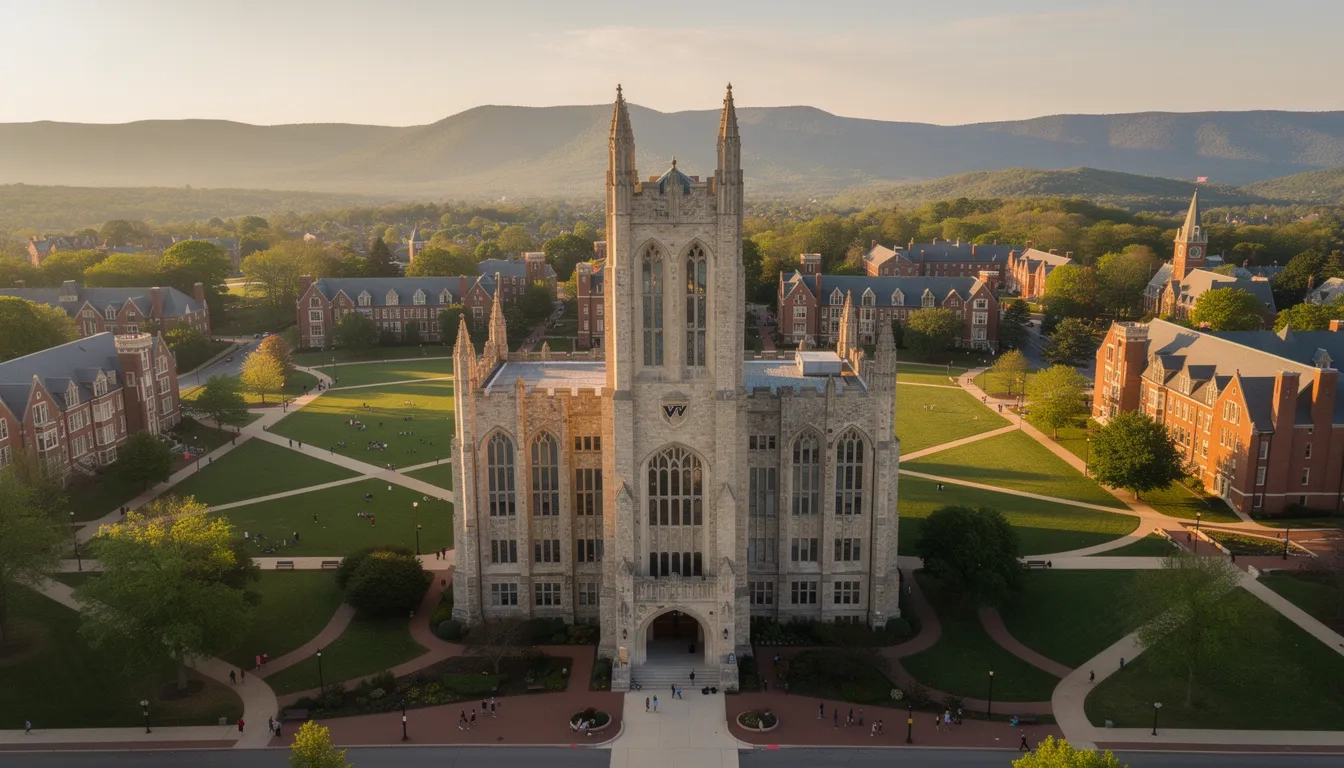
Sixty-six thousand fans inside Lane Stadium on a Saturday in Blacksburg. The first note of Metallica's "Enter Sandman" hits the speakers — and the synchronized jumping is so intense that seismographs nearby actually register the vibration. Twenty-five years of that tradition, and it still appears on every credible "best college atmospheres" list published.
Virginia Tech is many things at once. A research university on a genuine upward climb. A football school with real soul. An engineering powerhouse that still surprises people who haven't looked closely. If you're trying to figure out whether VT belongs on your college list, the picture is more interesting than the brochure suggests.
Where Virginia Tech Actually Stands in 2026
The numbers first. U.S. News & World Report's 2026 edition placed VT tied for No. 51 among national universities and tied for No. 21 among public schools. The Wall Street Journal/College Pulse ranking — which weights graduate outcomes and return on investment more heavily than raw selectivity — put it at No. 13 among all U.S. public universities. Globally, QS placed VT at No. 358 in 2026, up from No. 389 the year before.
| Ranking System | Virginia Tech Position |
|---|---|
| U.S. News National Universities (2026) | #51 (tied) |
| U.S. News Top Public Schools (2026) | #21 (tied) |
| Wall Street Journal / College Pulse Public (2026) | #13 |
| QS World University Rankings (2026) | #358 globally |
| Times Higher Education U.S. (2025) | ~#63 |
The trajectory matters here. Three years ago, Virginia Tech sat near No. 75 in U.S. News' national list. Getting to No. 51 — and No. 13 on a ranking that emphasizes what actually happens to graduates — isn't a statistics game. It reflects real improvement in research output, faculty depth, and post-graduation outcomes. The school is moving in one direction.
Engineering: Where Virginia Tech Is Genuinely Elite
No beating around the bush: Virginia Tech's College of Engineering belongs in the national conversation. Undergraduate programs tied for No. 14 nationally among schools offering a Ph.D. option (a peer group that includes Georgia Tech, Purdue, and the University of Michigan).
Go program by program and the picture sharpens:
- Industrial and Systems Engineering (undergrad): Tied for No. 6 nationally
- Environmental Engineering (graduate): No. 5 nationally
- Civil Engineering (graduate): No. 8 nationally
- Industrial/Systems/Manufacturing Engineering (graduate): No. 9 nationally
- Biological/Agricultural Engineering (graduate): No. 10 nationally
- Aerospace Engineering (graduate): No. 13 nationally
- Computer Science (undergrad): Tied for No. 25, up four spots from the prior year
Nine of the College of Engineering's graduate programs landed in the U.S. News top 25 in 2026. Nine.
The underrated story here is industrial and systems engineering. Most applicants chase computer science or mechanical engineering by brand familiarity. But VT's ISE program at No. 6 nationally consistently beats programs at schools with far bigger name recognition. For anyone targeting supply chain, operations research, or manufacturing optimization, that ranking is a serious credential that the school doesn't market loudly enough.
Programs Beyond the Engineering Building
Virginia Tech's strength doesn't stop at one college — and that's the part prospective students outside engineering tend to miss.
Veterinary Medicine landed at No. 18 nationally in 2026, the highest the Virginia-Maryland College of Veterinary Medicine has ever ranked. This program competes directly against Cornell and UC Davis. Worth knowing if vet school is anywhere on your radar.
Architecture and Design: The College of Architecture, Arts, and Design serves around 1,685 undergraduate students with a 9:1 student-to-faculty ratio. Its architecture program ranked No. 16 in America (Niche, 2025), industrial design at No. 14 nationally (College Factual, 2025), and it holds the top spot in Virginia for both graphic design and interior design.
Business: The Pamplin College of Business undergraduate programs sit tied for No. 51 nationally in U.S. News. More telling: the Evening MBA program jumped 19 spots to tied No. 33 — a move that suggests the graduate business programs are strengthening faster than the undergraduate rankings reflect.
The honest read: Virginia Tech isn't a place where one flagship college carries the whole institution. The engineering brand is strongest, but there's real program depth that non-engineering applicants should investigate before assuming VT is only worth considering if they want to build bridges.
What It Actually Costs to Attend
In-state students should budget approximately $39,670 total (tuition, fees, room, board, and personal expenses) for 2025-2026. Out-of-state students face roughly $61,486 for the same year. For 2026-27, in-state tuition and mandatory fees rise to $17,087 annually, and out-of-state reaches $40,180.
On-campus housing rates for the 2025-2026 academic year:
| Room Type | Cost per Semester |
|---|---|
| Non-air-conditioned, multiple occupancy (Category A) | $3,516 |
| Air-conditioned, multiple occupancy (Category B) | $4,822 |
| Air-conditioned, single occupancy (Category C) | $6,519 |
Dining plans run $2,934 to $3,368 per semester, required for on-campus residents. Virginia Tech Dining earned a second-place national ranking for campus food quality at public universities in 2026, so the mandatory plan isn't as grim as it sounds at most schools.
The financial aid picture is solid. Virginia Tech distributed $222 million in grants and scholarships last fiscal year. About 52% of enrolled students receive some award, with an average of $10,993. The Funds for the Future program protects returning students with family incomes under $115,000 from future tuition and fee increases — a real commitment that's worth understanding before comparing sticker prices at competing schools.
Student Life: What Blacksburg Looks Like Day-to-Day
Blacksburg is small. About 45,000 people total, and the university accounts for most of the energy. Students from major metro areas sometimes feel the adjustment at first. Most come to love it — the town wraps entirely around campus, the Blue Ridge Mountains sit close enough for weekend hiking, and the contained geography creates the kind of tight-knit community that big urban campuses often struggle to manufacture.
600+ clubs and organizations are accessible through GobblerConnect, ranging from competitive robotics teams to cultural groups to the Hokie Activities Board (which runs campus-wide programming throughout the year). Gobblerfest, the annual organization fair during orientation, has a strong reputation among large state schools for helping incoming students actually find their niche rather than just signing up for things they'll never attend.
VT's First-Year Experience program takes a different approach than most universities. Instead of a generic University 101 course (the kind that covers "how to use the library" for an entire semester), the program embeds itself within each academic college and major. Around 500 peer educators, supported by stipends through grant funding, mentor incoming students in their specific academic context. Small structural difference; meaningful impact on how quickly first-years find their footing in a school of 30,000+.
97% of students across multiple surveys report feeling safe on campus. That number holds consistently.
The Traditions That Define Hokie Culture
The measure of a real tradition isn't how old it is — it's whether students who graduated 20 years ago and students arriving this fall care about it equally. "Enter Sandman" passes that test by a mile.
The entrance has been happening since 2000, when Lane Stadium's new scoreboard gave the athletics department room to experiment. After testing a few options including Guns N' Roses' "Welcome to the Jungle," they landed on Metallica. Twenty-five years later, 66,000 fans jumping in unison still registers on seismographs, and USA Today ranked it one of the best college sports traditions in America in 2025.
The game day culture runs deeper than one song. Fans rattle their keys on third downs — a tradition dating to the late 1980s. Skipper, a cannon built by Corps of Cadets members in 1963, fires during games. "Effect games" coordinate the entire stadium into a single coordinated color block. None of these were invented for branding purposes. They grew organically over decades and stuck.
Beyond football: VT has a meaningful Greek presence, active intramural sports culture, and a walkable downtown within easy reach of campus. It's a school where students who want an active social life find plenty of options, and students who want to disappear into a research lab don't feel out of place either.
Bottom Line
Virginia Tech is one of the stronger bets in public higher education right now, and its actual program quality has consistently outpaced its national reputation — especially in engineering. That gap is narrowing.
- Engineering applicants: No. 14 undergraduate nationally, with nine graduate programs in the top 25. ISE at No. 6, environmental engineering at No. 5. These numbers matter in recruiting rooms.
- In-state Virginians: Total COA around $39,670, with 52% of students receiving aid averaging nearly $11,000. Funds for the Future provides real protection for families under $115,000.
- Non-engineering applicants: Architecture at No. 16 nationally, veterinary medicine at No. 18, computer science trending upward at No. 25. Don't self-select out without checking your specific program's ranking.
- Everyone: 600+ clubs, consistently high safety ratings, and a campus culture built around genuine traditions make this a place worth visiting in person before making a final call.
The single clearest takeaway: Virginia Tech has been on an upward trajectory for several years now, and the WSJ ranking's No. 13 placement among public schools — based on outcomes, not selectivity — is the data point that tells the truest story about what a degree from here is worth.
Frequently Asked Questions
How hard is it to get into Virginia Tech?
Virginia Tech is moderately selective, but admission is college-specific. Applying to the College of Engineering means competing against a stronger applicant pool than someone applying to Liberal Arts and Human Sciences. Admitted engineering students typically carry strong math and science profiles. The overall acceptance rate hovers in the mid-60% range historically, but engineering admits track notably lower than that.
How does Virginia Tech compare to the University of Virginia?
They serve different goals. UVA ranks higher overall and carries more weight in law, medicine, and liberal arts contexts. Virginia Tech consistently outranks UVA in engineering — civil, environmental, and industrial engineering most noticeably — and competes closely in computer science. If engineering is the target, VT is the clearer choice. If you're planning for graduate school in law or medicine and want the broader prestige signal, UVA holds the edge.
Is Blacksburg too isolated for a good college experience?
Students arriving from major cities feel the transition. The honest answer: most come to appreciate it. The town exists entirely around the university, the mountains offer accessible outdoor recreation, and the geography creates a campus community that larger urban schools often lack. The practical limitation is internship access — students targeting finance, consulting, or federal policy typically need to travel to Northern Virginia or Washington D.C. for recruiting. Build that commute into your planning from year one.
What are the strongest majors at Virginia Tech?
Industrial and systems engineering (No. 6 nationally), environmental engineering, civil engineering, and aerospace engineering lead at the graduate level. For undergraduates, engineering overall at No. 14, computer science at No. 25 and climbing, architecture at No. 16 nationally, and veterinary medicine at No. 18 for graduate-track students. The Pamplin College of Business is respectable but not a primary reason to choose VT over alternatives with stronger business programs.
Does Virginia Tech offer meaningful financial aid?
Yes. $222 million in grants and scholarships distributed last fiscal year, with 52% of enrolled students receiving aid averaging $10,993. The standout policy is Funds for the Future, which locks tuition and mandatory fees at the current rate for returning students whose families earn under $115,000 with demonstrated financial need. For multi-year planning, that protection has real dollar value.
What is the Hokie Passport and why does it matter?
The Hokie Passport is Virginia Tech's all-in-one campus card: meal plan access (loaded with "Flex Dollars"), building entry, library privileges, event admission, and on-campus purchasing in a single card. Dining "Hokie Specials" — discounted combination meals redeemable from 11 a.m. to 8 p.m. — are among the perks. First-year students living on campus should set it up before arrival since it's required for residence hall access from day one.
Sources
- Virginia Tech earns top marks in U.S. News & World Report, QS rankings
- Virginia Tech again named a top-25 public university in U.S. News & World Report rankings
- Virginia Tech 13th among U.S. public schools in new ranking
- Celebrating 25 years of 'Enter Sandman' - Virginia Tech Athletics
- Room and Dining Rates | Residential Experience | Virginia Tech
- Student Engagement and Campus Life | Virginia Tech
- Rankings | College of Architecture, Arts, and Design | Virginia Tech
- Undergraduate Cost of Attendance | Virginia Tech Financial Aid