Best Universities for Nuclear Engineering Research in 2026
The Department of Energy has put more than $1 billion into university nuclear research and training since the program's inception, and it still isn't enough. DOE projects the nuclear workforce needs to grow from roughly 100,000 people today to 375,000 by 2050 — and that's before you count the 250,000 construction workers needed to build the reactors. So the question "which school is best?" isn't academic anymore. It's a hiring pipeline problem with a several-hundred-thousand-person hole in it.
That urgency changes how you should read rankings. A program's US News score matters less right now than whether it has a working reactor, active DOE grants, and faculty tied to the advanced-reactor and fusion projects actually getting built. Here's how the landscape actually breaks down.
What "Best" Actually Means Here
Most people default to US News & World Report, and it's a fine starting point — it surveys peer faculty and produces a defensible national ranking. But it measures reputation, not research capacity, and nuclear engineering is a field where physical infrastructure is the bottleneck, not brand recognition.
A school can have a great reputation and no working reactor (many do — reactor decommissioning has outpaced construction for decades). Conversely, a mid-ranked program with an active 1-megawatt reactor and a fat NEUP grant might get a PhD student publishing original irradiation data faster than a "better" school where students queue for simulator time.
| Signal | What it tells you | Where to check |
|---|---|---|
| US News peer score | Faculty reputation, general program strength | usnews.com rankings |
| On-campus reactor | Hands-on access, irradiation research, isotope work | TRTR.org facility list |
| DOE NEUP/CINR awards | Active, funded research pipelines | neup.inl.gov |
| NSUF user-facility status | Access to national-lab-grade instruments | INL Nuclear Science User Facility |
| Named industry partnerships | Job pipeline, applied research relevance | Department news pages |
None of these alone tells the full story. Together, they do.
The Programs That Consistently Lead
In U.S. News & World Report's 2026 Best Graduate Schools rankings, the University of Michigan holds the top reputation score, with MIT, University of Tennessee–Knoxville, University of Wisconsin–Madison, University of Illinois Urbana-Champaign, Texas A&M, NC State, and UC Berkeley rounding out the leading tier. Penn State's Ken and Mary Alice Lindquist Department of Nuclear Engineering lands at No. 10.
Tennessee is worth pausing on. Its nuclear engineering program ranked No. 3 nationally among all institutions for the second year running, and No. 2 among public universities — a genuinely unusual feat for a program housed in a college (Tickle) that itself only recently cracked the top 50 overall. That's a program punching well above its parent institution's general engineering weight class.
The gap between a university's overall engineering reputation and its nuclear engineering reputation is often the most useful data point in this whole search — it tells you whether nuclear is a priority investment or an afterthought department.
Here's how the top tier actually differentiates once you look past the ranking number:
| University | Known for | Notable asset |
|---|---|---|
| MIT | Fusion energy, reactor physics | Plasma Science and Fusion Center, SPARC collaboration with Commonwealth Fusion Systems |
| University of Michigan | Radiological sciences, plasma, materials | ZEUS — the most powerful laser in the U.S. |
| UT Knoxville | Breadth, fastest-rising reputation | No. 3 nationally, No. 2 among publics (2026) |
| Texas A&M | Applied reactor operations | 1-MW pulsing TRIGA reactor, isotope production |
| NC State | Reactor-based materials research | PULSTAR reactor, INL Nuclear Science User Facility site |
| Wisconsin, Illinois, Berkeley | Deep bench, established labs | Long-standing DOE grant history |
Why an On-Campus Reactor Is the Real Differentiator
Here's the thing rankings don't capture well: you cannot simulate irradiation damage. If your research involves how materials degrade under neutron flux, or how fuel behaves at power, you need beam time on an actual reactor — and most U.S. universities don't have one anymore.
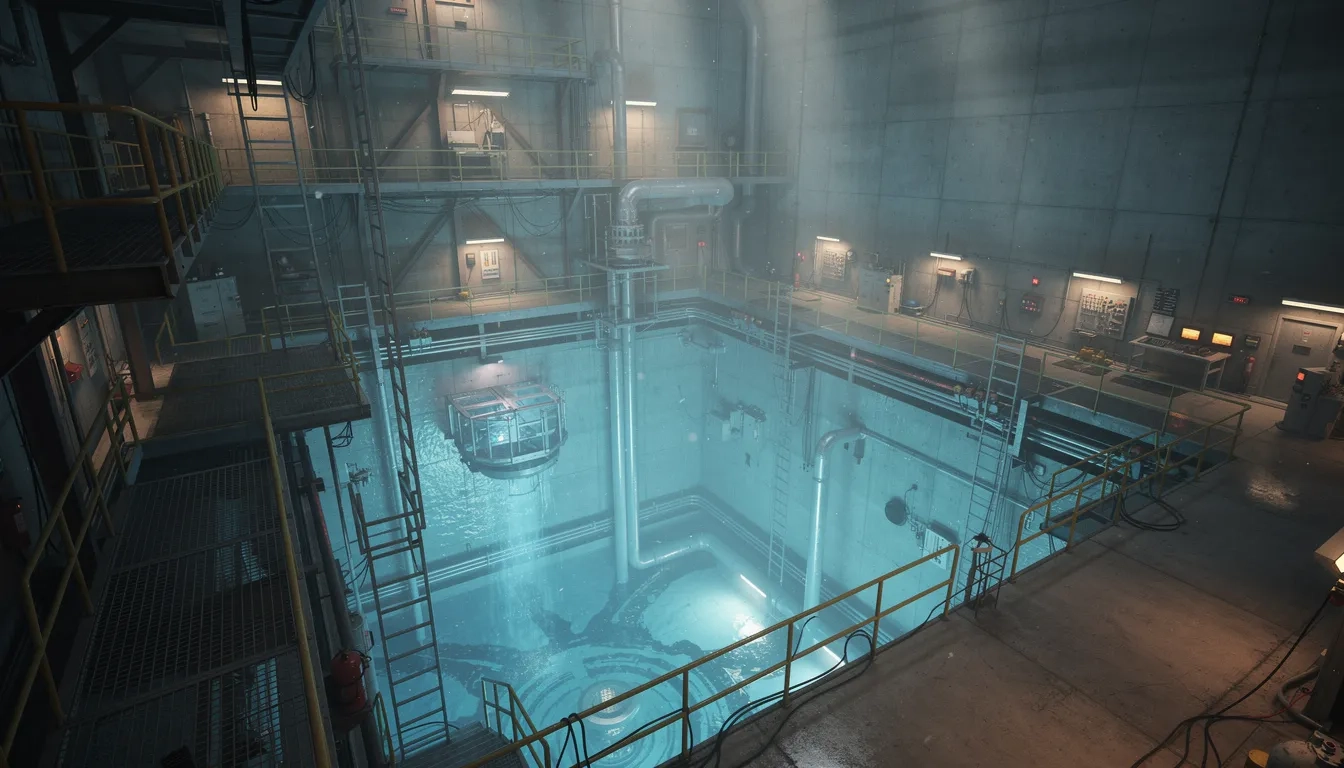
North Carolina State runs the PULSTAR reactor, a 1-megawatt pool-type unit that's one of just two ever built (the other's no longer operating) and one of 50 INL Nuclear Science User Facility locations nationwide, giving researchers access to neutron, gamma, and ion irradiation plus post-irradiation examination. NC State's department is, by its own account, the largest stand-alone nuclear engineering department in the country that still operates a research reactor.
Texas A&M's Nuclear Science Center runs a 1-MW TRIGA reactor with pulsing capability, a thermal column, and a pneumatic "rabbit" system for rapid sample irradiation — used heavily for isotope production and tracer studies. A handful of other schools (Oregon State, Kansas State, Idaho State, Purdue via its Nuclear Engineering Reactor Laboratory partnerships) round out the shrinking club of universities with live reactors on campus.
A common misconception: prospective students assume any "top 10" nuclear engineering school has a reactor. Many don't. Michigan State decommissioned its TRIGA reactor between 1985 and 1989 and never rebuilt one; several other historically strong programs run entirely on off-site access or partner facilities now. If hands-on reactor work is the point of your degree, verify facility access before you verify ranking.
Follow the DOE Money — It's the Best Leading Indicator
Rankings lag. Funding doesn't. DOE's Office of Nuclear Energy released its 2025 Nuclear Energy University Program awards covering thirty-five Consolidated Innovative Nuclear Research projects worth $33.9 million, plus roughly $7.2 million in Nuclear Science User Facility access awards across six projects and $2.4 million in Distinguished Early Career awards to three faculty.
That's not evenly distributed. Purdue received $6 million and structured its award as a consortium — partnering with MIT, NC State, Ivy Tech Community College, and Tougaloo College Research and Development Foundation to upgrade four existing nuclear research facilities and build out workforce training. That's a genuinely smart move: it turns Purdue into a hub rather than a single-campus program, and it's the kind of multi-institution structure worth watching as more advanced-reactor money flows in.
In April 2026, DOE added another $49.7 million across 10 university-led projects specifically targeting nuclear safety training — a direct response to the health physics staffing gap that's become the industry's quiet crisis. On the student side, the 2025 cycle funded 92 undergraduate scholarships and 34 graduate fellowships through the University Nuclear Leadership Program.
A practical filter: before applying anywhere, search "[university name] NEUP award" for the last two funding cycles. A department with zero recent CINR or NSUF awards is either extremely selective about what it pursues or quietly losing ground — worth asking your prospective advisor directly which one it is.
Match the School to Your Specialty, Not the Overall Rank
Nuclear engineering research splits into distinct tracks, and the "best" school changes depending on which one you're chasing:
- Fusion energy — MIT's Plasma Science and Fusion Center runs the SPARC collaboration with Commonwealth Fusion Systems, targeting a fusion gain (Q) greater than 10 using high-temperature superconducting magnets. If fusion is your target, this is the center of gravity in U.S. academia, full stop.
- Advanced fission / SMRs — Texas A&M, NC State, and Idaho State (through its INL proximity) sit closest to the small modular reactor deployment wave, including DOE's push to get at least three new reactor designs to criticality.
- Nuclear materials science — Michigan's access to ZEUS, paired with its radiological sciences program, makes it a strong pick for materials-under-extreme-conditions work.
- Health physics / radiological safety — this is the field with the most acute talent shortage right now, and it's where the newest DOE safety-training money is concentrated.
- Reactor operations and isotope production — Texas A&M's pulsing TRIGA reactor and NC State's PULSTAR give students direct operational hours that translate into NRC licensing eligibility later.
Don't pick a school because it's "#1 overall" if your actual interest is health physics — the overall rank barely correlates with strength in that specific track.
Bottom Line
- Check reactor access first, ranking second. A live reactor (PULSTAR at NC State, the TRIGA at Texas A&M) beats a higher US News score if your research needs real irradiation data.
- Cross-reference recent NEUP/CINR awards for any school on your shortlist — funding history predicts research momentum better than reputation surveys do.
- Pick your specialty before your school. Fusion means MIT. Materials science leans toward Michigan. SMR and advanced-reactor work clusters around Texas A&M, NC State, and Idaho National Laboratory partners.
- Watch consortium structures, like Purdue's multi-university DOE award — they're becoming a real pathway into facilities your home campus doesn't have.
- Talk to a prospective advisor about the health physics gap. It's the least glamorous track and the one with the clearest job security through 2050.
Frequently Asked Questions
Is University of Michigan really the best nuclear engineering school?
It holds the top reputation score in U.S. News & World Report's 2026 rankings and has genuinely strong research infrastructure, including access to the ZEUS laser. But "best" depends on your specialty — MIT leads fusion research specifically, and Tennessee's program has risen faster than almost any other in the past two years.
Do I need a school with an on-campus nuclear reactor?
Only if your research requires direct irradiation, isotope production, or reactor operations experience. Materials science, safety analysis, policy, and computational research tracks often don't need one — many strong researchers work through partner facilities or national labs like Idaho National Laboratory instead.
What's the biggest misconception about nuclear engineering rankings?
That a high overall rank means strength across every subfield. It doesn't. A school ranked outside the top 10 overall can lead in one specific track — reactor operations, health physics, or advanced fuel research — because rankings average across a department's whole portfolio.
How do I check if a university has active DOE funding?
Search the school's name alongside "NEUP" or "CINR award" and check the Nuclear Energy University Program site (neup.inl.gov), which lists funded projects by institution and year. Recent, repeated awards signal an active research pipeline rather than a dormant one.
Is the nuclear engineering job market actually growing?
Yes, sharply. DOE estimates the sector needs to grow from about 100,000 current workers to 375,000 by 2050, driven by small modular reactor deployment and the goal of getting multiple new reactor designs to criticality by mid-2026.
Which schools are best for small modular reactor (SMR) research specifically?
Texas A&M, NC State, and programs with close ties to Idaho National Laboratory (including Idaho State University) are positioned closest to current SMR deployment work, partly because DOE's advanced light-water SMR funding — including awards to TVA and Holtec Government Services — flows through partnerships with exactly these research clusters.
Sources
- The Best Nuclear Engineering Programs in America, Ranked — U.S. News
- UT Earns Top-Tier Graduate Rankings; Nuclear Engineering, Supply Chain Lead the Way
- Nuclear Engineering & Radiological Sciences — University of Michigan
- About the PULSTAR Reactor — NC State Nuclear Reactor Program
- DOE releases 2025 NEUP and NSUF funding — ANS Nuclear Newswire
- One Year After Executive Orders, U.S. Nuclear Energy Renaissance Is in Full Swing — DOE
- U.S. Department of Energy Announces $7 Million to Enhance University Nuclear Programs