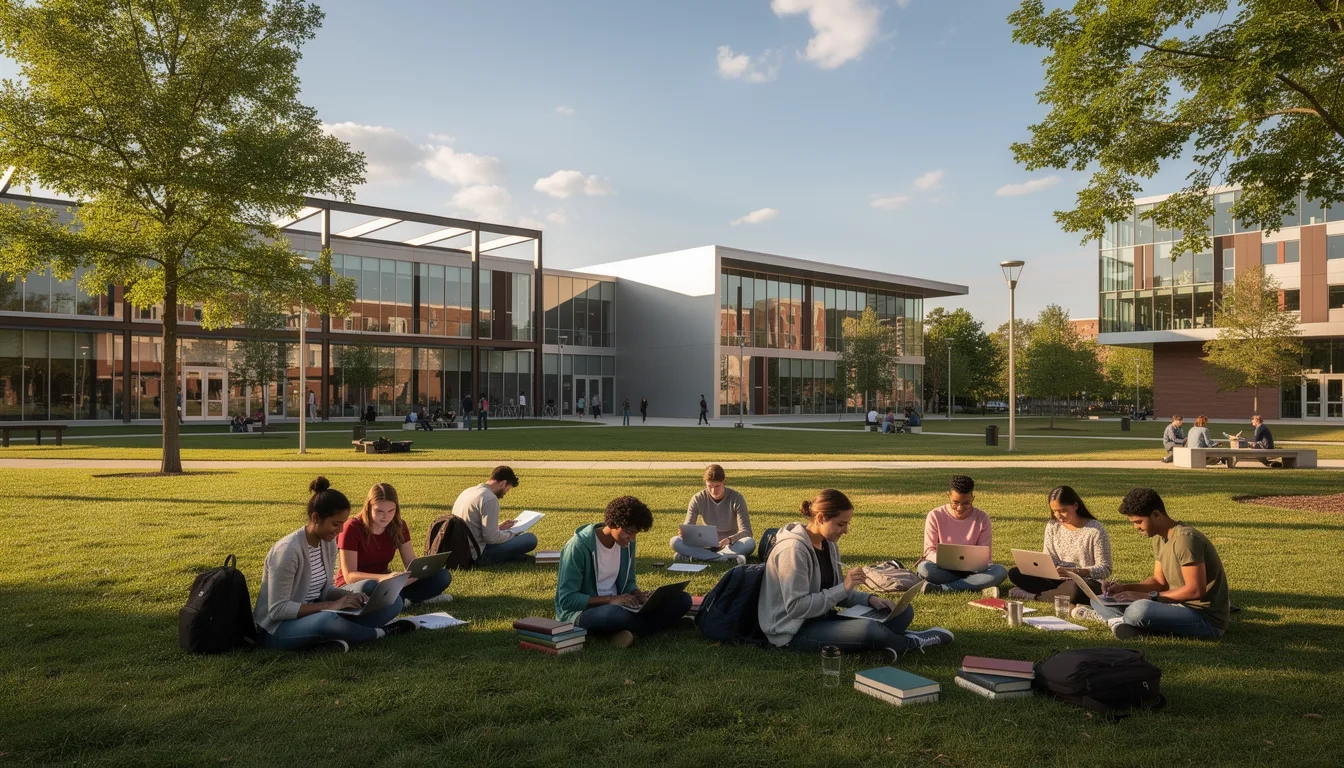
Best Universities for Real Estate Programs 2026

If you've started Googling "best real estate schools" at 11 p.m. because a guidance counselor shrugged when you asked about it, you're not alone. Real estate sits in a weird spot in college planning — it's a massive industry (commercial buildings, apartments, land development, REITs, mortgage finance all count), but very few high schoolers know it's even a major you can declare. It is. And a handful of schools have been building serious academic infrastructure around it for decades.
This guide walks through the real, verifiable programs that show up at the top of actual rankings in 2026 — not vibes, not "best of" listicles recycling the same five names without sourcing. We'll also clear up the single biggest misunderstanding students have about this field before you accidentally pick the wrong track.
First, What "Real Estate Program" Even Means
Before ranking anything, it helps to know that "real estate" as a college major is really an umbrella over several different careers:
- Brokerage and sales — helping people buy, sell, or lease property (residential or commercial)
- Real estate finance and investment — underwriting deals, working at a REIT, private equity real estate, or a pension fund's real assets desk
- Development — assembling land, financing, and construction to actually build something
- Property/asset management — running buildings or portfolios once they exist
- Urban planning and policy — the public-sector and nonprofit side of land use
Most strong university programs let you lean into whichever of these interests you, usually by pairing a real estate core (valuation, market analysis, real estate law, capital markets) with a home department — usually a business school, sometimes a school of architecture or public policy.
The Common Misconception: "I Need a Real Estate Degree to Work in Real Estate"
This is the one that trips up almost every student researching this topic, so let's deal with it directly.
You do not need a real estate degree to become a licensed real estate agent or broker. In every U.S. state, that requires a pre-licensing course (usually 60–180 hours, offered by community colleges or private schools) and a state exam — not a four-year degree of any kind. Plenty of successful agents have degrees in completely unrelated fields, or no degree at all.
Where a university real estate program actually matters is the institutional side of the industry: real estate private equity, REIT analyst roles, development at a real institutional shop, investment banking real estate coverage, or a role at a firm like Blackstone, CBRE Capital Markets, or a pension fund's real assets group. Those employers recruit heavily from programs like the ones below, the same way Wall Street recruits from strong finance programs.
The second layer of this misconception is conflating development with brokerage. They're genuinely different jobs that happen to share a title:
- A broker connects buyers, sellers, tenants, and landlords, and is typically paid on commission.
- A developer raises capital, buys land or existing buildings, manages entitlements and construction, and profits from creating or repositioning an asset.
A strong academic program will make sure you understand both, then let you specialize. If a school's real estate curriculum is 90% "how to close a residential sale," that's a licensing school, not the kind of program that gets you into a REPE analyst seat.
Career offices at the top programs put it bluntly: real estate is one of the few fields where a finance-minded student, a design-minded student, and a policy-minded student can all graduate from the "same" major and end up in completely different, equally legitimate careers.
The Top Real Estate Programs for 2026
These are real, currently operating programs with verifiable rankings or standing in the industry — not a guess-and-check list.
| University | Program | Level | What Makes It Notable |
|---|---|---|---|
| University of Wisconsin–Madison | James A. Graaskamp Center for Real Estate (Wisconsin School of Business) | Undergraduate (BBA) | Ranked #1 for undergraduate real estate by U.S. News for four consecutive years through 2026; finance-driven curriculum with a deep alumni bench in institutional investment |
| University of Pennsylvania | Wharton Real Estate Department | Undergrad concentration + MBA major | Wharton's MBA in Real Estate is ranked #2 nationally by U.S. News' 2026 specialty rankings; undergrads take a required investments/financing course plus electives in development, law, and policy |
| University of Georgia | Terry College of Business, Institute for Land Use and Real Estate Studies | Undergraduate (BBA) | Ranked #4 overall and #2 among public universities by U.S. News, with a top-5 national ranking averaged over 25 straight years |
| UC Berkeley | Fisher Center for Real Estate and Urban Economics (Haas School of Business) | Undergraduate | Ranked #4 nationally by U.S. News; blends finance with urban economics and public policy |
| New York University | Schack Institute of Real Estate (School of Professional Studies) | Undergrad, master's, certificates | A dedicated real estate institute rather than a department inside a business school, with a direct pipeline into NYC commercial real estate |
| University of Southern California | Lusk Center for Real Estate | MBA concentration, undergrad program, exec ed | Spans Marshall (business), Price (public policy), and Viterbi (engineering); strong ties to LA and West Coast development and REIT recruiting |
| MIT | MIT Center for Real Estate (MSRED) | Master's (one year) | Created the first one-year real estate development master's degree in the country; consistently ranked #1 among real estate management/construction master's programs internationally |
| Cornell University | Baker Program in Real Estate (College of Architecture, Art, and Planning) | Master's (MPS) | Largest full-time real estate faculty of any U.S. university, drawing from four colleges; Class of 2024 averaged a $106,035 base salary plus a $10,750 signing bonus |
A few other schools worth knowing about, even though this list isn't exhaustive: University of Florida's Kelley A. Bergstrom Center for Real Estate Studies has a long-running, well-funded program and graduate rankings of its own, and University of Texas at Austin, Georgetown, and Indiana's Kelley School all have credible real estate offerings worth researching directly if location matters to you.
Undergraduate vs. Graduate: Which Path Actually Makes Sense
This is where a lot of students overthink it.
Go undergraduate if you're set on real estate before college, or reasonably sure. A BBA with a real estate concentration (Wisconsin, Wharton, Georgia, Berkeley) gets you into internships as early as sophomore year, which matters enormously in an industry that hires heavily off internship-to-full-time pipelines.
Go graduate if you're switching careers, came from architecture/engineering/finance and want to formalize real estate knowledge, or want the specific technical toolkit for development (MIT's MSRED, Cornell's Baker Program, or NYU Schack's master's track). These one-to-two-year programs assume you already have professional experience and are built to convert that experience into a development or investment career, fast.
Neither path requires you to have "always known" you wanted real estate. A surprising number of successful people in this industry started in architecture, urban planning, civil engineering, or plain finance and pivoted through a master's program.
How to Actually Choose One
Rankings are a starting point, not the answer. Once you have a shortlist, dig into:
- Location relative to a real estate market you care about. NYU Schack and USC Lusk lean hard into their metro's deal flow (NYC and LA, respectively). If you want to work in Texas or the Southeast, factor that into recruiting reality, not just prestige.
- Who actually recruits on campus. Ask the program directly (or search LinkedIn alumni) which firms hire from there for the specific track you want — REPE, brokerage, development, REIT.
- Required vs. elective structure. Programs like Wharton's are lean on requirements and heavy on electives, which rewards students who already know what they want. Others build a fuller core curriculum, better for students still exploring.
- Faculty who are still practitioners. Real estate is a field where adjunct faculty who are active dealmakers matter more than in most academic disciplines — check if a program leans on practitioner instructors.
- Cost and format for grad programs. One-year master's programs like MIT's and NYU's are intense and expensive; make sure the ROI math works for the specific career you're targeting.
What These Careers Actually Pay
It's worth grounding expectations in real labor-market numbers, not just program marketing. According to the Bureau of Labor Statistics, the median annual wage for real estate brokers was $73,220 in May 2025, and $52,830 for real estate sales agents — with the top 10% of brokers earning over $143,300. Employment growth in brokerage itself is projected at a modest 2% from 2025 to 2035, though roughly 40,400 openings a year are still expected industry-wide, mostly from turnover.
That's the licensed-agent side. The institutional side — where the university programs above are really aimed — tends to start meaningfully higher: Cornell's Baker Program reported a $106,035 average base salary for its 2024 graduating class, before signing bonus, reflecting the analyst and associate roles those graduates land at investment and development firms rather than commission-based brokerage.
Bottom Line
There is no single "best" university for real estate — there's a best university for the specific corner of real estate you want to work in. If you want the broadest, most finance-forward undergraduate foundation, Wisconsin's Graaskamp Center and Wharton's concentration are the two names that show up at the top of actual rankings, not just marketing copy. If you want a dedicated real estate institute with deep industry access, NYU Schack has been doing exactly that for decades. If you're set on development specifically and already have some professional experience, MIT's MSRED and Cornell's Baker Program are the two most credentialed one-to-two-year master's options in the country. And if none of that matches your situation, remember the misconception from earlier: you can still become a licensed, working real estate professional without any of these degrees — these programs exist for students aiming at the institutional, finance, and development side of the industry specifically.
FAQ
Do I need a real estate degree to become a real estate agent? No. Becoming a licensed agent or broker requires a state-approved pre-licensing course and passing the state exam — not a college degree in real estate or anything else. A degree helps if you're aiming for the institutional side of the industry (REPE, REITs, development), not for getting licensed.
What's the difference between a real estate concentration and a full real estate major? A concentration (like Wharton's) is usually one required course plus a handful of electives layered onto a broader business degree. A full major or dedicated institute (like Wisconsin's or NYU Schack's) builds a more complete core curriculum specifically around real estate finance, law, and market analysis.
Is a master's in real estate worth it if I already have a bachelor's in something else? Often yes, especially if your undergrad degree was in architecture, engineering, urban planning, or general finance and you want to pivot into real estate development or investment specifically. Programs like MIT's MSRED and Cornell's Baker Program are built for exactly this kind of career-changer.
Which schools are best if I want to go into real estate development specifically, not brokerage? MIT's Center for Real Estate and Cornell's Baker Program are the two most established options built around development, drawing on design, planning, construction, and finance together rather than just brokerage or sales training.
Do these programs guarantee a job in real estate private equity or at a REIT? No program guarantees placement, but the schools on this list have real, documented recruiting relationships with major real estate employers, and publish outcomes data (like Cornell's reported average base salary and signing bonus for its graduating class) that you should ask any program to share before enrolling.
Should location matter when picking a real estate program? Yes, more than for most majors. Real estate is intensely local — deal flow, internships, and full-time recruiting cluster around the metro a program is embedded in. NYU Schack's NYC ties and USC Lusk's LA ties are genuine advantages if you want to work in those specific markets after graduation.
Sources
- 2026 Best Undergraduate Real Estate Programs | US News Rankings
- We Are #1 Again | Wisconsin School of Business, Graaskamp Center
- Undergraduate Program - Wharton Real Estate
- U.S. News 2026 Best Business Schools Ranking: MIT Joins Wharton At The Top
- Eight Terry College of Business majors ranked by U.S. News & World Report
- Undergraduate Program - Fisher Center for Real Estate and Urban Economics
- Schack Institute of Real Estate | NYU School of Professional Studies
- Degree Programs | USC Lusk Center for Real Estate
- MIT Center for Real Estate
- Baker Program in Real Estate Employment Report - Cornell
- Real Estate Brokers and Sales Agents : Occupational Outlook Handbook, BLS