Best Universities for Logistics and Transportation
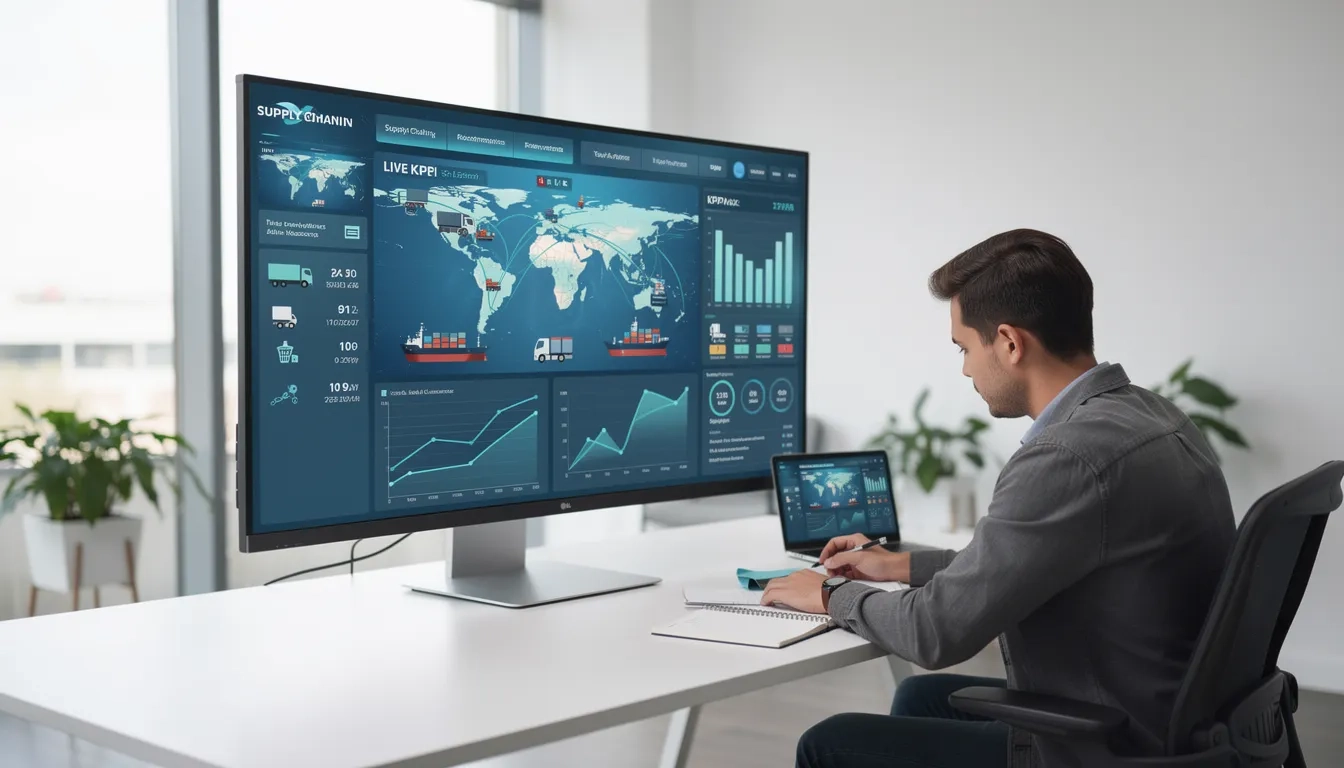
If you picture a logistics major as someone who grows up to schedule delivery trucks, you're picturing about 5 percent of the job. The other 95 percent looks a lot more like this: building a Python model to predict which distribution center will run out of inventory first, negotiating ocean freight contracts across three continents, or redesigning a retailer's entire network because a new tariff just made half its warehouses uneconomical. That's the discipline more accurately called supply chain management, and it's one of the more quietly lucrative, consistently in-demand majors a student can pick right now.
The good news is that unlike some fields where "best school" is mostly vibes, logistics and supply chain has real, published rankings from credible outside sources — U.S. News & World Report and the research firm Gartner both rank programs almost every year, and the results are surprisingly consistent. This guide walks through what those rankings actually say, which schools show up again and again, and how to think about picking a program that fits you rather than just chasing a number.
Wait, Is This Just "Truck Driving Management"? (The Big Misconception)
Let's deal with this up front, because it's the single biggest reason smart students overlook a genuinely great field.
Logistics is not the study of driving trucks or stacking boxes — it's the strategic and analytical discipline of moving money, materials, and information through a network as efficiently as possible, and it increasingly runs on data science, not dispatch radios.
The confusion is understandable. "Logistics" sounds blue-collar because for decades it was mostly about physical execution — get the truck to the dock, load the pallet, sign the paperwork. Real logistics and transportation majors do learn how physical distribution works, because you can't optimize a system you don't understand. But the actual coursework and career outcomes look like this:
- Supply chain analytics and forecasting — using statistical models and machine learning to predict demand before it happens
- Network design and optimization — deciding where warehouses, plants, and ports should physically sit to minimize cost and risk
- Procurement and strategic sourcing — negotiating multimillion-dollar supplier contracts and managing vendor risk
- Transportation management systems (TMS) and enterprise software — SAP, Oracle, Blue Yonder, and similar platforms that run global operations
- Risk management and resilience planning — the skill set that got a massive career boost after COVID-era shortages and the Suez Canal blockage showed executives how fragile global supply chains actually are
A supply chain analyst at a Fortune 500 company is far more likely to spend their day in a spreadsheet, a simulation tool, or a boardroom than on a loading dock. It's a business-and-data hybrid discipline, and companies from Amazon to Boeing to Procter & Gamble hire aggressively for it because so few students actually understand what the major is.
What "Best" Actually Means Here
Two organizations do the heavy lifting on ranking these programs:
- U.S. News & World Report ranks undergraduate supply chain management/logistics programs as a specialty within its Best Undergraduate Business Programs list, based on peer assessment surveys from business school deans and faculty.
- Gartner, the research and advisory firm that also ranks corporate supply chains, publishes a biennial ranking of North American supply chain university programs (both undergraduate and graduate) based on program scope, industry value, and program size, using data submitted directly by the schools.
Both rankings tend to surface the same handful of programs, which is a good sign the reputation is earned rather than manufactured by marketing departments.
Top Logistics and Supply Chain Programs, Based on Real Rankings
| University | School/College | Degree Focus | Notable Ranking |
|---|---|---|---|
| Michigan State University | Eli Broad College of Business | B.A. in Supply Chain Management | No. 1 in U.S. News undergrad supply chain/logistics rankings for 15 consecutive years |
| University of Arkansas | Sam M. Walton College of Business | B.S.B.A. in Supply Chain Management | No. 1 undergraduate program, Gartner 2024 rankings |
| University of Tennessee, Knoxville | Haslam College of Business | B.S. in Supply Chain Management | No. 2 undergrad, Gartner 2024; top 5, U.S. News |
| Arizona State University | W. P. Carey School of Business | B.S. in Supply Chain Management | No. 2 undergraduate program, U.S. News 2025 |
| University of South Carolina | Darla Moore School of Business | B.S. in International Business/Supply Chain | No. 3 undergrad, Gartner 2024 |
| Pennsylvania State University | Smeal College of Business | B.S. in Supply Chain and Information Systems | No. 1 graduate program, Gartner 2024 |
| University of North Texas | G. Brint Ryan College of Business | B.B.A. in Logistics and Supply Chain Management | No. 4 undergrad, Gartner 2024 |
| Rutgers University | Rutgers Business School | B.S. in Supply Chain Management | No. 5 undergrad, Gartner 2024 (4th cycle running) |
| Ohio State University | Fisher College of Business | B.S.B.A. in Logistics Management | Top-5 nationally among public universities in SCM/logistics |
| University of Texas at Dallas | Naveen Jindal School of Management | M.S. in Supply Chain Management | No. 4 graduate program, Gartner 2024 |
| MIT | Center for Transportation and Logistics (CTL) | M.Eng./M.A.S. in Supply Chain Management | World-renowned research center; not part of the undergrad rankings, but the top destination for advanced analytics-driven SCM |
A quick note on that last row: MIT doesn't have an undergraduate "logistics" major, so it won't show up on the undergrad lists above. But its Center for Transportation and Logistics runs one of the most respected graduate and executive programs in the field, along with a widely-used MicroMasters credential, and its research shapes how the entire industry thinks about network design. If you're aiming for a PhD, a research-heavy career, or a highly quantitative track after undergrad, MIT CTL belongs on your radar even though the path there usually runs through a different undergraduate major first (often industrial engineering, operations research, or economics).
A Closer Look at a Few Standouts
Michigan State (Broad College) has been the undergraduate benchmark for so long that "MSU supply chain" is practically shorthand in the industry — recruiters from Amazon, Kimberly-Clark, and Whirlpool show up on campus specifically because of it. The program leans heavily into hands-on projects with real corporate partners.
University of Arkansas (Walton College) benefits enormously from geography: Walmart's headquarters is 20 minutes away in Bentonville, and the surrounding area has become a magnet for supplier companies that need to be near their biggest customer. That proximity translates into internships and full-time offers that are hard to match elsewhere.
University of Tennessee (Haslam) houses the Global Supply Chain Institute, and its program is known for placing graduates directly into rotational leadership programs at large manufacturers and retailers.
Arizona State (W.P. Carey) has climbed steadily and pairs a large, well-funded program with strong ties to Southwest logistics and manufacturing hubs, plus one of the country's most active student supply chain associations.
Penn State (Smeal) consistently tops the graduate rankings, and its undergraduate "Supply Chain and Information Systems" major is unusual in explicitly fusing SCM with IT coursework — useful given how much of the field now runs through enterprise software.
Ohio State (Fisher) calls its major "Logistics Management" rather than supply chain, which is a good reminder that schools use different labels for very similar coursework — always check the actual curriculum, not just the major's title.
What to Actually Look For When Comparing Programs
Rankings are a useful shortcut, but they shouldn't be the only thing you look at. When you're comparing programs, dig into:
- Corporate recruiting pipeline. Ask each school (or check their career center reports) which companies actually show up for career fairs and internships. A program near a major logistics hub — Memphis, Chicago, Dallas-Fort Worth, Atlanta — often has stronger local pipelines regardless of its national ranking.
- Analytics and software exposure. Look for coursework in SQL, Python, Tableau, or specific enterprise systems like SAP. A program still teaching supply chain purely as a business-strategy topic without data tools is behind where the industry actually is.
- Internship requirements. The strongest programs functionally require at least one internship before graduation, and many students do two.
- Student organizations and case competitions. Active APICS/ASCM chapters and case competition teams are a strong signal of a program with real institutional investment, not just a listed major.
- Cost versus outcome. A flagship state school with a top-10 supply chain reputation and in-state tuition can be a far better financial bet than a private school with a similar ranking and triple the price tag.
Career Paths and Real Numbers
This is a field where the job market data backs up the hype. According to the U.S. Bureau of Labor Statistics, logisticians earned a median annual wage of $80,880 in 2024, with the top 25 percent earning more than $104,330. Employment in the field is projected to grow 17 percent from 2024 to 2034 — far faster than the average occupation — driven largely by e-commerce growth and companies competing to shrink delivery times. BLS projects about 26,400 openings per year on average over the decade, counting both new positions and replacement hires.
Common entry-level titles include supply chain analyst, logistics coordinator, procurement analyst, and operations management trainee, with clear paths up to supply chain manager, director of logistics, and eventually VP of operations or chief supply chain officer roles that now regularly sit on executive leadership teams.
Bottom Line
If you want the single most recruited, most consistently top-ranked undergraduate program, Michigan State's Broad College is the safest bet, with Arkansas, Tennessee, Arizona State, and Penn State right behind it and each carrying its own regional or curricular strengths. If you're already thinking graduate school or a research-heavy path, Penn State's graduate program and MIT's Center for Transportation and Logistics are the two names that carry the most weight. But don't let rankings do all the deciding — a program's location relative to logistics hubs, its analytics coursework, and its internship pipeline will matter more to your actual career than a one- or two-spot difference in a list. This is a field where demand for graduates consistently outpaces supply, so a solid program with a strong regional employer network can outperform a slightly higher-ranked school that's farther from where the jobs are.
FAQ
Is a logistics or supply chain management degree the same as a business degree? Usually it's a specialization within a business school — you'll take core business classes (accounting, finance, marketing) plus a concentration in supply chain, procurement, and operations. Some schools, like Ohio State, house it under a "logistics management" label, and a few engineering schools offer supply chain analytics tracks through industrial engineering instead.
Do I need to be good at math to succeed in this major? You need to be comfortable with data and statistics, not necessarily advanced calculus. Expect coursework in statistics, forecasting models, and often at least introductory programming (Python or SQL) or spreadsheet-based optimization. If you enjoy solving practical puzzles with numbers, you'll likely enjoy this more than you expect.
Can I get into logistics and supply chain without attending a top-ranked school? Absolutely. These rankings measure program strength and recruiting depth, not a hard ceiling on outcomes. Plenty of successful supply chain professionals graduated from regional schools and built their resumes through internships, certifications like APICS/ASCM's CPIM, and on-the-job experience.
What's the difference between "logistics," "supply chain management," and "transportation management" as majors? They overlap heavily and schools aren't consistent about the labels. Broadly, "logistics" often emphasizes the physical movement and storage of goods, "supply chain management" is the broader umbrella covering sourcing through delivery, and "transportation management" focuses specifically on the modes and networks (trucking, rail, ocean, air) that move goods between points. Always read the actual course list rather than assuming based on the title.
Is this a good major if I want to work in e-commerce or tech instead of traditional manufacturing? Yes — arguably it's become more valuable there. Amazon, Target, and other e-commerce-heavy companies are some of the largest employers of supply chain graduates precisely because same-day and next-day delivery promises require enormously sophisticated logistics networks behind the scenes.
Should I go straight to a master's program, or get work experience first? Most of the top graduate supply chain programs, including MIT's, are designed for people with a few years of professional experience already, and application strength often improves significantly with real industry background. For most students, it makes sense to start with a strong undergraduate program, work for a few years, and then consider a master's if you want to move into a more analytically advanced or leadership-track role.
Sources
- 2026 Best Undergraduate Supply Chain Management Programs - US News Rankings
- US News and World Report Ranks Broad No. 1 in Supply Chain Management/Logistics for 15th Year
- Gartner Announces Rankings of the Top 25 North American Supply Chain Undergraduate and Graduate University Programs for 2024
- Gartner ranks best colleges for studying supply chain - DC Velocity
- Supply Chain Management Master's Program - MIT Center for Transportation and Logistics
- Logisticians - Occupational Outlook Handbook - U.S. Bureau of Labor Statistics
- Gartner Ranks Penn State Smeal No. 1 in Graduate Supply Chain Education
- ASU bachelor's degrees in business step up in rankings - ASU News
- Fisher Celebrates Rise in Undergraduate Rankings - Fisher College of Business
- Rankings and Accolades - Haslam College of Business Global Supply Chain Institute