Best Public Universities by Value 2026: Real Costs, ROI, and Rankings
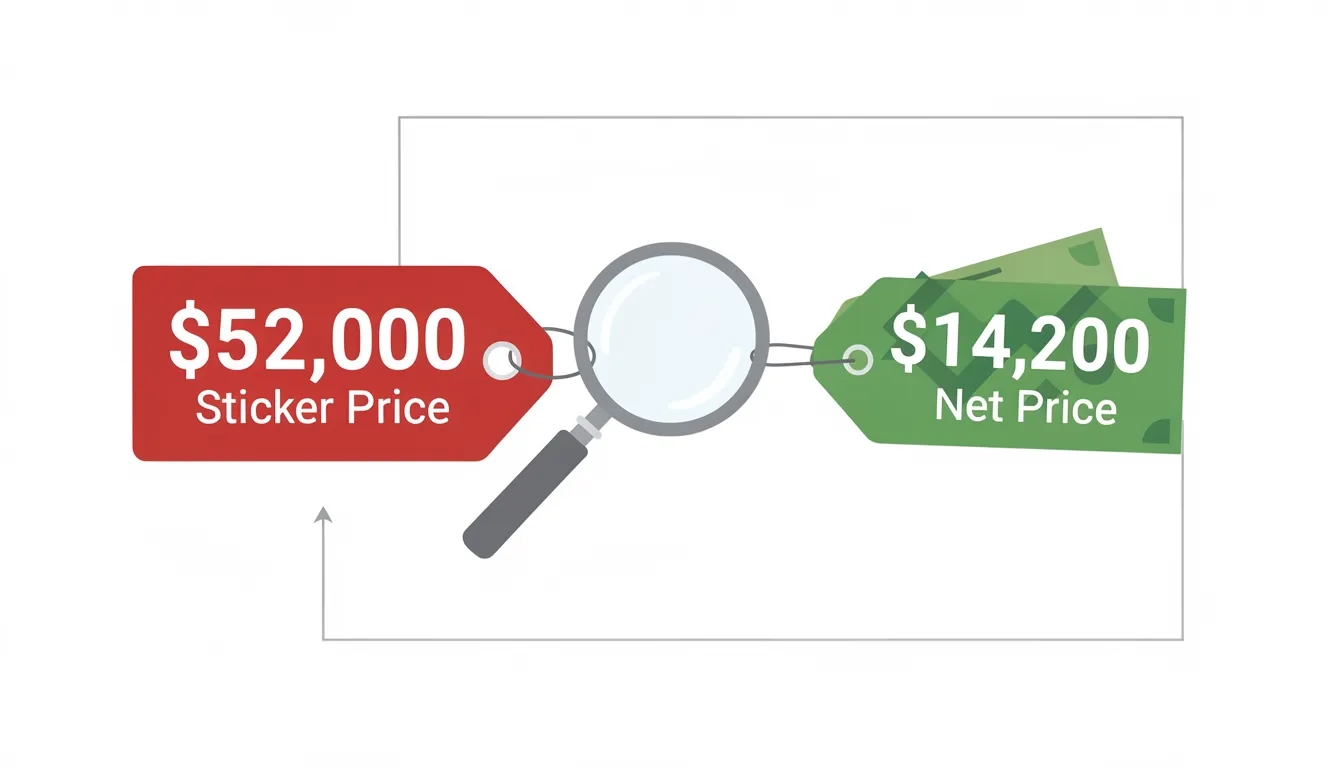
Fifty-eight percent of high school seniors say they skipped their top-choice college because of the price. More than half. And the painful irony is that many of them made that call based on a sticker price that had almost nothing to do with what they'd actually pay. The gap between published tuition and net cost after financial aid is one of the most underappreciated traps in American higher education — and the schools that close that gap most effectively are the ones worth your serious attention in 2026.
What "Value" Really Means (and What It Doesn't)
Most families compare published tuition rates. Wrong move. A school charging $52,000 per year might have grant aid so aggressive that your net price drops to $18,000. A school listing $16,000 might offer next to nothing, making the "cheaper" school genuinely more expensive by the time you factor in actual out-of-pocket costs.
Net price after financial aid is the number that matters. US News calculates best value by weighing academic quality — graduation rates, faculty resources, peer assessments — against the actual net cost of attendance for students who receive federal aid. The premise is simple: a great education at a low real cost beats a mediocre education that just looks cheap on paper.
There's a longer-horizon question too. Georgetown University's Center on Education and the Workforce analyzed 4,600 colleges using Department of Education data and found that graduation rates are the single strongest predictor of ROI at four-year institutions, with a correlation of 0.61 at the 10-year mark. A school where you actually finish is worth more than one where you might not.
How the 2026 Best Value Rankings Work
Three major systems dominate this space. Each measures something slightly different.
US News Best Value Rankings evaluate 17 factors of academic quality and then divide by net cost of attendance for students receiving aid. Higher quality plus lower real cost equals a better score.
Princeton Review's Best Value rankings layer in survey data from 140,000+ students about financial aid generosity, academics, and campus experience, then overlay cost data. Student perception gets more weight here than in US News's model.
Georgetown CEW's ROI rankings are purely financial — median earnings at 6, 8, and 10 years post-enrollment compared against average net price. Their 40-year horizon captures career-long impact, not just the first job salary.
A school that appears near the top of two or three of these systems simultaneously is a strong signal. Single-ranking heroism is easier to game than consistent performance across methodologies.
The 2026 Rankings: Top Public Universities by Value
Here's how the leading schools stack up across 2026 ranking systems:
| School | State | US News Value Rank | Notable Strength |
|---|---|---|---|
| UNC Chapel Hill | North Carolina | #1 (public) | 21 consecutive years at top |
| University of Virginia | Virginia | #2 (public) | 96% graduation rate |
| Georgia Tech | Georgia | Top 3 (Princeton Review) | Co-op earnings reduce net cost |
| UC Berkeley | California | Top 10 (public) | Research intensity, career outcomes |
| UCLA | California | Top 10 (public) | Program breadth, LA job market |
| University of Michigan | Michigan | Top 10 (public) | Alumni network, STEM depth |
| UC San Diego | California | Top 10 (public) | Biotech and tech industry access |
| University of Florida | Florida | Top 20 (public) | Low tuition, strong aid |
| University of Washington | Washington | Top 20 (public) | Seattle tech corridor proximity |
The Schools Worth Looking at Most Closely
UNC Chapel Hill's 21-year consecutive run at #1 is not PR spin. It reflects a sustained combination of low in-state tuition, meaningful grant aid, high graduation rates, and academic quality that genuinely rivals institutions charging three or four times as much. Most public flagships manage two or three of these at once. UNC keeps all four in balance year after year.
That said, in-state and out-of-state cost structures are completely different stories at UNC, as at almost every public university. A North Carolina resident and a student from New Jersey are attending the same school but making very different financial decisions.
The University of Virginia's jump to #2 in 2026 (up from #3) comes with one data point worth pausing on: 92% of Pell Grant recipients graduate. Nationally, low-income students complete four-year degrees at substantially lower rates than their higher-income peers — the national average gap runs to 15-20 percentage points at many institutions. UVA closing that gap almost entirely is unusual among selective publics, and it signals something real about how the institution actually supports students who need it most.
UVA's 96% overall graduation rate is also the highest among all public universities. You are extremely unlikely to pay for a degree you don't finish.
Georgia Tech earns its spot differently. The school's co-op program (one of the most established in the country, dating back to 1912) lets students alternate between academic semesters and paid work rotations with employers like Boeing, Coca-Cola, and the CDC. Those co-op earnings effectively reduce the total net cost of a degree. For engineering and computer science students in particular, this is a structural financial advantage that doesn't show up cleanly in any ranking's cost calculation — but it's real money.
The State System Question Nobody Asks Enough
Most value conversations focus on individual schools. But where you attend matters at the system level, not just the campus level.
The Foundation for Research on Equal Opportunity ranked all 50 state public university systems on price and outcomes. The gap between top and bottom is startling.
"Lower tuition is nice to have, but it isn't worth much if the degree lacks labor market value." — FREOPP, 2025 ranking report
South Dakota's system leads with a median ROI of $216,927, nearly double the national median of $118,182. That strength comes not from any single flagship but from a well-developed technical college network and career-focused programming. Minnesota ($214,923) and Iowa ($214,015) follow closely, driven by similar structures.
At the other end, Hawaii's public system averages median program ROI barely above zero. Fifty-four percent of undergraduate programs in Hawaii's public system show negative financial returns on a lifetime basis. That doesn't doom every Hawaiian student, but it means program selection inside the system matters more than which campus you pick.
The lesson is uncomfortable: in-state isn't automatically the smart choice. A student from Hawaii who considers out-of-state options might find that the higher sticker price of attending a Minnesota or Iowa public school produces dramatically better lifetime financial outcomes once you run the actual numbers.
The STEM Premium — and Its Limits
Georgetown CEW's data consistently shows that STEM majors produce higher ROI across nearly all institutions and time horizons. Engineering, nursing, computer science, and business graduates recover their educational costs faster and more completely than graduates in most other fields.
But here's what gets glossed over: a student who struggles through a STEM program without finishing has negative ROI. The Georgetown analysis found graduation rates more strongly correlated with ROI than major selection, especially in the 10-year window. A school with a 90% graduation rate across all majors often outperforms a STEM powerhouse where 30% of students leave without a degree.
This creates an honest problem with some "highest ROI" school lists. Schools that produce great earnings data partly do so because selective admissions mean that most students who get in would have succeeded almost anywhere. The more interesting question is which schools improve outcomes for students who wouldn't obviously succeed elsewhere. That's where the value conversation gets genuinely interesting.
How to Evaluate Value for Your Own Situation
No ranking can resolve the variables that are specific to you. Here's a framework that actually helps.
Start with the net price calculator on each school's website. Federal law requires every institution receiving Title IV aid to provide one. Plug in your actual family income numbers. The difference in estimated net price between two schools will often tell you more than their ranking positions.
Then work through these questions:
- Does your target major have specific rankings? A school at #8 overall for value might rank #2 for your program. Check department-level resources and faculty ratios, not just institutional stats.
- What is the graduation rate for students who look like you? Many schools publish overall rates that hide significant gaps for Pell recipients, first-generation students, or specific majors. If a school won't surface this data, ask why.
- Does the school report career placement and starting salary by field? Vague claims about "successful alumni" are worth nothing. Specific placement percentages and median starting salaries by major are worth a lot.
- Where is the school relative to your industry's hiring hubs? UW Seattle's proximity to Amazon and Microsoft creates hiring pipeline advantages that no ranking captures. Geography has real career value.
Run the math over 10 years, not just graduation day. A school that costs $8,000 more per year but increases your graduation probability by 15% and your starting salary by $6,000 is almost certainly the better financial decision when you extend the horizon.
The Honest Take
Chasing the highest-ranked school you can get into is a strategy with real costs (pun intended). The name on your diploma matters less than whether you graduated, what you studied, and which job market you entered. UNC's 21-year run at #1 for public value is not a fluke. It reflects sustained institutional commitment to keeping real costs manageable while maintaining quality.
If you're choosing between a higher-ranked public school that stretches your finances and a lower-ranked one where you'll finish debt-free in a field with strong placement rates, the lower-ranked school is probably the smarter bet. Debt from an over-leveraged degree can follow a graduate for a decade or more. Pick the school where you'll finish strong, not the one that sounds best at a dinner party.
Bottom Line
- Run the net price calculator on every school you're considering before comparing anything else. Sticker prices are marketing, not information.
- Graduation rates predict ROI more reliably than major or school prestige, especially within the first 10 years of your career.
- UNC Chapel Hill and UVA lead 2026 public value rankings across methodologies. Georgia Tech earns its spot through co-op earnings and career placement infrastructure.
- State systems differ enormously — South Dakota's median ROI of $216,927 is nearly double Hawaii's, which averages close to break-even. In-state isn't automatically the safe financial choice.
- Evaluate value over a 10-year earnings horizon. Starting salary alone doesn't capture the full picture.
Frequently Asked Questions
What public university ranks #1 for value in 2026?
UNC Chapel Hill holds the top spot for best value among public universities in US News & World Report's 2026 rankings — its 21st consecutive year in that position. The combination of low in-state tuition, strong grant aid, high graduation rates, and academic quality keeps it at the top year after year.
How does US News calculate best value for colleges?
US News divides academic quality (measured across 17 factors including graduation rates, peer assessments, and financial resources per student) by the net cost of attendance for students receiving federal financial aid. The formula rewards institutions that combine strong outcomes with low real costs, not just low sticker prices.
Is UC Berkeley a better value than UNC Chapel Hill?
For California residents, UC Berkeley is a strong value with in-state tuition around $14,312 per year. But UNC consistently outranks it in dedicated value rankings because of Carolina's financial aid generosity and lower net price for in-state students. For out-of-state applicants, UC Berkeley's non-resident tuition changes the comparison significantly — and UNC's value advantage grows.
Does graduating from a higher-ranked public school guarantee better ROI?
No. Georgetown CEW's analysis of 4,600 schools found that graduation rates matter more than institutional prestige in determining ROI, especially within the first decade. A student who leaves a flagship without a degree faces worse financial outcomes than one who graduates from a lower-ranked regional public. The school where you're most likely to finish is often the better financial bet.
Which states have the best public university systems for value?
According to the Foundation for Research on Equal Opportunity, South Dakota ($216,927 median ROI), Minnesota ($214,923), and Iowa ($214,015) lead all 50 state systems. Their strength comes from technical college networks and career-focused programs in nursing, engineering, and business. Hawaii, Montana, and Louisiana rank lowest.
Should I automatically choose a public school over a private one for value?
Not automatically. Princeton, MIT, Rice, and Berea College (which charges no tuition) offer such aggressive financial aid that their effective net cost undercuts many public flagships, particularly for lower-income students. Princeton's no-loan financial aid policy means many families pay less than they would at their state flagship. Always compare actual net prices, not school categories.
Sources
- UNC Chapel Hill: No. 1 Best Value Public for 21st Straight Year
- UVA Ascends to No. 2 Best Value Among Public Universities
- Georgetown CEW: Ranking 4,600 Colleges by ROI (2025)
- FREOPP: Ranking the 50 State Public University Systems on Prices & Outcomes
- Appily: Top 20 Best Value Colleges 2026
- US News 2026 Best Value Colleges & Universities