How College Sports Conference Revenue Sharing Works
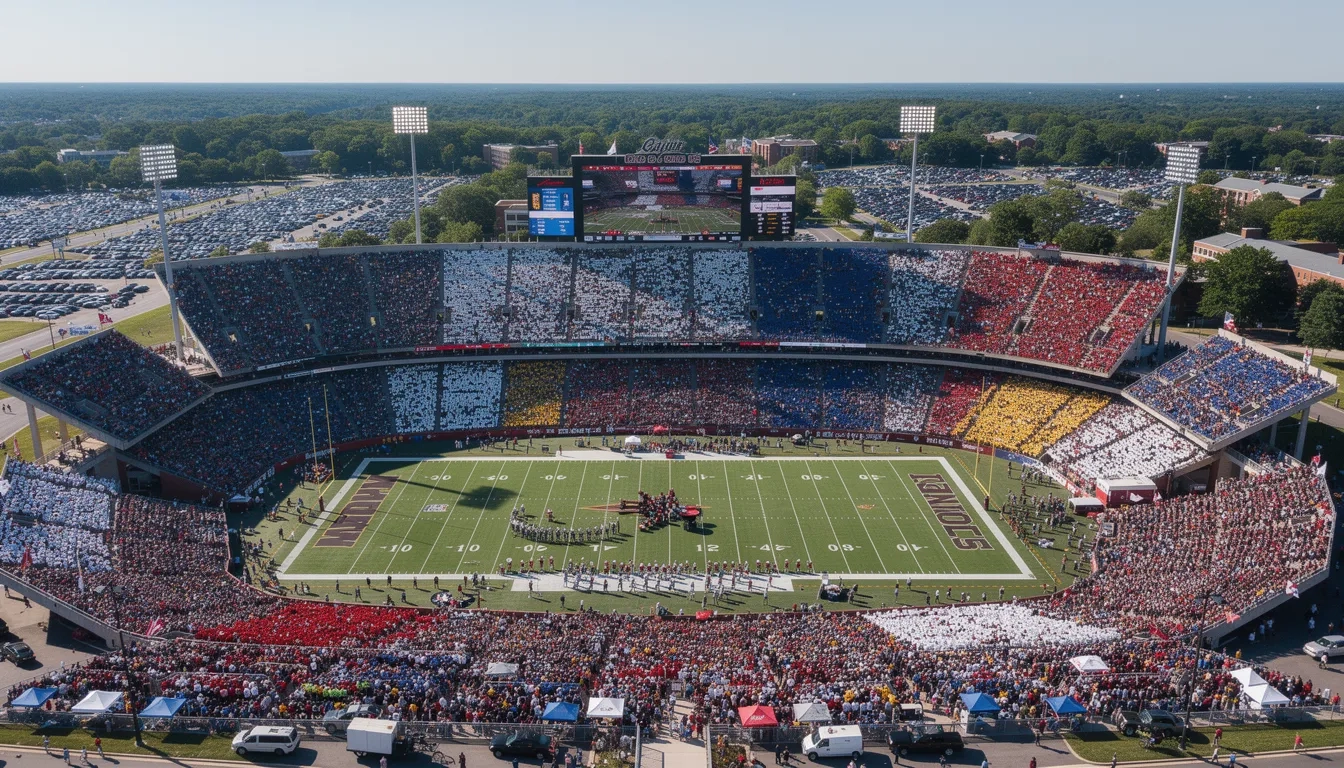
Ohio State collected $91.6 million from the Big Ten Conference in fiscal year 2025. Not from ticket sales. Not from alumni giving campaigns. The conference wrote a check — because Ohio State won the national championship, appeared in prime-time national broadcasts, and happened to belong to the most valuable media rights bundle in college sports history. Total Big Ten distributions that year: $1.47 billion, up $540 million from the year before.
Most fans know "conferences share revenue" but stay fuzzy on how it actually works. Who collects what? Who decides the formula? Where do athletes fit into any of this? The answer got more complicated in June 2025, when a federal judge approved a $2.8 billion antitrust settlement that created a second, entirely new revenue-sharing layer on top of the existing system.
Two separate frameworks now run simultaneously: the traditional conference-to-school flow, and a brand-new school-to-athlete payment system. They operate under different rules and have produced very different winners and losers.
How Conference Revenue Gets Built
Every major conference runs on the same core mechanic. Member schools transfer their broadcast rights to the conference. The conference bundles those rights and negotiates a single deal with a network partner. The bundle is worth far more than any individual school's games could command on their own.
The Big Ten's current media arrangement spans Fox, CBS, NBC, and Peacock, and is worth more than $7 billion over seven years. No single school could reach that figure independently. The conference captures the premium from collective scale, deducts operating costs, and distributes the remainder to members.
Revenue sources feeding the pool include:
- Media rights deals (by far the largest piece at every major conference)
- College Football Playoff distributions, under ESPN's six-year, $7.8 billion extension through 2032
- NCAA March Madness payouts, distributed from the NCAA to conferences based on tournament appearances over a rolling six-year period
- Bowl game revenue, conference sponsorships, and licensing
The March Madness distribution deserves its own note. The NCAA pays conferences in "units" for each tournament game their teams play. Each unit was worth approximately $369,000 in 2024. A team making a deep run generates several units for its conference, which the conference then splits among members. Win four games in March and your conference pockets nearly $1.5 million just from that appearance.
Distribution to schools has historically followed an equal-share model. Every full member received the same cut. That's changing, but equal shares remain the baseline most conferences still start from.
The Numbers: A Gap That Keeps Widening
The financial chasm between Power Four conferences is the defining fact of modern college athletics. Fiscal year 2025 illustrated exactly how wide it has grown.
| Conference | FY2025 Total Revenue | Established Member Distribution |
|---|---|---|
| Big Ten | $1.47 billion | $76M+ per school |
| SEC | $1.11 billion | $70.3M+ per school |
| ACC | $826.5 million | $42.8M+ per school |
| Big 12 | $610.9 million | $37.9M+ per school |
Sit with the Big Ten's $540 million single-year jump for a moment. That is one conference, one fiscal year, gaining more new revenue than the entire annual budget of most mid-major conferences.
The College Football Playoff arrangement makes the gap worse. Big Ten and SEC schools each receive roughly $21 million per year from that deal. ACC and Big 12 schools get about $12-13 million. Schools in the Group of 5 conferences (the American Athletic, Sun Belt, MAC, Conference USA, and Mountain West) receive approximately one-tenth of what Power 4 schools receive from the same arrangement.
A Sun Belt school starts every year roughly $70 million behind an average Big Ten member before a single ticket sells.
The New Member Discount
Joining a richer conference sounds like an obvious financial upgrade. The catch: new members don't get a full share right away. Oregon and Washington entered the Big Ten ahead of the 2024-25 season and each received $46-48 million, while established members collected $76 million or more.
The SEC's new arrivals were starker still. Oklahoma received $2.6 million in its first SEC year. Texas earned $12.1 million. Georgia, the conference's top earner, took home $74.5 million. Same conference, same year, wildly different checks.
These tiered entry periods are negotiated as part of joining agreements. The theory is that new members haven't yet built their contribution to the conference's collective media value. In practice, it means a program like Oklahoma, one of the most storied in college football history, spent its first year in the SEC earning roughly what a mid-major earns from its entire annual conference deal.
The writing was on the wall for anyone watching conference realignment: schools chase the long-term payoff while accepting a multi-year financial discount to get there.
The House Settlement: A Second System Gets Built
The traditional conference-to-school flow remained untouched by the House v. NCAA antitrust case. What changed is what schools can do with that money once it arrives.
On June 6, 2025, U.S. District Judge Claudia Wilken granted final approval to a $2.8 billion settlement. The case argued, successfully, that NCAA rules barring schools from directly compensating athletes violated antitrust law. The result was a new, parallel revenue-sharing framework built alongside the existing system.
Starting with the 2025-26 academic year, Division I schools can share up to $20.5 million annually with their athletes. The cap rises roughly 4% per year through 2034-35.
The $20.5 million figure comes from a specific formula: schools may share up to 22% of what an average Power Five program earns from media rights, ticket sales, and sponsorships. Schools have total discretion over how they allocate that pool. The settlement mandates a cap, not a method.
The $2.8 billion back-pay component covers damages for athletes who were denied compensation under the old rules. The NCAA covers $1.1 billion of that; the Power Four conferences collectively owe $664 million; the remaining 27 Division I conferences cover the other $990 million, paid out over ten years.
How Schools Are Actually Splitting the Money
Of approximately 364 Division I programs, 310 opted into the new framework by the June 30 deadline. The 54 that declined were almost entirely smaller schools, for whom $20.5 million represents a significant portion of their total athletic budget rather than a manageable side expenditure.
The allocation pattern that emerged at most participating schools looks like this: 70-75% of the pool goes to football rosters. Men's basketball claims the next largest share. Women's basketball follows. Most Olympic sport athletes receive little or nothing.
A few things worth knowing about how this actually plays out:
- NIL deals stay separate. The $20.5 million is on top of whatever athletes earn through outside sponsorships and endorsements. The two compensation streams don't count against each other.
- Title IX is a live concern. Directing most of a new payment pool to football while cutting back Olympic sports draws legal scrutiny that will likely produce litigation over the next several years.
- Enforcement has been messy. The College Sports Commission (CSC), the Power Four-created regulatory body meant to oversee the new framework, ran into compliance failures within months of launch. Some NIL collectives stopped reporting deals through the CSC system altogether.
The cap being the same for every school doesn't make the playing field equal. An athletic department running a $200 million annual budget treats a $20.5 million commitment very differently than one running $30 million.
The ACC's Performance Experiment
While athlete-payment stories dominated headlines, the ACC was quietly running a different kind of experiment: moving away from equal distribution entirely.
After years of threatened departures from Clemson and Florida State (who each faced exit fees north of $100 million), ACC Commissioner Jim Phillips announced a new model. His explanation was blunt: "go perform in football and men's and women's basketball, and you will get a bigger share."
The new ACC structure divides its pool this way:
- 40% of base media revenue distributed equally to all members
- 60% allocated based on on-field performance and TV viewership
Within that performance-weighted 60%, football claims 75% and men's basketball claims 25%. Games on ABC or ESPN generate significantly more viewership-weighted revenue than ACC Network games, creating an estimated $1.61 million advantage over five years for schools that appear regularly on the flagship networks.
Success bonuses stack on top of that base:
- CFP appearance: $4 million, plus $4-6 million more per additional round
- Bowl game eligibility: $1.8 million
- AP Top 25 final ranking: $1.8 million
- NCAA Tournament game (men's): $350,000 per game; $60,000 per game for women's
In 2024-25, Clemson earned $7.95 million in success bonuses. SMU, in its first ACC season, earned $7.6 million. Duke took home $3.79 million. Schools that missed bowl games and lost in early tournament rounds earned almost nothing beyond their equal-share base.
Over time, the model could produce a $30 million annual gap between top and bottom ACC earners. Some schools may actually receive less under the new system than they would have under the old equal-share arrangement. The Big Ten and SEC are watching this experiment closely.
Why the Rich Keep Getting Richer
Here is where I come down on this: the new framework doesn't create parity. It formalizes advantages that already existed and hands the wealthiest programs new tools to extend those advantages further.
A Big Ten school receiving $91 million from its conference can allocate the full $20.5 million to athletes, maintain elite facilities, pay top coaching salaries, and still run a healthy surplus. A Group of 5 school receiving $6 million from its conference cannot do all of those things simultaneously. The nominal cap is identical for every school on paper. The operational reality is not.
College sports has always run as a financial hierarchy. The 2025-26 season opened year one of a ten-year settlement, and the full compounding effect won't be clear for several years yet. But the direction is obvious. Programs that were already winning are better positioned to keep winning, and the mechanisms available to them are now more explicit than at any point in the sport's history.
The question worth asking isn't whether the new system is fair. It's whether fair was ever really the goal.
Bottom Line
- Conference revenue flows top-down: conferences bundle media rights, sell them to networks, and distribute back to schools — with the Big Ten ($76M+/school) and SEC ($70M+/school) far ahead of the ACC and Big 12.
- New members pay an entry tax: schools like Oklahoma ($2.6M in year one) and Oregon ($47M) receive a fraction of established members' share while their audience value gets established.
- The House settlement added a new layer: starting in 2025-26, schools can share up to $20.5 million annually with athletes, but most are directing 70-75% of that to football.
- The ACC's performance model is the future: weighting payouts by wins and TV viewership is already creating $30M gaps between conference members, and larger conferences are watching.
- The cap doesn't equalize anything: a $20.5 million commitment hits a $200 million athletic budget and a $30 million budget in entirely different ways. Understand that before assuming the new rules level the field.
Frequently Asked Questions
Does every Division I school participate in the new revenue sharing with athletes?
No. Of roughly 364 Division I schools, 310 opted into the House settlement framework by the June 30, 2025 deadline. The 54 that opted out were mostly smaller programs for whom committing $20.5 million annually would strain their entire athletic budget. Power conference schools were effectively required to participate.
How is conference revenue sharing different from NIL deals?
Conference revenue sharing (the school-to-athlete payment created by the House settlement) is money that comes directly from the athletic department's institutional revenue. NIL deals are separate contracts athletes sign with outside companies, brands, or boosters. The two streams don't count against each other — an athlete can receive both a direct payment from their school and earn NIL income from endorsements.
Why do some schools in the same conference receive so much less than others?
New conference members negotiate tiered entry agreements that phase them up to full-share status over several years. Oklahoma received just $2.6 million in its first SEC year while Georgia earned $74.5 million. The same pattern applies in every conference: Oregon and Washington got $46-48 million apiece while Big Ten veterans collected $76 million or more.
Is the $20.5 million cap the same for every school, or does it scale?
The cap is the same nominal figure for every participating school — $20.5 million in 2025-26, rising roughly 4% annually through 2034-35. But the cap represents 22% of average Power Five revenue, so it was built around what large programs can comfortably afford. For a mid-major athletic department running a $25-30 million total budget, that same $20.5 million is nearly impossible to pay out fully.
What is the College Sports Commission, and does it actually enforce the rules?
The College Sports Commission (CSC) is an independent regulatory body formed by the Power Four conferences to oversee athlete compensation rules, roster limits, and third-party NIL compliance under the new framework. In practice, enforcement has struggled significantly since launch. Several NIL collectives stopped reporting deals through the CSC system within months of its rollout, and Power conference participant agreements needed for enforcement were unsigned as of mid-2025.
Will the Big Ten and SEC eventually adopt the ACC's performance-based distribution model?
It's possible. The ACC's model, which directs 60% of its revenue based on wins and TV viewership rather than splitting everything equally, is being watched closely by both conferences. The Big Ten already has performance bonuses baked into certain distributions (Ohio State's championship payout being one example), and pressure to formalize a performance tier is building. But both conferences have long used equal distribution as a tool for institutional harmony, so any shift will be politically complicated.
Sources
- Big Ten Announces $1.37 Billion In 2024-2025 Revenue Distribution
- The Power 4 Conferences Reveal Revenue Figures for 2025
- New revenue equation for ACC schools: More wins + more viewers = more money
- The Year Schools Paid Their Players
- What Is NCAA Revenue Sharing? Impact on Recruiting Explained
- Big 12 spring meetings: FY2025 financial report illuminates revenue deficit