Federal Budget 2026: What Got Cut, What Congress Saved, and What DOGE Actually Changed
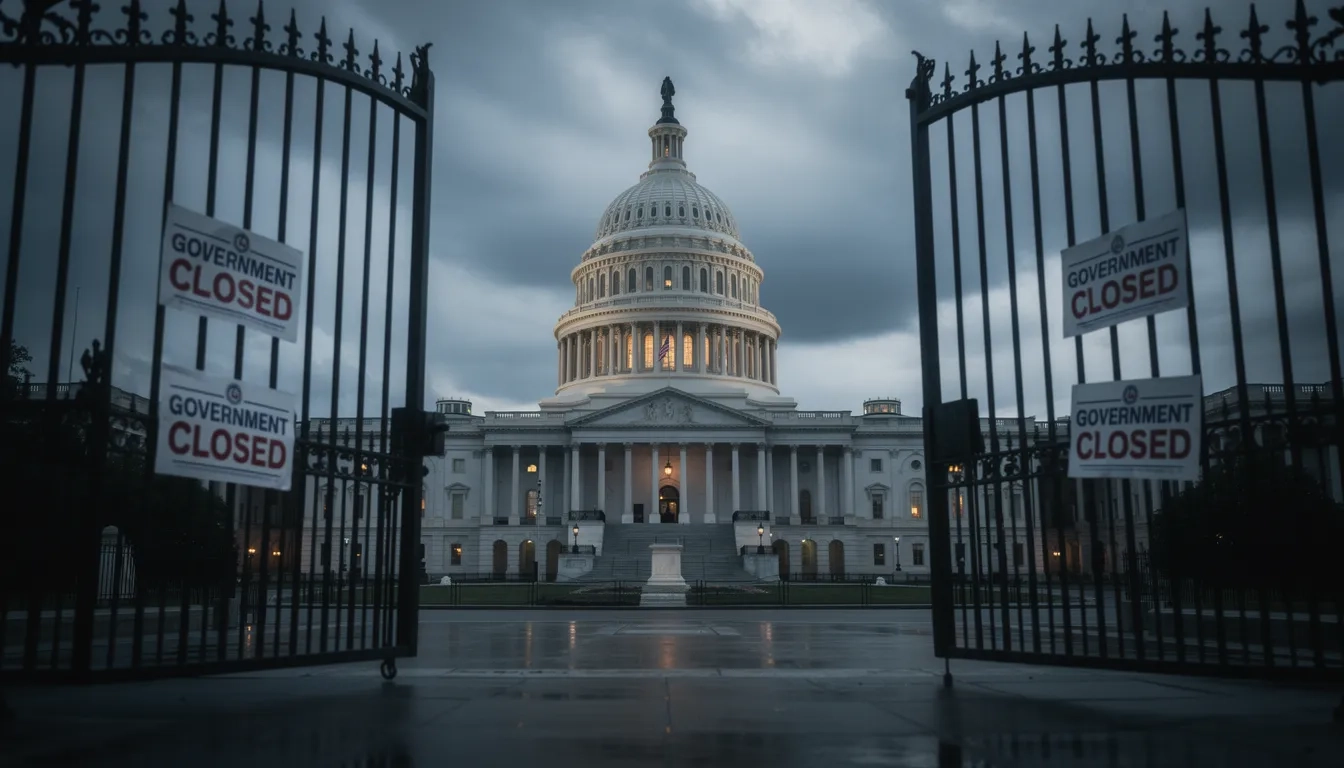
Three government shutdowns in a single fiscal year. A 43-day closure that the Congressional Research Service called the longest in modern history. Then a final sprint to enact all 12 appropriations bills before September 30. And underneath all of it, a fight over whether the executive branch could simply decide not to spend money that Congress had already approved. That's the actual story of federal funding in FY2026 — not the top-line numbers, but the gap between what was appropriated and what actually reached programs and people.
Three Shutdowns and a Messy Path to Enactment
FY2026 began on October 1, 2025, with no funding in place. What followed was the longest shutdown in modern history: 43 days, ending November 12. Congress eventually passed a partial funding bill, another brief shutdown hit January 31 through February 3, and then a third partial shutdown over ICE funding ran from February 14 through April 30.
This matters for more than just drama. Agencies operating under continuing resolutions and shutdowns can't award new grants, can't hire, and can't sign multi-year contracts. For grantees and state agencies dependent on federal pass-throughs, months of uncertainty meant frozen programs and staff layoffs that predated any formal appropriations decision.
All 12 appropriations bills were ultimately enacted. Total base discretionary spending for FY2026 came in at roughly $1.575 trillion, modestly below the $1.600 trillion enacted in FY2025. When you add mandatory appropriations from the reconciliation process (more on that below), the overall federal commitment grows considerably.
The Defense-vs.-Everything Trade
The administration's budget request made its priorities unmistakable. Non-defense discretionary spending: proposed at $163 billion below 2025 levels, a 22.6% cut. Defense: proposed up $119.3 billion to $961.6 billion. The Department of Homeland Security alone was proposed to grow from $65.1 billion to $107.4 billion — nearly 65%.
What Congress enacted was different, though the directional shift held. Defense appropriations landed at $838.7 billion. Non-defense programs at roughly $783 billion, a nominal 1.1% above 2025 levels. But here's the thing about nominal increases: inflation ran at 3.0%. In real purchasing power, that 1.1% gain is actually a 1.8% decline.
The Center on Budget and Policy Priorities tracked a longer arc: non-defense spending has fallen to just 2.5% of GDP in 2026, down from 3.7% in 2010. That's approximately $370 billion less per year than if funding had tracked economic growth. This isn't something that started in 2025.
The Fiscal Responsibility Act's spending caps, which had constrained both parties, were no longer binding for FY2026 — giving Congress more flexibility but also less political cover for the decisions they made.
DOGE's Real Footprint
The Department of Government Efficiency operated as an advisory body from January 2025 until disbanding in November 2025. Before it did, it claimed 15,887 grant terminations and $49 billion in savings — figures that circulated widely until independent analysts started checking the methodology.
The Government Accountability Office and multiple nonpartisan budget organizations identified duplicate contract entries, expired grants counted as cancelled savings, and other problems. The $214 billion in total claimed savings that DOGE published never reconciled with verifiable agency spending data.
What is verifiable, and significant:
- 27,500 IRS positions eliminated — a 27% workforce reduction in a single year
- NIH lost 21% of its research staff before any final appropriations vote
- The Social Security Administration cut 7,500 positions, its largest single-year staffing drop on record
- EPA shed roughly 4,000 employees (24% of its workforce)
- The Education Department eliminated over 40% of its personnel
The overall civilian federal workforce shrank by approximately 9-10% between January 2025 and early 2026. The Center on Budget and Policy Priorities described it as "the largest one-year reduction since the drawdown after World War II." That has budget consequences that don't show up in any appropriations line item.
Where Congress Drew Lines
The administration proposed cutting the National Science Foundation by 55%. Congress enacted $8.75 billion — a reduction of $310 million from 2025, not the $4-plus billion the budget request sought. NIH was targeted for a 41% reduction to $27.7 billion. Congress appropriated $47.3 billion, essentially flat with the prior year. Head Start, housing vouchers, WIC nutrition assistance — all survived, some with increases.
The pattern repeated across agency after agency. The most extreme proposals were blocked. But Congress also recognized that blocking a budget cut doesn't prevent an agency from being hollowed out through workforce reductions and grant terminations before the bill is signed.
So FY2026 appropriations added something new: legally binding guardrails. The Center on Budget and Policy Priorities documented mandatory compliance language across roughly 60 accounts at 12 agencies, including:
- Required timelines for grant delivery (preventing indefinite "pending review" holds)
- Prohibitions on unilateral changes to indirect cost rates for research grants
- Minimum staffing requirements at select agencies
- Automatic renewal provisions for homeless services grants
- Notification requirements before terminating grants
These aren't typical appropriations language. They're direct legislative responses to specific executive actions that had already occurred.
Health, Science, and Housing: Enacted vs. Delivered
Here's where the enacted numbers and the lived reality diverge most sharply. Looking at appropriations alone, FY2026 looks survivable for health and science programs. Looking at what programs actually received, it's considerably more complicated.
NIH: Congress appropriated $47.3 billion, roughly flat. But the agency had already lost 21% of its scientists and administrators — and had terminated over 400 grants (targeting DEI and vaccine-adjacent research) before the final spending bill was signed. The money was there. Much of the capacity to spend it wisely was not.
CDC: The proposed cut from $8 billion to $4.1 billion was not enacted. But $11.4 billion in COVID-era grants was clawed back from state and local health departments through executive action. Epidemiology and Laboratory Capacity grants alone lost $8.9 billion. SAMHSA mental health and substance use grants lost $1 billion. The Immunization and Vaccines for Children program lost $2.1 billion. These happened before any appropriations debate concluded.
The table below shows where proposed cuts landed versus what Congress actually enacted:
| Program | 2025 Level | Proposed Cut | 2026 Enacted | Net Change |
|---|---|---|---|---|
| NIH | $47.0B | -41% | $47.3B | +0.6% |
| NSF | $9.1B | -55% | $8.75B | -3.8% |
| EPA | ~$10.0B | -55% | ~$7.0B | -30% |
| Housing Vouchers | $35.6B | Major cuts proposed | $38.0B | +6.7% |
| IRS | $12.3B | Major cuts proposed | $11.2B | -8.9% |
| CDC (base) | $8.0B | -49% | Not fully cut | Partial |
Housing was a bright spot on paper. Congress increased vouchers to $38 billion (+7%) and project-based rental assistance to $18.5 billion (+10%). The National Association of Counties notes that even with those increases, only about 25% of eligible families receive rental assistance (a coverage gap that predates 2026 and won't be fixed by one year of modest increases).
States, Counties, and the Pass-Through Gap
Federal budget debates focus on agency-level line items. The actual pain lands on states and counties, which administer a substantial share of domestic programs through pass-through grants.
The National Association of Counties flagged several areas of serious concern for FY2026:
- The U.S. Forest Service was proposed to fall from $16.8 billion to $4.0 billion — a 76% cut that Congress rejected, but that triggered administrative slowdowns in grant disbursement regardless
- Community Development Block Grants, HOME housing funds, and the Community Development Financial Institutions Fund ($291 million) were all proposed for elimination
- LIHEAP (the Low-Income Home Energy Assistance Program, covering roughly 6.7 million households) faced proposed elimination
- Regional economic development commissions saw $3.6 billion in proposed cuts
Congress preserved most of these programs. But for much of FY2026, state and county administrators didn't know that. Grants were frozen pending review. Federal contacts who would normally process applications had been laid off. The uncertainty itself had a cost — programs delayed, hires deferred, nonprofit contracts paused.
The writing was on the wall by summer 2025 that the enacted appropriations number alone would not tell you what communities actually received.
The gap between what Congress funds and what actually reaches program recipients may be the defining accountability question of 2026 federal budgeting.
Courts as the Third Actor
Federal courts became a meaningful part of the FY2026 funding story in ways that have no precedent in recent budget history.
Judge William G. Young declared NIH grant terminations "void, illegal, set aside, and vacated" (the Supreme Court later stayed that order pending appeals). Judge Allison D. Burroughs struck down a freeze on Harvard's federal grants as an unconstitutional restriction on academic freedom. Judge Deborah L. Boardman reinstated AmeriCorps grants for 24 states plus the District of Columbia. A federal judge temporarily blocked the $11 billion CDC clawback from state health departments.
None of these restorations are necessarily permanent. Organizations operating under court-reinstated grants are in a legally fragile position until appellate courts settle the underlying questions about executive impoundment authority — questions that haven't been fully litigated since the 1974 Impoundment Control Act was passed.
The $14 billion EPA Greenhouse Gas Reduction Fund freeze was still in oral argument as of February 2026. That case will shape how much discretion future administrations have over funds Congress has already appropriated.
The Reconciliation Layer
Separate from the normal appropriations process, the One Big Beautiful Bill Act added approximately $382 billion in mandatory appropriations. Defense received $153 billion of that; Homeland Security received $133 billion. The Congressional Budget Office scored the full reconciliation package at adding roughly $72 billion to the deficit over ten years — or about $94 billion once interest costs are included.
This spending sits entirely outside the $1.575 trillion discretionary total. It's why the top-line discretionary numbers understate total FY2026 federal commitment on the defense and border security side, while overstating the relative share going to domestic programs.
The deficit is projected to hit nearly $2 trillion in FY2026. Federal debt is expected to cross 102% of GDP. The Committee for a Responsible Federal Budget has noted that a ten-year discretionary freeze from current levels would save $1.5 trillion — which means that even the enacted cuts, taken together, don't move the long-term fiscal needle much.
Bottom Line
- Congress blocked the most extreme proposed cuts — NIH, NSF, housing vouchers, and education appropriations all survived far above what the administration requested. But blocking a cut in the budget document does not prevent workforce reductions and grant terminations from happening first.
- DOGE's verifiable impact was concentrated in the federal workforce (roughly 10% cut) and executive-action grant terminations. The $49B in claimed savings is disputed. The 27,500 IRS positions eliminated are not.
- If you depend on federal grants, about 1,600 opportunities are currently active on Grants.gov — a 33% year-over-year drop. NIH R01 cycles, NSF (freeze lifted), USDA Farmer Bridge, and FEMA programs are live. If your program was court-reinstated, monitor the relevant appellate docket closely.
- For states and counties, the enacted numbers are the starting point, not the finish line. Delivery depends on agency staffing and administrative capacity that has been significantly reduced.
- The FY2027 budget cycle is already underway. The pattern from 2026 — propose deep cuts, face congressional resistance, achieve partial reductions through executive action — is almost certainly the template going forward.
Frequently Asked Questions
Did the federal government actually cut spending in FY2026?
At the discretionary level, total spending fell slightly to roughly $1.575 trillion, modestly below the $1.600 trillion enacted in FY2025. In real inflation-adjusted terms, non-defense programs lost purchasing power. The larger reductions came through executive actions — workforce eliminations, grant terminations, impoundments — that don't appear as formal reductions in enacted appropriations line items.
What did DOGE actually accomplish, and were the savings real?
DOGE claimed $49 billion in grant terminations and $214 billion in total savings before disbanding in November 2025. Independent analysts, including the Government Accountability Office, identified significant methodological problems: duplicate entries, expired contracts counted as cancelled, and inflated figures. The most concrete verified outcome was a roughly 10% reduction in the civilian federal workforce — real, significant, and unlikely to reverse quickly.
My nonprofit relies on federal grants — what's available right now?
Approximately 1,600 active grant opportunities remain on Grants.gov, down about 33% year-over-year. Currently open programs include NIH funding cycles (R01 deadline was June 5, 2026), NSF awards (freeze lifted), USDA's Farmer Bridge program ($12 billion available), HRSA and SAMHSA opportunities through HHS, FEMA programs, and Title I and IDEA education grants. If you received a termination notice that was subsequently reversed by a court order, confirm your program's current legal status before spending reinstated funds.
Myth vs. reality: "Congress cut NIH by 40% in 2026" — is that accurate?
No. The administration proposed a 40% cut in its budget request. Congress enacted $47.3 billion for NIH — essentially flat with 2025 levels. That said, NIH's actual operational capacity shrank significantly: the agency lost 21% of its staff before the appropriations bill was signed, and hundreds of grants were terminated by executive action. The money was preserved; some of the people who would have disbursed it were already gone.
How does the "One Big Beautiful Bill" reconciliation fit in?
The reconciliation bill added approximately $382 billion in mandatory appropriations — primarily $153 billion for the Armed Services and $133 billion for Homeland Security. This sits outside the normal discretionary spending caps and on top of the $1.575 trillion in regular appropriations. The Congressional Budget Office estimated the full reconciliation package adds $72 billion to the ten-year deficit (or $94 billion with interest), making it a significant fiscal event beyond what the discretionary headlines capture.
What happened to community development programs like CDBG and LIHEAP?
Both were proposed for elimination or major restructuring. Congress largely protected them in the FY2026 appropriations bills — LIHEAP survived, CDBG survived, the Community Development Financial Institutions Fund ($291 million) survived. However, agencies administering these programs experienced significant staffing losses, which affected grant processing timelines and technical assistance to local governments throughout the fiscal year.
Sources
- Tight 2026 Non-Defense Funding Rejects Trump's Proposed Deep Cuts — Center on Budget and Policy Priorities
- Assessing FY 2026 Appropriations — Committee for a Responsible Federal Budget
- Appropriations Watch: FY 2026 — Committee for a Responsible Federal Budget
- DOGE Federal Funding Tracker 2026 — Funding Landscape
- Analysis of FY 2026 President's Budget — National Association of Counties