Florida A&M: Admissions, Rankings, and What Campus Life Is Really Like
When Niche published its 2026 HBCU rankings, Florida A&M University sat at the top — above Howard University, above Spelman, above Morehouse. A lot of people raised an eyebrow. Howard is often called the Harvard of HBCUs. So how did a public university in Tallahassee, Florida beat it?
The answer involves academic performance, genuine affordability, social mobility data, and a campus culture students consistently rate as exceptional. FAMU isn't a surprise contender anymore. It's the standard other HBCUs are measured against.
What FAMU Actually Is
Florida Agricultural and Mechanical University — everyone calls it FAMU, pronounced "FAY-moo" — was founded in 1887 in Tallahassee. It started with 15 students and two teachers. Today it enrolls roughly 10,000 students from across the country and several foreign countries, making it one of the largest HBCUs in the nation.
FAMU is a public research university, which means it operates with state funding and tuition that's a fraction of what private HBCUs charge. Schools and colleges span pharmacy, journalism, engineering, law, education, and business. The College of Engineering is a joint program with Florida State University (the FAMU-FSU College of Engineering), housed on FSU's campus but conferring degrees under both universities.
The university is gunning for R1 Carnegie research classification — the highest designation for research activity. Recent investments in graduate programming and faculty hiring are designed to get it there, according to Provost Allyson Watson.
Getting In: What the Numbers Actually Mean
Many people assume FAMU runs a lenient admissions process because it's a public HBCU. It does not. FAMU's acceptance rate sits around 21%, which places it in the "more selective" category for public universities — more selective, in fact, than many large flagship state schools.
The middle 50% of admitted freshmen in Fall 2025 showed these academic profiles:
- Weighted core GPA: 3.69 to 4.24
- SAT: 1080 to 1230
- ACT: 22 to 27
- CLT: 61 to 73
These are not soft minimums. They reflect the actual band where most admitted students land.
Also worth knowing: FAMU is not test-optional. You must submit ACT, SAT, or CLT scores. The application fee is $30 (one of the lowest among selective universities), and fee waivers from ACT, College Board, and NACAC are accepted.
Here are the key deadline windows:
| Application Type | Deadline | Decision Date |
|---|---|---|
| Early Action | November 1 | December 12 |
| Regular Decision | February 1 | March 12 |
| Rolling Admission | May 1 | Starting April |
Early Action is the smart play. You get a decision on December 12, leaving months to compare financial aid packages before the national May 1 deadline. No binding commitment.
One underrated pathway: the IGNITE Transfer Program. Complete an Associate of Arts degree from any Florida College System institution and you receive guaranteed admission to FAMU. It's a real option for students who didn't hit FAMU's freshman profile but want to get there eventually.
Rankings: What They Mean and What They Don't
FAMU holds multiple notable rankings for 2026, and the specific placements tell different stories depending on what you care about.
U.S. News placed FAMU in the top 100 among more than 1,700 ranked colleges. It ranked 5th among all HBCUs (public and private combined) and held its position as the highest-ranked public HBCU for the seventh straight year. That consistency across seven years matters more than any single placement.
The ranking that arguably tells you the most about FAMU's real value: U.S. News tied it at No. 22 nationally on the Social Mobility Index, alongside UC Davis and the University at Albany-SUNY. That index measures how well universities move Pell Grant recipients through to graduation and into careers that pay.
Niche's 2026 rankings gave FAMU an overall grade of A- and placed it #1 among all HBCUs, above Alcorn State (#2) and Howard (#3). Niche weights student reviews and experience data heavily, so this reflects what students actually say about being there.
A few other Niche-specific placements worth flagging:
- #11 nationally for Best Greek Life
- #10 nationally for Best Colleges for Criminal Justice
- #2 in Florida for Best Greek Life
Rankings measure what they measure. But the pattern across U.S. News, Niche, and multiple methodologies is consistent: FAMU delivers well above its price point.
Tuition and Financial Aid: The Real Numbers
This is where FAMU becomes genuinely compelling compared to private HBCUs. In-state tuition and fees total $5,785 per year. Out-of-state students pay $17,725. Total cost of attendance — including housing and meals — runs about $24,153 for in-state students and $36,093 for out-of-state.
Compare that to Howard University, where tuition alone exceeds $31,000 annually. The value math isn't complicated.
80% of first-year students receive need-based financial aid. The average net price for federal loan recipients drops to $11,558. The average need-based grant or scholarship for first-year students was $8,319 — meaning many Florida residents end up paying well under the sticker price.
One thing to flag: FAMU proposed its first tuition increase since 2013 for Fall 2026. The increase is expected to be modest, but confirm updated figures with the financial aid office before locking in any enrollment decision.
Florida residents can also stack the Florida Bright Futures Scholarship on top of institutional aid. Students qualifying for the Florida Academic Scholars award get 100% of tuition covered by the state before FAMU-specific aid is even applied. That combination can make FAMU effectively free for high-achieving Florida residents.
Campus Life: What Students Actually Experience
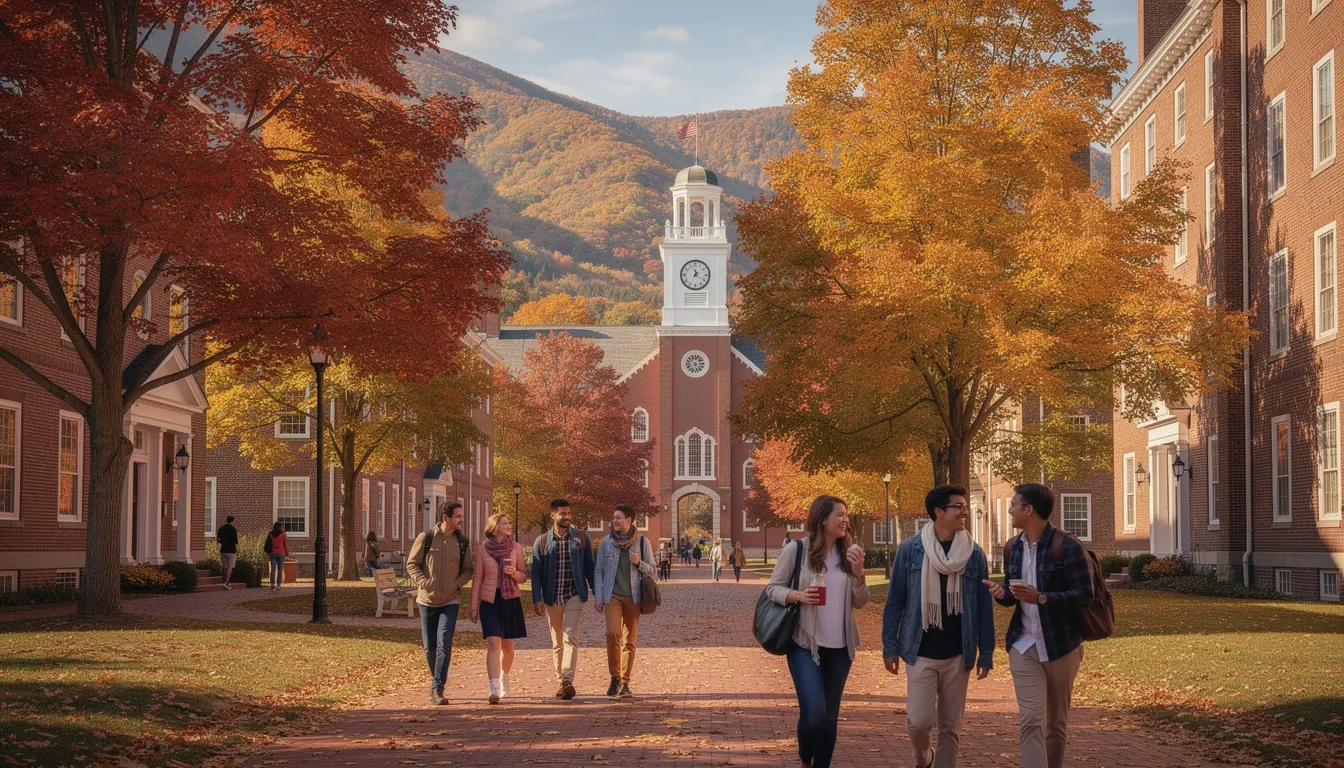
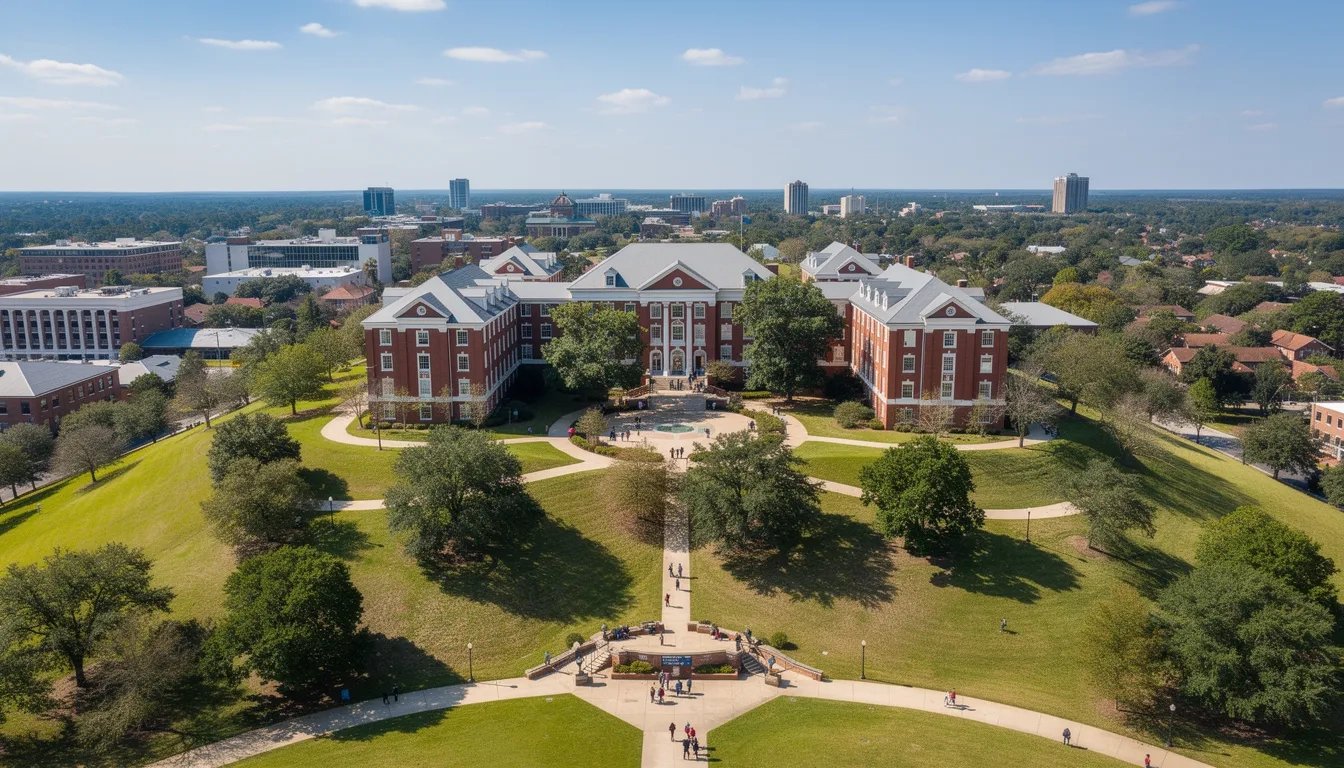
FAMU's Tallahassee campus covers 422 acres in Florida's state capital. That location matters more than people realize — the Florida state legislature meets a few blocks away, creating a direct professional pipeline for students in political science, public policy, and social justice who want proximity to actual government work.
On-campus housing expanded significantly in Fall 2025, with two new residence halls bringing total bed capacity from 2,684 to 3,379 — an addition of 695 beds for a campus of roughly 10,000 students. Housing ratings on Niche jumped from C- to B- in a single year because of it.
Niche student reviews break down campus life by category:
| Category | Niche Grade |
|---|---|
| Student Life & Dining | A |
| Faculty Quality | A- |
| Athletics | B+ |
| Housing | B- |
| Diversity | B |
FAMU has over 300 registered student organizations spanning professional associations, cultural clubs, student media, academic honor societies, and activist groups. That's enough range that most students can find something that fits without defaulting to Greek life.
Campus traditions give FAMU its texture. Set Fridays are an informal weekly gathering where students socialize on a specific section of campus — the kind of ritual that takes about one semester before it feels indispensable. Fried Chicken Wednesdays in the dining hall has achieved near-legendary status. And FAMU Homecoming is a week-long event drawing alumni, national artists, and more media attention than most public universities ever see.
Greek Life and the Marching 100
FAMU's Greek life ranks #11 nationally on Niche — a position that reflects what students report: the organizations here are high-visibility, embedded deeply in campus identity, and competitive to join. The university has 35 fraternity and sorority chapters under its Office of Fraternity & Sorority Life, spanning the NPHC (the "Divine Nine" historically Black Greek-letter organizations), plus additional councils.
But Greek life is almost secondary to the Marching 100.
FAMU's Marching "100" (a stylized name — the band has 420+ members) is one of the most historically significant college marching bands in the country. Founded in 1892, it has performed at multiple Super Bowls, at the Presidential inaugural parades for Bill Clinton and Barack Obama, and represented the United States at France's Bicentennial celebration in Paris in 1989. William P. Foster, the band's director from 1946 to 1998, developed 30 marching band techniques now used as standard practice by high school and collegiate programs across the nation.
Watching a FAMU home football game means watching a performance the stands are partly there for. The band isn't halftime entertainment — it's a main event.
Standout Academic Programs
FAMU's College of Pharmacy and Pharmaceutical Sciences is the only HBCU pharmacy school in the southeastern United States. It produces a disproportionately high share of Black pharmacists nationally, which matters when you look at how underrepresented Black professionals remain in healthcare.
The School of Business and Industry (SBI) holds AACSB accreditation — a credential fewer than 6% of business schools worldwide earn — and runs a corporate partners program that connects students directly with Fortune 500 companies for internships. The School of Journalism and Graphic Communication has produced a long list of prominent journalists and media executives.
The FAMU-FSU College of Engineering is genuinely unusual. Students get access to FSU research facilities and faculty while earning a degree that bears FAMU's name and all the community that comes with it. It's an arrangement few universities manage to pull off well.
Bottom Line
FAMU makes the strongest case I know of for why public HBCUs deserve more national attention than they typically get. The combination of 21% selectivity, a Social Mobility Index ranking of #22 nationally, $5,785 in-state tuition, and an A from students on campus life is hard to match anywhere.
If you're applying to FAMU:
- Apply Early Action by November 1 — decisions arrive December 12, which gives you the most time to evaluate aid packages before committing anywhere.
- Florida residents should run the Bright Futures + institutional aid stack through the financial aid office. The net cost may surprise you.
- If your freshman GPA falls below the middle 50%, look seriously at the IGNITE Transfer Program through any Florida College System school — it's a legitimate guaranteed path in.
- Students interested in pharmacy, engineering, or journalism should look at program-specific scholarships. FAMU's professional schools carry their own funding pools.
The #1 Niche ranking above Howard University isn't noise. The data across multiple independent methodologies points the same direction.
Frequently Asked Questions
Is Florida A&M actually selective, or is it easy to get into?
FAMU has an acceptance rate around 21%, which is more selective than many public flagship universities. The middle 50% of admitted students have weighted GPAs between 3.69 and 4.24. It also requires standardized test scores — not test-optional — so applicants need a complete, competitive file.
What is FAMU's tuition for out-of-state students, and is it worth it?
Out-of-state tuition and fees run $17,725 per year, with total cost of attendance around $36,093. That's still lower than many private HBCUs and comparable private universities. With 80% of first-year students receiving need-based aid, the actual out-of-pocket cost frequently drops below the sticker price.
How does FAMU compare to Howard University in rankings?
In Niche's 2026 Best HBCU Schools in America, FAMU ranked #1, placing above Howard (#3). U.S. News puts FAMU 5th among all HBCUs combined. Howard carries more name recognition, particularly in graduate and professional programs. But for undergraduate value, social mobility outcomes, and student satisfaction, FAMU has a legitimate claim to the top spot.
What is the IGNITE Transfer Program at FAMU?
IGNITE offers guaranteed admission to students who complete an Associate of Arts degree from any institution in the Florida College System (Florida's community college network). If you meet the A.A. completion requirements, FAMU admits you without competing in the standard freshman applicant pool. It's a practical pathway for students who need more time to build their academic profile.
What makes FAMU's Marching 100 so well-known?
The Marching "100" has performed at multiple Super Bowls, at two Presidential inaugurals (Clinton in 1993 and Obama in 2009), and at France's 1989 Bicentennial celebration in Paris. Former director William P. Foster developed techniques that became industry standards for marching bands nationwide. At home games, the band draws as much attention as the football team itself.
Is FAMU a good school for pre-med or healthcare students?
FAMU's College of Pharmacy and Pharmaceutical Sciences is the only HBCU pharmacy school in the southeastern U.S. and consistently graduates a high percentage of Black pharmacists nationally. For pre-med students, FAMU's biology and chemistry departments feed into medical school pipelines, and the university's research expansion under its R1 pursuit is creating more undergraduate lab opportunities each year.
Sources
- Florida A&M University Ranked No. 1 HBCU in the Nation by Niche
- U.S. News & World Report Ranks FAMU Amongst 2026 Best Colleges
- FAMU Freshman Admissions Requirements & Deadlines
- FAMU Proposes First Tuition Increase Since 2013, Effective Fall 2026
- Marching 100 – Wikipedia
- Florida A&M University – Wikipedia