Hampton University: Admissions, Rankings, and Student Life
When US News ranks Hampton University at #273 in National Universities, most high school seniors scroll right past it. That's a mistake. A school that holds the #7 spot among all HBCUs nationally, lands at #136 for social mobility, sits on a 15-acre National Historic Landmark District, and counts Academy Award-winning costume designer Ruth Carter among its graduates deserves more than a quick skip.
A 157-Year Foundation
Hampton University opened on April 1, 1868, on land that carried unusual weight even before the school existed. During the Civil War, formerly enslaved people who escaped to Union-held Fortress Monroe — located just down the road from what would become Hampton's campus — were declared "contraband of war" by Union General Benjamin Butler, protecting them from being returned to slaveholders. A free Black woman named Mary Peake began teaching those first freedom seekers on September 17, 1861, under an oak tree on the same grounds.
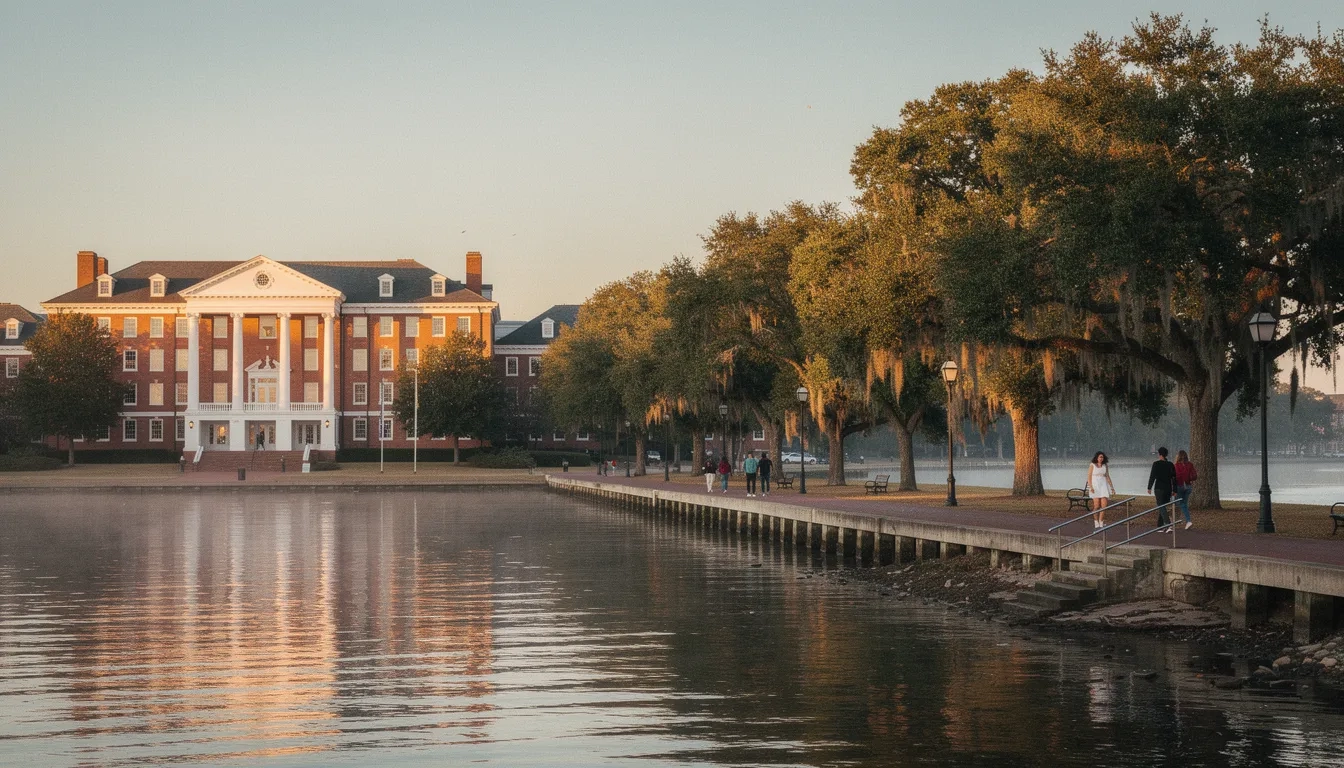
That's the soil Hampton was planted in. Former Union General Samuel Chapman Armstrong founded the school on a former plantation called "Little Scotland," on the banks of the Hampton River. The campus today spans 314 acres, and a 15-acre stretch along the river — including some of the original 19th-century buildings — is designated a U.S. National Historic Landmark District. The old plantation's Mansion House (circa 1820) still stands near the waterfront and serves as the President's House.
The school's educational philosophy, shaped by Armstrong and later popularized by one of its earliest students, embedded a work-study ethic and vocational seriousness into the institution from the start. One of those students was Booker T. Washington, who arrived in 1872 with almost no money after walking a significant portion of the journey from West Virginia. He later used Hampton's model as the direct blueprint for founding Tuskegee University. That lineage is not incidental — it shapes how faculty, alumni, and administrators still talk about what the school is for.
Hampton's motto, "The Standard of Excellence: An Education for Life," reads less like marketing copy and more like a standing expectation. Campus culture tends to reflect it: professional dress codes are enforced in certain facilities, conduct standards are taken seriously, and the institution connects daily academic life to a broader historical mission in ways that visitors usually notice within a few hours on campus.
Admissions: Reading the Numbers Correctly
Hampton's acceptance rate is 62%, with an early action rate of 71.5%. That 9.5-percentage-point gap between early and regular admission is large enough to matter in practice — students who apply ahead of the March 1 deadline give themselves a real structural advantage, not a trivial one.
The middle 50% of admitted students scores between 990 and 1,170 on the SAT (median: 952) or 15 to 22 on the ACT. A 3.3 GPA combined with an SAT score around 1,040 puts an applicant in solid range. Students below that GPA threshold aren't automatically out, but the application needs to demonstrate upward trajectory — an improvement from sophomore to junior year carries more weight than a static 2.9.
The application requires:
- Official high school transcript (GPA is the single most heavily weighted factor)
- SAT or ACT scores
- One letter of recommendation from a counselor or teacher
- $60 non-refundable application fee
One detail that surprises applicants: Hampton does not consider class rank. That's a meaningful equalizer for students who come from high schools that don't rank, or from competitive schools where ranking would look unflattering despite genuinely strong academic performance. The review stays focused on GPA, course rigor, and the quality of that one recommendation letter — which makes choosing the right recommender more consequential than it is at schools with longer application checklists.
There is no early decision option with a binding commitment. The 71.5% early action acceptance rate means students get a better shot without locking in enrollment. For applicants who have Hampton near the top of their list, applying early action is the clearest low-cost move available.
Rankings: The Full Picture
Placing a national rank of #273 next to an HBCU rank of #7 reveals something important about how these lists work. The national ranking compares Hampton against flagship state universities with research budgets, endowments, and graduate program depth that dwarf what any 3,700-student private institution can match. The HBCU comparison is the more meaningful benchmark for students who are actually evaluating Hampton as a choice.
Hampton's 2025-2026 US News rankings place it #7 among HBCUs and #136 nationally for Top Performers on Social Mobility — a measure of how effectively a school moves lower-income students into higher economic outcomes over time.
The social mobility metric deserves more attention than it usually gets. US News calculates it using graduation rates among Pell Grant recipients relative to predicted rates given student characteristics. A #136 national finish means Hampton is outperforming hundreds of universities — including schools with far higher national profiles — on the question that matters most to families stretching financially to send a student to college.
Here's how Hampton's key rankings stack up:
| Ranking Category | Position |
|---|---|
| National Universities (US News 2026) | #273 |
| Top HBCUs (US News 2025-2026) | #7 |
| Top Performers on Social Mobility | #136 |
For a student weighing Hampton against a lower-ranked regional school, the HBCU network strength and the social mobility data consistently tip the scales. Graduating from a school that has a track record of moving its students upward economically is worth more than a marginally better national ranking with weaker alumni engagement.
Campus Life: What 3,728 Students Actually Do
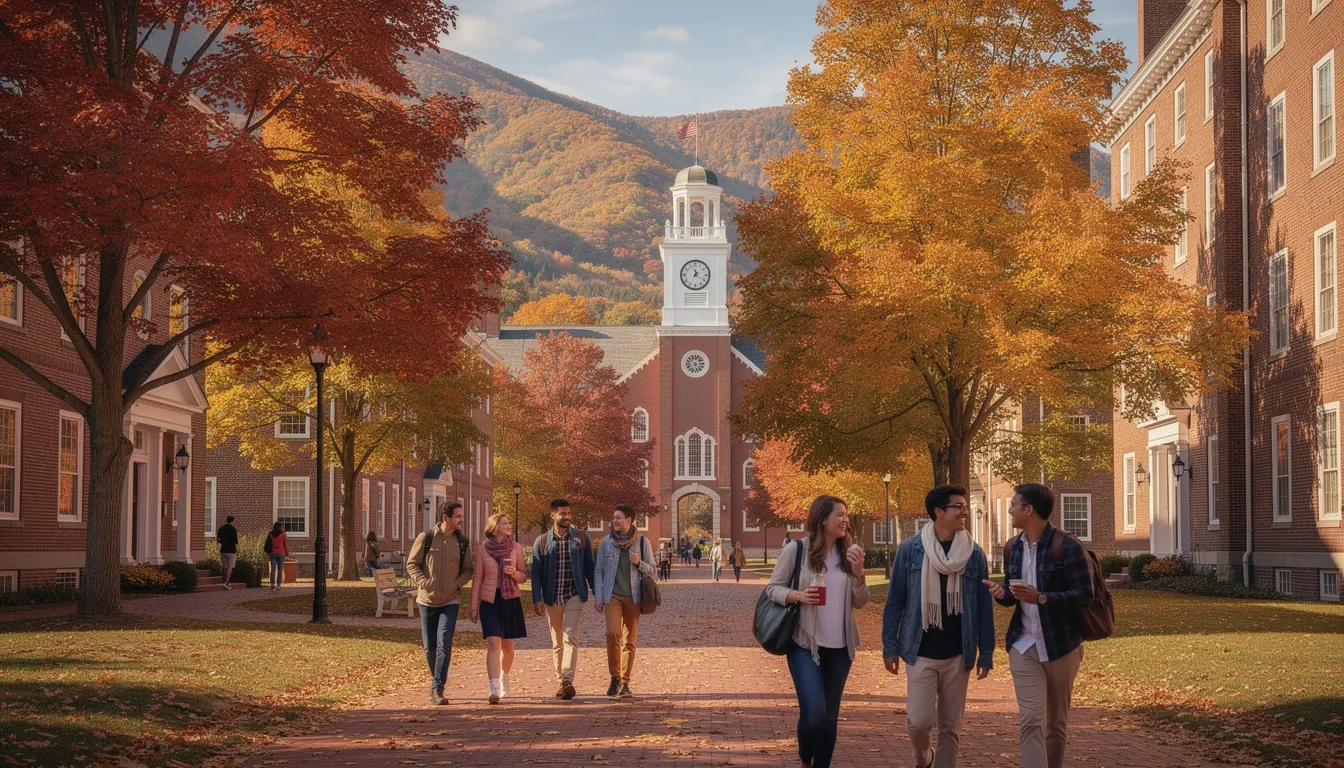
Hampton's undergraduate enrollment of 3,728 students (fall 2024) lives on a 314-acre waterfront campus where 74% of students live in college-operated housing. The waterfront location is genuinely distinctive — the Hampton River runs along the edge of campus, the Chesapeake Bay sits just beyond, and the older buildings on the National Historic Landmark stretch are integrated into everyday student routes. It doesn't feel like a generic suburban campus.
When three out of four students sleep on campus, social life concentrates there. Organizations recruit more easily, friendships build faster, and the campus does not empty out on weekends the way commuter-heavy schools do. That residential density is one of the less-advertised reasons Hampton's alumni network stays cohesive — people actually know each other.
Greek life is central to Hampton's social fabric, not peripheral. The Divine Nine historically Black fraternities and sororities have deep roots here, and their presence is visible in ways that go beyond wearing letters. Step shows, community service initiatives, and professional mentorship pipelines connect current students to alumni who graduated decades ago and still show up for Homecoming and career events.
Hampton's 55+ student organizations cover the range you'd expect — student government, honor societies, pre-professional clubs, cultural organizations, campus media. The Scripps Howard School of Journalism and Communications runs its student media operations as live, professional environments. Students are filing, editing, and broadcasting for real audiences, not simulated assignments.
Athletics compete at the NCAA Division I level through the Coastal Athletic Association (CAA). The mascot is the Pirates, the school colors are reflex blue and white, and the football program plays at Armstrong Stadium. The annual "Battle of the Bay" against Norfolk State and the "Battle of the Real HU" against Howard University are the two games that define the fall calendar — for students who follow sports closely and for those who don't.
The student-faculty ratio sits at 15:1 on a semester calendar. At a school this size, that ratio means faculty contact is real rather than hypothetical, which matters most in the health sciences programs where mentorship relationships often drive professional placement.
The Homecoming Factor
Some schools have homecoming. Hampton has Homecoming. The distinction is real, and it matters when you're thinking about what kind of alumni network you're actually buying into.
The 2025 event marked Hampton's 95th consecutive Homecoming, themed "Pirates Island." The week included a formal Homecoming Parade, a Vendors Bazaar featuring alumni-owned businesses, the Bon Voyage Brunch, the traditional Divine Nine organizations reunion photo, and the football game itself. According to Hampton's own reporting, the event generates millions of dollars in tourism revenue for the city of Hampton and the broader Coastal Virginia region annually — which tells you something about the scale of alumni participation involved.
The football program's all-time homecoming record stands at 57-36-2, a .611 winning percentage across those 95 games. Hampton has won seven of the last ten homecoming matchups. The program takes that record seriously enough that it gets cited in official athletics communications.
What rankings cannot capture is this: Hampton graduates come back. They mentor, they hire through the network, and they show up in visible numbers every October. For students who want to graduate into an active professional community rather than a LinkedIn page full of strangers, that alumni culture is a tangible asset — not a soft talking point.
Academics and the Cost Question
Hampton organizes its undergraduate programs across seven schools: Business; Liberal Arts and Education; Engineering and Technology; Nursing; Pharmacy; Science; and the Scripps Howard School of Journalism and Communications. Graduate programs extend into doctoral territory in physics, pharmacy, and physical therapy — which makes Hampton one of a small number of HBCUs with doctoral-level health sciences infrastructure.
The School of Pharmacy has produced approximately 500 Doctor of Pharmacy graduates since its founding in 1998, awarded over $300,000 in merit and need-based scholarships in 2024, and ranks in the top 25% of all pharmacy programs nationally. For pre-pharmacy students evaluating HBCU options, that combination of output volume, scholarship availability, and ranking depth is difficult to match at peer institutions. The nursing program targets first-time NCLEX pass rates at or above the national benchmark of 80%. These aren't vague aspirations — they are publicly stated performance goals tied to accreditation standards.
The honest cost picture:
- Annual tuition and fees: approximately $32,047
- Total cost of attendance (on-campus): $48,800
- 82% of enrolled students receive grants or scholarships
- Average grant/scholarship award: $17,764
- Average net price after aid: $31,036
Tuition increased 4.90% for 2025 over the prior year, which tracks with national private university trends but is worth projecting forward when comparing four-year costs. At average aid levels, total net cost over four years runs approximately $131,130.
For context: many flagship state universities across the Southeast charge out-of-state students $40,000 or more per year, often with similar graduation rates and weaker alumni networks for graduates entering professional services careers. Hampton's private-school sticker price looks different once you factor in the 82% grant coverage rate and what the Scripps Howard name carries in journalism and communications hiring.
One misconception worth addressing directly: Hampton is not a fallback for students who couldn't land somewhere larger. It is a school with a distinct mission, a specific culture, and programs built to produce graduates who enter their fields through tight professional pipelines. Students who thrive at Hampton tend to be those who want that environment — not those who landed there by default.
Bottom Line
Hampton University is a strong choice for students who know what they're looking for: a historically Black university with 157 years of institutional identity, serious health sciences and communications programs, a waterfront campus on a National Historic Landmark site, and an alumni network that stays genuinely engaged long after graduation.
- Applying: aim for a 3.3+ GPA and submit before March 1; the 71.5% early action rate makes applying early a meaningful strategic move
- Comparing costs: average net price after aid runs approximately $31,036 per year — use Hampton's Net Price Calculator before making any judgment based on the $48,800 sticker price
- Evaluating fit: the residential campus (74% on-campus), active Greek life, and Homecoming culture are real features of daily student life, not brochure material — visit before deciding
The #273 national ranking is a data point that obscures more than it reveals. Hampton punches well above that number for the students it is actually built to serve.
Frequently Asked Questions
What GPA and test scores do I need to get into Hampton University?
Hampton treats GPA as the single most important factor in its review process. A 3.3 GPA is a practical target, and the middle 50% of admitted students scores between 990 and 1,170 on the SAT or 15 to 22 on the ACT. Class rank is not considered, which puts students from non-ranking high schools on equal footing with everyone else.
Is Hampton University expensive compared to other HBCUs?
Hampton's $48,800 on-campus cost of attendance is on the higher end for HBCUs, reflecting its private institution status. But 82% of students receive grant or scholarship aid averaging $17,764, which brings the typical net price to $31,036 per year. Always run the Net Price Calculator on Hampton's financial aid site before making cost comparisons based on the list price alone.
What is Hampton University best known for academically?
Hampton's deepest academic strength is in health sciences — doctoral programs in pharmacy, physics, and physical therapy give it research and training infrastructure unusual for a university of its size. The Scripps Howard School of Journalism and Communications carries a named endowment that connects students to one of the more recognized brands in journalism education. Ruth Carter, whose costume design work on Black Panther won the Academy Award, came through Hampton's arts tradition.
Does Hampton University have a strong alumni network?
Yes, and it's arguably the school's most underrated advantage. Thousands of alumni return for Homecoming each year; alumni-owned businesses fill the Vendors Bazaar; the Divine Nine Greek organizations maintain active mentorship pipelines across generations. For students entering business, health care, media, or government, the Hampton network opens doors through direct referrals rather than cold outreach.
What is the difference between Hampton University and Howard University?
Both are prominent East Coast HBCUs, but they serve different student profiles. Howard, based in Washington D.C., enrolls roughly 10,000 students, has a stronger research emphasis, and operates at a somewhat higher selectivity level. Hampton is smaller (3,728 undergrads), more residential, and ranks higher for social mobility outcomes. The two schools play each other every fall in the "Battle of the Real HU" — a rivalry with decades of history that reflects genuine institutional competition between schools that share a lot of common ground while remaining distinctly different in culture and scale.
Can I get into Hampton University without ACT or SAT scores?
As of current policy, Hampton requires standardized test scores as part of the application — it has not adopted a test-optional policy. Students with scores toward the lower end of the admitted range should pay attention to GPA trajectory and invest time in selecting the right recommender, since GPA carries the heaviest weight in Hampton's review and a strong letter can provide meaningful context for a borderline application.
Sources
- Admission Requirements for Freshman Students — Hampton University
- Anchored in Achievement: Hampton University Sustains #7 Place in Top 10 HBCUs — Hampton University
- Hampton University Profile — US News Best Colleges
- Pirates Entertain Monmouth for Homecoming Saturday — Hampton University Athletics
- Tuition Fees and Statistics — Hampton University
- Hampton University Admissions 2026 — Research.com
- Hampton University — Wikipedia
- Hampton University Pharmacy Ranking 2024 — pharmacy-schools.com