Howard University: Admissions, Rankings, and Student Life
Thirty-four thousand applications. One school. In a single admissions cycle.
That's what Howard University processed for 2025, and it tells you everything about where this institution sits right now. Howard has climbed to #88 among all national universities in the 2026 US News & World Report, claimed the #1 HBCU spot on both LinkedIn and Forbes, and holds the only R1 research designation of any historically Black college in the country. If you're deciding whether Howard belongs on your list, or just trying to understand why everyone is suddenly talking about it, here's what you actually need to know.
What the Admissions Numbers Really Mean
Howard's overall acceptance rate for the 2025 cycle landed at approximately 41%. Of those 34,211 applicants, 14,144 were admitted and 2,738 enrolled, giving a yield of around 19%.
That yield number is worth sitting with. A 19% yield tells you Howard is frequently someone's first choice or serious target, not a safety school people apply to as backup. That's a different position than many people still assume Howard occupies.
Here's how the admitted student profile breaks down:
| Metric | Data |
|---|---|
| SAT (Middle 50%) | 1060–1270 |
| ACT (Middle 50%) | 20–26 |
| Overall Acceptance Rate | ~41% |
| Men's Acceptance Rate | 39.82% |
| Women's Acceptance Rate | 41.97% |
| International Acceptance Rate | ~66% |
Howard is test-optional for admissions, which means your GPA, essays, and recommendations can carry the weight if your scores fall below the median. But there's an important wrinkle: the merit scholarship program has a separate threshold of a 3.5+ unweighted GPA and a combined 1300 SAT (or 28 ACT). Test-optional helps you get in; withholding a strong score might cost you scholarship money.
The Early Action deadline is November 1, with Regular Decision closing February 1. Early Action is non-binding, which removes the risk of a premature commitment while giving your application earlier consideration, when scholarship pools are fuller. For students targeting merit aid, applying EA is the clearer strategic call.
One non-obvious insight: men and women are admitted at slightly different rates. The 2025 cycle showed 39.82% for men and 41.97% for women. A small gap, but useful if you're trying to calibrate your odds carefully.
The Rankings Climb Nobody Predicted
Howard jumped 29 positions in the US News national rankings in a single year. Schools typically move three or four spots in a good year.
The landing spot: #88 among all national universities, a list that includes Harvard, MIT, and every other institution that's been competing for this particular ranking for decades. Howard is now ranked above dozens of schools with far larger endowments and longer histories of chasing these metrics.
Howard ranked #12 nationally for social mobility among all national universities in the 2026 US News report — the highest of any D.C.-based institution in that category.
That social mobility ranking deserves more attention than it usually gets. It measures whether a school actually moves low-income students into economic stability. Landing #12 nationally puts Howard alongside elite programs that most people have heard of for very different reasons.
Other major recognitions from the same period:
- Forbes 2025: #1 HBCU, #95 among top colleges in the Northeast
- LinkedIn 2025: #1 HBCU based on graduate career outcomes
- Princeton Review: Named among the nation's best colleges, based on surveys from 170,000+ students across 98 questions
- Undergraduate Teaching: Tied #21 nationally with Georgetown and Northwestern
And the designation that may matter most long-term: Howard is the only HBCU to hold an R1 Carnegie Classification, meaning the highest level of doctoral research activity. That unlocks federal grant pipelines, faculty recruitment, and research partnerships that no other HBCU can currently access.
The Academic Programs Worth Knowing
Not every department at Howard has broken through nationally. But several have, and the concentration of strong programs in specific fields makes Howard particularly compelling if you know what you want to study.
Among HBCUs, Howard ranks #1 in five undergraduate disciplines: business, computer science, economics, engineering, and psychology, according to US News 2025. Nationally, those same programs land at Business #77, Psychology #68, and Engineering #90.
That breadth is unusual. Most schools build a reputation around one or two signature programs. Howard has built depth across technical and social science fields at the same time.
A common misconception worth correcting: many applicants still assume Howard is primarily strong in humanities and liberal arts, given its historical identity as a center of African American intellectual life. The engineering and CS rankings should put that assumption to rest. Pre-med students also find Howard appealing specifically because of its on-campus hospital, which provides clinical training directly integrated with undergraduate coursework and research.
Campus Life on The Yard and Beyond
Howard's 256-acre campus sits in Washington D.C.'s LeDroit Park neighborhood, two Metro stops from downtown. That location is not incidental. Students intern at federal agencies, lobbying firms, tech companies, and NGOs while still enrolled, and those connections are built into the rhythm of campus life in a way that's hard to replicate anywhere else.
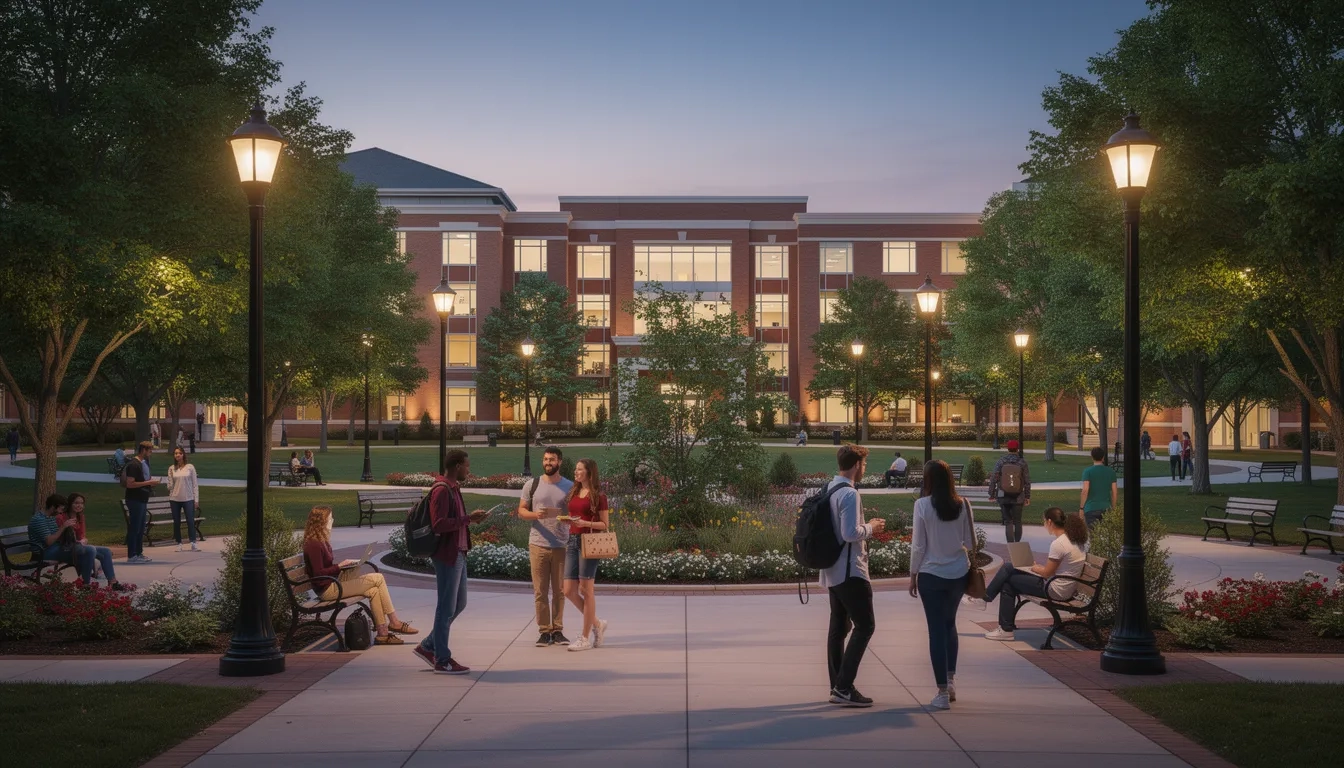
The Yard is the social and cultural center of campus: the open quad where Greek organizations step and sing, where Homecoming crowds gather, and where the informal social life of Howard plays out in real time. Alumni describe it in almost reverent terms years after graduation. It's not just a lawn.
Howard's Homecoming tradition has run continuously since 1924. The 2024 edition carried the theme "Yard of Fame" (a concept submitted directly by students), reflecting how much of the school's culture flows bottom-up rather than down from administration. The Showtime Marching Band performs at major national events and has become a draw independent of the football game itself.
Student engagement numbers for the 2025-2026 year:
- 200+ registered student organizations
- NCAA Division I athletics (the Howard Bison)
- Undergraduate enrollment of 9,885
- 14% Greek life participation
The Howard University Student Association, Undergraduate Student Assembly, and a social organization called Campus Pals (focused on building friendships across class years) form the structural core of organized student involvement. But much of the real community happens informally: study sessions, late-night dorm conversations, and professional introductions that happen because someone in your residence hall knows someone at the Congressional Budget Office.
Financial Aid and What It Actually Costs
Here's the number that surprises most people doing comparisons: Howard graduates carry lower average student debt than graduates of Georgetown, George Washington University, American University, and Catholic University of America, according to Forbes' 2025 analysis. All four are in the same D.C. market and charge comparable or higher tuition.
The average net price after aid runs around $47,919 per year. Still substantial. But Howard's Howard University Freshman Scholarship (HUFS) program is specifically designed to move that number for qualified students.
How merit aid thresholds work:
- A 3.5+ unweighted GPA and 1300+ combined SAT (or 28+ ACT) unlock merit scholarship consideration
- HUFS combines merit-based and need-based components, with some tiers requiring FAFSA data
- Awards are renewable for up to 8 semesters, with GPA and credit-load requirements attached
Filing FAFSA early matters here. Domestic students who submit before January 1 of the application year are generally better positioned for institutional need-based packaging than those who file in spring. Howard's scholarship pool is real but not unlimited, and timing affects access to it.
Alumni Network and Career Outcomes
Howard's alumni argument isn't subtle. Kamala Harris (class of 1986), Thurgood Marshall, Toni Morrison, Chadwick Boseman, Taraji P. Henson, Zora Neale Hurston, and Debbie Allen all walked the same Yard. These aren't names on donor buildings. They represent a professional and cultural lineage that shapes what a Howard degree signals to employers, institutions, and rooms you're trying to get into.
The LinkedIn 2025 HBCU ranking methodology is worth understanding because it doesn't measure prestige inputs or historical reputation. It measures what happens after graduation: job placement rates, percentage of alumni reaching senior-level roles, undergraduate internship rates, and alumni entrepreneurship activity. Howard ranked #1 among all HBCUs by every one of those output measures.
I think the career outcomes case is Howard's most compelling argument right now. The rankings jump grabs headlines, but the post-graduation data is what should actually drive the decision. When a school outperforms nearby Georgetown on both social mobility and graduate debt load while placing alumni in senior roles across government, media, tech, and law, that's a return on investment you can point to with real numbers.
Bottom Line
- Apply Early Action by November 1. It's non-binding, gives you earlier consideration, and puts you in the pool when scholarship funds are fullest.
- Submit test scores if you're at 1300+ SAT or 28+ ACT. Test-optional helps admissions, but withholding strong scores cuts you out of merit aid consideration.
- File FAFSA before January 1 to maximize institutional need-based packaging.
- Match your major to Howard's strengths. Business, CS, economics, engineering, and psychology have broken through to national rankings. Pre-med students should look closely at the hospital integration.
- Plan for the D.C. network before you arrive. The city and the alumni base are features you have to actively use, not perks that happen to you.
Frequently Asked Questions
Is Howard University hard to get into?
Howard's acceptance rate sits around 41% for the 2025 cycle, making it moderately selective. But the applicant pool has swelled to 34,211, meaning the effective competition has intensified even without the raw rate dropping sharply. Students who meet or exceed the middle 50% in GPA and course rigor have a solid shot. Those significantly below it face a harder road than the acceptance rate alone suggests.
What GPA and test scores do admitted Howard students typically have?
The middle 50% of admitted students scored between 1060 and 1270 on the SAT and 20 to 26 on the ACT. Howard doesn't publish a specific GPA distribution, but the merit scholarship threshold of 3.5+ unweighted GPA and 1300+ SAT (or 28+ ACT) is the practical benchmark to aim for. Remember: Howard is test-optional for admissions only. Those scores still affect financial aid.
Is Howard a good choice for non-Black students? (Myth vs. Reality)
This is the elephant in the room for many prospective applicants. Howard is an HBCU with an explicit mission centered on African American education and advancement, and the campus culture, traditions, organizations, and social identity all reflect that fully. Non-Black students do attend and graduate from Howard, but anyone applying primarily for the rankings or the D.C. location, without genuine interest in what Howard specifically represents, is likely to feel out of place. Howard is the right choice for students who actively want what Howard offers, not a substitute for schools that feel harder to get into.
How does Howard's financial aid compare to other D.C. universities?
Forbes' 2025 analysis found Howard graduates leave school carrying less debt than peers at Georgetown, GWU, American University, and Catholic University of America. The HUFS scholarship program and strong need-based packaging make the net cost more competitive than the sticker price implies. For students who hit the merit thresholds, the gap compared to D.C. peers can be significant.
What makes Howard's Homecoming unique?
Howard's Homecoming has run continuously since 1924, making it one of the oldest in the country. It's not just a football weekend. The Yard becomes the focal point for tens of thousands of alumni and visitors, with Greek organization performances, the Showtime Marching Band, celebrity appearances, and campus-wide events including Yardfest. The 2024 theme, "Yard of Fame," was submitted by students and reflected the school's long tradition of producing graduates who shape American public life.
What does Howard's R1 designation mean for undergraduates?
R1 is the Carnegie Classification for the highest level of doctoral research activity. Howard is the only HBCU to hold it. For undergrads, this means access to funded research labs, faculty who are active in their fields, and pipelines into graduate programs and industry partnerships that weren't available before. Students in STEM, public health, and the social sciences benefit most directly, but the designation affects the entire institution's funding, faculty caliber, and research culture.
Sources
- Top of the Rankings | Howard Magazine
- LinkedIn and Forbes Name Howard the #1 HBCU | The Dig at Howard University
- Howard University Profile | US News Best Colleges
- Howard University Soars to No. 80 on US News Rankings | Howard University President
- Howard University's Homecoming: A Celebration of Black Excellence | Washington Informer
- Spotlight on Howard University | Expert Admissions
- Howard University Scholarships Guide | College Ready Parent