Michigan State University: Complete Profile 2026
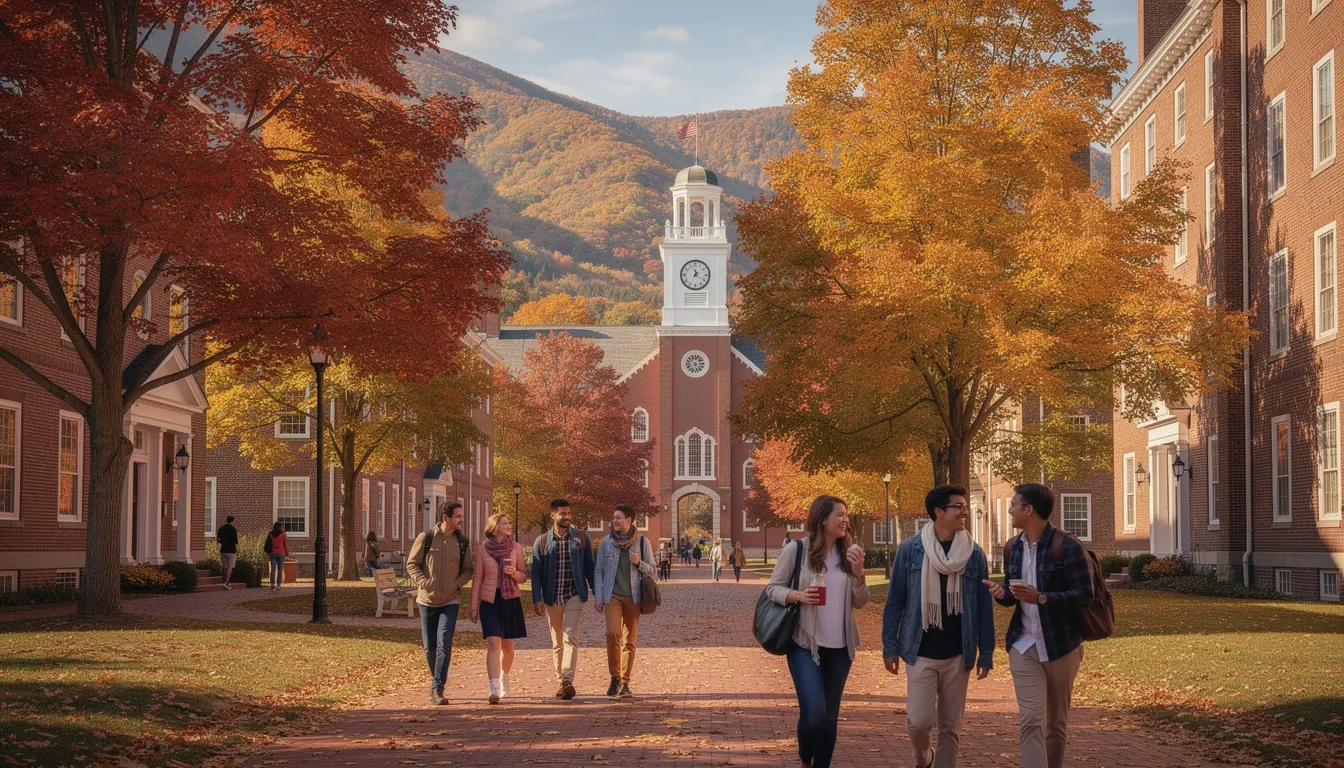
Michigan State University was doing land-grant education before land-grant universities were officially a thing. Founded on February 12, 1855, MSU pre-dates the Morrill Act of 1862 that formalized federal support for agricultural colleges across the country. It didn't join the movement. It built the mold. That origin story still defines what kind of university MSU is today: large, applied, research-focused, and built for people who want degrees that connect to actual careers and actual problems worth solving.
By the Numbers: What MSU Looks Like in 2026
52,089 students call MSU home, making it one of the largest universities in the country by headcount. They come from all 50 states and more than 130 countries. About 2,681 study entirely online.
Enrollment, though, tells only part of the story. MSU runs 17 degree-granting colleges, 448 academic programs, and employs more than 2,000 tenure-system faculty. Its endowment sits at $4.4 billion, and in the last fiscal year gifts hit $380 million — a new all-time record for the institution.
Here's the snapshot at a glance:
| Metric | Number |
|---|---|
| Total Enrollment | 52,089 |
| Acceptance Rate | ~85% |
| In-State Tuition (2026) | $18,926 |
| Out-of-State Tuition (2026) | $45,675 |
| Graduation Rate | 81% |
| First-Year Retention | 90% |
| Endowment | $4.4 billion |
| US News National Ranking | #64 |
| QS World Ranking 2026 | #161 |
First-year retention at 90% is worth pausing on. That's a meaningful signal. Large public universities often bleed students after freshman year, but MSU's number suggests that students who pick it tend to stay — either because they're satisfied, or because they chose a school that genuinely fit their goals.
A Brief History That Shaped American Higher Education
Before land-grant colleges were a legal concept, MSU was already running the experiment. The Agricultural College of the State of Michigan opened in 1855, and what it built became the literal prototype that Congress had in mind when drafting the Morrill Act seven years later. The school didn't follow a federal template. Congress borrowed from what East Lansing had already figured out.
MSU officially became Michigan State University in 1955. That same year, a young English student named David McCullough (who would later win two Pulitzer Prizes for books like John Adams and The Wright Brothers) graduated from East Lansing. He is one of thousands of notable alumni who've passed through the university across politics, athletics, science, and culture.
The land-grant identity isn't marketing. It's still operationally present: working farms on campus, strong agricultural extension programs across Michigan, and a genuine focus on making higher education affordable and accessible for in-state residents. When you understand that foundation, MSU's current strategic priorities start to make immediate sense.
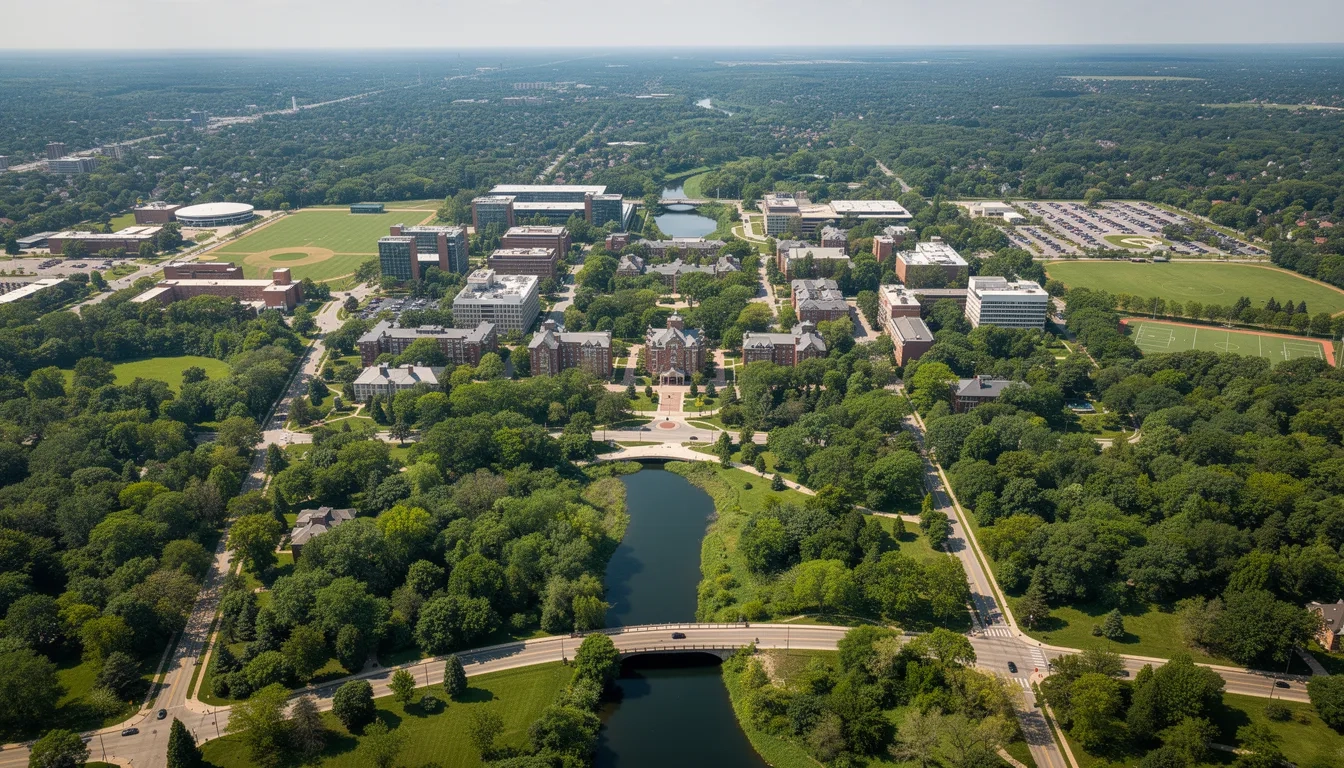
Today the alumni network approaches 500,000 people worldwide, with faculty and staff exceeding 12,000 across a campus that sprawls across roughly 5,200 acres in East Lansing.
Academics and Research: Where MSU Earns Its Reputation
MSU holds R1 Carnegie classification — the highest tier for research activity — and it takes that standing seriously.
Graduate programs in supply chain management, nuclear physics, and education consistently rank among the national top 10. The Facility for Rare Isotope Beams (FRIB), which opened in 2022, is a federally funded physics research center that gives MSU scientists access to equipment found at essentially no comparable institution in the Western Hemisphere. That's not puffery; FRIB is a genuine global draw for physicists at every career stage.
The recognition is concrete. MSU received the prestigious Golden Goose Award for work connected to cisplatin, one of the most widely used chemotherapy drugs in cancer treatment. The award specifically honors federally funded research that produced unexpected, life-changing benefits — and cisplatin fits that description. Millions of patients have been treated with it.
When federal funding cuts hit research universities in 2025, MSU committed $5 million annually over three years from a restricted endowment to protect 37 ongoing projects. The funding shields work spanning environmental science, health research, and digital humanities. Twenty-four graduate students were protected from disruptions, including 4 whose fellowships had been cancelled outright before MSU stepped in.
The institutional target for 2030: $1 billion in annual research expenditures. MSU sat below that mark going into 2026, but the direction of investment is unmistakable.
Beyond the sciences, the Eli Broad College of Business draws competitive applications from across the country. The Colleges of Veterinary Medicine and Osteopathic Medicine are among the few programs of their kind at a public university, and the Residential College in Arts and Humanities combines intentional living and learning in ways uncommon at institutions this large.
Admissions: Accessible, But Not Automatic
An 85% acceptance rate puts MSU in the accessible tier by most definitions. Calling it a safety school, though, misreads the situation.
The middle 50% of admitted students who submitted test scores showed SAT scores between 1,180 and 1,360, and ACT scores between 25 and 31. MSU is test-optional, so submitting scores is your call. GPA trends and course rigor weigh heavily in the review.
A few practical things worth knowing:
- MSU uses rolling admissions. Applying in October rather than January can make a real difference — not just for admissions odds, but for merit scholarship consideration and on-campus housing availability.
- International applicants face additional timelines. English proficiency requirements, credential evaluation, and visa processing mean the effective deadline is earlier than the official calendar suggests.
- Programs like Nursing, Computer Science, and Broad Business have their own competitive sub-processes within the general application. Getting into MSU is not the same as getting into these programs.
The common mistake applicants make is assuming a high acceptance rate signals low expectations. Students who struggle at MSU are usually the ones who coasted through without thinking about fit, major selection, or financial planning. Students who thrive chose MSU deliberately.
The Cost of Attendance and What Aid Actually Covers
Michigan residents get the favorable deal, as expected. In-state tuition runs $18,926 for 2026. Out-of-state students pay $45,675. Add room, board, and fees, and the full cost of attendance runs closer to $30,000 (in-state) and $57,000 (out-of-state) annually.
About 90% of MSU students receive some form of financial aid. The average award lands around $13,000 per year, which meaningfully reduces net costs for many families.
Aid at MSU flows through three main channels:
- Need-based grants via FAFSA: Free money tied to demonstrated financial need. Filing when FAFSA opens in October maximizes eligibility windows.
- Merit scholarships: Awarded through individual colleges and the central scholarship office. Strong academic profiles can unlock awards covering the majority of in-state tuition.
- Work-study placements: On-campus jobs bundled into aid packages for qualifying students.
The university's ongoing "Uncommon Will, Far Better World" campaign — a $4 billion fundraising effort launched formally in March 2025 — has expanded scholarship reach. The inaugural class of 30 Joseph R. and Sarah L. Williams Scholarship recipients provides full support to high-need Michigan students, with more cohorts planned.
My honest read on MSU's value: for Michigan residents pursuing fields where MSU has real strength — engineering, business, medicine, agriculture, education — the cost-to-outcome ratio is hard to beat among Midwest public flagships. For out-of-state students, the math depends heavily on the aid package.
Campus Life: 5,200 Acres and a Big Ten Heartbeat
MSU's campus is enormous, and the experience reflects it. Working farms sit alongside research labs. A botanical garden occupies one corner. The MSU Museum and Kresge Art Museum are on campus. So is one of the largest college library systems in the country. The sheer scale of the place can feel overwhelming at first — and then, for most students, it becomes one of its defining features.
Spartans athletics operates as the cultural anchor. MSU competes in the Big Ten Conference across 25 varsity sports. The basketball program's most famous product is Earvin "Magic" Johnson, who led MSU to the 1979 national championship before going first overall in the 1979 NBA Draft to the Los Angeles Lakers. Football has produced NFL Hall of Famers Bubba Smith and Herb Adderley, among others. The athletic history is real, not manufactured.
Beyond sports, more than 900 registered student organizations cover interests from academic research clubs to outdoor recreation to entrepreneurship. Greek life is present but not dominant. The residential experience is organized around living-learning communities, where students with shared interests live together and take some courses as a cohort.
East Lansing functions almost entirely around the university calendar. It's a college town in the traditional sense — most daily needs are reachable on foot or by bus. That setup differs from urban campuses where students compete with a larger city for housing and services.
Bottom Line
MSU is a serious research university that gets underestimated because of its scale and accessibility. That's a mistake worth correcting before you write it off.
Key considerations for anyone evaluating Michigan State:
- Michigan residents have one of the stronger flagship options in the Midwest, particularly in programs that rank nationally — supply chain management, veterinary medicine, education, and nuclear physics.
- Out-of-state applicants should model the net cost carefully. The gap between sticker price and actual aid can swing dramatically based on academic profile and program choice.
- Research-oriented students should look closely at FRIB, the Broad College, and the university's concrete goal of reaching $1 billion in annual research expenditures by 2030. The investment signals where this institution is heading.
- Apply early. Rolling admissions means the earliest applicants get first consideration for merit aid and housing — this isn't a cliché, it's a real mechanical advantage.
The institution that invented the land-grant model is still trying to prove something. For the right student, that energy translates into real opportunity.
Frequently Asked Questions
Is Michigan State University a good school?
MSU ranks #64 among National Universities in the 2026 US News rankings and sits in the top 30 public universities nationally. It holds R1 Carnegie classification for research activity, and specific graduate programs — including nuclear physics, supply chain management, and education — rank in the national top 10. The quality varies by program, but the academic infrastructure is genuinely substantial.
What GPA do you need to get into Michigan State?
MSU doesn't publish a hard minimum GPA cutoff, but the admitted student profile trends toward 3.5 and above, particularly for competitive programs like engineering, nursing, and business. Upward grade trends and rigorous course selection (AP, IB, dual enrollment) tend to carry more weight than a single static number.
Does Michigan State offer strong financial aid?
Around 90% of MSU students receive some form of financial aid, with average awards around $13,000 per year. Michigan residents benefit most from the combination of competitive in-state tuition and state grants. The "Uncommon Will, Far Better World" campaign has added scholarship capacity, and the Williams Scholarship provides full support for high-need in-state students.
Is MSU really a party school?
MSU has appeared on various such lists, and that reputation has some basis in reality. But the student body is 52,000 people. The experience for a student in the Honors College, a living-learning community, or the College of Osteopathic Medicine looks nothing like the stereotype. The label captures one corner of a very large campus — not the whole university.
What is MSU most known for academically?
MSU is best known for agricultural sciences (where it essentially originated the American model), supply chain management, veterinary medicine, osteopathic medicine, education, and nuclear physics. The Facility for Rare Isotope Beams makes MSU a destination for physics research at the graduate level that very few institutions can match.
How does MSU's rolling admissions process work in practice?
MSU accepts applications on a rolling basis with no single hard deadline for most programs. Applications submitted by November 1 receive early scholarship and housing consideration. Certain programs — Nursing, Broad Business, Computer Science — have their own internal timelines and competitive thresholds on top of general admissions. Applying as soon as your application is complete is almost always the right move.
Sources
- Michigan State University 2026 Profile | Research.com
- President Guskiewicz Delivers State of the University Address | MSU Today
- MSU Research Foundation Designates $75M for Far Better World Campaign | MSU Foundation
- MSU to Reallocate $15 Million to Fund Research Amid Federal Cuts | The State News
- Michigan State University Rankings and Admissions | Niche
- Michigan State University Profile | US News Best Colleges