North Carolina A&T: Programs, Rankings, and Campus Life in 2026
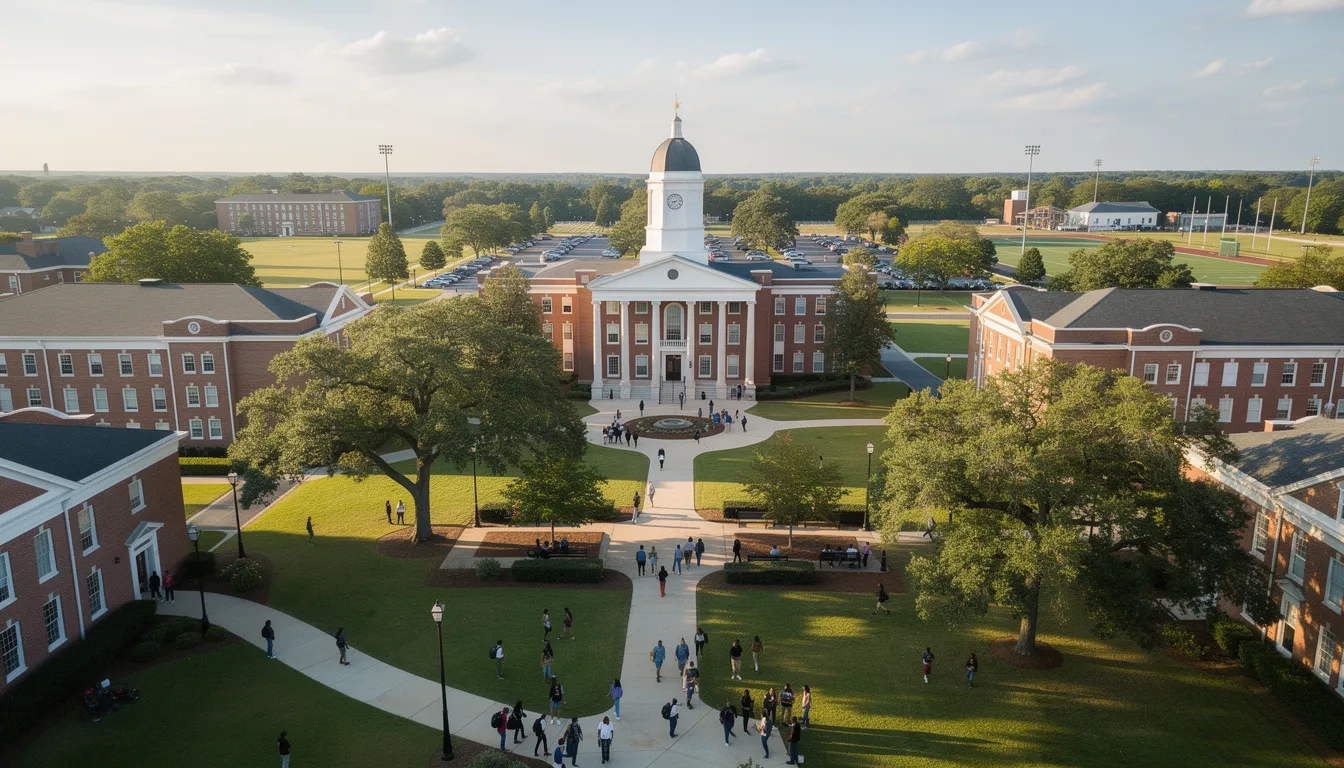
There's a quiet contradiction running through 188 acres in Greensboro, North Carolina. On a campus that has been educating Black students since 1891, a university is now building toward something almost no public HBCU has ever achieved: Carnegie R1 research status. North Carolina A&T State University already holds the title of largest historically Black university in America, with 15,275 enrolled students. And the trajectory is pointing up, not sideways.
What Makes NC A&T Different From Other HBCUs
The most obvious differentiator is sheer scale. NC A&T has been the largest HBCU in the country for 10 straight years, and in 2023 it became the first to break through 15,000 enrolled students. That matters practically: more enrollment translates to broader program offerings, more research infrastructure, and a campus culture that doesn't thin out on Wednesday afternoons.
But size alone isn't the story. NC A&T's College of Engineering graduates more Black engineers than any other university in the United States. All seven undergraduate engineering programs carry ABET accreditation, the field's gold standard. According to U.S. Department of Education data, A&T is also the #1 producer of African American bachelor's degrees in both Engineering and Agriculture nationally.
That pipeline has produced people worth knowing. Ronald McNair graduated magna cum laude with a degree in engineering physics in 1971, became a NASA astronaut, and died in the Space Shuttle Challenger disaster in 1986. Jesse Jackson, one of the most consequential civil rights figures of the 20th century, is another A&T graduate. The thread connecting them: A&T has long placed students in rooms they weren't expected to enter.
Academic Programs Worth Knowing About
Engineering is the flagship. The College of Engineering offers seven undergraduate programs — mechanical, electrical, civil, chemical, industrial, computer, and architectural — plus master's and doctoral programs in electrical and mechanical engineering. A recently approved Doctor of Philosophy in bioengineering extends that portfolio further. For anyone serious about engineering who also wants to be part of an HBCU's specific legacy, no other institution comes close.
The Willie A. Deese College of Business and Economics deserves equal attention. The MBA program has ranked in the top 100 nationally for five consecutive years, most recently tied at #77 per U.S. News. Among HBCUs, it's the top-ranked MBA (tied with Howard). That's not a consolation prize — a top-100 MBA at a public institution charging in-state tuition near $6,879 per year is a legitimate value story.
| Program Area | Degree Levels | Notable Distinction |
|---|---|---|
| Engineering | BS, MS, PhD | #1 producer of Black engineers in the US |
| Business (MBA) | MBA, BBA | Tied #77 nationally, top HBCU MBA |
| Information Technology | BS, MS (online) | Online MS tied for 10th nationally |
| Agriculture | BS, MS, PhD | #1 in Black agricultural degree production |
| Nursing | BSN | #2 HBCU nursing school |
| Communications/Journalism | BA | #2 in Black degree production nationwide |
Online programs have become a serious strength, not a revenue afterthought. NC A&T's Online Master's in Information Technology tied for 10th nationally in U.S. News's 2025 Best Online Programs rankings, alongside Rice and Boston University. For veterans specifically, the Online Master's in IT ranks 6th nationally. Three undergraduate programs and six graduate programs appear in the overall online rankings — genuinely broad coverage for a school that, not long ago, was primarily a residential institution.
How NC A&T Ranks (The Honest Picture)
Rankings are a blunt instrument, and NC A&T's position illustrates exactly why context matters.
In U.S. News's 2026 Best Colleges, A&T sits at #232 among national universities. Not a headline number. But the same publication ranks A&T #40 for Social Mobility nationally — which measures how effectively a school moves low-income students into higher income brackets after graduation. That tells you something real about what a degree does for students' lives, not just how selective admissions is.
NC A&T earned a peer reputation score of 4.3 out of 5.0 among HBCU academics in U.S. News's 2026 assessment — second only to Spelman (4.5) and Howard (4.4).
Among HBCUs, A&T ranks #8. It also lands among the top 130 public universities nationally and the top 25 most innovative universities according to a 2024 U.S. News ranking. Money magazine named it "America's Most Affordable Doctoral Research University" for 2023-24.
The bigger signal, though, is where A&T is heading. The university is widely expected to become the first public HBCU to earn Carnegie R1 status (Research 1, "Very High Research Activity") when the Carnegie Classifications next update in 2028. R1 requires hitting thresholds for both research spending and doctoral degree production — A&T is actively meeting both targets. When an institution crosses that threshold, it unlocks federal grant pipelines, attracts more research faculty, and strengthens every graduate program on campus. A school that becomes R1 in 2028 looks materially different by 2031.
Student Life: What It's Actually Like
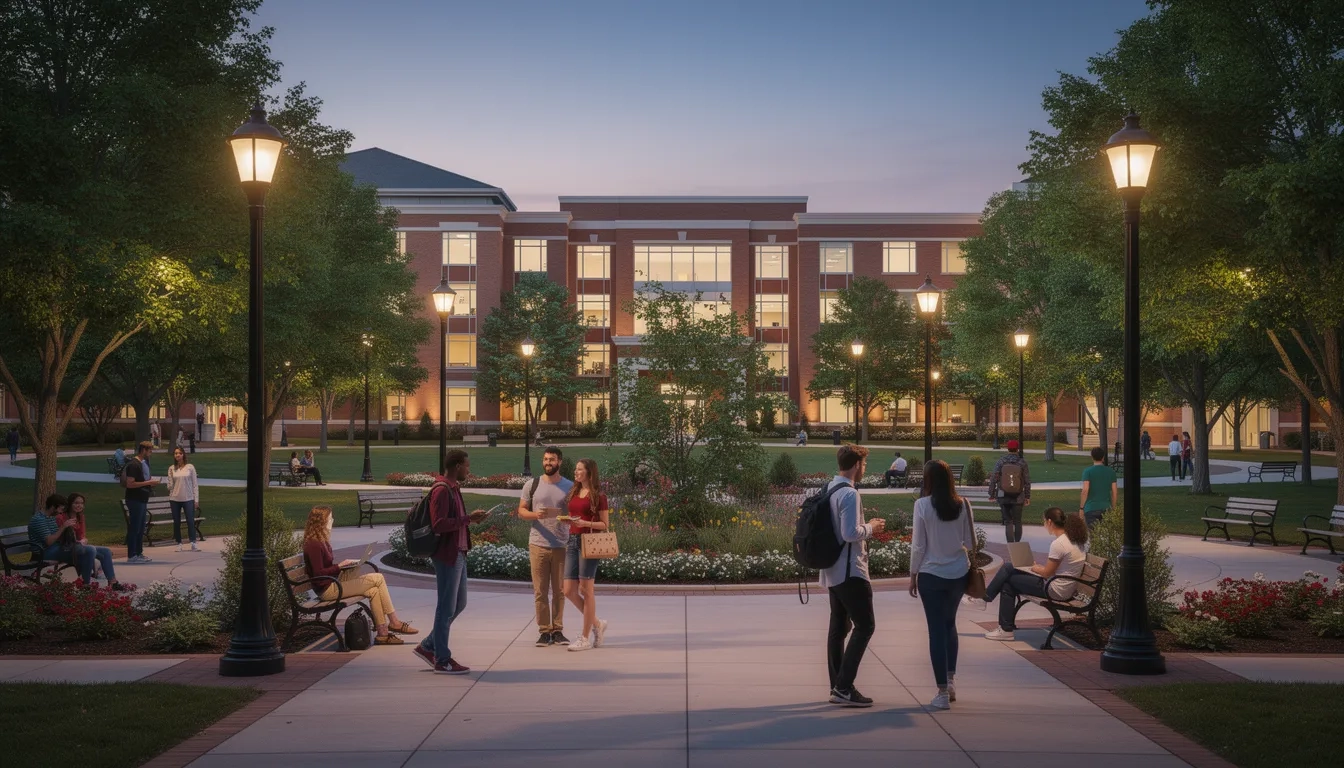
NC A&T's campus culture is shaped by something specific to HBCUs: a shared sense of purpose that goes beyond degree completion. Students consistently describe the experience as community-first, not just curriculum-first, and that shows up in concrete ways.
More than 50% of undergraduates live on campus — roughly double the national average for public universities. When half the student body is on-site, the campus stays genuinely active past 5 PM. Midweek events, late-night study sessions, spontaneous gatherings — these happen because people are actually there.
In 2025, A&T finished a $30 million investment in campus housing infrastructure. The scope was real: 1,500 HVAC units serviced, mold remediation across approximately 420 rooms, 60+ projects covering plumbing, electrical, roofing, and locksmithing. Beyond infrastructure, the university upgraded WiFi in 42 apartment buildings, updated 1,538 computers in student labs, and enhanced technology in 46 smart classrooms.
Homecoming at A&T operates at a different scale than most schools. It's become a nationally recognized cultural event that draws alumni, media, and artists from well outside Greensboro. Greek life is prominent, student organizations span professional, cultural, and recreational interests, and intramural sports keep competition alive outside the classroom.
What current students consistently highlight:
- A strong sense of belonging, particularly for Black students experiencing a majority-minority academic environment for the first time
- Faculty who are described as accessible and personally invested in outcomes
- An events calendar that fills quickly — there's rarely a dead weekend between Welcome Week and graduation
- Active professional organizations tied to engineering, business, and health fields that build real career networks early
Worth naming honestly: A&T is a large public university mid-renovation. The $30 million housing project was partly a response to legitimate student complaints about aging facilities. Administration answered with money rather than messaging — the right instinct — but students should go in expecting a campus that is improving, not one that has already arrived.
The Cost Equation
In-state tuition at NC A&T runs approximately $6,879 per year. Out-of-state students pay around $20,941 in tuition and fees. Full cost of attendance for on-campus in-state students (including housing, food, and other expenses) lands near $20,745, and around $34,605 for out-of-state students.
Those numbers look different after financial aid. About 74% of enrolled students receive grants or scholarships, with an average package of $10,685 (covering roughly 52% of tuition). After aid, the net annual price for in-state students drops to approximately $10,060. For North Carolina residents weighing engineering or business programs, that is a hard figure to argue against.
Out-of-state net price after average aid runs around $23,920 — comparable to many regional public universities, but the calculus is tighter. Run the net price calculator with your specific household income before making comparisons.
Who Should Seriously Consider NC A&T
Here's a direct read: NC A&T makes the clearest case for students pursuing engineering or business who want a research-active institution without flagship tuition, and for students who actively want to learn inside an HBCU community rather than just adjacent to one.
That second point is harder to quantify but arguably more important. You can get an ABET-accredited electrical engineering degree from dozens of schools. You can get that same degree while being surrounded by faculty, alumni networks, and peers who share your cultural background at a much shorter list of schools. Alumni describe that environment as formative in ways that aren't captured in rankings tables.
For out-of-state students, the honest advice is to run the numbers carefully before committing. For North Carolina residents, A&T is one of the cleaner value decisions in public higher education: nationally ranked engineering, a top-100 MBA, serious online program investment, and a $1.5 billion annual economic footprint in the state — all at in-state rates. The school that becomes R1 in 2028 is already enrolling its graduating class of 2031 right now.
Bottom Line
- NC A&T is the largest HBCU in America and is positioned to become the first public HBCU with Carnegie R1 research status in 2028, which will strengthen graduate programs and faculty recruitment across the board.
- The College of Engineering is the strongest academic unit: 7 ABET-accredited programs, more Black engineers produced annually than any other US institution, and a new PhD in bioengineering coming online.
- The MBA program (tied #77 nationally) and Online IT Master's (tied #10 nationally) represent real, measurable program strength — not just HBCU-relative rankings.
- North Carolina residents get serious value: roughly $10,060 net annual cost after average financial aid, at an institution with genuine national research ambitions.
- Campus life is genuinely active — $30 million in housing improvements completed in 2025, 50%+ on-campus residency, and a homecoming that draws national attention for a reason.
If you're choosing between NC A&T and a larger flagship, the real question isn't which school has the bigger brand. It's which environment will actually move you forward. For engineering, business, and HBCU-aligned students, A&T's answer to that question keeps improving.
Frequently Asked Questions
Is NC A&T a good school for engineering?
Yes. The College of Engineering produces more Black engineers than any other university in the US, all seven undergraduate engineering programs are ABET accredited, and graduate programs in electrical (#137 nationally) and mechanical engineering (#138 nationally) appear in U.S. News rankings. The recently approved PhD in bioengineering shows the program is still expanding.
What is NC A&T's acceptance rate, and how competitive is admissions?
The acceptance rate sits around 50%, making A&T moderately selective rather than open enrollment. Admitted students typically show a GPA near 3.3. The university has offered test-optional admissions in recent cycles, though strong test scores can still strengthen an application for competitive programs like engineering.
Is NC A&T really the largest HBCU in the country?
Yes — and by a significant margin. NC A&T has held that title for 10 consecutive years, and in 2023 it became the first HBCU to exceed 15,000 enrolled students, reaching 15,275. The next-largest HBCUs enroll significantly fewer students. That scale affects everything from program variety to campus energy to research infrastructure.
Does NC A&T offer strong programs for non-engineering majors?
Absolutely. The MBA program ranks in the national top 100 and is the top HBCU business program. Nursing ranks #2 among HBCU programs nationally. Communications and journalism produce the #2 volume of African American graduates in that field. Agriculture remains a flagship (it's literally in the name) with bachelor's, master's, and doctoral programs.
Is NC A&T worth it for out-of-state students?
It depends on your financial aid package. Out-of-state costs before aid run roughly $34,605 for on-campus students. After average grants, the net price drops to around $23,920 — which is competitive but not a slam-dunk compared to in-state options at other schools. Engineering and business programs can justify the cost. Run the net price calculator with your actual household income before deciding.
What is Aggie homecoming, and does it affect life at NC A&T?
Homecoming at NC A&T has grown into a nationally recognized cultural event that draws alumni, performers, and media far beyond campus. It reflects the broader campus culture: events-driven, community-oriented, and rooted in HBCU pride. For students who want a campus that celebrates its identity loudly and publicly, A&T's culture delivers that consistently — not just during homecoming week.
Sources
- A&T Maintains Reputational Position in U.S. News & World Report
- A&T Doubles Down on Student Success with $30M in Campus Housing Enhancements
- N.C. A&T Ranks High Among U.S. News Best Online Programs 2025
- Rankings, Recognitions & Prominent Alumni | NC A&T State University
- North Carolina Agricultural and Technical State University | US News Best Colleges
- North Carolina A&T State University | Wikipedia