Inside Oberlin College: Programs, Rankings, and Student Life
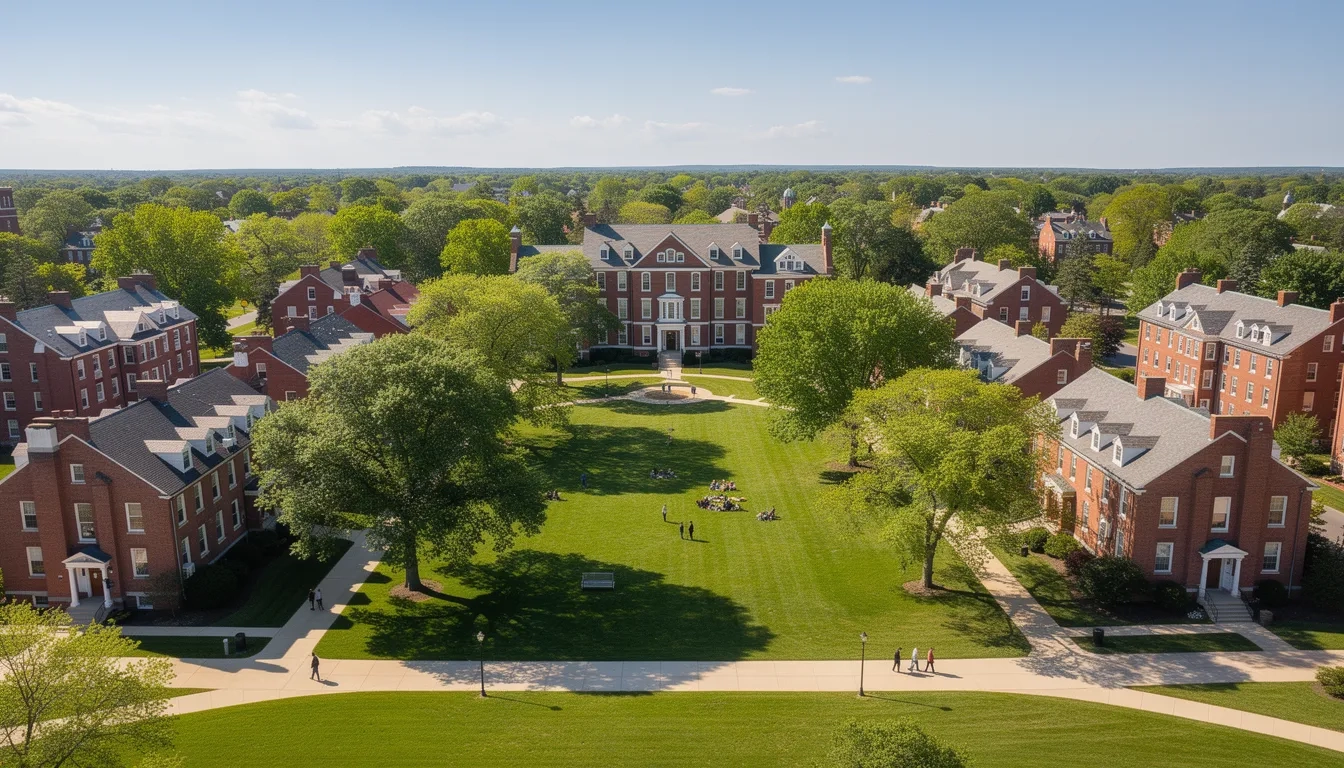
There's a small liberal arts college in northern Ohio that has produced 4 Nobel Prize winners, 14 MacArthur "Genius" Fellows, and 6,001 research doctorates since 1957 — more than any other baccalaureate liberal arts and sciences college in the country. That last number is 6,001 from a school that rarely enrolls more than 3,000 undergraduates at a time. If Oberlin isn't already on your college list, that figure alone is worth sitting with.
What Makes Oberlin Different
Oberlin College was founded in 1833. Two years later, in February 1835, its trustees voted to admit students without regard to race, making it the first American college to do so. That commitment to deliberate, values-driven choices has shaped the institution ever since — including its willingness to build something that almost no other college has tried.
Two schools share a single campus. Oberlin runs two distinct, nationally recognized institutions side by side: the College of Arts & Sciences and the Conservatory of Music. The Conservatory, founded in 1865, is the oldest continuously operating music conservatory in the United States. These aren't separate campuses connected by a shuttle. Same quad, same dining halls, same social world.
That integration has real consequences for students in both schools. A music student can take a cognitive science seminar. An English major can play in a jazz ensemble. The cultural cross-pollination isn't a brochure talking point — it's built into the physical and academic structure of the place.
College of Arts and Sciences
Oberlin's College offers more than 40 undergraduate majors, and the range is genuinely broader than most schools this size. Yes, the expected humanities programs are there — English, history, philosophy, comparative literature, politics. But Oberlin also runs serious programs in neuroscience, computer science, and engineering. That combination is rarer at small liberal arts colleges than most applicants realize.
The 9:1 student-to-faculty ratio is the kind of number that actually changes the classroom experience. At most large universities, introductory courses pack 200 students into an auditorium. At Oberlin, you're sitting across from your professor at a seminar table by sophomore year, sometimes earlier. Princeton Review rates professor accessibility at 83 out of 99. Students describe the environment as one where professors "treat you more like collaborators."
US News ranks Oberlin #13 nationally for writing programs and #29 for undergraduate teaching. Those subject-area rankings tell you more about day-to-day academic experience than the headline #58 in National Liberal Arts Colleges.
Oberlin's science facilities are worth mentioning specifically. STEM students here get genuine research access — the kind of hands-on lab work that at many universities is reserved for graduate students. Biology and neuroscience are two of the most popular majors, and the college's track record in producing science Ph.D.s is exceptional.
Oberlin Conservatory of Music
The Conservatory may be Oberlin's most distinctive asset, and it's genuinely hard to overstate what it offers. 540 students. A 6:1 student-to-faculty ratio. 240 Steinway grand pianos. 150 practice rooms, each with a window (which matters more than it sounds after your third hour of scales). Nine concert halls. Seven electronic music studios. One of the nation's top conservatory library collections.
"Each year, students, faculty, and guest artists present 500 concerts spanning five centuries of music." — Oberlin Conservatory
That works out to roughly 1.4 performances every single day of the academic year. The alumni list makes the case even clearer: Rhiannon Giddens (MacArthur Fellow, Grammy winner), Du Yun (Pulitzer Prize-winning composer), cellist Jennifer Koh, and pianist Jeremy Denk all trained here.
Rankings vary by methodology, but multiple systems place the Conservatory between #7 and #22 nationally among music schools — PrepScholar has it at #7, Niche at #22. What those rankings miss is the Conservatory's unusual undergraduate focus. Most peer institutions have significant graduate programs, which means undergraduates compete for practice time, performance slots, and faculty attention against masters and doctoral students. At Oberlin, undergraduates are the point.
The TIMARA program (Technology in Music and Related Arts) deserves specific attention. It's one of the few undergraduate programs in the country offering genuine specialization in electronic and computer music, with seven dedicated electronic studios. Students interested in music production, experimental composition, or sound design should look at this carefully — it's not a minor add-on. It's a full curricular track.
The Double Degree Program
Oberlin launched the nation's first double degree program in 1910. Students simultaneously pursue a Bachelor of Arts from the College and a Bachelor of Music from the Conservatory. The program typically takes five years. About 40% of double degree students finish faster, usually by arriving with AP or IB credits that count toward College requirements.
Around 180 students are enrolled at any given time, and over a third of each incoming conservatory class chooses this path. The application process requires separate admissions to both programs — getting into the College doesn't guarantee conservatory admission, and vice versa.
Here's the honest tradeoff. The elephant in the room is this: some students find the double degree exactly what they needed — a path to musical excellence without closing doors to other careers. Others, as The Oberlin Review's student journalism has reported, feel the structure creates implicit pressure that musicians require a "backup plan." That's a real tension worth thinking through honestly before applying to both programs.
The curriculum is demanding. You're not taking a lighter load in either direction. Double degree students carry a full arts and sciences curriculum alongside conservatory requirements, which means scheduling is tight and summers often involve coursework.
Rankings: The Full Picture
Headlines can mislead. Here's where Oberlin actually sits across different systems:
| Ranking System | Category | Position |
|---|---|---|
| US News 2026 | National Liberal Arts Colleges | #58 |
| US News | Most Innovative Schools | #28 |
| US News | Undergraduate Teaching | #29 |
| US News | Best Writing Programs | #13 |
| Forbes 2025 | Private Colleges | #114 |
| Academic Influence | Liberal Arts Colleges (1,240 total) | #13 |
| PrepScholar | Best Music Schools | #7 |
| Niche | Best Music Schools | #22 |
The #58 headline figure undersells Oberlin's actual academic quality by a wide margin. Academic Influence, which weights the long-term scholarly and creative impact of faculty and alumni, ranks Oberlin 13th among more than 1,200 liberal arts colleges. That's a different lens than US News's input-heavy formula, and it arguably captures something more meaningful.
Four Nobel Prize winners. Nine Pulitzer Prizes. 265 Fulbright scholars. 14 MacArthur Fellowships. Those are outcomes, not inputs, and they point to a school whose graduates consistently go on to do serious, recognized work.
Student Life and Campus Culture
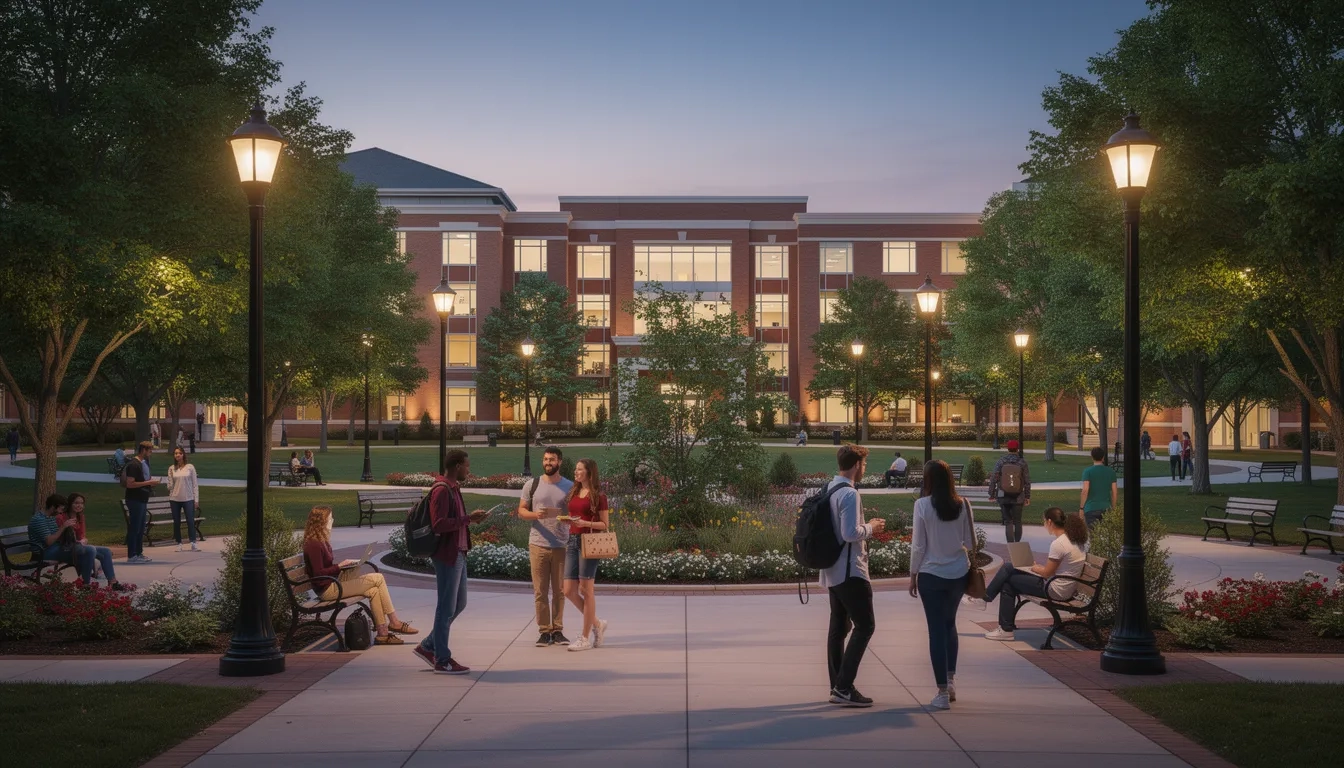
Oberlin is a genuinely small town. Population is roughly 8,600. One coffee shop, a few bars, limited retail. Students who arrive expecting urban energy will find something quite different: a campus community that is almost entirely self-generated.
The upside to that insularity is real. With nearly 200 student organizations and 500+ annual concerts, there's almost never a dead evening. The music scene bleeds off campus. Free jazz shows in the student union, open mics, student-run record labels, impromptu performances in common spaces. Students describe stumbling into a Thursday night recital as a normal occurrence, not a special event.
There is no Greek life at Oberlin. This shapes the social scene in ways that matter — parties and gatherings tend to be informal and decentralized, organized by friend groups and clubs rather than residential fraternities. Some students see this as freeing. Others find the social scene harder to break into without that pre-built infrastructure.
The campus is a strongly LGBTQ+-affirming environment. Oberlin has ranked among the country's most inclusive campuses in multiple surveys, and that reputation draws a student body that skews toward students who find that culture meaningful rather than merely tolerable. About 58% of students identify as female, and the student body includes students from 52 different countries. Niche rates campus safety at 92/100, and 92% of students report feeling extremely secure.
The honest friction points are housing and dining. Students and recent alumni consistently flag an ongoing shortage of on-campus housing, leaving some upperclassmen to navigate a tight off-campus rental market in a small town. Dining services receive mixed reviews. These aren't dealbreakers, but they're real costs to factor into the experience.
Admissions and the Financial Reality
Acceptance rate sits at 33% — moderately selective. The middle 50% of admitted students score between 1370 and 1510 on the SAT. Oberlin is test-optional, and the average admitted student's high school GPA runs around 3.60. The Conservatory's admissions process adds a layer: most applicants must submit prescreening recordings or composition portfolios before receiving a full application, which functions as its own informal filter.
The sticker price is $69,432 per year in tuition and fees. That number is real but also somewhat misleading. Ninety-seven percent of enrolled undergraduates receive grants or scholarships. Average aid packages run approximately $37,626 per year. The Conservatory guarantees every admitted student a minimum $10,000 annual merit award. The average net price for federal loan recipients comes out to $37,377 — meaningfully lower than the headline figure.
The endowment stands at approximately $1.2 billion, which isn't enormous by the standards of Swarthmore or Williams, but it's substantial enough to support genuine financial aid commitments. Oberlin meets 100% of demonstrated financial need for domestic students.
Bottom Line
- If music and liberal arts are both priorities, Oberlin is one of a very small number of schools offering both at genuine depth on the same campus. Don't treat the Conservatory as a secondary feature. It's arguably the institution's defining strength.
- The headline ranking of #58 undersells what Oberlin actually delivers. Writing (#13), undergraduate teaching (#29), and Academic Influence (#13 among 1,240 colleges) paint a more accurate picture of educational quality.
- The Double Degree is a genuine opportunity, not a marketing hook — but know why you want it before applying to both programs. Five years is a real commitment.
- Run the net price calculator before ruling Oberlin out on cost. With 97% of students receiving aid and an average package near $37,626, the real number is often far below the sticker price.
- The campus culture is activist-leaning and deeply self-contained. Students who find that energizing thrive. Students who need urban access or a conventional social scene often don't.
Frequently Asked Questions
Is Oberlin College or the Conservatory harder to get into?
Both accept roughly 33–35% of applicants, but they evaluate fundamentally different things. The College looks at academic performance and intellectual curiosity in traditional terms. The Conservatory requires prescreening recordings or composition portfolios before even issuing a full application, which means the bar is audition-based. You can be a strong candidate for one and not the other, and admission to both programs is evaluated independently.
What is the Oberlin Double Degree and is it actually worth doing?
The Double Degree lets students earn both a Bachelor of Arts and a Bachelor of Music simultaneously, typically over five years. Oberlin launched the program in 1910 — it was the first of its kind in the country. It's worth pursuing if you have genuine, concurrent ambitions in music and a separate academic field. But it's not a hedge. Students who treat it as an insurance policy tend to find the workload unsustainable by year three.
Does Oberlin meet 100% of financial need?
Yes, for all admitted domestic students. The average aid package runs approximately $37,626 per year, and the Conservatory guarantees every admitted student a minimum $10,000 annual merit award. The net price after aid is significantly below the $69,432 sticker price for most families, and Oberlin meets 100% of demonstrated need rather than leaving gaps that students must cover with loans.
Is Oberlin a good choice for STEM students?
Better than its reputation often suggests. Oberlin offers computer science, neuroscience, biology, chemistry, and engineering, all with the 9:1 faculty ratio that gives undergraduates direct research access. Since the annual survey of earned research doctorates began in 1957, Oberlin graduates have earned more Ph.D.s than graduates of any other baccalaureate liberal arts and sciences college — 6,001 total. Four alumni have won Nobel Prizes, including economist Joshua Angrist (Class of 1982), who received his prize in 2021.
What is Oberlin's social scene like without Greek life?
Informal, music-heavy, and highly campus-centric. The 500+ annual concerts anchored by the Conservatory mean there's almost always something happening, and the nearly 200 student organizations give people a range of ways to find their crowd. Without fraternities or sororities structuring the social calendar, parties and gatherings tend to be organic rather than institutional. Students who arrive expecting a conventional social infrastructure often find Oberlin's scene requires more initiative to navigate.
How politically and socially active is the Oberlin campus?
Very. Oberlin has a long history of social activism going back to its abolitionist roots in 1835, and that culture remains strong. Students organize around a wide range of causes, and the campus leans progressive. Some students find this environment invigorating and central to why they chose Oberlin. Others, including some current students writing in The Oberlin Review, have noted that activist culture can sometimes prioritize visibility over sustained effort. It's one of those questions worth researching honestly before committing.
Sources
- Oberlin Conservatory of Music | Oberlin College and Conservatory
- Oberlin College - Profile, Rankings and Data | US News Best Colleges
- Oberlin College 2026 - Programs, Rankings, Acceptance Rate | Research.com
- Oberlin Conservatory of Music: Ranking, Acceptance Rate, and More | Music School Central
- Oberlin College (OC) - The Princeton Review
- Double Degree Program | Oberlin College and Conservatory
- Oberlin College | Britannica
- Oberlin College - Niche