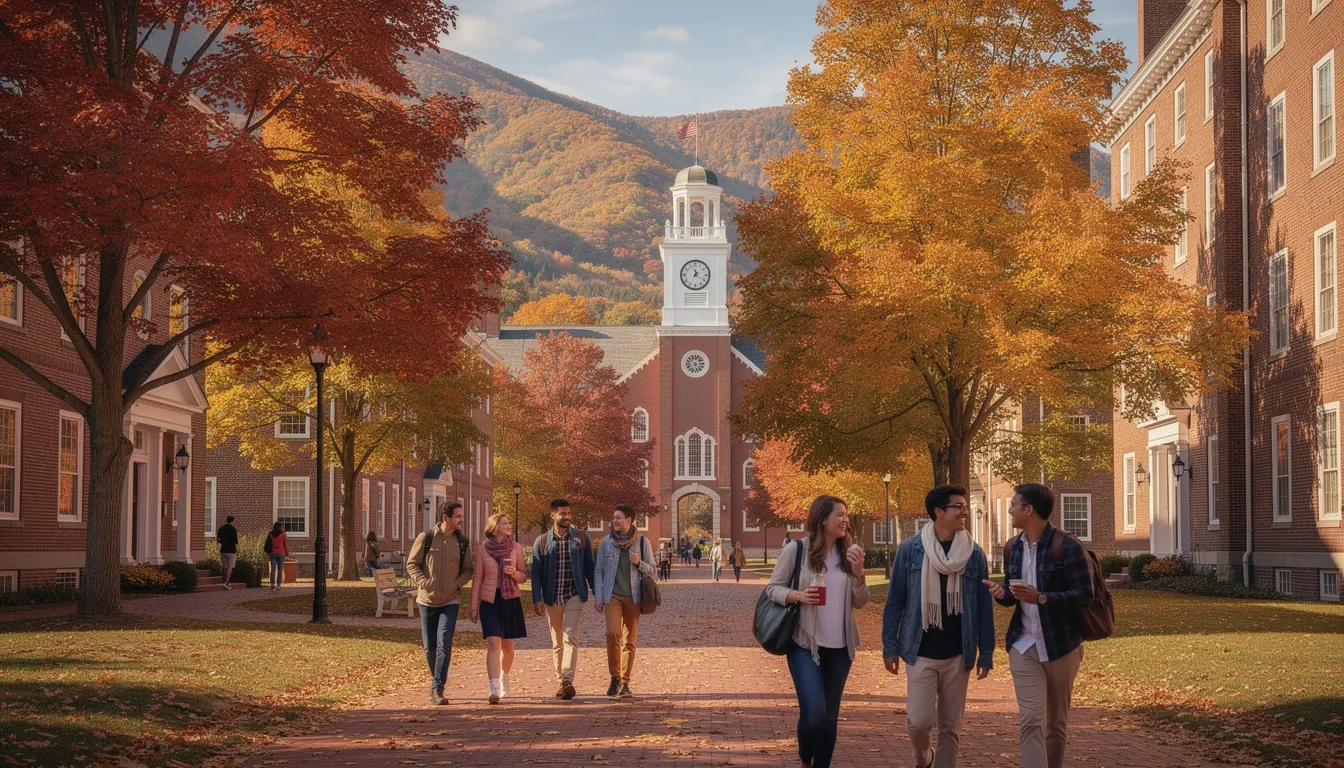
Oregon State University: Programs, Rankings, and Student Life
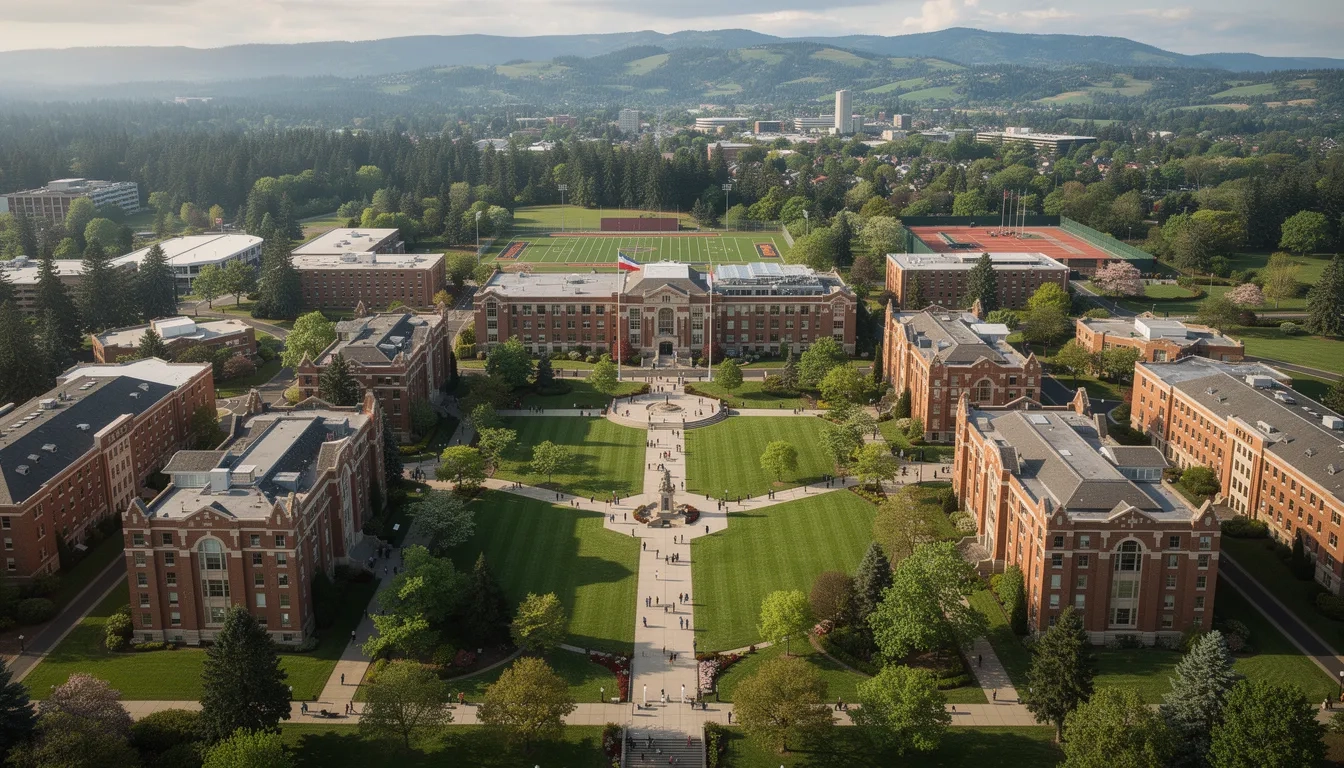
When most people compare Pacific Northwest public universities, the University of Oregon gets the brand recognition, the Nike money, and the out-of-state buzz. Oregon State gets underestimated. That gap is worth examining, because the actual rankings data tells a story most applicants miss entirely.
Rankings: The Full Picture
US News ranks Oregon State at #143 among National Universities in its 2026 edition, with a #74 slot among top public schools. Globally, QS World University Rankings places OSU at #624 for 2026, an improvement over the prior year.
Those headline numbers are fine. But they're also the wrong lens.
When you break it down by field, OSU competes at levels the composite score doesn't reflect. Here's where it actually stands out:
| Program / Category | Ranking | Source |
|---|---|---|
| Forestry (U.S.) | #1 | Center for World University Rankings |
| Forestry (global) | #2 | Center for World University Rankings |
| Online bachelor's programs | #6 | US News 2026 |
| Online psychology bachelor's | #1 | US News 2026 |
| Online business bachelor's | #4 | US News 2026 |
| Oceanography | #4 | US News |
The pattern is consistent. OSU dominates in applied natural science, environmental fields, and distance learning — categories where a blended university ranking doesn't capture the actual quality of instruction or research output.
And it's worth saying plainly: most students don't compete in "National Universities." They compete in specific majors. If your major appears in the left column above, the #143 overall ranking is largely irrelevant to your career.
Programs That Deserve Serious Attention
The College of Forestry is OSU's most decorated program and the clearest argument for putting OSU on your list. Over 1,400 students from 48 states and 33 countries study there, and in fiscal year 2023-24, the college generated $45 million in research grants and contracts. Faculty published 315+ refereed papers in that same period.
The Forest Engineering degree stands alone nationally. It's the only program in the United States accredited by both the Accreditation Board for Engineering and Technology (ABET) and the Society of American Foresters (SAF). If you want to design watershed systems, manage logging roads, or work in forest operations at a technical level, there is no direct American competitor.
Beyond forestry, OSU's deeper strengths cluster in:
- Marine and ocean sciences — OSU operates the Hatfield Marine Science Center in Newport, Oregon, a working research facility where students participate in live coastal and fisheries studies
- Agriculture and soil science — as Oregon's only land-grant university, OSU has sustained investment in crop systems, sustainable farming, and food safety research
- Veterinary medicine — the College of Veterinary Medicine is one of 32 accredited vet schools in the U.S. and operates a full teaching hospital
- Nuclear engineering — OSU runs one of a small number of campus research reactors in the country, housed in the Radiation Center
These aren't programs with decent reputations. They are programs with real infrastructure.
The Online Education Edge
OSU Ecampus has spent 12 consecutive years in the US News top 10 for online bachelor's degree programs — a streak that, according to Oregon State itself, no other school in the nation can currently match.
That claim is worth taking seriously. Staying in the top 10 for a single year is achievable with marketing and scale. Staying there for over a decade requires consistent student outcomes, completion rates, and instructional quality that surveyors keep validating.
"Oregon State's Ecampus has maintained a top-10 position for online bachelor's programs longer than any competing institution — 12 consecutive years as of 2026." — OSU Ecampus
The #1 ranking for online psychology bachelor's programs is the kind of specific achievement that draws working adults back to school. Tuition for Ecampus programs follows a separate rate structure from on-campus in-state and out-of-state pricing, which can actually make it cost-competitive for students who would otherwise pay the full non-resident rate.
For military veterans or career-changers who can't relocate to Corvallis, Ecampus delivers the same Oregon State credential with the same accreditation. The quality difference between on-campus and online at OSU is narrower than at most universities.
Research, Faculty, and What It Means for You
OSU's land-grant origin shapes its research priorities in ways that are still visible today. The university runs the Oregon Climate Research Institute, which produces authoritative data on Pacific Northwest climate systems and feeds directly into federal policy discussions. Students who connect with that institute aren't working on academic exercises — they're generating data people use.
The Hatfield Marine Science Center in Newport is similarly active. Ocean acidification studies, fisheries management research, and coastal ecology projects run year-round and need student involvement. Getting a lab position there in your second year is possible if you ask early; waiting until junior year puts you behind the people who didn't wait.
Faculty-to-student ratio sits at approximately 18:1, typical for large public research universities. That number matters less than you think. What matters is whether you proactively contact faculty — students who send a thoughtful email in their first year consistently secure research positions that students who rely on the ratio never get.
OSU's total enrollment runs over 37,000 students. That size creates real opportunities (more programs, more research centers, more employers recruiting on campus) alongside the usual challenges of navigating a large institution.
Life in Corvallis
Corvallis is the part of the OSU discussion that requires honesty. It's a small city of roughly 59,000 people, distinctly Pacific Northwest in character, with a rhythm shaped almost entirely by the university calendar.
Some students find that charming. Others find it limiting by October of their sophomore year.
The good news is Corvallis consistently ranks among the best college towns in the country — rated the #2 Friendliest College Town in America and recognized as one of the safest, with 81% of students reporting they feel extremely safe on campus. Walkability is real, outdoor recreation is exceptional (the Coast Range sits nearby), and Portland is roughly 85 miles north for weekends that need a city.
Oregon State has more than 400 student clubs and organizations, ranging from Beaver Robotics to the Korean Culture Club to a competitive quidditch team (which, yes, still exists and competes nationally). The university runs 40+ intramural sports leagues and 40 club sports, so athletic students who aren't on varsity teams have real competitive options.
The OSU Program Council books major events throughout the year — concerts, comedy shows, film festivals — generally free or discounted for enrolled students. In a town this size, those events matter.
Housing, Greek Life, and Beaver Athletics
First-year students are required to live on campus under OSU's First-Year Experience Live-On Residency Requirement. That policy creates community by design rather than hoping students find it. Retention data consistently shows that students who live on campus in year one complete their degrees at higher rates than those who don't.
University Housing offers traditional residence halls, suite-style living, and apartment communities for upperclassmen. The newest apartment option at 1045 Madison Ave opened recently for students who want more independence while staying in the OSU housing system.
Greek life is active. Over 45 chapters operate across five councils: the Collective Greek Council, Interfraternity Council, Multicultural Greek Council, National Pan-Hellenic Council, and Panhellenic Council. About 23% of the student body participates in Greek or similar social organizations — meaningful by any measure, though far from the only way to find community at a 37,000-student school.
On the athletics side, the Beavers compete in a restructured Pac-12. After the conference's near-collapse when most members left for the Big Ten and Big 12, Oregon State and Washington State held the conference together. The new Pac-12 officially welcomed seven additional members — Boise State, Colorado State, Fresno State, Utah State, San Diego State, Texas State, and Gonzaga — with full conference play beginning in the 2026 season. Football Saturdays at Reser Stadium (capacity 35,362) carry genuine energy for a town Corvallis's size.
Tuition and What It Actually Costs
For 2024-25, OSU undergraduate tuition came in at approximately $14,400 for Oregon residents and $38,190 for non-residents. The Board of Trustees approved an average 4.9% increase for 2025-26, putting current in-state undergraduate tuition at roughly $15,107 and out-of-state at approximately $40,087.
Here's a realistic cost breakdown for 2025-26:
| Student Type | Tuition & Fees (est.) | Total w/ Room & Board |
|---|---|---|
| Oregon resident (undergrad) | ~$15,107 | ~$28,000–$30,000 |
| Non-resident (undergrad) | ~$40,087 | ~$54,000–$57,000 |
| Ecampus (online, undergrad) | Separate per-credit rate | Varies by load |
Oregon residents who qualify for the Oregon Opportunity Grant can meaningfully reduce that in-state figure. For out-of-state students, OSU's merit scholarship portal opens every October 15 — that date matters because awards are competitive and early applications get priority consideration. Missing it is the single most expensive mistake non-resident applicants make.
The 77% acceptance rate signals that OSU is accessible, not that it's academically weak. Specialized programs (vet med, engineering honors tracks, nursing direct-admit) run more selective processes. Getting in is one question; getting into the program you want is a different one.
Bottom Line
Oregon State is a legitimate research university that earns less credit than it deserves. If you're choosing where to apply, here's what to actually act on:
- Align your major with OSU's strengths. Forestry, marine science, nuclear engineering, agriculture, and environmental studies are where OSU genuinely competes at the top of the field — not just "good options" but world-class resources.
- Take the Ecampus option seriously. The 12-year top-10 streak for online bachelor's programs is a credibility marker, not a marketing line. For working adults or students with geographic constraints, it's a strong path.
- Oregon residents get real value. Around $28,000–$30,000 in total annual cost for a research university with this program depth is a legitimate deal. Non-residents should run the numbers with financial aid before committing.
- Apply for merit aid before October 15. That deadline has more financial impact than almost anything else in the application process.
- Visit Corvallis before you commit. The town is genuinely good — but it's also genuinely small. Two days there will tell you whether that's a feature or a dealbreaker for you specifically.
Frequently Asked Questions
Is Oregon State University a good school?
OSU ranks #143 in US News 2026 National Universities, which undersells its actual strengths. In forestry (#1 nationally, #2 globally), online education (top 10 for 12 consecutive years), and marine science, it competes at a level most universities at that composite ranking do not. Whether it's the right school depends almost entirely on what you plan to study.
What is Oregon State's acceptance rate, and how selective is it really?
The overall acceptance rate for 2025 applicants is approximately 77%, making OSU more accessible than many comparable research universities. That figure applies to the general pool, though. Programs like veterinary medicine, the engineering honors college, and direct-admit nursing tracks are considerably more competitive and review applicants separately.
What is OSU's highest-ranked program?
The College of Forestry holds OSU's most prestigious position globally — ranked #1 in the United States and #2 in the world by the Center for World University Rankings. The Forest Engineering degree is also uniquely distinguished as the only program in the country holding dual accreditation from both ABET and the Society of American Foresters.
Is there a meaningful difference between OSU's on-campus and Ecampus programs?
Both award the same Oregon State University degree under the same regional accreditation. Ecampus has its own per-credit tuition structure that differs from on-campus rates, and for many out-of-state students, it costs less than paying non-resident tuition in Corvallis. The instructional quality is held to the same academic standards — OSU's 12-year top-10 ranking for online programs reflects that consistency.
What is campus social life like for a first-year student?
First-year students are required to live on campus, which creates an immediate community that commuter-heavy schools don't replicate. From there, 400+ student organizations, 40+ intramural leagues, 40 club sports, and an active Greek system (45+ chapters) give students a lot of entry points. The OSU Program Council runs regular free or low-cost events throughout the year.
Is Corvallis a good place to spend four years?
That depends on what you need from a college town. Corvallis offers genuine safety (ranked #2 Friendliest College Town in America), walkability, Pacific Northwest outdoor access, and a tight-knit community. What it doesn't offer is urban nightlife, transit to a major city, or the energy of a larger metro. Portland is driveable, not walkable. Students who need city access should plan for that; students who prefer a quieter environment often find Corvallis ideal.
Sources
- Oregon State Ecampus: Top-Ranked Online Programs
- College of Forestry Rankings – Oregon State University
- Campus Life – Oregon State Undergraduate Admissions
- Oregon State Board of Trustees Approve 2025-26 Tuition Rates
- Oregon State University Overall Rankings – US News Best Colleges
- Pac-12 Conference Welcomes New Members – Pac-12.com