Research vs. Teaching Institutions: The Real Difference Nobody Warns You About
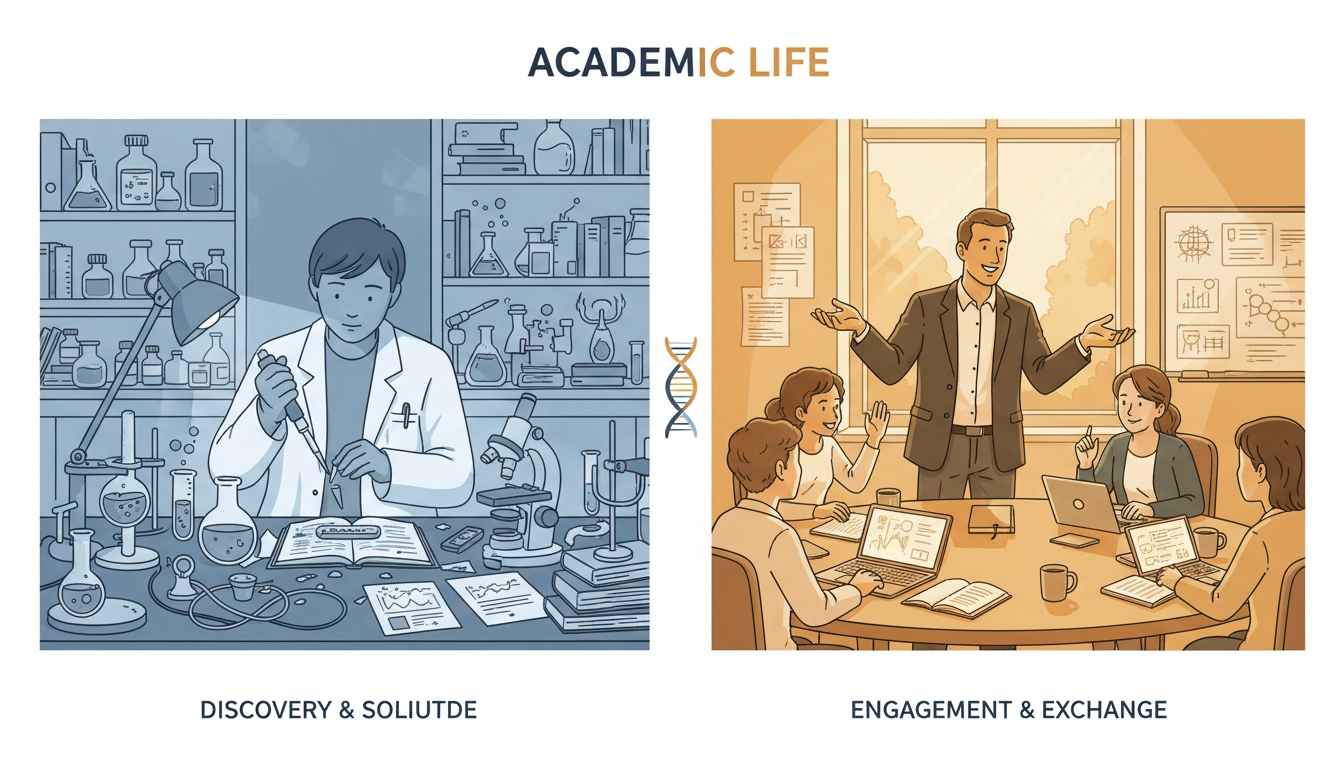
Most students picking a college focus on rankings, location, and campus vibe. What they rarely examine — the thing that actually shapes their four years — is the incentive structure of the faculty teaching their classes. That single factor explains almost everything else about the research-versus-teaching divide.
What "Research" and "Teaching" Actually Mean (and Why the Labels Are Slippery)
The cleanest definition comes from the Carnegie Classification system, which in February 2025 released its most significant methodology overhaul in two decades. Research 1 (R1) institutions now require a clear threshold: $50 million in annual research spending plus 70 research doctorates awarded per year. That puts 187 institutions in the top tier. Research 2 (R2) sits lower, at $5 million in spending and 20 doctorates annually, covering another 139 schools.
Everything below that is, broadly, the "teaching" end of the spectrum. That includes liberal arts colleges, regional comprehensives, master's-granting universities, and community colleges. The Carnegie system even added a brand-new category in 2025 called Research Colleges and Universities (RCU), which captures 216 schools that spend at least $2.5 million on research annually but don't award many doctorates. The lines are blurrier than most people assume.
Here's the thing: the labels describe institutional priorities, not individual classroom quality. A great lecturer at a flagship state university and a checked-out tenured professor at a small liberal arts college both exist. The difference is in which one the institution's reward system is designed to produce.
The Incentive Problem Nobody Talks About
A 2024 study published in Studies in Higher Education put it plainly in its title: "You certainly don't get promoted for just teaching." That's not a bug — it's how research universities are designed. Tenure and promotion decisions at R1 institutions weight grant acquisition, peer-reviewed publications, and PhD student mentorship far above classroom performance.
The result is predictable. Faculty at research universities spend roughly 37% of their working hours on research, grant writing, and publication, compared to far smaller fractions at teaching-focused schools. The most productive researchers, the people whose names appear on landmark papers, may teach one course per semester. Or none at all.
This isn't a criticism. It's a structural reality. The mission of an R1 university is to push the frontier of human knowledge, and that requires protecting the time of people who are good at doing that. But if you're an undergraduate enrolling primarily to learn, you need to understand what you're walking into.
"Faculty at research universities aren't incentivized to be great teachers. They're incentivized to be great researchers who also teach. Those are different jobs."
At the University of California system, there's a small but telling experiment happening. The UC created a tenure-eligible position called Professor of Teaching (PoT), where faculty spend roughly two-thirds of their time on classroom instruction. These faculty members number about 5-10% of tenure-eligible UC faculty. The fact that this needed to be invented as a special category tells you something about the default.
What Students Actually Experience Day to Day
The most tangible difference is class size. Public research universities average a student-faculty ratio of 19:1; private institutions (including selective liberal arts colleges) average around 8:1. But the raw ratio understates the gap.
At a large R1, introductory courses routinely hold 300 to 500 students in lecture halls, with discussion sections led by graduate teaching assistants. The professor delivers content; a 24-year-old PhD student grades your work. That TA might be excellent. But they're also trying to finish a dissertation.
At a teaching-focused school, the professor who lectures you is almost always the same person holding office hours and writing your recommendation letter. There's no intermediary layer.
The MOST Policy Initiative's analysis found that primarily undergraduate institutions (PUIs) showed better retention rates for undergraduates in research internship programs than their R1 counterparts. Counterintuitively, you're often more likely to actually complete a research project at a school less famous for research — because the mentorship is more consistent.
Research also consistently shows that larger class sizes disproportionately hurt students from underrepresented backgrounds, reducing on-time graduation rates and increasing dropout risk. It's not that R1s don't care about these students; it's that the structural setup creates barriers that motivated, well-prepared students from privileged backgrounds are better equipped to navigate around.
| Factor | R1 Research University | Teaching-Focused Institution |
|---|---|---|
| Avg. student-faculty ratio | ~19:1 (public), ~12:1 (private) | ~8:1 to ~12:1 |
| Intro class size | 100–500+ students | 15–40 students |
| Faculty primary incentive | Research output and grants | Teaching effectiveness |
| Undergraduate research access | High volume, competitive to enter | Lower volume, easier access |
| Grad school pipeline | Strong brand recognition | Strong per-capita PhD production |
| Program breadth | Extensive (engineering, law, medicine) | Narrow (arts and sciences focus) |
The Liberal Arts College Surprise
Here's the counterintuitive finding that most people — and most college ranking systems — completely miss.
The NSF's Survey of Earned Doctorates tracks where PhD recipients did their undergraduate work. Liberal arts colleges consistently rank among the top baccalaureate-origin institutions for students who go on to earn research doctorates, relative to their size. Small schools like Harvey Mudd, Swarthmore, Carleton, and Reed regularly "punch above their weight" when it comes to producing future researchers.
Why? Because at a liberal arts college, you're more likely to work directly with a professor on research as a sophomore rather than waiting until senior year. The barrier to entry is lower. The mentorship is more personal. And the culture rewards intellectual curiosity across disciplines, not just within a single specialized track.
That said, liberal arts colleges come with real tradeoffs. The program catalog is narrow — if you want to study biomedical engineering, computational linguistics, or supply chain management as a standalone major, you probably won't find it at a 1,800-student liberal arts school. Professional schools (law, medicine, business) don't exist there either. Students who arrive knowing exactly what they want to specialize in will often find the breadth requirement frustrating rather than enriching.
The honest framework is this:
- Liberal arts colleges produce strong critical thinkers who excel when the environment rewards intellectual generalism
- Research universities reward students who arrive knowing how to self-advocate, seek out opportunities, and operate with less hand-holding
Neither one is more rigorous. They're rigorous in different ways.
The Middle Path: Honors Programs and the R1 Hybrid
A large portion of this debate is moot if you know how to use the resources at a research university strategically. Honors colleges at flagship state schools are specifically designed to give research-university resources with liberal-arts-college intimacy.
The University of Michigan's Honors Program, for example, caps most seminar sections at 18 students and offers research apprenticeships starting freshman year (the kind of access that liberal arts students assume is unique to their model). Selective honors tracks at Penn State, Georgia, and Arizona operate similarly.
The key insight — and this is the thing nobody tells high school students — is that the R1 experience is highly variable depending on how proactively you engage with it. Students who cold-email professors in their first semester, show up to office hours without being required to, and join a lab by spring of freshman year have a genuinely different experience than students who only attend scheduled class sessions. Both groups are officially enrolled at the same institution.
A 2024 Frontiers in Education study on the impact of imbalanced teaching-research evaluation systems found that when students feel a strong sense of belonging to the university, the negative effects of large class sizes on academic persistence were significantly reduced. In other words, the gap between "good R1 experience" and "bad R1 experience" is often determined by student behavior, not just institutional design.
This doesn't put the entire burden on students — institutions that are aware of this dynamic have an obligation to create more structured on-ramps. But it does mean the question "is this a research or teaching school?" matters less than "what structures does this school have for engaged students?"
Who Should Actually Choose What
There's no universally right answer, but there are cleaner decision rules than most people use.
Choose a teaching-focused institution or liberal arts college if:
- You need frequent faculty access and relationship-based advising to do your best work
- You're academically curious but not yet certain of a specific field or career path
- You want a discussion-based classroom environment as a baseline, not a rare occurrence
- You'd rather have one genuine research experience than access to a hundred you'd need to compete for
Choose a research university if:
- You know your field and want access to cutting-edge labs, specialized programs, or professional schools
- You're comfortable advocating for yourself and seeking out opportunities independently
- You want the brand recognition and alumni network that comes with flagship institutions
- You plan to attend graduate school and want access to faculty with national reputations in your field
Consider the honors college option if:
- You want both — the resources of an R1 and the classroom culture of a smaller school
- You qualify (most require a separate application, and acceptance rates can run around 12-18% of admits)
The elephant in the room that rarely gets addressed in these comparisons is cost. A public flagship R1 at in-state tuition can run $28,000 to $35,000 per year all-in. A private liberal arts college can easily top $85,000 before financial aid — but generous need-based aid policies at schools like Amherst, Williams, and Pomona mean that families under certain income thresholds often pay less than they would at a public university.
Run the net price calculator before assuming anything.
Bottom Line
- The biggest difference isn't class size — it's faculty incentives. At research universities, great teaching is a bonus. At teaching institutions, it's the job. Know which culture you're entering.
- Liberal arts colleges produce more PhDs per capita than most R1s (NSF data backs this up), which flips the conventional wisdom that "serious researchers go to research schools."
- At an R1, your experience is largely self-constructed. Students who engage proactively — first-semester office hours, cold emails to faculty, lab applications — have dramatically different four years than passive students at the same institution.
- The 2025 Carnegie Classification changes introduced a new Research Colleges and Universities (RCU) category, recognizing 216 institutions that do real research but don't fit the old R1/R2 boxes. The teaching vs. research binary is getting fuzzier by design.
- Match the institution to your operating style, not just your ambitions.
Frequently Asked Questions
Is a research university or teaching university better for getting into graduate school?
Both can work, but in different ways. Research universities offer prestigious faculty names and bigger lab infrastructure, which matters for PhD programs in STEM. Liberal arts colleges punch well above their weight in per-capita PhD production (per the NSF Survey of Earned Doctorates), largely because undergraduates get earlier and more personal research mentorship. The better question is: where will you actually complete meaningful research, not just be adjacent to it?
Do professors at research universities actually teach undergraduates?
Yes, but the structure varies widely. At large R1s, introductory courses are often delivered in lecture halls by full professors but discussion sections are run by PhD students. Upper-division seminars and lab courses typically involve direct faculty contact. The tradeoff is that a professor running a $3 million NSF grant simply cannot be as available between classes as a colleague whose entire job is teaching.
Isn't it a myth that liberal arts colleges are "easier" than research universities?
Largely, yes. The coursework at selective liberal arts colleges — places like Reed, Carleton, or Haverford — is academically demanding, and the expectation for class participation and close reading is often more intensive than at a large lecture-based R1. The misconception comes from conflating "small school" with "not serious," when the reality is that the rigor is just expressed differently (seminar-style discussion vs. lab research vs. problem set culture).
What is an R1 university, exactly?
Under the 2025 Carnegie Classification update, an R1 institution is one that spends at least $50 million on research annually and awards at least 70 research doctorates per year. There are currently 187 such institutions in the United States. The designation is about research output, not teaching quality — the two are separate dimensions.
How do I find out if a university's undergraduate experience is actually good?
Look beyond rankings. Check the student-faculty ratio (aim for below 14:1 for regular interaction), ask about honors programs and undergraduate research grant funding, and look at what percentage of undergraduates publish or present research before graduation. The Common Data Set (publicly available for most schools) shows class size distributions — a school where 60%+ of classes have fewer than 20 students tells a very different story than one where most are over 50.
What should first-generation college students consider in this choice?
First-generation students often benefit more from the structured support environment of teaching-focused institutions, where advising relationships are more built-in rather than opt-in. Research from the MOST Policy Initiative found that larger class sizes disproportionately harm students from underrepresented backgrounds on retention and graduation rates. That said, many R1s have expanded first-gen support programs — it's worth asking specifically whether those resources are proactive (the school reaches out) or reactive (you have to seek them).
Sources
- Research vs. Teaching Universities - MOST Policy Initiative
- Carnegie Classifications Release 2025 Research Activity Designations
- Research University vs Teaching University - Academic Influence
- 'You certainly don't get promoted for just teaching' - Studies in Higher Education
- 6 Key Differences: Liberal Arts Colleges vs Research Universities - Galin Education
- New Carnegie Classifications Reshape the R1 List - Georgetown THE FEED