Santa Clara University: Programs, Rankings, and Student Life
When U.S. News published its 2026 college rankings, Santa Clara University landed at No. 59 nationally. That headline undersells what's actually happening here. Dig into the program-level data and things get more interesting: SCU's accounting program jumped from No. 56 to No. 26 in a single year. Its analytics ranking appeared from nowhere. And PayScale's research places SCU graduates at No. 9 nationwide for career earnings. That's not a school riding reputation. That's a school on the move.
What Santa Clara University Actually Is
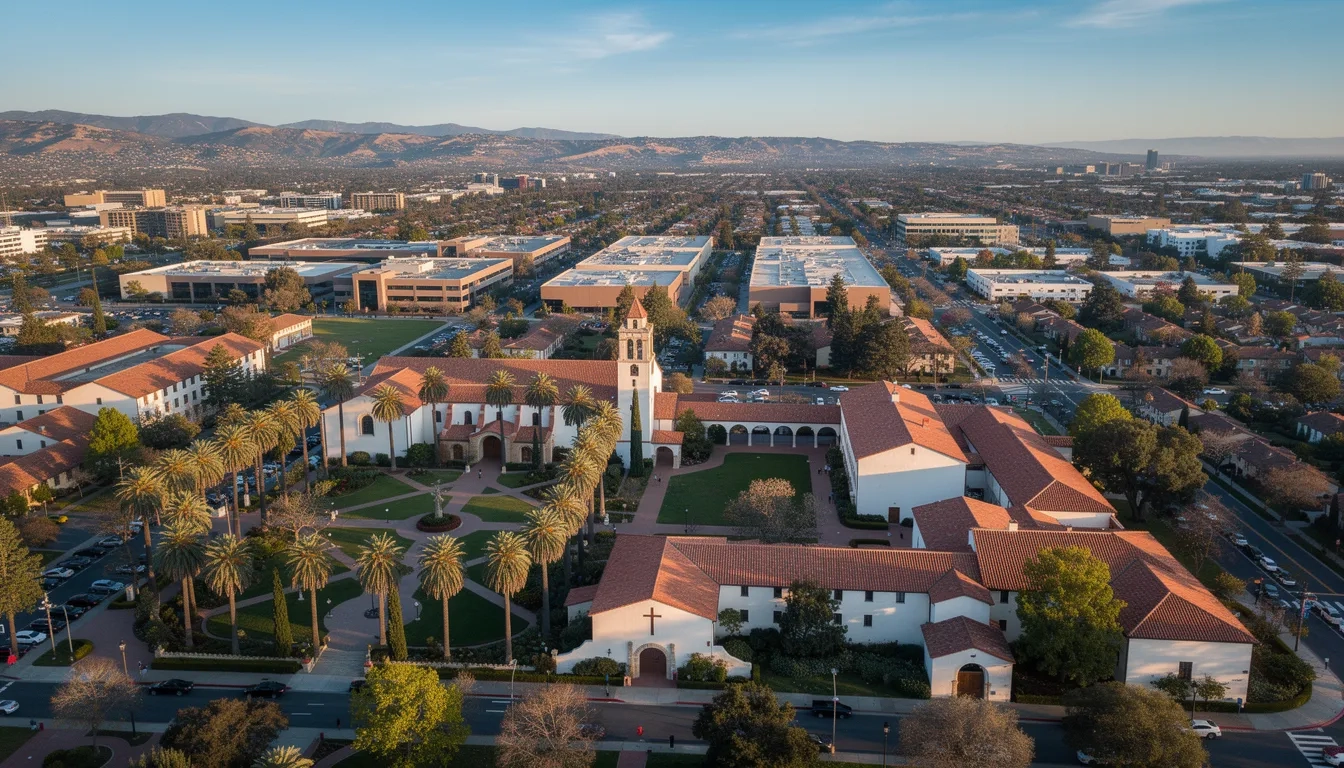
Founded by Jesuits in 1851, SCU sits on 106 acres in the heart of Silicon Valley — literally surrounded by the headquarters of Apple, Intel, and NVIDIA. The university enrolls roughly 9,000 undergraduates and graduate students across six schools. Small by research university standards. Large enough to run a full law school, a business school competing with Stanford and Berkeley graduates in the same job market, and an engineering program that feeds directly into tech companies a commute away.
The Jesuit tradition is not just branding at SCU. It genuinely shapes the academic culture in ways that surprise students who arrive focused purely on career outputs. The core curriculum requires engagement with ethics, philosophy, and community service regardless of major. You will find pre-med students in theology seminars and computer science majors working through social justice frameworks.
Some students love this. Others find it unexpected. Either way, it is woven into the fabric of what an SCU degree involves.
Academic Programs: The Six Schools
SCU organizes its offerings across six colleges and schools:
- College of Arts and Sciences — the largest unit, covering humanities, natural sciences, social sciences, and pre-professional tracks
- Leavey School of Business — the flagship program, offering undergraduate degrees plus MBA and MS graduate options
- School of Engineering — computer science, electrical engineering, and mechanical engineering with strong Silicon Valley employer ties
- School of Law — one of California's oldest law schools, with recognized strength in high-tech law and intellectual property
- Jesuit School of Theology — graduate-level, based in Berkeley, focused on ministry and religious studies
- School of Education and Counseling Psychology — graduate programs in education, counseling, and marriage and family therapy
The Leavey School of Business deserves particular attention. It consistently outperforms the university's overall ranking at the individual program level. Faculty often hold active industry roles, and case studies aren't hypothetical exercises — they're drawn from companies whose recruiters visit campus the following semester to hire. That feedback loop is rare, and it's a direct product of location.
Rankings: Where SCU Actually Stands
Here's a consolidated view of where SCU sits across the major ranking systems:
| Ranking Source | Position | Notes |
|---|---|---|
| U.S. News National Universities (2026) | No. 59 (tied) | Up significantly from prior years |
| U.S. News Private Universities | No. 35 | Up from No. 38 |
| Wall Street Journal / College Pulse | No. 38 | Reflects outcomes and value metrics |
| Forbes (2025) | No. 65 | |
| U.S. News Undergraduate Teaching | No. 23 (tied) | |
| U.S. News Entrepreneurship | No. 14 | Up from No. 18 |
| U.S. News Management Information Systems | No. 21 | |
| U.S. News Finance | No. 24 (tied) | |
| U.S. News Accounting | No. 26 (tied) | Up from No. 56 — largest jump |
| U.S. News Analytics | No. 33 | Previously unranked |
The accounting leap from 56 to 26 in one year is the number worth pausing on. Ranking movements that dramatic usually signal curricular restructuring, new faculty hires, or both. Whatever drove it, accounting at SCU now competes with programs at universities carrying dramatically larger endowments.
SCU's entrepreneurship program ranks No. 14 nationally — ahead of Georgetown, Notre Dame, and many flagship state universities. For a school this size, sitting in the top 15 in any discipline is a real achievement.
The analytics ranking appearing from zero is equally telling. Analytics as a standalone discipline is still relatively new at most institutions, and SCU entered early enough to land in the top third nationally on its first appearance.
Student Life: The Real Day-to-Day
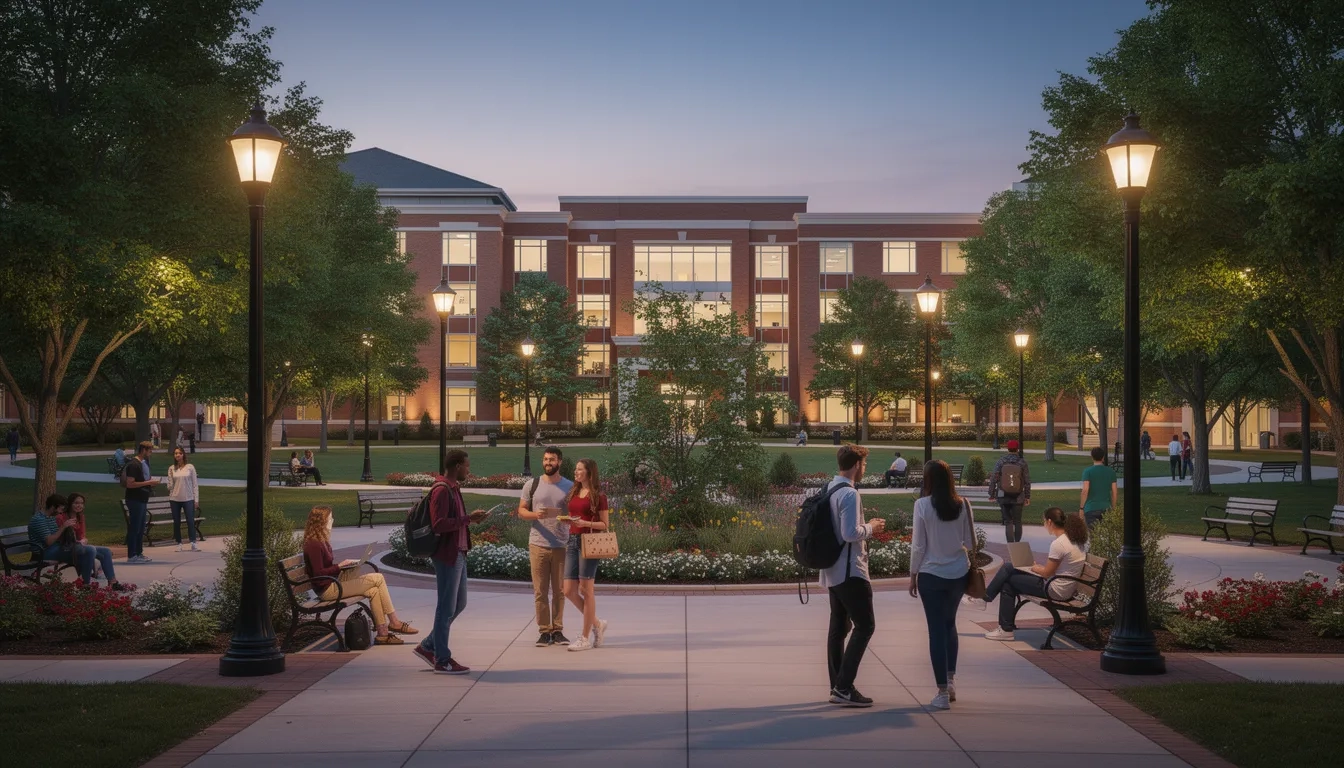
Let me be direct about something: SCU is not a party school. Students who arrive expecting the social infrastructure of a large state university sometimes find campus life more subdued than anticipated. The school is around 9,000 students total. Traditional Greek life is absent. The social scene runs through approximately 150 student organizations, athletic events, and programming organized by the Associated Students of Santa Clara University.
What SCU does offer is a strong community-within-community structure that larger schools rarely replicate. Residential Learning Communities (RLCs) group first-year students by shared academic interests, with Faculty Directors who live nearby and actively mentor residents. You read about this kind of arrangement in every college brochure. At SCU, it actually functions.
Housing breakdown:
- First-year students typically live in traditional residence halls with structured community programming
- Upperclass students choose from villas, apartments, and communal-style halls — newer buildings rate well in student reviews
- On-campus living correlates strongly with academic success at SCU, per the university's own residential experience data
The campus sits in the actual city of Santa Clara — quieter than San Jose, and honestly a bit suburban if you are coming from a major metropolitan area. Students compensate by leaning on the geography. San Francisco is about 45 minutes by Caltrain (no car needed). Santa Cruz beaches run roughly 40 minutes south. The Bay Area's range means most weekends have options.
Community service is embedded, not optional. The Ignatian Center for Jesuit Education coordinates service programs from local tutoring to international immersions, and roughly 90% of students participate in some form of community engagement before graduation. This isn't resume padding culture — it's the actual campus norm, which either attracts you to SCU or tells you something important about fit.
The Silicon Valley Advantage
This is where SCU's value proposition gets genuinely underappreciated by applicants who look only at rankings.
Being located in Silicon Valley isn't a background detail on the website. It's an academic asset that reshapes what education here looks like in practice. Engineering students get internship access that programs in other states simply cannot match on geography alone. Cisco is headquartered in San Jose, 4.3 miles from campus. Intel's campus is in Santa Clara, roughly 2 miles away. These are not abstract corporate partners — they are literal neighbors who recruit regularly.
The Leavey School's executive MBA program draws working professionals from Valley companies into the same classrooms as full-time students. That mix of current practitioners and traditional students changes the texture of business education in ways that you cannot engineer in a campus isolated from industry.
For law students, the School of Law has built specific expertise in high-tech law and intellectual property — disciplines in constant demand in a region where IP disputes happen at scale. Education journalist Jeffrey Selingo has called SCU a "hidden value" and "dream college" category school, and the Silicon Valley effect is a significant part of why.
The numbers back this up. SCU alumni median earnings within the first five years post-graduation sit at $87,300, climbing to $173,100 for those with a decade or more of professional experience. U.S. News named SCU one of the top 22 colleges for return on investment in 2025. Those outcomes reflect not just the degree, but the network geography that comes with it.
Cost, Aid, and the Real Price
The listed tuition is $63,514 for 2025-26. Add room, board, and fees, and the on-campus cost of attendance hits $86,694. Those are real private university numbers.
But the net price picture is meaningfully different:
- 72% of undergraduates receive some form of grant or scholarship
- Average need-based award for first-year students: $41,590
- Net price for the average aid recipient: $46,622
- Acceptance rate: 48%
That net price is still substantial. But it narrows the gap between SCU and many flagship public universities in ways that sticker-price comparisons obscure. Families who compare net prices (rather than listed tuition) often find SCU more competitive than they expected.
SCU meets 100% of demonstrated financial need for qualifying students. Students who start seriously researching financial aid in the spring of 11th grade can run the net price calculator and compare across schools before paying a single application fee — that's the move most families skip.
Bottom Line
SCU is a strong choice for students who want Silicon Valley proximity, business or engineering programs that compete with institutions twice its size, and a campus culture built around genuine community rather than scale. The trajectory matters: a school moving from No. 65 to No. 59 nationally while its accounting program jumps 30 spots in one year is investing in quality, not managing optics.
- Business students: Leavey's entrepreneurship (No. 14), finance (No. 24), and accounting (No. 26) rankings make it defensible against better-known alternatives at a fraction of the admissions stress
- Engineers: The Silicon Valley location creates internship access that no ranking number fully captures
- Community-oriented students: SCU's size, RLCs, and service culture produce a different undergraduate experience than any large research university
- Know the tradeoff: The campus isn't a social circus — nightlife lives in San Francisco, not on-campus. That is a fit question, not a flaw
If you're comparing SCU against a higher-ranked school that sits in geographic isolation, run the net price comparison carefully. The employment outcomes regularly close the gap that ranking numbers imply.
Frequently Asked Questions
Is Santa Clara University a good school for business?
Yes — and specifically so. The Leavey School of Business ranks No. 14 nationally in entrepreneurship and No. 21 in management information systems, placing it ahead of many business schools with far larger name recognition. For students targeting finance, accounting, or tech-adjacent business roles, the Silicon Valley location creates internship pipelines that programs in other regions genuinely cannot replicate.
What is SCU's acceptance rate, and how selective is it?
The acceptance rate is 48%, placing SCU in the moderately selective tier. It's not an Ivy-level admissions competition, but admitted students typically show strong academic records and intentional applications. Admissions readers respond to evidence of community engagement and ethical reasoning — both of which align with the Jesuit mission the school takes seriously.
Does SCU offer meaningful financial aid?
72% of undergraduates receive grants or scholarships, and the average need-based award for first-year students is $41,590. SCU meets 100% of demonstrated financial need for qualifying students, which makes the real cost of attendance significantly lower than the $86,694 sticker price for many families. Running SCU's net price calculator early in the application process is worth the ten minutes it takes.
Is the Catholic and Jesuit identity a big part of daily student life?
The core curriculum requires coursework in ethics and religious studies for all students regardless of major — that part is not optional. Active participation in Catholic religious practice is entirely voluntary. Students of all faith backgrounds attend SCU without issue. The more consistent cultural imprint day-to-day is an emphasis on community service and ethical reasoning, which shows up in academic programs, not just campus ministry.
How does SCU compare to other Bay Area universities?
SCU sits in a distinct tier. Stanford is far more selective and primarily research-focused. San Jose State is a large public school with significantly lower costs. SCU's closest peer group by size, selectivity, and mission includes schools like University of San Diego and Loyola Marymount. Within that comparison, SCU's placement inside the actual tech corridor gives it career placement leverage that most Jesuit peer institutions cannot match.
What do SCU graduates actually earn, and does the degree pay off?
PayScale ranks SCU alumni at No. 9 nationally for career earnings. Median salaries within the first five years post-graduation run $87,300, rising to $173,100 for those with ten or more years of experience. U.S. News named SCU one of the top 22 colleges for return on investment in 2025. Engineering and business graduates pull the numbers up, but the Silicon Valley network effect improves outcomes across most majors.
Sources
- Santa Clara University Rises to 59th Best Nationally — SCU Press Release
- Santa Clara University — U.S. News Best Colleges Profile
- Campus Life at Santa Clara University — CollegeVine
- Santa Clara University Recognized Among Top Colleges for Best ROI — SCU Press Release
- Santa Clara University Graduates Top Lists for Post-Graduation Salaries — SCU
- Leavey School of Business — SCU Official Site