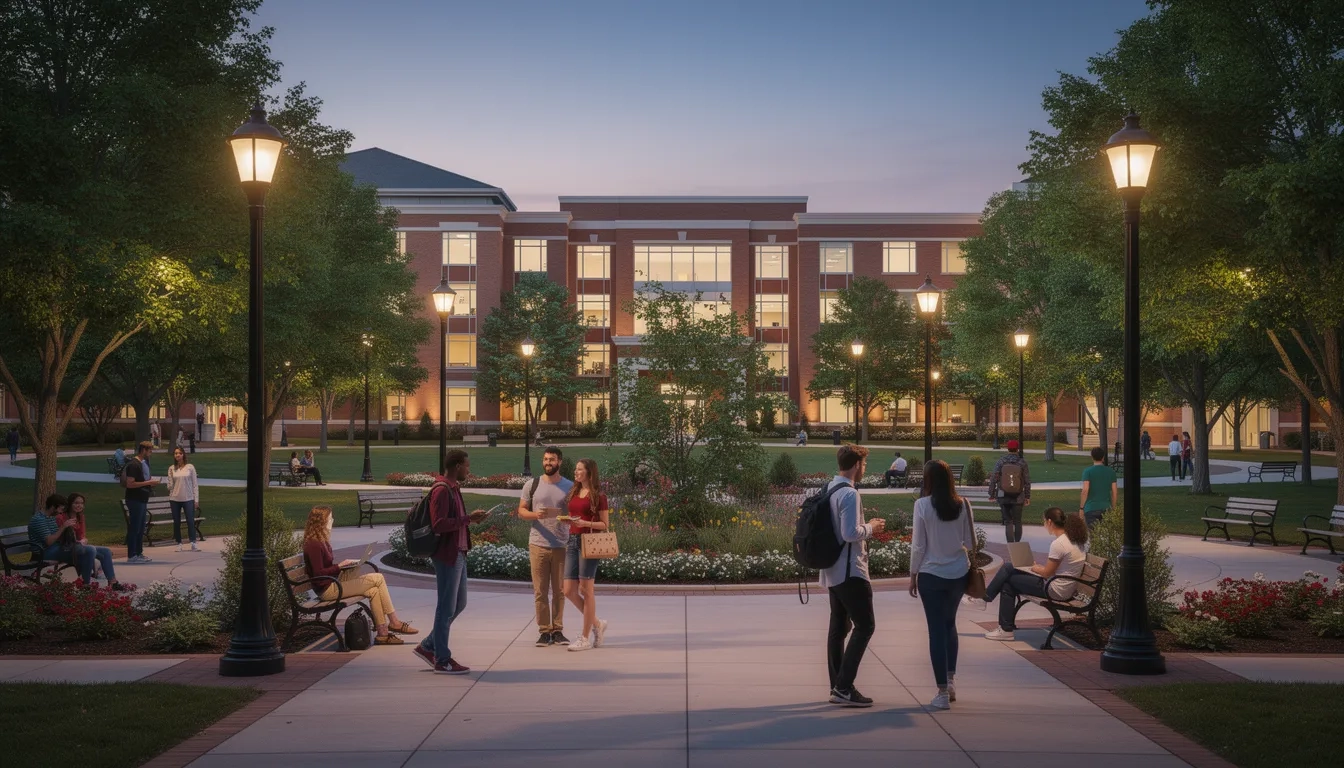
SCAD: Programs, Rankings, and Student Life Explained
SCAD started in September 1979 with 71 students, four staff members, and one converted building in Savannah, Georgia. Today it enrolls more than 18,550 students from over 110 countries and holds the Red Dot Award's title of #1 design university in the Americas and Europe for 2025. That's not a minor arc — it's one of the more striking transformations in American arts education over the past four decades.
The School That Built Itself Into a City
Most art schools are compact. SCAD is not. With 15,552 undergraduates and 2,998 graduate students as of fall 2024, it operates at a scale that most specialized design schools simply can't match — and that scale has real consequences for what it can offer.
The multi-campus structure is genuinely unusual in this space. Students can study at the flagship Savannah campus (67 buildings woven throughout a historic city), move to Midtown Atlanta for a metropolitan experience, or spend time at the Lacoste campus in the south of France. There's also SCADnow, the school's online platform for students who need flexibility.
SCAD was founded by Richard G. Rowan and Paula S. Wallace to fill a gap — the Southeast had almost no institutions offering specialized art and design degrees. They started deliberately, acquiring historic Savannah buildings one at a time until the campus became embedded in the city itself rather than separated from it.
One thing easy to miss: SCAD's endowment sits at $459 million as of 2024. For a private arts institution, that's substantial. It funds the SCAD Film Studios (the largest university-owned film production complex in the United States), two university museums, and facilities that smaller arts schools couldn't afford to build.
Programs: 136 Degrees Across 11 Schools
The breadth of SCAD's academic offerings is one of its most defining features. 136 total programs — 53 undergraduate and 83 postgraduate — span everything from industrial design to sequential art to architectural history. Few schools in any category can make that claim.
The 11 academic schools cover:
- Animation & Motion
- Building Arts
- Business Innovation
- Creative Technology
- Design
- Fashion
- Film & Acting
- Fine Arts
- Foundation Studies
- Liberal Arts
- Visual Communication
Degree types include B.A., B.F.A., B.Des., M.A., M.F.A., M.Arch., and M.B.I. (Master of Business Innovation). That last credential reflects SCAD's push to bridge creative practice with business fluency — which is increasingly where design careers actually live, particularly in brand strategy, experience design, and creative direction.
Standout programs by reputation include animation, graphic design, fashion, film, and industrial design. The animation program has placed graduates at Pixar, DreamWorks, and major game studios. The film program benefits from SCAD's own production infrastructure rather than relying purely on classroom instruction.
One honest caveat: with 136 programs, quality is uneven. The marquee programs get the investment, the faculty with industry pedigree, and the best facilities. Smaller or newer programs don't always receive the same resources or alumni network depth. Before committing, ask specific questions about class sizes, faculty work histories, and portfolio placement outcomes in your exact program of interest — not the school's aggregate statistics.
Rankings: How SCAD Actually Stacks Up
Rankings for arts schools are messier than rankings for research universities. But SCAD collects them deliberately, and several of the numbers are genuinely significant.
| Ranking | Position | Source | Year |
|---|---|---|---|
| Design University (Americas & Europe) | #1 | Red Dot Award | 2025 |
| Best Art Schools (USA) | #1 | Art & Object | 2025 |
| International Design University | #1 | International Design Awards | 2024 |
| Art & Design (QS World Rankings by Subject) | #15 | QS World University Rankings | 2026 |
| Most Innovative Schools | #2 | U.S. News & World Report | 2025 |
| Best Value Schools | #37 | U.S. News & World Report | 2025 |
The QS trajectory is worth pausing on. SCAD ranked #36 in Art & Design in 2020 and climbed to #15 by 2026. That's significant movement for a specialized institution competing against research universities with far larger budgets and longer histories.
"99% of recent SCAD graduates were employed, pursuing further education, or both within 12 months of graduation."
That 99% figure comes from SCAD's own Office for Career and Alumni Success reporting — so it deserves some scrutiny around methodology. But even discounted, it reflects career outcomes that most fine arts programs struggle to approach.
The U.S. News rankings are less flattering for overall academic prestige, but SCAD doesn't compete on that axis. It competes on design excellence and placement, and those numbers land.
Student Life: Cities, Clubs, and the Bees
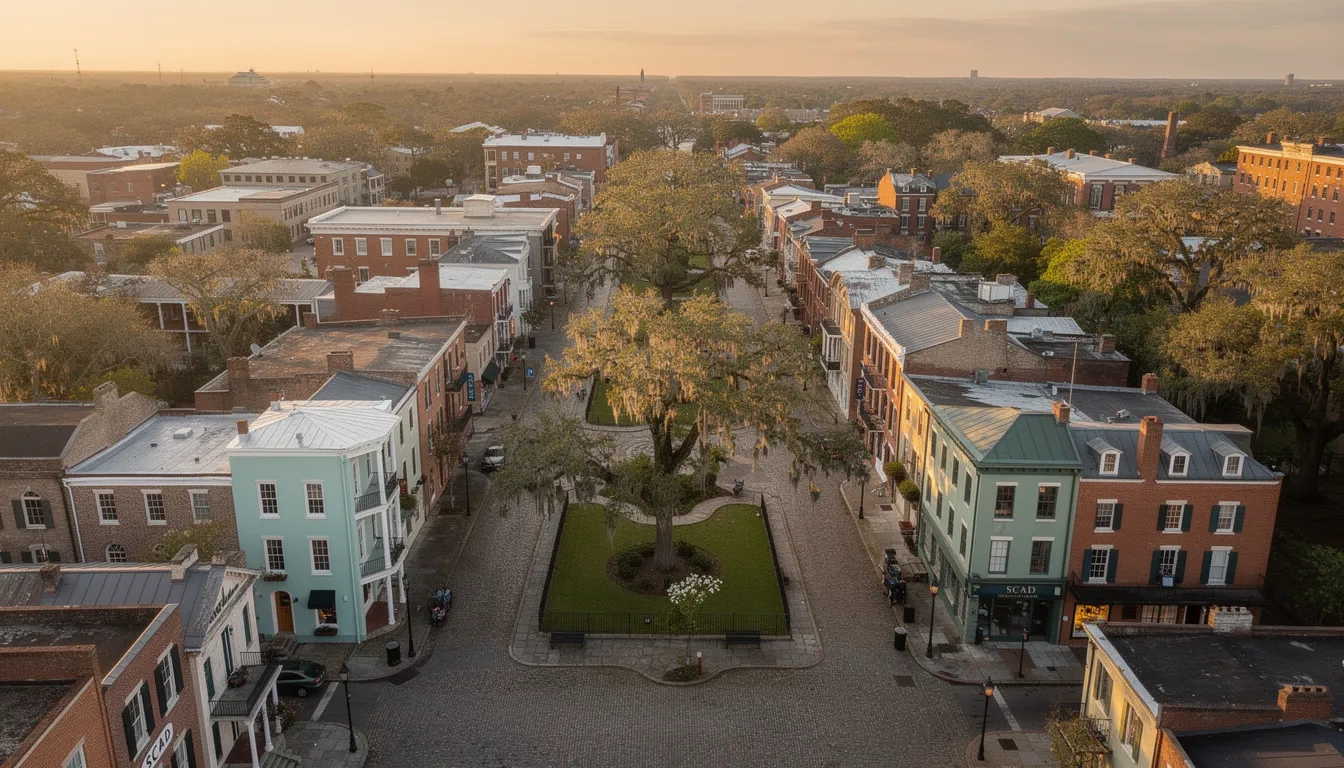
The Savannah campus is its own argument for attending. Spanish moss, antebellum squares, cobblestone streets. SCAD buildings are distributed throughout the historic district rather than behind a gate, which means student life and city life genuinely blur together. That doesn't happen at most universities, and it shapes daily experience in ways that are hard to quantify but easy to feel.
SCAD maintains 80+ student organizations. No fraternities or sororities — the social structure is built around creative disciplines and shared interests instead of Greek life.
Student media is a particular strength:
- The District — student newspaper
- SCAD Radio — a live radio station with programming and DJ culture
- The Manor — student magazine with a design-forward format
Annual events shape the academic calendar in ways that go beyond typical campus activities. The Savannah Film Festival draws working industry professionals every fall. The deFINE ART program brings international artists for installations and public talks each February. The Sidewalk Arts Festival takes over Forsyth Park with student work covering the ground in chalk and color.
Athletics might surprise you. SCAD fields 22 varsity sports in Savannah and 16 in Atlanta, competing under the NAIA banner as "The Bees." For a school known primarily for its creative programs, that's a real athletic presence.
Housing through SCADhome places students in residence halls across the Savannah historic district rather than in isolated dormitory complexes. Atlanta's campus offers a different energy entirely — Midtown access means proximity to agency culture, entertainment companies, and tech firms that Savannah can't provide.
Career Outcomes and Industry Connections
SCAD invests seriously in career infrastructure. The Office for Career and Alumni Success manages direct recruiting relationships with companies including Google, Disney, and Adobe. For students in animation, UX design, and motion media, these relationships create real internship pipelines rather than just career fair appearances.
The SCAD Film Studios — the largest university-owned film production facility in the country — gives film students professional-grade production experience before graduation. That's not available at most film programs regardless of their ranking or reputation.
Faculty composition matters more than most prospective students realize. SCAD actively recruits working practitioners alongside academics. Emmy, Oscar, and Peabody Award winners teach at the graduate level in film and media programs. That translates into mentorship quality and industry introductions that a purely academic faculty can't offer.
International students make up 25.4% of enrollment, representing over 110 countries. That makes the professional network genuinely global — which matters in fashion, animation, and gaming, all fields where international studios and clients are a realistic part of a career, not an exotic exception.
SCAD's art programs rank in the top 10% in the United States; its computer and film programs sit in the top 20%. Those aren't vanity rankings — they reflect where the school has concentrated its investment and faculty hiring over the past decade.
The Honest Cost Breakdown
The elephant in the room is the cost. Undergraduate tuition runs $41,630 for 2024-2025. Graduate tuition sits at $42,620. Add housing, food, and living costs and the estimated total cost of attendance hits approximately $66,008 per year.
That's serious money. The art school market has significant sticker-price inflation, and SCAD isn't cheap relative to what most students expect from a non-Ivy institution.
92% of enrolled undergraduates receive grants or scholarships, with an average aid package of $12,540. That average is modest relative to the sticker price, meaning many students carry substantial debt loads. The 82.98% acceptance rate means SCAD is filtering on portfolio quality and creative fit, not academic selectivity — which changes the admissions math significantly for students who are strong artists but not straight-A students.
SCAD's #37 Best Value Schools ranking from U.S. News (2025) is worth weighing carefully. My read: the school delivers solid value for students who enter the strongest programs and engage career services actively from day one. Students in smaller, less-resourced programs who stay passive about networking get a much worse deal at this price point. The career outcomes data is an average; your results depend heavily on which program you choose and how hard you work the school's industry connections.
Bottom Line
- For creative careers, SCAD has real placement power, particularly in animation, graphic design, film, and fashion. The career infrastructure and industry partnerships are worth serious consideration.
- Choose your specific program carefully. The marquee programs here compete nationally. Smaller programs don't carry the same track record or resources.
- Campus location shapes the experience. Savannah's historic environment is a genuine asset if that appeals to you. Atlanta is the better choice if you want proximity to commercial clients and entertainment industry hubs.
- Run your own financial numbers. At $66,000/year sticker, financial aid, scholarship outcomes, and post-graduation salary expectations in your specific field need to be part of the decision before you apply — not after you enroll.
The school that started with 71 students in 1978 has become a legitimate force in global design education. The rankings reflect real investment. The career outcomes reflect real infrastructure. Whether it's the right fit depends on your program, your finances, and how actively you engage with what SCAD has built.
Frequently Asked Questions
Is SCAD actually a good school for art and design?
Yes, with context. SCAD ranks #1 for design in the Americas and Europe (Red Dot Award, 2025) and #15 globally in Art & Design per QS World Rankings for 2026 — a climb from #36 just six years earlier. The strongest programs compete nationally. Quality in smaller or newer programs varies more than the overall rankings suggest.
How hard is it to get into SCAD?
SCAD accepts approximately 82.98% of applicants, making it relatively open on paper. The real filter is portfolio quality. Unlike research universities where GPA and standardized test scores drive decisions, SCAD evaluates creative work. Strong artists with average academic records have a genuine shot; students with strong grades but weak portfolios don't.
What is SCAD's job placement rate after graduation?
SCAD reports that 99% of recent graduates were employed, pursuing further education, or both within 12 months of graduation. The school maintains active recruiting relationships with Google, Disney, Adobe, and hundreds of other companies. That said, outcomes vary by program — animation and film graduates have different trajectories than students in less commercially-oriented fields.
Is SCAD only for traditional fine arts students?
This is a common misconception. SCAD's 136 programs include game development, UX design, architectural history, business innovation, sequential art, and sound design, among many others. The Creative Technology and Business Innovation schools specifically serve students whose careers will sit at the intersection of design and technology or commerce.
What should I know about SCAD's athletics?
SCAD fields 22 varsity sports in Savannah and 16 in Atlanta, competing in the NAIA as "The Bees." The athletic program is real and actively recruited. For students who want to continue playing a sport while attending a top design school, SCAD is one of a small number of institutions where that's genuinely possible.
What is the difference between SCAD Savannah and SCAD Atlanta?
Savannah is the flagship campus — 67 buildings in a historic district, the largest enrollment, and the widest program selection. Atlanta is a smaller urban campus in Midtown, better suited for students focused on commercial design, advertising, entertainment industry work, and access to the city's growing tech and film sectors. Both offer strong programs but operate with different rhythms and different professional opportunity sets.