UC Berkeley: Admissions, Rankings, and Real Student Life
The acceptance rate at UC Berkeley has been cut nearly in half since 2013. Back then, about 1 in 5 applicants got in. For the Class of 2029, roughly 14,400 students were admitted from ~126,800 applications — closer to 1 in 9. Certain programs have gotten far tighter than that. And yet Berkeley's reputation as a place that changes how you think, not just what you know, hasn't dimmed. Understanding what the numbers actually mean — for your application, your budget, and four years of your life — is worth doing carefully.
Where Berkeley Stands in the Rankings
UC Berkeley holds the #1 spot among U.S. public universities in U.S. News & World Report, a position it has defended against UCLA, Michigan, and Virginia for years. In the 2025 overall national rankings combining public and private institutions, Berkeley lands at #17. Globally, the QS World University Rankings placed it at #12 in 2025, though the 2026 edition moved it to #17 — a drop worth noting but not one that reflects a structural decline in research output or faculty quality.
The QS methodology leans heavily on employer reputation scores and international research networks, which favor schools like MIT and Oxford. Berkeley's actual research influence stays formidable.
For program-specific rankings, Berkeley dominates the public university tier:
- EECS (Electrical Engineering and Computer Sciences): Widely considered the hardest undergraduate CS-adjacent program to enter in the country
- Chemistry: Consistently top 5 globally in QS subject rankings
- Haas School of Business: Top 10 nationally for undergraduate business
- Engineering overall: Top 3 nationally, behind only MIT and Stanford
The "#1 public university" title matters practically, not just symbolically — it affects how employers and graduate programs read a Berkeley degree.
The Acceptance Rate Breakdown That Actually Matters
The 11% headline rate hides enormous variation across applicant categories. Here's what the data actually looks like:
| Applicant Group | Acceptance Rate |
|---|---|
| California residents | 14.9% |
| Out-of-state applicants | 7.3% |
| International students | 3.4% |
| Female applicants | 12.9% |
| Male applicants | 8.8% |
| EECS (College of Engineering) | Below 5% |
California's preference isn't arbitrary — it's built into the UC system's public charter. Berkeley allocates a mandated share of each freshman class to in-state students, which is why OOS and international odds are so compressed.
The gap between male and female acceptance rates (8.8% vs. 12.9%) reflects patterns seen at many selective schools, driven partly by women applying in greater numbers and partly by stronger representation in essays.
One widely misunderstood distinction: EECS and Computer Science are separate programs. EECS sits in the College of Engineering; CS is housed in Letters & Science. Both are extraordinarily competitive. But EECS's sub-5% rate is significantly lower than the L&S CS rate. Students set on a software career who apply through L&S get a wider front door, access to most of the same courses, and the same companies showing up at career fairs.
The Academic Profile of Who Gets In
Berkeley has been fully test-free since 2021, and the policy remains in place. SAT and ACT scores are explicitly not reviewed. So the focus shifts entirely to grades, coursework rigor, and writing.
GPA data from the most recent class tells a clear story:
- 37.7% of admitted students had a perfect 4.0 unweighted GPA
- 51.5% had GPAs between 3.75 and 3.99
- Nearly 90% of admits cleared the 3.75 unweighted threshold
California's weighted GPA scale awards extra points for AP, IB, and honors courses, so the competitive weighted GPA range sits between 4.15 and 4.30. Loading up on rigorous courses — and doing well in them — is the single clearest signal you can send.
Berkeley formally rates these factors as "very important" in admissions: rigor of secondary coursework, academic GPA, and application essays. Extracurriculars and personal qualities come in as "important." Test scores are irrelevant by design.
Berkeley's Personal Insight Questions are where borderline applications break one way or the other. Students who write polished, generic answers about leadership and community service blend into the pile. Students who write specific, honest stories about the things that genuinely consumed them — a backyard chemistry experiment that went wrong, a language they learned to talk to a grandparent — tend to earn a second read.
The demographic composition of the current first-year class: 38.2% Asian, 22.3% Hispanic/Latino, and 2.0% Black. The elephant in the room here is that 2% Black enrollment figure, which campus advocacy groups have criticized persistently. Under California's Proposition 209 — which bars race-conscious admissions — Berkeley's tools for addressing the gap are limited, and the university has acknowledged it openly.
What It Actually Costs
Cost of attendance figures vary significantly by residency, and the difference is real:
2025-2026 total cost of attendance (on campus):
- California residents: $47,289
- Out-of-state students: $79,177
Tuition alone runs $15,978 for in-state and $48,726 for nonresidents. On-campus housing adds $11,780 to $18,710 per year (all residence hall contracts bundle in a $6,555 Blue and Gold Meal Plan).
The UC Blue and Gold Opportunity Plan is the most important financial aid fact California families should know: it covers full tuition for in-state students whose family earns below $80,000 annually. Families under $110,000 typically see enough grant aid to cover tuition entirely, making Berkeley cheaper in net terms than many private schools that post lower sticker prices.
For housing, the Berkeley Student Cooperative (BSC) deserves a spotlight. The co-op houses over 1,300 students across 17 houses. Students work about 5 hours per week in exchange for housing, which typically runs $400 to $600 less per month than nearby private rentals. It's one of the more genuinely interesting living experiments in American higher education — not for everyone, but beloved by those who try it.
Life on the Berkeley Campus
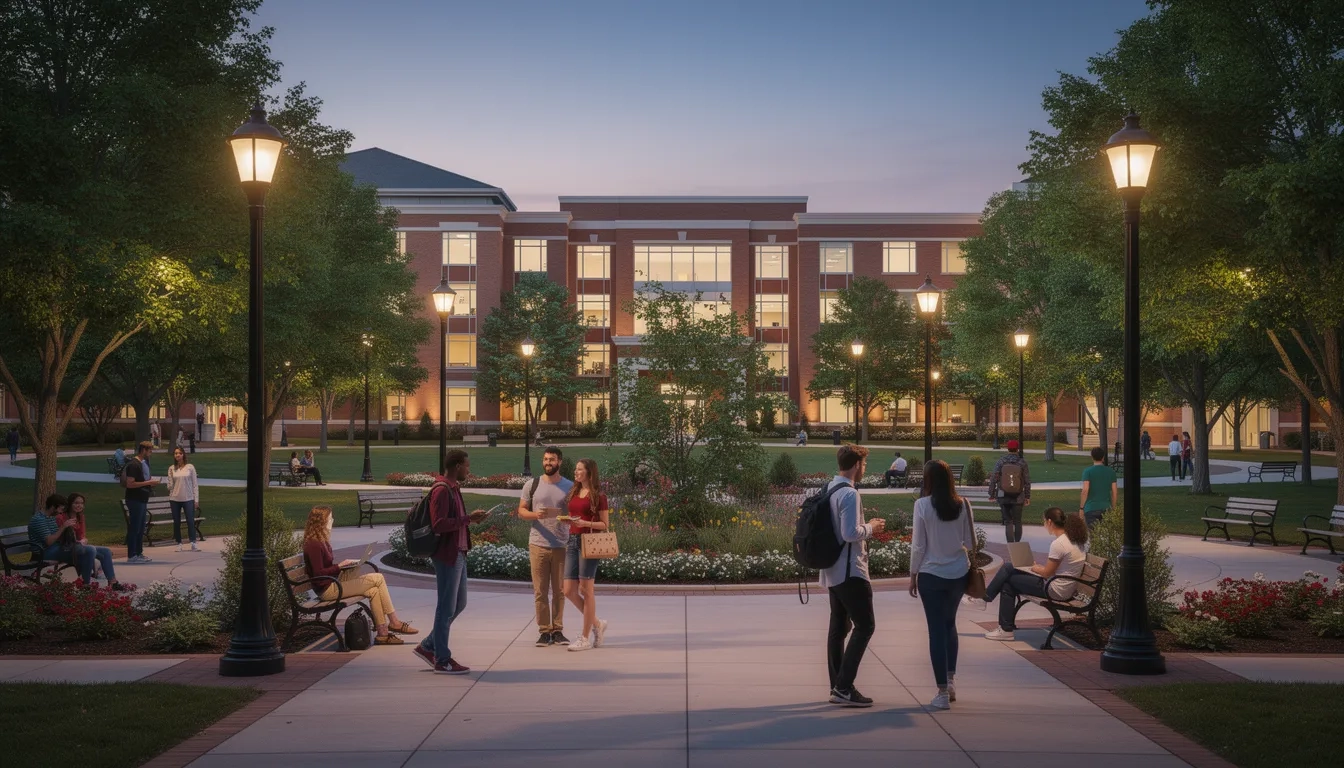
33,469 undergraduates were enrolled as of fall 2024. About 28% live in university-affiliated housing; the other 72% live off campus in the surrounding neighborhoods, co-ops, and apartment buildings that stretch from north Berkeley's Gourmet Ghetto down through Oakland. This matters more than most prospective students realize. Berkeley is not a campus-in-a-bubble. It sits inside a real city with real character — coffee shops that have been open since before your parents graduated, a politically charged street scene on Telegraph Avenue, and a community that treats the university as part of itself rather than a tenant.
96% of first-year students choose to live on campus, and that's where most of the traditional social bonding happens. After freshman year, many students move into off-campus apartments or co-ops and the experience shifts accordingly.
Traditions run deep here. The Big Game against Stanford is the defining event of the fall social calendar — a rivalry dating to 1892 that generates more collective student energy than almost anything else the university produces. The Cal Band's card stunts have been featured in national press. DeCal courses (student-designed classes that earn actual academic credit, covering everything from urban beekeeping to K-pop analysis) are a distinctly Berkeley phenomenon you won't find replicated elsewhere in the UC system.
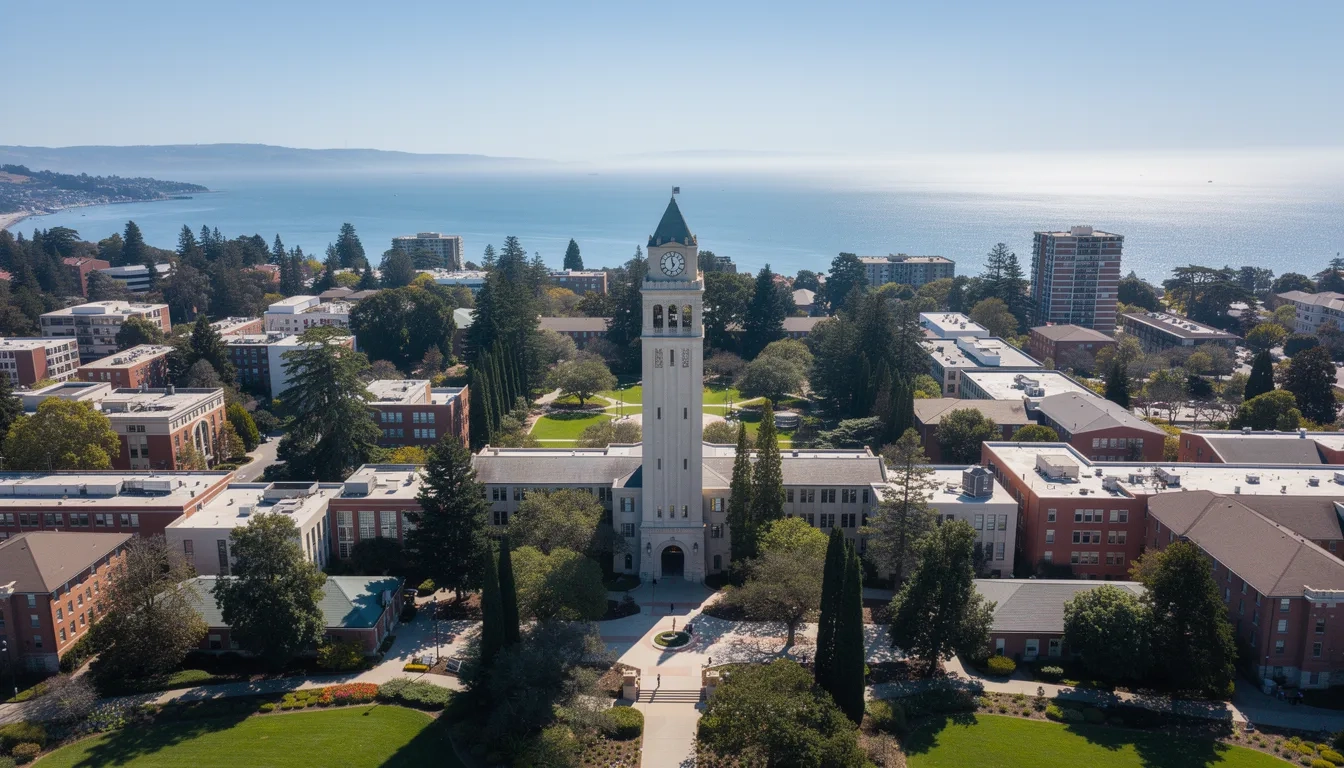
RecWell, Berkeley's recreation center, serves over 22,000 members. The Hearst Pool is carved into a hillside with views across the Bay — practically speaking, one of the nicest places to swim on any public university campus in California.
The Academic and Social Culture
Here's the honest version: Berkeley is academically relentless. Grade deflation in core science and engineering courses is real, not mythological. The historic average in lower-division engineering courses has hovered around C+ to B-. Students who arrive expecting the same grades they earned in high school without similar strain sometimes find their first semester genuinely disorienting.
This is normal. And it passes. Most students recalibrate within a semester. But knowing it's coming reduces the shock considerably.
The social environment is more varied than the "protest campus" reputation suggests. Yes, Sproul Plaza sees regular political demonstrations and organizing. But 33,000 students contain a lot of contradictions — sports culture and protest culture coexist, Greek life runs alongside housing co-ops, competitive pre-med tracks exist beside thriving arts communities. Berkeley has over 1,000 registered student organizations. Finding your people takes slightly more active effort than at a smaller school with fewer options, but the options genuinely exist for almost any interest.
Berkeley's culture rewards self-direction above almost everything else. Students who arrive needing external structure tend to struggle. Students who arrive knowing what drives them, or who are willing to figure it out actively, tend to thrive.
Career outcomes reflect the degree's weight. Berkeley's career center data shows median starting salaries for CS, engineering, and data science graduates consistently outpacing national averages for comparable degrees, with many students fielding multiple offers before graduation.
Bottom Line
- Apply to a specific program, not just "UC Berkeley." EECS, Haas, and L&S Computer Science each have distinct acceptance rates and competitive dynamics. Know yours before you calibrate expectations.
- Test-free means test-free. Redirect preparation time toward crafting Personal Insight Questions that are specific, honest, and genuinely yours.
- A 3.75 unweighted GPA is a practical floor — not a guarantee, but the threshold below which admission becomes unlikely regardless of other factors, especially for OOS applicants.
- California families earning under $110,000 often pay significantly less than comparable private schools after aid.
- Berkeley's academic environment will challenge you. Go in knowing that, and you'll be ready for it.
Frequently Asked Questions
Is UC Berkeley actually the best public university in the US?
By U.S. News rankings, yes — Berkeley has held the #1 public university ranking for years, though UCLA has come close in recent editions. The QS World Rankings tell a slightly different story, placing it #17 globally in 2026. Both snapshots reflect a genuinely elite research institution; the specific number depends on which methodology you weight.
Does UC Berkeley require SAT or ACT scores?
No. Berkeley adopted a test-free admissions policy in 2021 and has kept it in place. Submitting scores has no effect on your application — they simply aren't reviewed. This is distinct from "test optional" policies where scores can help you.
What GPA do you realistically need to get into UC Berkeley?
The practical floor for competitive applicants is 3.75 unweighted. Nearly 90% of admitted students cleared that mark, and 37.7% had a perfect 4.0. The minimum UC eligibility threshold is 3.0 for California residents, but that minimum won't get you admitted. Course rigor matters alongside the GPA — a 3.9 in AP and honors classes reads very differently than a 3.9 in standard courses.
Is the Berkeley Student Cooperative worth it?
For students comfortable with communal living and cooking, the BSC delivers genuinely good value — typically $400 to $600 cheaper per month than nearby private apartments, in exchange for about 5 hours of house work weekly. It also has a strong social culture that many students cite as one of the better parts of their Berkeley experience. It's not for everyone, but it's worth researching seriously before dismissing it.
What is the difference between EECS and CS at Berkeley?
EECS (Electrical Engineering and Computer Sciences) is in the College of Engineering with a sub-5% acceptance rate. Computer Science in Letters & Science has a higher admission rate. Both programs share significant coursework overlap, access to the same faculty and research, and the same employer pipeline. If your goal is a software career, applying through L&S CS is a strategically sound choice with meaningfully better odds of admission.
How competitive is Berkeley compared to UCLA?
Counterintuitively, UCLA's overall acceptance rate (~9%) is actually lower than Berkeley's (~11.4%). Berkeley is the more famous brand globally and holds the #1 public university ranking more consistently, but UCLA is arguably harder to get into at the aggregate level. Students applying to both should treat them as roughly equivalent reaches.
Sources
- UC Berkeley Acceptance Rate: EECS Under 5% & OOS Odds - Oriel Admissions
- UC Berkeley Admissions 2024-2025: 11% Rate, Test-Free Policy - Cosmic College Consulting
- UC Berkeley Acceptance Rate (2025-2026) - Leland
- UC Berkeley Acceptance Rate 2025: Trends & Admission Insights - Pathivy
- University of California, Berkeley Ranking 2026: QS & World Rankings - Yocket
- Student Budgets (Cost of Attendance) - UC Berkeley Financial Aid