UCLA: Admissions Stats, Rankings, and What Campus Life Actually Looks Like
Four years ago, roughly 1 in 7 applicants got into UCLA. Today it's closer to 1 in 11. That shift didn't happen because UCLA got dramatically better — it happened because demand exploded, test-optional policies removed a natural filter, and UCLA's reputation kept climbing. If you're planning to apply, you're competing in a fundamentally different game than students who enrolled in 2021.
Here's what the numbers actually say, what the campus is actually like, and how to think clearly about your chances.
Where UCLA Stands in the Rankings
UCLA held the #1 public university title from US News for eight consecutive years — a streak that finally ended with the 2026 edition of the rankings, where the University of California system overall retained top billing but UCLA specifically ceded the top public spot. For the 2025 list (the most recent before that shift), UCLA was tied with Dartmouth at #15 among all national universities.
That matters more than it might seem. Sitting at #15 overall puts UCLA ahead of most flagship state universities and in the same tier as schools that carry significantly higher price tags.
A few other rankings worth knowing:
- Niche.com ranks UCLA the top public college in the U.S. for 2025
- UCLA ranks highest in social mobility among the top 25 national universities, according to US News
- Specific programs like computer science, engineering, economics, and psychology all land in the top 10 among public schools
No single ranking captures the full picture, but the consistent pattern is clear: UCLA punches at an elite private-school level while charging public school tuition for California residents.
The Admissions Numbers (What They Actually Mean)
UCLA received 145,085 freshman applications for fall 2025. Of those, 13,659 were admitted and 6,553 enrolled — a yield rate of about 47.9%, which is lower than you might expect for a school of this caliber. Many admitted students ultimately choose Berkeley, out-of-state schools, or private universities.
The overall acceptance rate for the Class of 2029 was 9.4% — up slightly from 8.97% the year before, but still roughly 5 percentage points tighter than it was in 2021.
Here's what the admitted class looked like academically:
| Metric | Median | Middle 50% Range |
|---|---|---|
| Weighted GPA | 4.61 | 4.44 – 4.78 |
| Unweighted GPA | 4.00 | 3.95 – 4.00 |
| SAT / ACT | Not used for admissions | Placement only |
The unweighted GPA range is striking. An unweighted 3.95–4.00 means that essentially everyone who enrolled had nearly a perfect grade history. The Koppelman Group's analysis found that 56% of admitted students had perfect 4.0s and 92% had GPAs of 3.75 or higher. Anything below a 3.94 "will really weaken your application" is how one admissions consultant put it — and that tracks with the data.
The test-optional policy is real. UCLA uses standardized test scores only for course placement after enrollment, not as an admissions factor. That said, removing a differentiating data point just shifts the weight to grades, coursework rigor, and essays.
School-Specific Rates: The Number Most Applicants Miss
The 9.4% headline rate hides enormous variation by program. Applying to the wrong school within UCLA can kneecap your chances before your essays are even read.
| School / Division | Admit Rate |
|---|---|
| School of Nursing | 0.5% |
| School of Theater, Film & Television | 4.3% |
| School of Arts & Architecture | 5.1% |
| Samueli School of Engineering | 6.8% |
| The College (Letters & Science) | 11% |
| Herb Alpert School of Music | 24% |
The School of Nursing's 0.5% acceptance rate makes it more selective than Harvard. By a lot. If nursing is genuinely your path, treat it like a reach of the highest order and build your application accordingly.
The College, which covers most humanities and social science majors, is significantly more accessible at 11% — still competitive, but a meaningfully different conversation than engineering or arts.
What UCLA Actually Weighs
UCLA is a University of California campus, which means it does not consider legacy status, does not conduct interviews, and does not track demonstrated interest. Those three facts eliminate levers that help applicants at many elite private schools.
What matters instead:
- Coursework rigor — the most heavily weighted academic factor; taking the hardest available classes matters more than a slightly higher GPA in easier ones
- Personal Insight Questions — UCLA's eight short essays (you pick four) function as the primary human element of the application; admissions readers use them to understand who you are beyond grades
- Sustained extracurricular depth — a four-year commitment to one or two activities reads better than a scattered list of 12 clubs joined senior year
- Work, family, and community responsibilities — particularly for first-generation applicants (26% of enrolled students) and those from underrepresented backgrounds
One non-obvious insight: UCLA's demographic breakdown for fall 2025 showed 40% Asian, 25% Chicano/Latino, 22% White, and 7% African American among domestic admits. The university explicitly tracks and values diversity in ways that shape holistic review. First-generation status carries a modest but real advantage in that holistic read.
The waitlist, for what it's worth, is not a soft rejection. About 10% of applicants get waitlisted, and of those who accept the spot, roughly 13% eventually enroll — a higher rate than the overall acceptance rate.
Life on "the Hill": Housing and Dining
UCLA guarantees on-campus housing for freshmen, and the institution is working toward a four-year guarantee. Right now, 98% of incoming first-years choose to live on campus — which is essentially everyone who has the option.
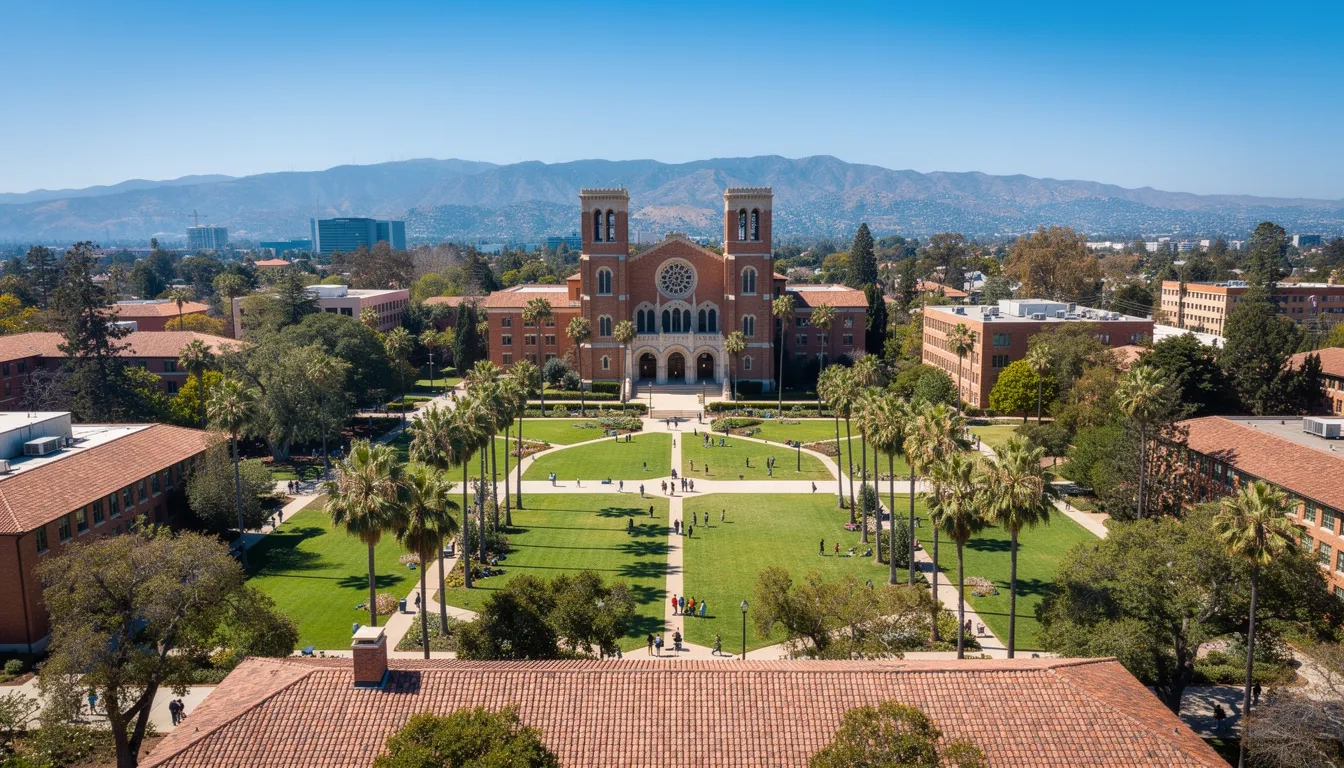
The residential area is called "the Hill," a cluster of residential complexes perched above the main academic quad. The Hill isn't just where you sleep; it's where most of your social life happens in year one. Living-learning communities built around themes like sustainability, global health, and creative arts let students self-select into smaller cohorts within the larger residential population.
UCLA's dining program has a national reputation, and it earns it. The campus runs four themed residential restaurants (not just cafeterias) offering buffet-style meals with roughly ten entree options per meal. Five dining locations hold Green Restaurant Certification. The program accommodates kosher, halal, vegan, vegetarian, and flexitarian diets without making those students feel like afterthoughts.
Honest caveat: most first-year students live in triple rooms. Shared space with two roommates is the norm, not the exception, and that's an adjustment many incoming students underestimate.
Clubs, Greek Life, and the 1,000-Organization Universe
With over 1,000 clubs and student organizations, UCLA's campus activity landscape is one of the most varied in the country. Student government, the Daily Bruin newspaper, Quidditch, Latin dance, pre-med societies, improv comedy — the range is genuinely wide.
About 15% of undergrads join Greek organizations. UCLA hosts 71 chapters total (37 fraternities, 34 sororities), including culturally specific chapters that serve communities the traditional Greek system historically excluded. Greek life has a presence but doesn't dominate social life the way it does at some Southern flagship universities — you can have a rich social experience entirely outside of it.
A few things that make campus culture distinct:
- The annual Beat 'SC Bonfire before the USC rivalry game draws alumni, students, and the occasional celebrity back to campus
- More than 1,000 visual and performing arts events happen on campus each year, attracting roughly 500,000 patrons — UCLA functions as a legitimate cultural institution for the city, not just a college venue
- The surrounding neighborhoods of Bel Air, Brentwood, and Westwood place students within 20 minutes of Santa Monica beach, Hollywood, and downtown LA
Athletics: 118 Titles and Counting
UCLA's athletic record is legitimately extraordinary. The Bruins have won 118 NCAA championships across 20 sports, second only to Stanford in all-time titles. The men's basketball program under John Wooden won seven consecutive national championships and ten titles in twelve years — a run that still stands as the most dominant dynasty in college sports history.
Today, UCLA fields 23 Division I teams. Football games at the Rose Bowl in Pasadena draw large crowds; basketball at Pauley Pavilion is a genuine campus event. For students who don't play varsity sports, the university offers 16 recreational facilities and six pools, including the UCLA Marina Aquatics Center near the beach (kayaking and sailing, not just laps).
The athletic culture isn't just spectator-focused. Intramurals, club sports, and the campus recreation programs give ordinary students real options to stay active in a city with year-round outdoor weather.
Is UCLA Right for You?
UCLA is a large research university with 31,000+ undergraduates. That means the experience is what you make of it — more than at a small liberal arts college, your social life and academic community depend on your own initiative in finding your people.
The best-fit students tend to share a few traits: comfortable navigating large systems, genuinely interested in research or industry connections that a major research university enables, and drawn to an urban environment where the campus and the city feed each other.
Students who struggle at UCLA often cite large intro-level lecture courses (common in STEM fields in years one and two), the academic pressure of a highly competitive peer group, and the cost-of-living reality of Los Angeles, where off-campus housing runs significantly higher than the national college average.
The financial picture is real but not bleak. According to UCLA's own data, 78% of enrolled students receive some form of financial aid. California residents pay in-state tuition that is a fraction of comparable private schools. For out-of-state students, the cost rises considerably — and that math is worth doing carefully before committing.
Bottom Line
- Apply strategically by school. The College (Letters & Science) at 11% is a different application than the School of Nursing at 0.5%. Know which division you're applying to and calibrate your school list accordingly.
- Your GPA is the first filter. An unweighted 3.94 or higher is the practical floor for competitive consideration. Below that, other factors can help but the odds shift fast.
- Essays matter more than at schools that use test scores. UCLA's four Personal Insight Questions are where you either distinguish yourself or blend in. Treat them seriously.
- Campus life rewards engagement. With 1,000+ organizations, research opportunities, and a city as a backyard, UCLA can be transformative — but the large university format means you have to seek out community rather than stumble into it.
- UCLA's #1 public university streak may have ended, but its combination of academic prestige, athletic culture, location, and in-state value is hard to match anywhere in the country.
Frequently Asked Questions
What GPA do you need to get into UCLA?
The middle 50% of enrolled students had an unweighted GPA between 3.95 and 4.00. A weighted GPA median of 4.61 suggests most applicants are maxing out on AP and honors coursework. In practical terms, a 3.9 unweighted is the realistic floor — below that, your application faces an uphill climb regardless of other factors.
Does UCLA still require SAT or ACT scores?
No. UCLA went test-optional during the COVID-19 pandemic and has maintained that policy. Test scores are submitted after enrollment for course placement purposes only — they play no role in the admissions decision itself.
Is it easier to transfer into UCLA than to apply as a freshman?
Yes, by a meaningful margin. The transfer acceptance rate for fall 2025 was 23.4%, compared to 9.4% for freshmen. The UC system maintains a strong community college transfer pipeline, and California community college students applying as junior transfers receive priority consideration under the Transfer Admission Guarantee (TAG) program for some UC campuses.
What is the hardest major to get into at UCLA?
The School of Nursing had an acceptance rate of just 0.5% for fall 2025 — making it more selective than any Ivy League school in the same cycle. The School of Theater, Film and Television (4.3%) and School of Arts and Architecture (5.1%) also far exceed the overall university selectivity. If you're targeting those programs, treat UCLA as a significant reach and build your list accordingly.
Does UCLA consider legacy status or demonstrated interest?
No to both. UCLA follows UC system policy, which prohibits consideration of legacy relationships in admissions. The university also does not track campus visits or email contact as a demonstrated interest signal — a sharp contrast with many private universities where those behaviors move the needle.
What is student life like for freshmen at UCLA?
About 98% of first-year students live on "the Hill," the residential complex above campus. Most freshmen share a triple room. Dining is well-regarded nationally, with four themed restaurants and extensive dietary accommodations. The social scene in year one is largely Hill-centric before students branch out into clubs, Greek life, research, or LA itself in subsequent years.
Sources
- First-Year Profile — Fall 2025 | UCLA Undergraduate Admission
- UCLA Admissions Statistics 2025 - The Koppelman Group
- What is UCLA Student Life Like? | CollegeVine Blog
- UCLA is the nation's No. 1 public university for the 8th year in a row | UCLA Newsroom
- UCLA Acceptance Rate: Class of 2030 Admissions Statistics | AdmissionSight