University at Buffalo: Rankings, Programs & Complete Profile
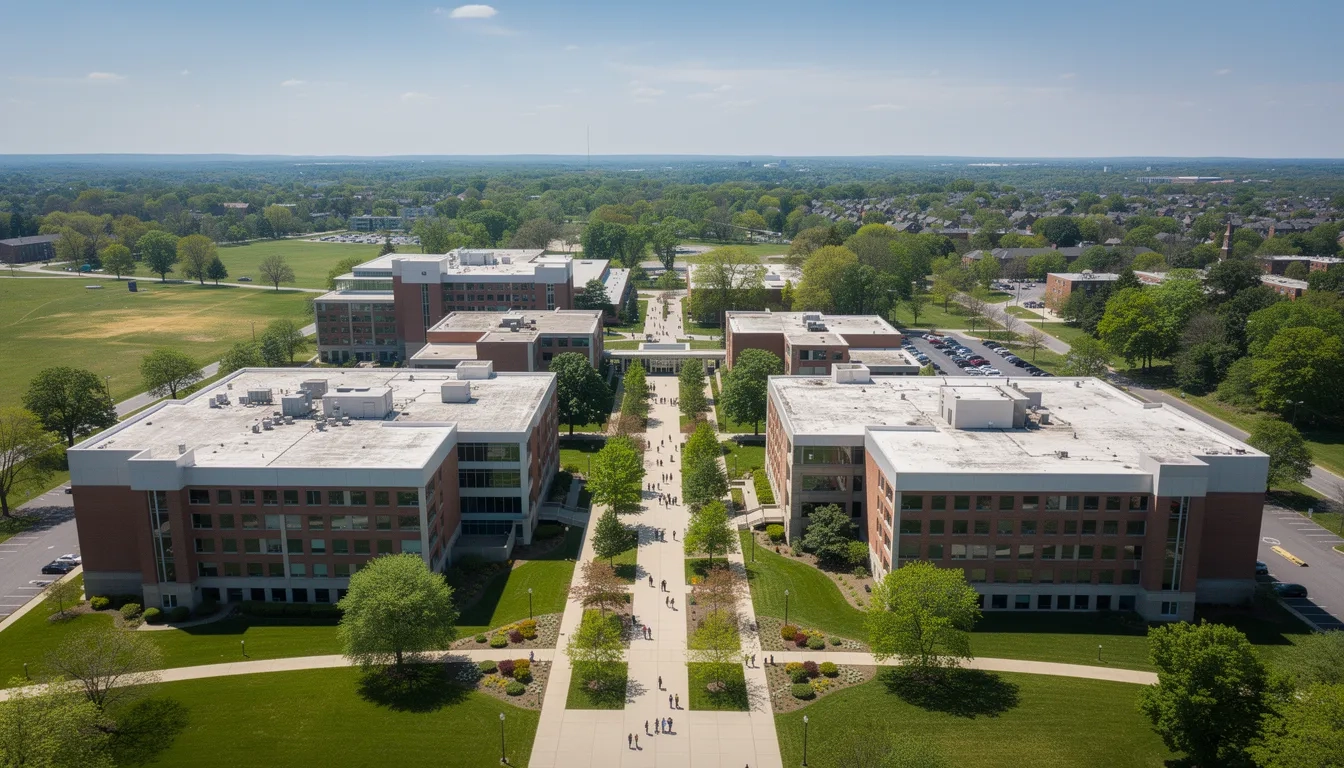
New York's largest public university quietly climbed to 36th place among public universities in the 2026 U.S. News rankings — a result that would make bigger headlines if the campus weren't located in a city that still carries a Rust Belt reputation it no longer fully deserves. But here's the thing: that same location keeps UB's competition down, its housing costs manageable, and its in-state tuition at $10,936 per year. For the right student, this is one of the best-value research universities in the Northeast. For a handful of specific programs, it's simply one of the best, full stop.
The Big Picture: Where UB Stands in 2026
UB holds the No. 1 spot among New York State public universities and has defended that position for several consecutive years. Nationally, it sits at 75th overall in U.S. News' 2026 Best National Universities rankings (which combines public and private schools) and tied for 36th among the 225 public institutions in that list.
Globally, QS places UB at No. 410. The Times Higher Education rankings put it in the 251-300 band. Neither number is elite by the standards of Michigan or UCLA, but UB isn't built on the same funding model as those schools, and comparing them at face value misses the point.
The credential worth pausing on is UB's membership in the Association of American Universities. Only 65 universities in the U.S. and Canada carry that designation. UB's fellow members include Johns Hopkins, Duke, and the University of Texas at Austin. That context reframes the conversation: UB isn't a tier-2 fallback school. It's a member of the most selective research university consortium in North America.
Program Rankings: The Standouts and the Surprises
Not every department at UB operates at the same level. The 2026 U.S. News data tells a varied story — which is how real research universities actually work.
The School of Engineering and Applied Sciences is the most reliably strong unit on campus. Its undergraduate engineering program ranks 33rd among public universities and 57th nationally. The school's research arm crossed $102 million in sponsored expenditures in fiscal year 2023, a record at the time, and the trajectory has continued upward.
The nursing school's rise is the year's biggest story. The School of Nursing jumped 31 places to 42nd among public universities (59th nationally). A 31-spot improvement in one year signals structural change, not a blip. Most likely combination: new faculty hires, improved research output, and peer assessment gains happening simultaneously.
Other programs with meaningful 2026 movement:
- Psychology: 45th among public universities, 85th nationally (up 9 spots)
- Economics: 52nd among public universities, 112th nationally (up 14 spots)
- Business (School of Management): 54th among public universities, 88th nationally (up 5 spots)
- Best Value Schools: 40th among public universities, 125th nationally
- Social Mobility: 40th among public universities, 49th nationally
The economics department's 14-spot climb in a single year is the kind of movement that typically follows serious faculty investment. Keep an eye on that program specifically.
QS World Rankings by Subject: UB's Global Footprint
U.S. News is the system most undergrads consult. For graduate students and international applicants, QS Rankings by Subject carry more weight because they measure employer reputation, academic peer review, and citation impact across 18,300-plus programs globally.
UB's 2026 QS subject rankings reveal a more distinctive institutional profile than the overall number suggests. Here's where the university ranks among U.S. institutions:
| Program | U.S. Rank | World Rank |
|---|---|---|
| Dentistry | 9th | 28th |
| Library & Information Management | 16th (tied) | — |
| Geography | 21st (tied) | — |
| Pharmacy & Pharmacology | 22nd (tied) | — |
| Civil & Structural Engineering | 27th (tied) | — |
| Archaeology | 36th (tied) | — |
| Philosophy | 49th (tied) | — |
| Materials Science | 50th (tied) | — |
Dentistry is the headliner. The School of Dental Medicine ranks 9th in the United States and 28th in the world, improving 11 spots globally in a single year. For pre-dental students, that's a number many brand-name schools simply cannot match.
UB's dental program improved 11 spots globally in one year, landing 28th in the world — a ranking that places it above universities with far larger endowments and considerably more name recognition.
The geography and archaeology rankings reflect something less obvious: UB has genuine strength in spatial sciences and anthropological research that rarely surfaces in general university conversations. These aren't vanity rankings. They reflect sustained research output in fields where UB has concentrated faculty resources for decades.
The UB Profile: Size, Costs, and Research Activity
UB is not a small school. Total enrollment sits at 31,903 students, making it the largest campus in SUNY's 64-school system. The acceptance rate for 2024-25 was 74.18% across all programs, though individual schools like engineering and dental medicine are substantially more selective than that aggregate figure suggests.
Tuition and cost structure:
- In-state (New York residents): $10,936 per year
- Out-of-state: $31,536 per year
- Student-faculty ratio: 11:1
- 61% of enrolled undergrads received grants or scholarships in 2024-25
The in-state figure is the number that makes UB genuinely interesting for financial planning. Paying $10,936 to attend an AAU research university ranked in the top 40 public institutions nationally is hard to beat anywhere in the Northeast.
Research output gives UB its Carnegie R1 classification. Total sponsored research funding exceeded $110 million in fiscal year 2025. The university runs three physical campuses: North Campus (the primary undergraduate and research hub in Amherst), South Campus (health sciences, closer to downtown), and a Downtown Buffalo location. With 499 total programs across 125 bachelor's and 246 master's degrees, UB offers unusual breadth. But breadth without depth is a liability. The programs worth choosing here are the ones where UB has concentrated resources.
Trajectory: Why the Momentum Is Real
Rankings shift every year. Trajectory tells you where an institution is actually headed.
Nearly every UB program tracked by U.S. News improved in 2025-26. The nursing school's 31-spot jump, the economics department's 14-spot rise, engineering's record research expenditure, and dentistry's 11-spot global improvement don't happen simultaneously by coincidence. They reflect a period of deliberate institutional investment that appears to be compounding.
UB's AAU membership (granted in 1989) is the structural driver here. Staying in that consortium requires continuous performance against research output benchmarks. That accountability shapes faculty recruitment, graduate program design, and budget allocation in ways that accumulate over time.
The honest tradeoff is endowment size. UB's financial resources per student lag behind well-funded private AAU peers. Some labs will feel dated. Graduate stipends in the humanities are competitive with public-school peers, not with Harvard or Princeton. The library system is good, not exceptional.
But for undergraduates who want access to a research-active environment without carrying six-figure debt into their twenties, UB makes a strong case. The gap between what you're getting and what you're paying is real and, by most measures, widening.
Who Should (and Shouldn't) Choose UB
Not everyone benefits equally from what UB offers. A realistic framework:
UB makes strong sense if:
- You're a New York resident and the $10,936 in-state tuition changes your financial calculus meaningfully
- Your target program sits inside UB's documented strengths: dentistry, engineering, pharmacy, nursing, geography, or library science
- You want genuine access to research activity at the undergraduate level — 31,000+ students means more funded research programs running concurrently, not fewer opportunities
- You're comparing program quality across schools and want to sidestep private-school debt for genuinely competitive program ranking
Think harder before committing if:
- You're comparing UB's out-of-state rate ($31,536) against your home state's flagship at in-state prices — the value argument largely disappears at that comparison
- Your target program ranks significantly outside UB's flagship departments — the quality differential between colleges on a large campus is real and often underappreciated
- You want a small-seminar, residential-college atmosphere — UB's scale works against that
One practical factor students consistently overlook: Buffalo's cost of living runs well below comparable research university cities. Housing near North Campus costs far less than equivalent proximity to campuses in Boston, Philadelphia, or the New York metro area. Over four years, that difference in living expenses can offset a meaningful portion of tuition — particularly for out-of-state students running tight budget projections.
Bottom Line
- UB ranks 36th among public universities and 75th nationally in U.S. News 2026 — well inside legitimate research-university territory, not a consolation placement
- New York residents get exceptional value: $10,936 per year at an AAU research university with multiple top-50 programs nationally
- Target the documented strengths: dentistry (9th U.S., 28th world), engineering (33rd public), pharmacy (22nd U.S.), and nursing (42nd public) are where UB competes with schools charging two to three times the price
- The upward trajectory across nearly every ranked program in 2025-26 suggests this is a school building momentum, not coasting
- If you're weighing UB against a private peer at $60,000-plus per year, run the full four-year cost comparison before assuming the prestige premium pays off in outcomes
Frequently Asked Questions
Is University at Buffalo a good school?
Yes, with real context. UB holds AAU membership alongside Johns Hopkins and Duke, ranks 36th among public universities nationally, and runs genuinely top-tier programs in dentistry, engineering, and pharmacy. Quality varies significantly by department, so program selection matters more here than at a smaller, more uniform institution.
What is University at Buffalo best known for academically?
The School of Dental Medicine stands out most clearly: 9th in the United States and 28th in the world per 2026 QS subject rankings, improving 11 spots globally in a single year. Engineering and pharmacy are the next-strongest programs by national reputation. Geography, philosophy, and library science are less obvious strengths that consistently appear in global subject top-50 rankings.
Is UB a difficult school to get into?
The university-wide acceptance rate of 74.18% makes UB accessible by research-university standards. That aggregate number hides significant variation — engineering and dental medicine programs are meaningfully more selective. Treat UB as a match or slight reach in those specific programs, not as an automatic safety.
Does UB's location in Buffalo hurt job prospects after graduation?
Less than the reputation suggests. In competitive fields like engineering and dentistry, program ranking travels further than city name. UB's AAU standing carries weight with graduate school admissions offices and research-sector employers. Students targeting New York City finance or law may find stronger alumni density at schools located closer to that market, which is worth factoring into the decision.
Is out-of-state tuition at UB worth it?
For most students, probably not. At $31,536 per year, UB's out-of-state rate sits in the range of private universities that carry stronger brand recognition in many fields. The exception: if UB's specific program ranking — dentistry at 9th nationally, for example — is substantially stronger than your in-state flagship option, the numbers can still work in your favor.
How does University at Buffalo compare to SUNY Stony Brook?
Both are AAU members, both are Carnegie R1 research universities, and both rank well above the rest of the SUNY system for research activity. UB is larger and carries a broader graduate program portfolio. Stony Brook has traditionally held stronger subject rankings in quantitative sciences and medicine. For most undergraduates, the choice between them should come down to specific program rankings and personal fit rather than overall prestige, since they're genuinely close peers.