University of Kansas: Programs, Rankings, and Campus Culture
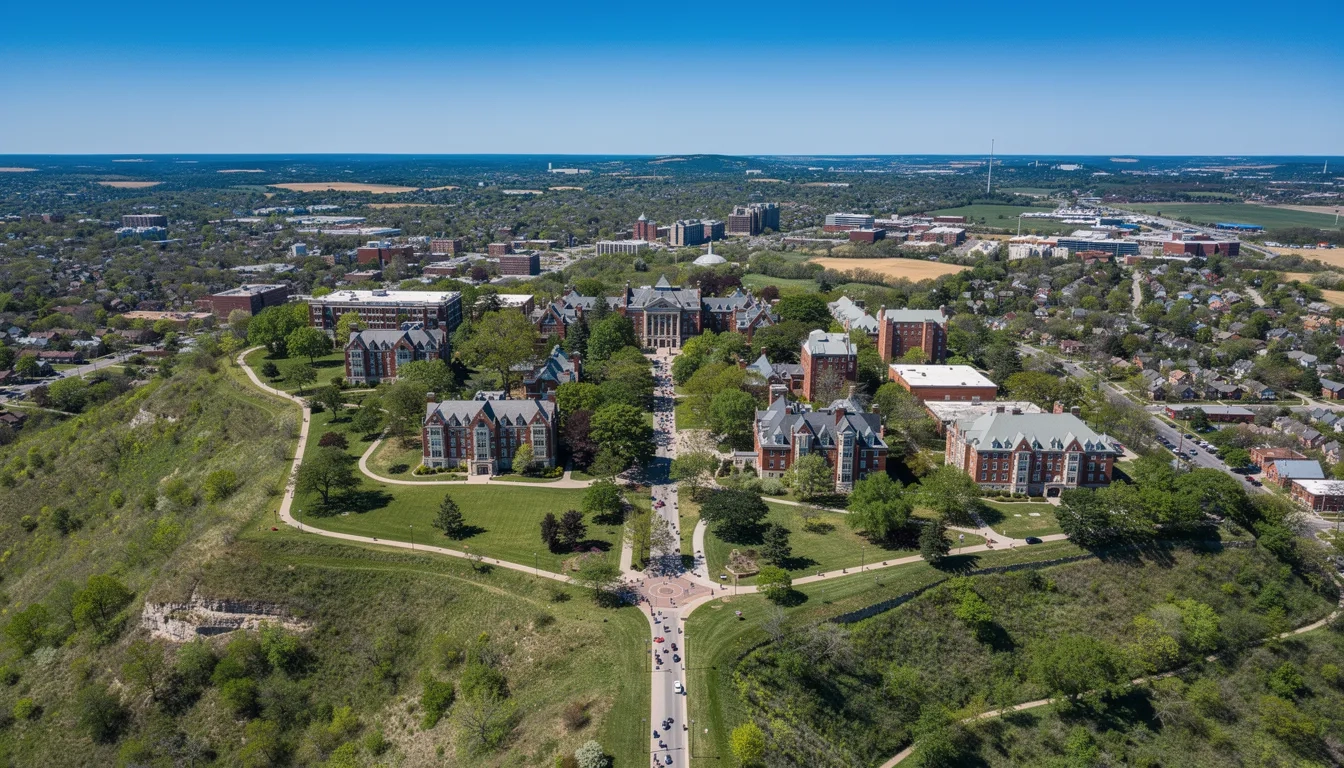
If you told someone that a mid-size public university in eastern Kansas holds the #1 national ranking in local government management — and has held it continuously since 1998 — they'd probably assume you meant somewhere bigger. Michigan. Texas. Wisconsin. But that streak belongs to the University of Kansas, and it's not the only thing KU does quietly better than schools with far louder reputations.
This is a guide to what KU actually offers, how it stacks up across programs and ranking systems, and what campus life genuinely looks like for the roughly 28,000 students who call Lawrence home.
How KU Ranks: The Big Picture
U.S. News places KU at #143 among national universities, which puts it comfortably in the top third of the country's four-year institutions. In global rankings, QS gives KU #465 worldwide for 2026, while Times Higher Education slots it at #351. Neither number is flashy. Both are quietly respectable for a mid-size public flagship.
But headline rankings often bury the real story. KU has 48 graduate programs ranked in the top 50 among all U.S. public universities, including 10 programs in the top 10. That's the kind of depth you don't expect until you start scrolling the list.
The pattern here is concentration, not breadth. KU doesn't try to be great at everything. It picks lanes and stays in them.
"The University of Kansas has 48 graduate programs in the top 50 among public universities" — U.S. News & World Report
For prospective students, that distinction matters. Being enrolled at a #143 university doesn't mean much if your specific program ranks #1. And several of KU's do.
The Programs That Actually Rank #1
Some schools claim national prestige at a department level; fewer can point to legitimate first-place finishes. KU has three.
Paleontology is ranked #1 in the country, full stop. The Natural History Museum and Biodiversity Research Center gives the department infrastructure most programs would envy. Special Education also holds the #1 spot among public universities, backed by decades of research from the KU Center for Research on Learning. And Local Government Management has ranked #1 since 1998 — that's 27 consecutive years, which at this point is basically an institution within an institution.
Here's a fuller look at where KU's graduate programs land among public schools:
| Program | Rank Among Public Universities |
|---|---|
| Local Government Management | #1 (since 1998) |
| Special Education | #1 |
| Paleontology | #1 |
| Speech-Language Pathology | #3 |
| Physical Therapy | #5 |
| Petroleum Engineering | #9 |
| Legal Writing (Law) | #10 |
| Nursing-Midwifery | #7 |
| Education (overall) | #8 |
| Public Management & Leadership | #7 |
The pattern in that table is worth noticing. Health sciences and education programs cluster at the top, while professional programs like petroleum engineering and law show up as dark horses. Environmental law ranks #25 nationally across all institutions, public and private.
Online Programs: A Quieter Strength
KU's distance education portfolio has become a real asset, particularly for working professionals. U.S. News ranked KU's online Master's in Education programs #2 in the nation for 2026, and the program for veterans specifically ranked #1. The online MBA tied for #8 nationally, with a #5 ranking for veterans.
These aren't just for-credit mill programs padding a spreadsheet. U.S. News evaluates online programs on faculty credentials, student engagement, support infrastructure, and actual graduation rates — not reputation. KU's numbers hold up under that scrutiny.
Online-program highlights worth knowing:
- #1 in the country: Online Master's in Special Education
- #2 (tie): Online Master's in Education (overall)
- #5: Online MBA for Veterans
- #10 (tie): Online Master's in Curriculum and Instruction
For professionals in education or business who need flexibility, KU's online programs are genuinely competitive with institutions that charge considerably more.
Standout Schools and Colleges
KU has 13 colleges. Not all of them make headlines, but several deserve attention beyond the graduate rankings.
The William Allen White School of Journalism and Mass Communications has historically ranked in the top 5 nationally. Named after the legendary Emporia Gazette editor who won the 1923 Pulitzer Prize, the school has a working newsroom culture — students run actual publications, not just practice exercises. That journalism tradition runs deep in Kansas.
The School of Business holds dual AACSB accreditation for both business and accounting. Fewer than 6% of business schools worldwide carry that dual credential. It's the kind of detail that matters when you're recruiting or applying to MBA programs and need employers to recognize your degree immediately.
Architecture and Related Services ranks #74 nationally — respectable for a school that isn't positioned as a design powerhouse. The program benefits from KU's arts ecosystem and the unusually creative culture of Lawrence itself.
For pharmacy students, KU's School of Pharmacy (one of the few in Kansas) offers programs in medicinal chemistry, pharmacology, and pharmaceutical chemistry that feed directly into the KU Health System, one of the region's primary medical networks.
The Military-Friendly Factor
This one surprises people. In the 2025-2026 Military Friendly Schools survey, KU ranked #5 nationally among Tier 1 research institutions. The university has built out significant support infrastructure for veterans and active-duty students, which explains why its online MBA for veterans specifically ranks #5 nationwide, and its online education programs for veterans rank #1.
If you're using GI Bill benefits and want a legitimate research university rather than a for-profit school, KU is worth a serious look. The combination of online program quality and veterans support is not common at this price point.
Lawrence and Campus Culture
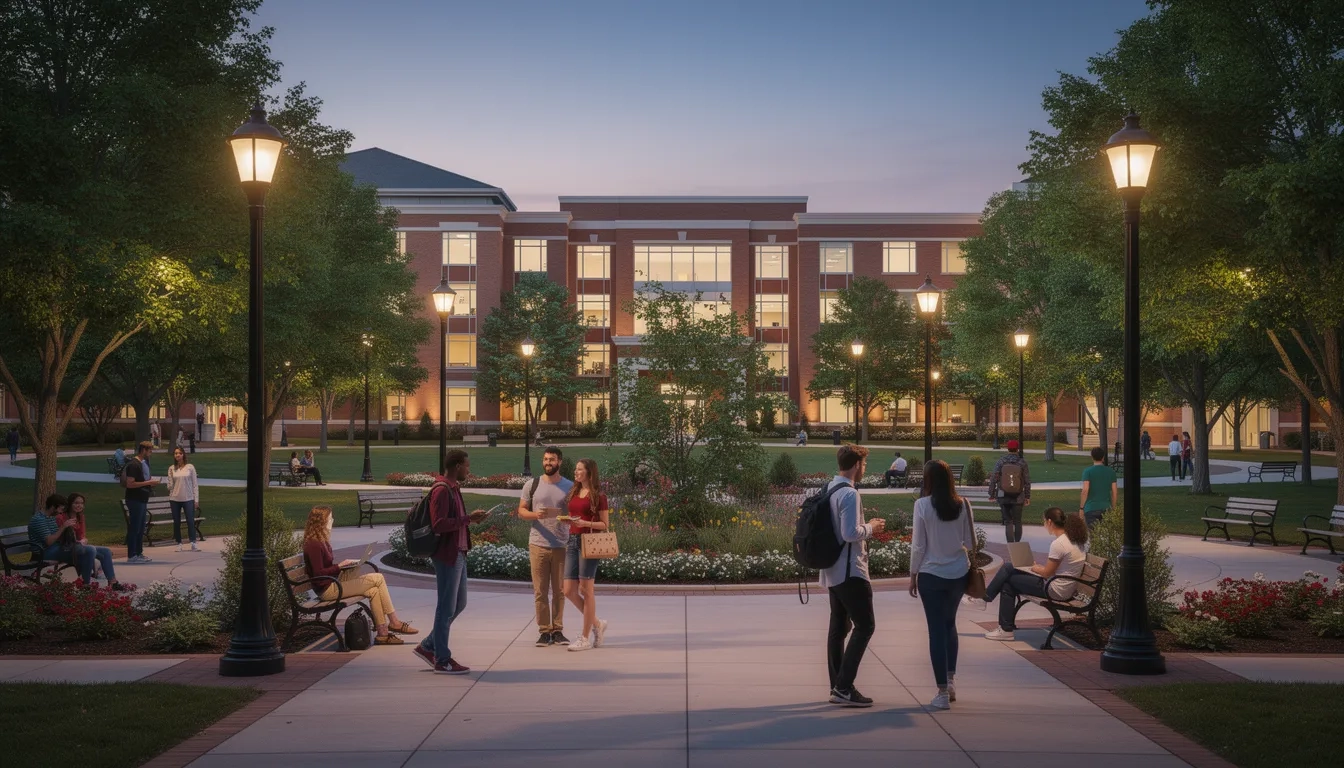
You can't understand KU without understanding Lawrence. The city of about 98,000 sits 40 miles west of Kansas City, and Mass Street (the main drag downtown) is the kind of place that consistently shows up in "most creative small cities" lists. Live music venues, independent bookshops, local breweries, coffee roasters — the infrastructure of a college town that actually earned its reputation rather than coasting on proximity to the campus.
Rock Chalk Chant is the connective tissue of KU identity. Walk into Allen Fieldhouse on a February night with 16,347 people (that's the listed capacity) chanting it before a basketball game, and you understand immediately why former coaches and players consistently call it the best home court atmosphere in college basketball. Wilt Chamberlain played here. Paul Rudd graduated from here (he studied theatre before transferring). The lineage runs long.
KU Engage lists over 600 student organizations, covering everything from academic clubs to performing arts to competitive esports. Greek life is active but not dominant — there's enough variety that students without any interest in fraternities or sororities don't feel socially stranded.
The scholarship hall system is one of the more genuinely unusual features of KU housing. Rather than standard dormitories, scholarship halls are cooperative communities where residents share responsibilities for cooking, cleaning, and governance. They cost noticeably less than conventional housing, and they tend to produce unusually tight social bonds. It's the kind of model that would be called "innovative" if it started at a tech campus in California — at KU it's just tradition.
Student wellness gets real infrastructure support:
- Watkins Health Services (on-campus medical care)
- Counseling & Psychological Services
- KU Recreation Services, which includes a 50,000-square-foot fitness center
The vibe on campus tends toward collaborative rather than cutthroat. That tracks with the graduate program focus on public service fields like education, public administration, and health sciences — fields that tend to attract students who are mission-driven more than status-driven.
Honest Tradeoffs: What KU Is and Isn't
KU is worth choosing for the right reasons. Here's where it earns its ranking, and where it doesn't.
What KU genuinely does well:
- Graduate programs in education, health sciences, and public administration that rival schools twice its size
- Online program quality that's been independently verified by U.S. News methodology
- A campus town with genuine cultural character, not just bars and chain restaurants
- Price point that makes sense for in-state students and competitive for out-of-state
Where it's more average:
- STEM research output and engineering rankings don't match the flagship programs
- National name recognition outside the Midwest is modest — your KU degree needs explanation east of Ohio
- Social life depends heavily on basketball season; if sports aren't your thing, you have to work a bit harder to find your people
The elephant in the room for any prospective KU student is this: the school's overall #143 national ranking doesn't reflect what individual departments can offer. If your field is special education, public administration, paleontology, or speech pathology, you'd be choosing a #1 program. If your field is, say, computer science or economics, you're looking at a solid but unspectacular option.
Match the program ranking to your goals, not the headline number.
Bottom Line
- If you're in education, health sciences, or public administration, KU's graduate programs rank with the best in the country. The #1 rankings in Special Education and Local Government Management aren't honorary — they reflect real research output and program infrastructure.
- For online learners, KU's master's and MBA programs combine legitimate academic quality with veteran-friendly support that's rare at this price point.
- For undergraduates, Lawrence delivers a campus town experience that punches well above the school's Midwest-modest reputation. The combination of Allen Fieldhouse, Mass Street, 600+ organizations, and cooperative housing makes for a more textured college experience than the rankings suggest.
- The single most important thing to remember: KU's overall rank and its program ranks can be 100+ positions apart. Check the specific rankings for your intended field before making a decision based on the aggregate number.
Frequently Asked Questions
Is the University of Kansas a good school?
KU ranks #143 among national universities (U.S. News), which is solid but not elite at the headline level. Where KU genuinely stands out is at the program level — with 48 graduate programs in the top 50 among public universities and three programs (#1 in paleontology, special education, and local government management), the school's reputation in specific fields exceeds what the overall ranking implies.
What is the University of Kansas best known for academically?
KU is best known for its programs in education, public administration, health sciences, and journalism. The William Allen White School of Journalism historically ranks top 5 nationally. Special Education and Local Government Management have held #1 rankings among public universities for years. The School of Business holds dual AACSB accreditation, a credential fewer than 6% of business schools worldwide carry.
Is it hard to get into the University of Kansas?
KU has a relatively accessible acceptance rate compared to selective research universities — it functions as a public flagship with a mission to serve Kansas students broadly. That said, admission standards for competitive graduate programs (pharmacy, law, physical therapy, special education) can be substantially more selective than undergraduate admissions.
Does the University of Kansas have good online programs?
Yes, and this is often underappreciated. KU's online Master's in Education programs ranked #2 in the nation for 2026 (U.S. News), with the online Special Education program ranking #1 nationally. The online MBA ranked #8. These aren't reputation rankings — they're based on measurable factors like graduation rates, faculty credentials, and student support infrastructure.
What is campus life like at the University of Kansas?
KU's campus life centers heavily on basketball culture (Allen Fieldhouse is considered one of the best home court environments in college sports), the creative energy of Lawrence's Mass Street corridor, and over 600 student organizations. The scholarship hall system offers an affordable, cooperative housing alternative that's unique among large public universities. The overall culture trends collaborative and community-oriented.
Is the University of Kansas good for out-of-state students?
Out-of-state tuition raises the cost significantly, which is worth calculating carefully. The strongest case for out-of-state enrollment is in programs where KU's rankings genuinely compete nationally — special education, speech pathology, public administration, physical therapy. In those cases, the program quality justifies the premium. For fields where KU is average, in-state alternatives or other well-ranked public schools may offer better value.
Sources
- U.S. News & World Report ranks 48 KU graduate programs in top 50 among public schools
- University of Kansas Recognized Among the Best Online Programs for 2026
- Student Life at KU | University of Kansas Admissions
- University of Kansas 2026 – Programs, Rankings, Acceptance Rate & Key Facts | Research.com
- University of Kansas Academics & Majors – US News Best Colleges