University of Michigan: Admissions, Rankings, and What Student Life Is Actually Like
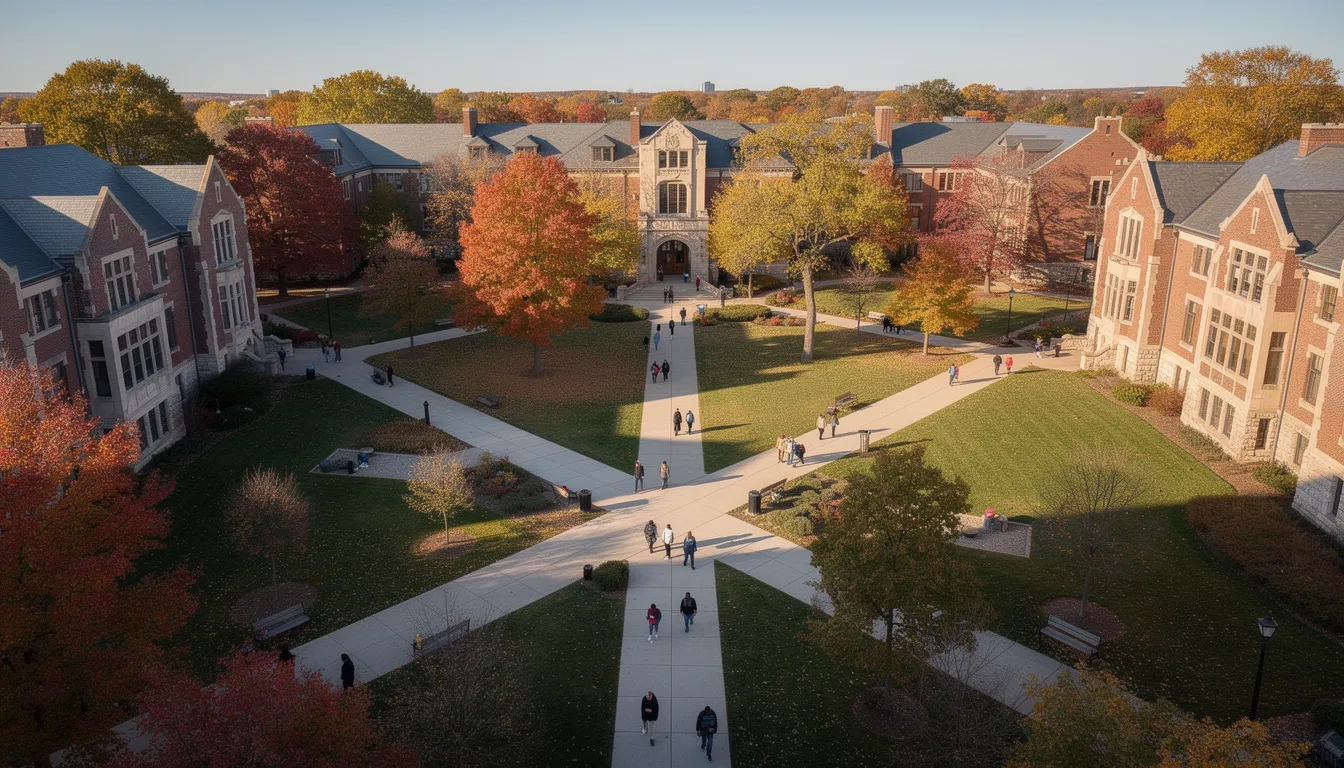
Michigan received more than 109,000 first-year applications for fall 2025 — a record, and roughly 11 times the size of the incoming freshman class. Fewer than one in six applicants got in. That kind of selectivity used to be reserved for schools with names like Duke or Georgetown. Now it's just Tuesday at a Big Ten university that still charges Michigan residents under $20,000 a year in tuition. That combination of elite-level competition with public-university pricing is why Michigan belongs in conversations that often leave it out.
Why Michigan Punches Above Its Weight in Rankings
When U.S. News & World Report released its 2026 Best Colleges edition, Michigan landed at #20 among all national universities and #3 among public schools, behind only UCLA and UC Berkeley. Rankings get debated constantly — and rightly so — but the underlying data tells a cleaner story than the single number suggests.
Michigan's research output is extraordinary for a flagship state school. The university consistently places in the top five nationally for annual R&D expenditures, and its graduate programs carry that reputation into specific disciplines. What separates Michigan from similarly ranked schools is breadth. Most top-20 universities are either well-endowed privates with smaller enrollments, or they have one or two standout programs pulling up their averages. Michigan runs the table across almost every major college of study.
That breadth isn't accidental. The university was founded in 1817, making it one of the oldest public research institutions in the country, and decades of sustained state and federal investment have built something that's genuinely hard to replicate quickly. The reputation compounds on itself — strong faculty attract more strong faculty, and a century of alumni in senior roles at major companies makes career networking a structural advantage rather than a hope.
Global rankings paint a similar picture. In QS World University Rankings 2026, Michigan sits in the top 35 worldwide across multiple subject areas, with particular strength in engineering, social sciences, and business.
The Numbers Behind Getting In
Here's the uncomfortable reality for applicants: Michigan has become dramatically more selective over a short window. The overall acceptance rate for the Class of 2028 was 15.6%, down from 26% just five years prior. In 2010, Michigan admitted roughly 42% of applicants. The trajectory is not subtle.
But the numbers break down in ways that genuinely matter depending on where you live.
| Applicant Type | Approximate Acceptance Rate |
|---|---|
| Michigan residents | ~39% |
| Out-of-state applicants | ~15–18% |
| Early Action applicants (estimated) | ~20–25% |
| Overall (Class of 2028) | ~15.6% |
If you're a Michigan resident, this is a meaningfully different school to apply to. Nearly four in ten in-state applicants get admitted. For everyone else — it's a reach. Plan your list accordingly.
Academic benchmarks are competitive across the board. The average enrolled student carries a GPA between 3.9 and 4.0, and 88% of the incoming class maintains a 3.75 or above. Standardized test scores (Michigan is test-optional as of 2025) run in a similarly tight range: SAT middle 50% sits between 1350 and 1530, ACT between 31 and 34. About 54% of admitted students voluntarily submitted SAT scores, which tells you scores still carry weight for applicants who want to strengthen their application rather than leave it out.
The most underestimated factor? Course rigor. Michigan lists it as one of only two criteria rated "very important" in admissions, alongside GPA. A 3.9 built on unchallenging coursework reads very differently than a 3.8 built on six AP courses and a dual-enrollment college class in the same transcript review.
What Actually Gets You Admitted
Numbers are the floor, not the ceiling. At Michigan, essays carry genuine weight. The school requires multiple writing samples, and readers are looking for something specific: not polished ambition, but actual self-awareness and fit. Students who write generically about wanting to "make an impact" tend to blur together. Students who can point to something specific — a particular research lab, a named professor whose work intersects with theirs, a program within a program that no other school offers — tend to stand out.
One thing many applicants miss: Michigan tracks demonstrated interest. Campus visits, virtual info sessions, contact with admissions counselors — all of it signals genuine investment in the school. At a university processing over 100,000 applications, anything that helps an admissions reader picture you as a Michigan student, rather than someone treating Michigan as a backup, matters at the margins.
Applying Early Action (November 1 deadline) doesn't confer a formal advantage by the university's official account, but independent analysts consistently observe higher EA acceptance rates — estimated around 20–25% versus a substantially lower Regular Decision figure. There's no binding commitment involved. If Michigan is a top choice, applying early is a low-risk, potentially high-reward move.
What you should avoid: manufacturing a "spike" through artificial extracurriculars assembled purely for an application. Michigan has enough volume to recognize the difference between a student who genuinely spent three years doing something versus one who crammed activities onto a résumé in senior fall.
Academic Strengths Worth Knowing
The Ross School of Business is arguably Michigan's biggest claim to academic prestige at the undergraduate level. U.S. News ranks it #4 among undergraduate business programs nationally for 2026, with the marketing specialty ranking #1 in the country. Entrepreneurship and management both hold #2 spots nationally. One thing worth knowing: admission to Ross is selective even after you're enrolled at Michigan — students apply during sophomore year and compete with classmates for BBA seats, which keeps the program tight and career outcomes strong.
| Program | U.S. News 2026 National Ranking |
|---|---|
| Undergraduate Business (Ross) | #4 |
| College of Engineering | #5 |
| School of Nursing | #6 |
| Psychology | #5 |
| Economics | #14 |
Engineering at Michigan is not just ranking-deep — it's industry-connected in ways that translate directly to employment. The College of Engineering runs research programs with substantial federal and automotive industry funding (Detroit is 45 minutes away, and that proximity is not incidental). The School of Nursing climbed three spots in the 2026 rankings to reach #6, reflecting recent faculty hiring and a curriculum redesign that's gotten significant national attention.
The Go Blue Guarantee is one of the most meaningful financial aid commitments any major research university has made. Beginning fall 2025, Michigan families earning $125,000 or less annually with household assets below $125,000 qualify for free tuition. For families above that threshold, the average Ross BBA scholarship runs around $7,000 per year, with common awards ranging from $7,500 to $15,000 for eligible applicants. None of this requires a separate application — admitted students are considered automatically.
Living in Ann Arbor: What Day-to-Day Life Looks Like
Ann Arbor is genuinely half the draw, and this point gets undersold in most college guides. It's a walkable city with a dense restaurant and bar scene concentrated along Main Street and South University Avenue, a strong independent bookstore culture (Literati Bookstore on Washington Street gets mentioned by nearly every Michigan graduate as a formative part of their time there), and enough live music that students who care about that scene almost never need a car.
The campus itself covers 3,200 acres — enormous, but organized in a way that puts most academic buildings within a 15-minute walk of each other. Most first-year students live in the residence halls along central campus, and the facilities are better than the average Big Ten experience: many halls have been renovated in the last decade, and live-in residential staff are trained for both academic and personal support.
Student organizations number over 1,700 — registered, student-run, and legitimately varied. There's a competitive quidditch team, a student-run venture fund that makes real investments in early-stage companies, competitive debate programs, and 30+ club sports for anyone who wants structured athletic competition without a varsity commitment.
Greek life involves roughly 5,500 students across four councils (IFC, MGC, NPHC, and Panhel) — about 16% of undergraduates. It's visible but not the organizing principle of social life the way it is at some smaller liberal arts schools. Most students who don't join fraternities or sororities report full, active social lives without them.
By junior or senior year, about 75% of students live off campus. Ann Arbor's neighborhoods — Kerrytown, Burns Park, Old West Side — absorb the overflow and function as natural extensions of campus. Rents are high by Michigan standards, but still far below what comparable proximity to a major university would cost in most coastal cities.
The Wolverine Culture: Football, Traditions, and What Binds It All
Few schools have a tradition that generates the kind of collective electricity Michigan football does. Michigan Stadium — called the Big House by everyone who has set foot there — holds 107,601 people by official capacity, making it the largest stadium in the United States and the third-largest anywhere on Earth. When crowds exceed that number (which happens), you feel it physically.
The Victors, written in 1899 by a Michigan student named Louis Elbel, has been the fight song ever since — one of the oldest continuously played fight songs in college sports. The winged helmet design dates to 1938, introduced by coach Fritz Crisler, and remains one of the most visually recognizable in the sport. These aren't just historical footnotes. They're cultural touchstones that incoming students absorb fast and carry for decades.
One more recent addition has become genuinely beloved: at the end of every third quarter, the stadium plays "Mr. Brightside" by The Killers, and 107,000 people sing along. It's absurd in the best possible way.
"There's nothing quite like walking into the Big House on a September afternoon when 107,000 people are already there. It doesn't matter if you follow football — the sound alone changes your relationship to the place."
Beyond football, Michigan fields 31 varsity sports, and hockey gets as much reverence as football in certain weeks, particularly during rivalry matchups with Michigan State and Ohio State. Intramural sports draw about 25,000 student participants annually — one of the highest participation rates in the Big Ten — with options ranging from traditional team sports to esports and cornhole circuits.
The honest read on Michigan's culture: it's earned, not manufactured. The school spirit exists because the institution is genuinely old, genuinely accomplished, and genuinely tied to the identity of an entire state. That's harder to replicate than most prospective students appreciate until they're standing in it.
Bottom Line
Michigan is a legitimate top-20 university with public-school pricing for residents, specific programs that hold their own against any school in the country, and a campus culture built on 200 years of real history. The admissions picture has changed fast. Out-of-state applicants should treat this as a reach and build their list to reflect that.
- Apply Early Action by November 1 — the data favors it, and there's no binding commitment.
- Build essays around specifics: name professors, labs, or programs you've genuinely researched.
- Check the Go Blue Guarantee — if household income is under $125,000, the cost equation may be far better than you expect.
- Michigan residents: your odds are nearly three times the national average. Don't treat this application casually.
- The real question isn't just whether Michigan will admit you — it's whether you'll actually use what it offers. The infrastructure for an extraordinary four years is there. 1,700+ clubs, top-five programs in business and engineering, a 107,601-seat stadium that fills up most fall Saturdays. What you build inside all of that is still up to you.
Frequently Asked Questions
Is University of Michigan considered an Ivy League school?
No. Michigan is a public research university and a founding Big Ten member. It's often called a "Public Ivy" — a group of flagship public universities whose academic reputations and selectivity rival Ivy League schools — but it holds no formal Ivy League affiliation. The distinction matters mainly for cost: Michigan's in-state tuition is a fraction of what the actual Ivies charge.
What GPA do you need to get into University of Michigan?
The average enrolled student carries a GPA between 3.9 and 4.0, and 88% of the incoming class maintains a 3.75 or above. But GPA alone won't get you in. Course rigor is weighted equally in Michigan's admissions process — readers evaluate whether you pushed yourself within what your high school actually offered, which means a 3.8 in a demanding curriculum can read better than a 3.95 built on easier classes.
Does Michigan significantly favor in-state applicants?
Yes, more than most top-20 schools. Michigan residents are admitted at roughly 39%, compared to 15–18% for out-of-state applicants. The university reserves approximately half of first-year seats for Michigan residents by policy. This gap is one of the most pronounced at any nationally ranked research university.
Is it worth applying Early Action to University of Michigan?
Likely yes, if Michigan is a genuine top choice. The university officially states that EA confers no formal advantage, but independent analysis consistently finds higher EA acceptance rates — estimated at 20–25% versus a lower Regular Decision rate. EA is non-binding, so you're not committing. The downside risk is essentially zero.
What is Michigan's Go Blue Guarantee and who qualifies?
The Go Blue Guarantee covers full tuition for Michigan families earning $125,000 or less per year with assets below $125,000. It launched for fall 2025 and applies to eligible in-state students. No separate application is required — admitted students are considered automatically during financial aid review. It's one of the most substantial need-based aid programs at any major American research university.
How competitive is it to get into Ross School of Business as a Michigan student?
Very. Ross admission is a two-step process: you're admitted to Michigan first, then you apply to the BBA program during sophomore year and compete with your classmates. This internal selectivity keeps the BBA cohort small (around 450 students per year) and career outcomes strong. Students who enter Michigan with Ross as their target should maintain strong grades in prerequisite courses and get involved in business-adjacent student organizations early.
Sources
- University of Michigan Acceptance Rate — Leland
- University of Michigan Acceptance Rate: Class of 2030 — AdmissionSight
- UMich Named Top 20 University by U.S. News — Michigan Daily
- U-M Receives Record Number of Applications for Fall 2025 — University Record
- BBA Tuition & Financial Aid — Michigan Ross
- Key Things to Know About Game Day at Michigan — Maize n Brew
- Michigan Stadium — Wikipedia
- University of Michigan — Ann Arbor Campus Life — Niche