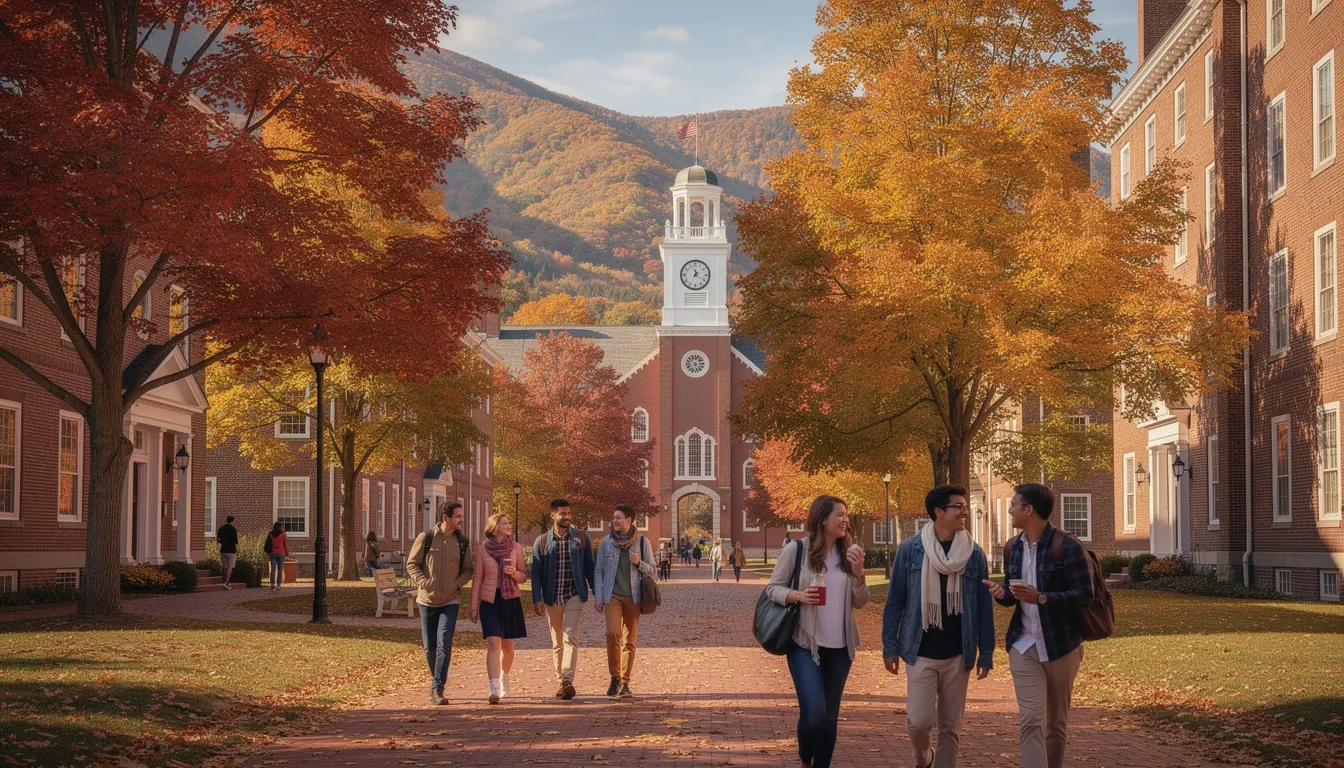
University of Vermont: Programs, Rankings, and Student Life
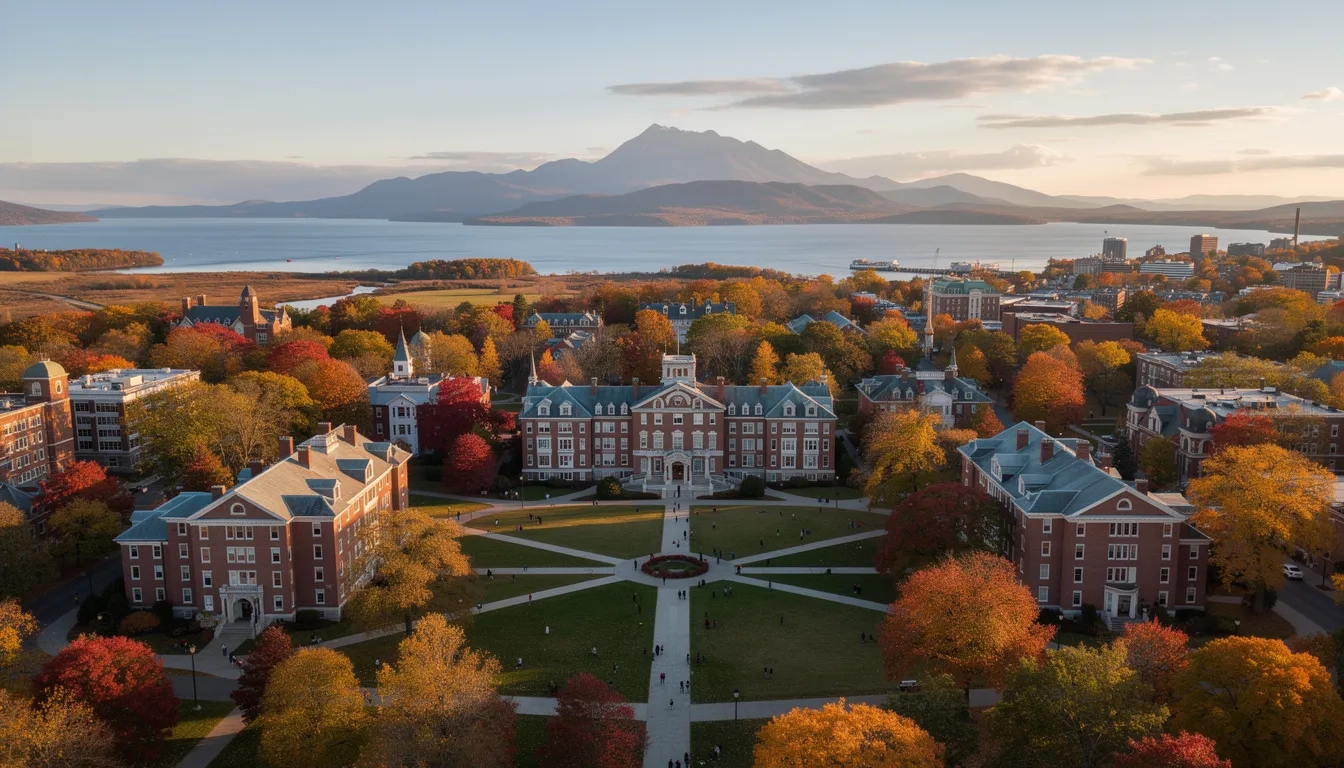
Burlington, Vermont sits 273 miles north of New York City, tucked between Lake Champlain and the Green Mountains. The University of Vermont — everyone calls it UVM — pulls about 77% of its undergraduates from out of state. For a public university in one of the smallest states in the country, that number is remarkable. People aren't defaulting to UVM. They're actively choosing it.
The question worth asking is whether the choice is well-reasoned or just aesthetically driven. Ski access and mountain views will get a school on your list. Graduation rates and program quality are what keep you there four years later.
Rankings: What the Numbers Actually Show
UVM placed #132 nationally in U.S. News & World Report's 2026 Best Colleges rankings and #68 among Top Public Schools. Those numbers place it comfortably in the upper-middle tier of American research universities — respected, but not elite in the traditional sense.
The more useful data lives in the category-specific rankings:
- Nursing programs rank in the top 10% nationally (U.S. News 2024)
- #73 (tied) in Best Education Schools at the graduate level
- #116 (tied) in Best Engineering Schools
- Princeton Review's #1 School for Making an Impact — a ranking that reflects institutional culture more than academic rigor, but still tells you something real
UVM holds an R1 Carnegie Classification, the highest research designation. That matters more than its national rank for undergraduates who want to work in labs, publish, or go to graduate school. R1 status means active research is happening across disciplines, and undergrads can often get a piece of it starting sophomore year.
The gap between a school's overall ranking and its specific program rankings is where the real story lives. UVM is a good example: mid-tier overall, top-tier in select fields.
Academic Programs: The Real Differentiators
UVM offers more than 100 undergraduate majors across seven colleges. The breadth is genuine, but the depth isn't uniform. Knowing which programs carry real national weight saves a lot of confusion at decision time.
Environmental and natural resources programs are where UVM has built its strongest national case. The Rubenstein School of Environment and Natural Resources runs 19 sustainability-focused undergraduate programs — from Agroecology to Wildlife Biology to Environmental Engineering. These aren't marketing categories. They're distinct majors with their own faculty and research infrastructure. UVM committed to carbon neutrality by 2030, and students working in these programs are often directly connected to the policy conversations driving that commitment.
Nursing and health sciences rank in the top 10% nationally, and UVM runs a well-regarded pre-health advising operation. The office publishes data on where Catamount pre-med graduates actually get accepted — and the list includes medical schools ranked well above UVM itself.
The most popular majors by enrollment tell a clear story: Biological and Biomedical Sciences and Natural Resources and Conservation are the two largest fields. Business (through the Grossman School), Engineering, and Psychology round out the top five.
| College | Standout Programs | Research Strength |
|---|---|---|
| Rubenstein School | Environmental Sci, Wildlife Biology, Agroecology | High — tied to state policy work |
| College of Nursing & Health Sciences | Nursing, Allied Health | Top 10% nationally |
| College of Engineering & Math | Civil, Electrical, Computer Science | Moderate — R1 access helps |
| Grossman School of Business | Entrepreneurship, Sustainable Business | Regional reputation |
| College of Education | Teacher preparation, Ed Leadership | #73 nationally (grad) |
The Larner College of Medicine
UVM's medical school confuses a lot of prospective undergrads. Named after Robert Larner (whose $100 million gift was the largest in UVM history at the time), it sits in U.S. News's Tier 2 for both Research and Primary Care categories. Not a top-20 medical school. Not a throwaway. Somewhere in the serious-but-not-famous middle.
What sets it apart is the Vermont Integrated Curriculum (VIC). Most medical schools keep students in lecture halls for two years before putting them in front of patients. The VIC front-loads clinical exposure — students interact with real patients starting in year one, with foundational science woven in alongside that experience rather than delivered first in isolation.
That model has critics who argue it can leave gaps in biochemistry and pharmacology foundations. But the residency match rates have been competitive with schools ranked similarly, and for undergrads at UVM, proximity to Larner opens research collaboration doors that most pre-med students at larger universities have to fight harder to access.
Student Life: Burlington Is the Point
Burlington is the smallest "big city" most college students will ever live in. Vermont's largest city has roughly 45,000 year-round residents — a number that swells noticeably when UVM's 12,000+ undergrads arrive each fall. That scale creates something hard to find elsewhere: a college town where students actually become part of the local fabric rather than a temporary population tolerated by locals.
The campus sits on a hill above Lake Champlain, with the Adirondack Mountains visible across the water on clear days. On the other side, the Green Mountains begin almost immediately past campus. That geography shapes daily life in tangible ways.
The UVM Ski and Snowboard Club (UVMSSC) is the largest collegiate ski club in the United States, with more than 3,700 members each academic year. That's roughly 30% of the undergraduate student body in a single club. The club runs discounted shuttles to Stowe Mountain Resort (about 37 minutes from campus by shuttle), Sugarbush, and Mad River Glen, and negotiates group season passes. Four separate clubs teach skiing and snowboarding to beginners, including UVM People of Color Outdoors and Chicks on Sticks VT, which deliberately expands who participates in ski culture.
Beyond skiing, here's what student life looks like day-to-day:
- 240+ registered student organizations, including the Vermont Cynic (campus newspaper since 1883), student government, and a robust arts scene
- NCAA Division I athletics — men's soccer won the national championship in 2024, and hockey home games sell out every single time
- 27% of students participate in intramural sports, which is high for a university with a serious D1 athletic program
- Greek life is present but not dominant — about 7% of men and 3% of women participate, meaning the social scene isn't organized around fraternities and sororities
On housing: 98% of first-year students live on campus, with options including coed dorms, themed housing, and wellness communities. After freshman year, many students move into Burlington's South End and Hill neighborhoods, where student apartments mix with local restaurants, breweries, and music venues. Church Street, Burlington's pedestrian shopping district, is walkable from campus.
The student body skews politically progressive (about 62% female, 38% male, with students from 44 countries), and the social culture reflects that — environmental activism, farmers' markets, and live music are genuinely popular activities here, not just things the admissions brochure invents.
Cost and Financial Aid: The Honest Math
UVM's tuition is one of the first things that gives families pause. For out-of-state students, it should.
2025-26 tuition: $16,606 in-state, $44,646 out-of-state. Add housing, dining, fees, and books, and full cost of attendance reaches $36,772 for Vermont residents and $63,216 for out-of-state students.
Two facts offset the sticker price in meaningful ways. First, 39% of Vermont residents attend UVM tuition-free through a combination of state and institutional aid programs. Second, 92% of all undergraduates receive some form of scholarship or financial aid. The average need-based aid package for first-year students is $24,421, and the average total aid package across all undergrads is $31,016. UVM automatically considers all applicants for merit scholarships — no separate application required.
The honest question for out-of-state families: after aid, does UVM compete with what your home state's flagship would cost? Often, it doesn't close the full gap. A high-achieving student from Ohio or Texas with a comparable flagship option nearby needs to run the net price calculator seriously before committing to UVM's out-of-state cost. The calculator is on UVM's financial aid site and takes about 15 minutes to complete.
For Vermont residents, the value equation shifts significantly. A Vermonter attending tuition-free has access to an R1 research university, a top-10% nursing program, and nationally competitive environmental science programs. That's a strong deal.
Is UVM the Right Fit?
The school-fit question often gets answered with vibes rather than logic. Here's a more useful frame.
UVM makes strong sense if you're drawn to environmental science, nursing, or pre-health fields and want an R1 research environment without the anonymity of a 40,000-student flagship. The Rubenstein School, in particular, draws students who could have gone to schools ranked much higher overall but specifically wanted UVM's combination of faculty access and real-world policy connections.
It also makes sense if outdoor recreation is genuinely central to how you want to spend your time outside class, not just a nice idea. The ski culture is not a niche interest here. It's mainstream. Students who find that energizing will love it. Students who find it indifferent will feel like they're missing a social dimension the campus revolves around.
Where I'd push back on the conventional wisdom: UVM's 60% acceptance rate leads some applicants to assume it's a safety school unworthy of serious consideration. That's the wrong read. For specific programs, UVM competes directly with institutions ranked 40 or 50 spots higher overall. A student who knows they want to study forest ecosystems or wildlife biology will likely get more specialized attention and better research access at UVM than at a generalist school with a shinier name.
Bottom Line
- UVM's environmental, nursing, and pre-health programs carry real national weight — in those fields, the school punches above its overall ranking.
- Burlington isn't just a setting; it's an active part of the college experience. The city's scale, outdoor access, and local culture shape daily life in ways that differentiate UVM from most public universities.
- Run the financial math before anything else. Vermont residents often attend tuition-free. Out-of-state students need to compare net price, not sticker price, against their alternatives.
- The 60% acceptance rate is misleading for program-specific applicants. Competitive programs within UVM, particularly Rubenstein, draw students from a much stronger applicant pool.
- For students aligned with UVM's academic strengths and Burlington's outdoor culture, it's a genuinely distinctive choice — not a compromise.
Frequently Asked Questions
Is UVM hard to get into?
The overall acceptance rate is 60%, which puts UVM in the moderately selective tier. But that number hides variation by program. Environmental science and nursing programs attract more competitive applicant pools. Research the acceptance rates for your specific college or major rather than relying on the university-wide figure.
What is UVM most academically respected for?
Environmental and natural resources programs have built the strongest national reputation. The Rubenstein School of Environment and Natural Resources offers 19 sustainability-focused majors and is directly connected to Vermont's real policy work. Nursing ranks in the top 10% nationally, and UVM's R1 research designation opens undergraduate research access that smaller schools cannot match.
Is UVM worth the out-of-state tuition?
For students targeting UVM's strongest programs who receive a solid aid package, yes. For students who could attend their home state's flagship in the same field for $20,000–$25,000 less per year, probably not. Use UVM's net price calculator — not the sticker price — as your reference point before making any decision.
What's the social scene actually like?
Outdoor recreation dominates. The ski club has over 3,700 members, and hiking, mountain biking, and kayaking are genuinely popular activities year-round. Burlington's Church Street and South End offer bars, music venues, and restaurants that mix students with locals. Greek life exists but accounts for only about 7% of men and 3% of women, so it doesn't define the social structure.
How strong is UVM's pre-med pipeline?
Solid. UVM's pre-med advising office is active and transparent about outcomes — they publish data on where graduates actually get accepted. Proximity to the Larner College of Medicine gives undergrads access to clinical observation and research opportunities that are harder to secure at schools without an affiliated medical school on campus.
Is UVM really a "ski school"?
This is the biggest misconception. The ski culture is real and enormous (the largest collegiate ski club in the US), but it sits alongside a serious research university with nationally ranked programs and an R1 designation. Students who wrote off UVM because of the ski reputation and later looked at its environmental science or nursing programs sometimes find they dismissed one of the better options in their field.
Sources
- University of Vermont - Profile, Rankings and Data | US News Best Colleges
- 2026 University of Vermont Rankings - Niche
- University of Vermont - The Princeton Review
- Costs, Financial Aid, and Scholarships | UVM Undergraduate Admissions
- Outdoor Programs | Student Life | The University of Vermont
- University of Vermont 2026 - Programs, Rankings, Key Facts | Research.com