Best Universities for Oceanographic Research
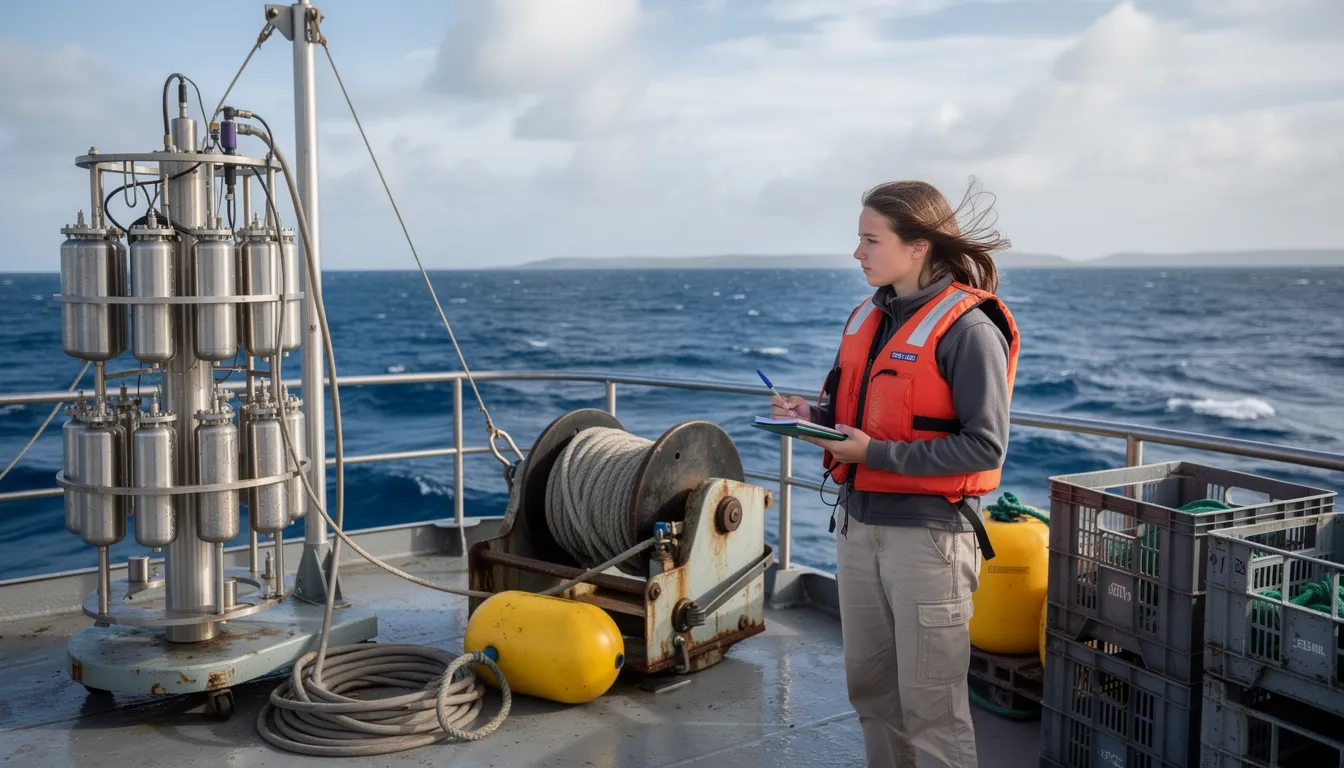
If you picture an oceanographer as someone in a wetsuit counting fish, you're only picturing about a quarter of the field. Oceanography is really four sciences wearing a trench coat: biological, chemical, physical, and geological. The people who model how the Gulf Stream moves heat around the planet are oceanographers. The people who figure out why parts of the ocean are turning acidic are oceanographers too. The people who map fault lines on the seafloor with sonar are oceanographers too. Marine biologists are one slice of a much bigger pie.
That distinction matters a lot when you're choosing a school, because "best university for oceanography" doesn't mean the same thing for everyone. A student who wants to study coral reef ecology needs a very different setup than one who wants to build autonomous underwater vehicles or model ocean-atmosphere carbon exchange. The good news is that the US has a small cluster of genuinely world-class programs, and most of them are transparent about what they specialize in. Below is a real, researched look at the programs that keep coming up for the right reasons — plus what to actually look at beyond a school's name.
The common misconception: oceanography is not "marine biology with extra steps"
This is worth sitting with before you even start comparing schools, because it changes what you should be searching for.
Oceanography is formally divided into four branches:
- Biological oceanography — how marine ecosystems function, from plankton to whales, and how life shapes ocean chemistry and vice versa.
- Chemical oceanography — the composition of seawater, nutrient cycles, ocean acidification, pollutant tracking.
- Physical oceanography — currents, waves, tides, heat transport, ocean-climate interaction. Lots of fluid dynamics and math.
- Geological oceanography (marine geology and geophysics) — the seafloor, plate tectonics, sediment cores, underwater volcanoes, paleoclimate records.
Marine biology is its own adjacent field, usually housed in biology departments and focused specifically on organisms, often in shallower coastal water. Many oceanography programs offer marine biology as one degree track alongside the other three branches (Scripps does exactly this), which is part of why the terms get blurred. But if your interest is currents, seafloor spreading, or carbon chemistry rather than living organisms, you want an oceanography or "earth and ocean science" program, not a marine biology program — the required math, physics, and chemistry coursework differs substantially.
"No water, no life. No blue, no green." — Sylvia Earle
That quote from the oceanographer and former NOAA chief scientist gets used a lot, but it's worth remembering the "blue" part covers physics and chemistry as much as it covers biology.
What actually matters when comparing programs
Before the list, a few things worth checking that matter more than a school's general reputation:
- Research vessel and fleet access. Sea time is not optional in this field — it's how you learn to actually collect data. Programs affiliated with a major research fleet (through the University-National Oceanographic Laboratory System, UNOLS) give students far more hands-on cruise experience.
- Which of the four subfields the faculty are strong in. A program can be excellent in physical oceanography and mediocre in marine geology. Look at faculty research pages, not just the department's homepage.
- Funding structure for PhD students. Most legitimate oceanography PhD programs fund students through assistantships, not loans. If a program doesn't guarantee funding, that's a red flag for a research doctorate.
- Undergrad vs. graduate strength. Some of the best-known oceanography institutions (like Woods Hole) don't have undergraduate programs at all — they only take graduate students, often jointly with a partner university.
- Proximity to related institutions. Being near NOAA labs, national labs, or specific ocean environments (Gulf of Mexico, Pacific coast upwelling zones, coral reefs) shapes what kind of fieldwork is realistic.
Real programs worth researching
| Program | Institution | Degree Levels | Standout Feature |
|---|---|---|---|
| Scripps Institution of Oceanography | UC San Diego | BS, MS, PhD, MAS | Oldest and one of the largest oceanography institutions in the US; three PhD tracks (climate-ocean-atmosphere, geosciences, ocean biosciences); 1,084-foot research pier |
| MIT-WHOI Joint Program | MIT / Woods Hole Oceanographic Institution | PhD, joint doctoral/professional degrees | Access to WHOI's research fleet, including R/V Atlantis and the submersible Alvin; five specializations spanning applied ocean engineering to physical oceanography |
| School of Oceanography | University of Washington | BS, BA, MS, PhD | Small, research-intensive cohort (~60 grad students); strong in biological, chemical, physical oceanography and marine geophysics |
| Rosenstiel School of Marine, Atmospheric, and Earth Science | University of Miami | BS, MS, PhD | Six graduate programs including Ocean Sciences and Marine Geosciences; located near NOAA's AOML and the National Hurricane Center |
| Graduate School of Oceanography | University of Rhode Island | MS, PhD, Master of Oceanography | Flexible specialization across all four branches; also offers a professional (non-research) Master of Oceanography for policy/industry careers |
| Department of Oceanography | Texas A&M University | BS, MS, PhD | Gulf of Mexico-focused fieldwork; undergraduate REU program; access to research vessels including the R/V Pelican |
| College of Earth, Ocean, and Atmospheric Sciences | Oregon State University | BS, MS, PhD | Interdisciplinary focus on nearshore science, paleoceanography, and land-sea interaction along the Pacific coast |
| Department of Oceanography, SOEST | University of Hawaii at Manoa | MS, PhD | Access to three oceangoing research vessels and two research submarines; strong biological, physical, and geological/geochemical divisions |
Scripps Institution of Oceanography (UC San Diego)
Scripps is the one name almost everyone in the field recognizes, and for good reason — it's one of the oldest and largest oceanographic research institutions in the country. Its PhD program is split into three tracks students apply into directly: Climate-Ocean-Atmosphere, Geosciences of the Earth Oceans and Planets, and Ocean Biosciences. Most PhD students end up with degrees in oceanography, marine biology, or earth science, and the school also offers standalone master's degrees, including a professional Master of Advanced Studies. The 1,084-foot research pier supports a scientific diving program and small-boat deployment right from campus, which is a genuinely rare convenience.
MIT-WHOI Joint Program
This is the program most oceanographers point to when asked "if I could go anywhere." It's a five-year joint doctoral program between MIT and the Woods Hole Oceanographic Institution, combining MIT's engineering strength with WHOI's status as one of the largest independent oceanographic research organizations in the world. Students get access to one of the biggest academic research fleets in the country, including the R/V Atlantis and the deep-sea submersible Alvin (the vehicle that explored the Titanic wreck). Specializations cover applied ocean science and engineering, biological, chemical, and physical oceanography, and marine geology and geophysics. There's no undergraduate track — this is a graduate-only pipeline, and admission is competitive.
University of Washington School of Oceanography
UW runs a notably small, tight-knit program — around 60 graduate students at any given time — which means more direct faculty contact than at some larger institutions. It offers the full range of oceanography degrees (BS, BA, MS, PhD) and research strength across biological, chemical, and physical oceanography plus marine geology and geophysics, with a lot of current work tied to climate change, coastal processes, and extreme ocean environments like the deep Pacific.
University of Miami Rosenstiel School
Rosenstiel is worth a hard look if your interests sit at the intersection of oceanography and atmospheric science — it houses six graduate programs (Atmospheric Sciences, Marine Biology and Ecology, Environmental Science and Policy, Marine Geosciences, Meteorology and Physical Oceanography, and Ocean Sciences), plus specialized MS tracks in ocean engineering, data science, and climate and health. Its location gives students unusually close proximity to NOAA's Atlantic Oceanographic and Meteorological Laboratory, the Southeast Fisheries Science Center, and the National Hurricane Center — useful if hurricane science or applied forecasting is part of your interest.
URI Graduate School of Oceanography
URI-GSO in Narragansett is one of the more flexible options: its MS and PhD programs let students specialize in biological, chemical, geological, or physical oceanography, or blend in adjacent areas like atmospheric chemistry. It's also one of the few schools offering a genuine non-research alternative — the Master of Oceanography, aimed at students heading into ocean policy, maritime industry, fisheries management, or science communication rather than a research career. That's a useful option if you're drawn to the ocean but not necessarily to a PhD-track research life.
Texas A&M Department of Oceanography
Texas A&M's program leans heavily into Gulf of Mexico fieldwork, with research cruises conducted from the College Station-area program using vessels like the R/V Pelican, and undergraduate research experiences (REU) that put students on cruises early. If your interest is the Gulf specifically — oil spill science, hypoxic "dead zones," hurricane-ocean interaction — this is a program with direct regional relevance most other schools can't match.
Oregon State CEOAS
Oregon State's College of Earth, Ocean, and Atmospheric Sciences takes a strongly interdisciplinary approach, with research spanning physical oceanography, paleoceanography, nearshore science, and the way biological, chemical, physical, and human systems interact along a coastline. Its Pacific Northwest location makes it a natural fit for anyone interested in coastal upwelling, nearshore ecosystems, or land-sea interaction research.
University of Hawaii at Manoa (SOEST)
UH Manoa's Department of Oceanography, part of the School of Ocean and Earth Science and Technology, is organized into three divisions — physical oceanography, marine geology and geochemistry, and biological oceanography. Graduate students get real sea-time built into training (SOEST cites 30-plus days at sea as typical) and the department has access to three research vessels and two research submarines, which is a substantial fleet for an academic department. Its Pacific location also makes it a strong fit for anyone interested in open-ocean or deep-sea research specifically, as opposed to coastal work.
How to actually choose between them
Start by identifying which of the four branches genuinely interests you — go read a handful of faculty research pages at two or three schools before you decide anything. Then check whether the program is undergraduate-friendly (Scripps, UW, Miami, Texas A&M, and Oregon State all have undergraduate tracks) or graduate-only (MIT-WHOI and, functionally, most of URI's research degrees are aimed at grad students). If you're set on a research PhD, confirm funding is guaranteed before you apply — legitimate oceanography doctoral programs fund their students. And if you already know you want a specific ocean environment — the Gulf, the Pacific, the North Atlantic — let that steer you as much as prestige does, since your fieldwork will happen wherever the school's boats actually go.
Bottom line
There is no single "best" university for oceanographic research — there's a best fit for your specific interest inside a fairly small, well-documented group of strong programs. Scripps and the MIT-WHOI Joint Program are the two names that show up most often in "top program" conversations, largely because of the scale of their research fleets and faculty. But Washington, Miami, URI, Texas A&M, Oregon State, and Hawaii are all real, well-funded, actively-publishing programs with their own regional and disciplinary strengths — and for a lot of students, one of those will actually be the better fit than the famous names. Read faculty pages, ask about funding, and ask how much time students actually spend at sea before you decide.
FAQ
Is oceanography the same as marine biology? No. Marine biology focuses on organisms and ecosystems, usually within biology departments. Oceanography is broader and includes physical, chemical, and geological study of the ocean in addition to biological oceanography. Many oceanography programs, including Scripps, offer marine biology as one specific degree track alongside the other three branches.
Do I need a strong math and physics background to study oceanography? It depends on the branch. Physical oceanography is heavily math- and physics-based (fluid dynamics, differential equations). Biological oceanography leans more on biology and chemistry. Most undergraduate oceanography programs require a solid foundation in calculus, physics, and chemistry regardless of which branch you eventually specialize in.
Can I major in oceanography as an undergraduate, or is it mostly graduate-level? Both exist. Scripps (UC San Diego), the University of Washington, University of Miami, Texas A&M, and Oregon State all offer undergraduate oceanography degrees. Some prominent programs, notably the MIT-WHOI Joint Program, are graduate-only.
How important is a research vessel or fleet to picking a program? Very. Actual sea time is central to how oceanographers are trained, not an occasional bonus. Programs affiliated with a UNOLS research fleet — MIT-WHOI, Scripps, and Hawaii's SOEST among them — give students direct access to research cruises as part of their training.
Are oceanography PhD programs funded? At reputable research programs, yes — PhD students are typically funded through research or teaching assistantships covering tuition and a stipend, similar to other STEM doctoral programs. If a program you're considering doesn't offer guaranteed funding for its PhD track, ask hard questions before enrolling.
What can you actually do with an oceanography degree besides academic research? Career paths include federal agencies like NOAA and the Navy, environmental consulting, marine policy and law, coastal management, offshore energy, fisheries management, science journalism, and technology roles building ocean-monitoring instruments and autonomous vehicles. URI's Master of Oceanography program is specifically built for students heading toward policy or industry rather than a research career.
Sources
- Education Programs at Scripps Oceanography at UC San Diego
- Doctoral Programs | Scripps Institution of Oceanography
- MIT-WHOI Joint Program - Woods Hole Oceanographic Institution
- MIT-WHOI Joint Program in Oceanography / Applied Ocean Science and Engineering | MIT Office of Graduate Education
- About our Program - Oceanography - University of Washington
- PhD and MS Programs - University of Miami Rosenstiel School
- Graduate School of Oceanography - University of Rhode Island
- Oceanography Degrees – URI Graduate School of Oceanography
- About the Department | Texas A&M University Department of Oceanography
- Oceanography | Oregon State University College of Earth, Ocean, and Atmospheric Sciences
- About - University of Hawaii at Manoa Department of Oceanography
- Graduate Program - University of Hawaii at Manoa Department of Oceanography