Best Universities for Optometry Programs 2026: A Real Guide to Accredited OD Schools
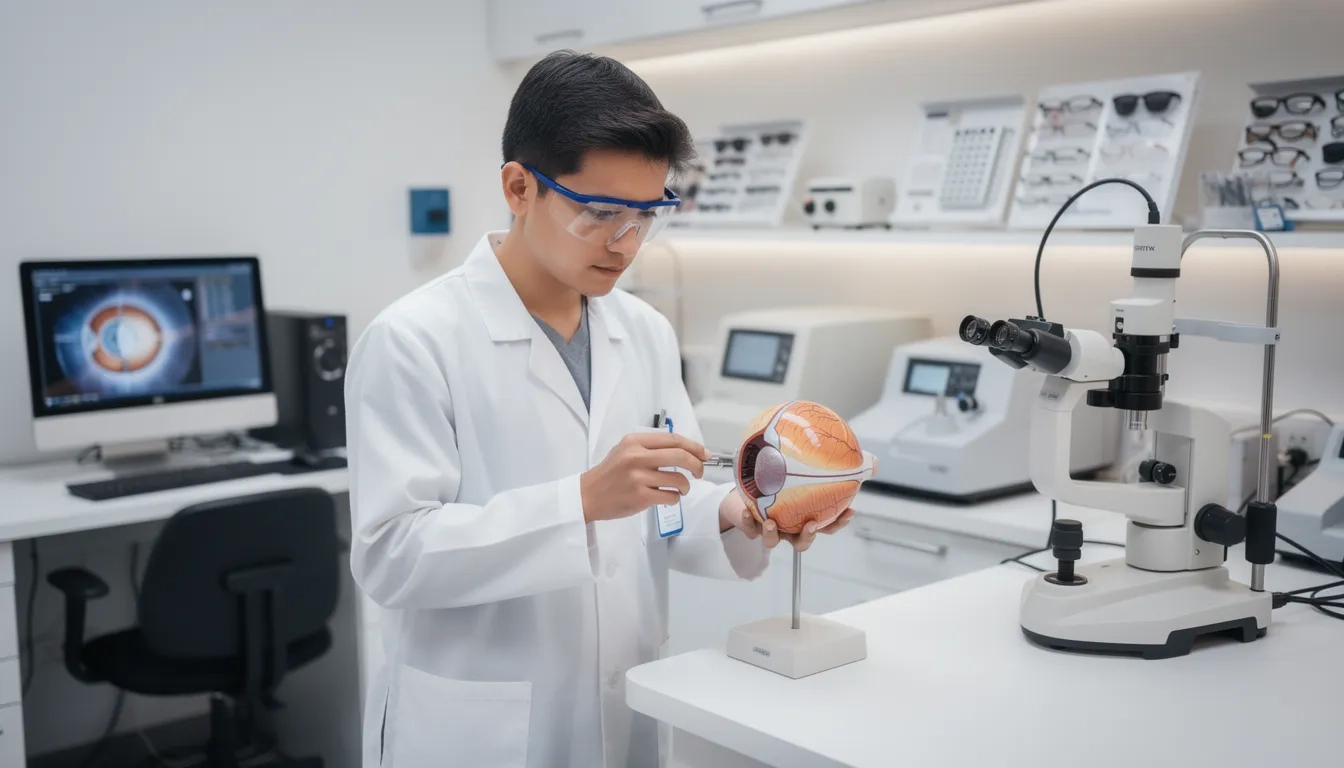
Best Universities for Optometry Programs 2026
If you've been Googling "best optometry schools" and getting a different top-10 list every time, here's the thing nobody tells you upfront: there is no U.S. News-style ranking of optometry schools. There's no official body that sits down every year and stack-ranks them 1 through 25. What actually exists is a short, fixed list of accredited programs, and your job as an applicant is figuring out which one fits your life, your budget, and your career goals — not chasing a prestige number that doesn't really exist in this field.
That's actually good news. Optometry is one of the more transparent professions when it comes to school quality, because every single accredited program has to meet the same rigorous standards set by one accrediting body. So instead of guessing, let's go through exactly what's real, what's not, and how to actually choose.
How Many Optometry Schools Are There, Really?
This is the number that surprises most pre-optometry students: there are only 25 professional optometry degree programs in the United States and Puerto Rico that hold accreditation from the Accreditation Council on Optometric Education (ACOE), the sole accrediting body for optometric education recognized in the U.S. All of these schools are also members of the Association of Schools and Colleges of Optometry (ASCO).
That's it. Compare that to over 150 accredited medical schools or nearly 200 dental hygiene programs, and you can see why optometry admissions feels different — there simply aren't hundreds of options to sift through, which also means every program on this list has already cleared a real quality bar before you even apply.
Common Misconception: "Optometry School Is Basically Pre-Med"
This is the single biggest mix-up pre-optometry students run into, so let's clear it up early.
Optometrists (OD, Doctor of Optometry) and ophthalmologists (MD or DO) are not the same profession, and they don't train the same way. An ophthalmologist goes through a standard medical school pathway (MCAT, four years of med school, residency) and is a physician who can perform eye surgery, treat systemic disease affecting the eyes, and manage complex ocular conditions surgically. An optometrist earns a Doctor of Optometry degree through a separate four-year professional program, focuses on primary vision care — eye exams, vision correction, detecting and managing many eye diseases, and in most states now prescribing certain medications — and does not perform major eye surgery.
Because of this, "doing pre-med" is not the same as "doing pre-optometry," even though the science coursework overlaps heavily. Pre-optometry students typically:
- Take the Optometry Admission Test (OAT), not the MCAT (though some OD programs will also accept MCAT, DAT, or PCAT scores)
- Apply through OptomCAS, the centralized application service built specifically for optometry schools, not AMCAS
- Need roughly three years (90+ semester credit hours) of specific prerequisite coursework — general biology, general and organic chemistry, physics, microbiology, biochemistry, statistics, English, and often psychology — rather than a full pre-med checklist
- Can often apply after their junior year of undergrad, since many OD programs admit students before a bachelor's degree is finished, provided prerequisites are met
If you spend three years building a pre-med resume with MCAT prep and clinical shadowing exclusively in hospitals, you may be missing OAT prep and optometry-specific shadowing hours (in an actual optometrist's practice) that admissions committees specifically want to see. Shadow an OD, not just an ophthalmologist or physician, before you apply.
The Full List of Accredited Optometry Schools (2026)
Here is the complete, verified list of ACOE-accredited, ASCO-member schools and colleges of optometry. Every program below awards the Doctor of Optometry (OD) degree.
| Institution | Host University / System | Location | Setting |
|---|---|---|---|
| University of Alabama at Birmingham School of Optometry | UAB | Birmingham, AL | Public |
| Arizona College of Optometry | Midwestern University | Glendale, AZ | Private |
| Southern California College of Optometry | Marshall B. Ketchum University | Fullerton, CA | Private |
| Herbert Wertheim School of Optometry and Vision Science | UC Berkeley | Berkeley, CA | Public |
| College of Optometry | Western University of Health Sciences | Pomona, CA | Private |
| College of Optometry | Nova Southeastern University | Fort Lauderdale, FL | Private |
| Chicago College of Optometry | Midwestern University | Downers Grove, IL | Private |
| Illinois College of Optometry | Illinois College of Optometry | Chicago, IL | Private |
| Indiana University School of Optometry | Indiana University | Bloomington, IN | Public |
| Kentucky College of Optometry | University of Pikeville | Pikeville, KY | Private |
| School of Optometry | Massachusetts College of Pharmacy and Health Sciences (MCPHS) | Worcester, MA | Private |
| New England College of Optometry | New England College of Optometry | Boston, MA | Private |
| Michigan College of Optometry | Ferris State University | Big Rapids, MI | Public |
| School of Optometry | University of Detroit Mercy | Novi, MI | Private |
| College of Optometry | University of Missouri-St. Louis | St. Louis, MO | Public |
| College of Optometry | SUNY (State University of New York) | New York, NY | Public |
| College of Optometry | The Ohio State University | Columbus, OH | Public |
| Oklahoma College of Optometry | Northeastern State University | Tahlequah, OK | Public |
| College of Optometry | Pacific University | Forest Grove, OR | Private |
| Pennsylvania College of Optometry | Salus University at Drexel University | Elkins Park, PA | Private |
| School of Optometry | Inter American University of Puerto Rico | Bayamón, PR | Private |
| Southern College of Optometry | Southern College of Optometry | Memphis, TN | Private |
| College of Optometry | University of Houston | Houston, TX | Public |
| Rosenberg School of Optometry | University of the Incarnate Word | San Antonio, TX | Private |
| College of Optometric Medicine | Rocky Mountain University of Health Professions | Provo, UT | Private |
If a program you're looking at isn't on this list, verify it directly against the ACOE's current directory before applying — accreditation status is the one thing you cannot compromise on, since only graduates of ACOE-accredited programs are eligible to sit for state licensure boards.
So What Actually Makes One Program "Better" for You?
Since there's no official ranking, here's what should actually drive your decision:
1. In-state tuition access. The public programs on this list (UAB, Berkeley, Indiana, Ferris State/Michigan, UMSL, SUNY, Ohio State, Northeastern State/Oklahoma, and Houston) typically offer significantly reduced tuition for state residents, and some have reciprocity agreements with neighboring states that lack their own optometry school. This single factor can be worth six figures over four years.
2. Clinical training model. Every accredited program includes supervised clinical hours, but the setting varies — university-run eye clinics, VA hospital rotations, community health centers, and off-site externships in the final year. If you know you want experience with a specific population (pediatrics, low vision, ocular disease-heavy caseloads), ask programs directly about their externship sites.
3. Board pass rates. All OD graduates must pass the National Board of Examiners in Optometry (NBEO) exams to get licensed. Programs publish their pass rates — ask for them during interviews or admitted-student days, since this is a much more meaningful signal than a program's reputation.
4. Program length and structure. Nearly all programs are four years, but a few (like Rocky Mountain University and NSU) run accelerated or slightly different calendars. Some allow you to start before finishing your bachelor's degree, which can save a year overall.
5. Cost of living and location. A program in Memphis or Big Rapids, Michigan will have a dramatically different cost of living than one in Berkeley, New York, or Fort Lauderdale — and that affects your total debt load as much as tuition does.
The right optometry school isn't the one with the best name recognition — it's the one where you can graduate with manageable debt, get strong hands-on clinical hours, and pass your boards on the first try. All 25 accredited programs can get you there; the differences are in cost, fit, and clinical exposure.
Admissions: What You Actually Need
Getting into an OD program requires the OptomCAS application, which centralizes your transcripts, letters of recommendation, and test scores for most participating schools. Key facts for the current cycle:
- The Optometry Admission Test (OAT) is the standard entrance exam, though several schools also accept the MCAT, DAT, or PCAT as alternatives.
- Competitive applicants generally aim for an OAT Academic Average around 300 or higher, though every program sets its own bar and holistic factors matter too.
- Most programs require roughly three years (90+ semester credits) of prerequisite coursework rather than a completed bachelor's degree, though the large majority of matriculants do hold a bachelor's degree by enrollment.
- Shadowing hours with a licensed optometrist, extracurricular leadership, and any patient-facing healthcare experience meaningfully strengthen an application.
- The OptomCAS cycle typically opens in late June and stays open through the following spring, but individual schools set their own priority and final deadlines — apply early, since many programs use rolling admissions.
Career Outlook: Is Optometry Still Worth It in 2026?
According to the U.S. Bureau of Labor Statistics, the median annual wage for optometrists was $134,830 as of May 2024, and employment of optometrists is projected to grow 8% from 2024 to 2034 — much faster than the average for all occupations — driven largely by an aging population that needs more vision care. That's a reassuring backdrop for anyone weighing four more years of school (and the associated debt) against the eventual payoff.
Bottom Line
There is no "Harvard of optometry" — there are 25 ACOE-accredited programs, all of which meet the same rigorous national standard and all of which lead to the same Doctor of Optometry degree and licensure eligibility. Your best program is the one that combines affordable tuition (ideally with in-state or reciprocity pricing), a clinical training environment that matches the patient population you want to serve, and a location you can actually afford to live in for four years. Start by confirming any program you're considering is currently ACOE-accredited, get your prerequisites and OAT prep locked in early, shadow a practicing optometrist (not just an ophthalmologist), and apply broadly through OptomCAS since class sizes at most schools are small and competitive.
FAQ
Is optometry school the same as medical school? No. Optometrists earn a Doctor of Optometry (OD) through a separate four-year professional program focused on primary eye and vision care, while ophthalmologists are physicians (MD/DO) who complete medical school and residency and can perform eye surgery. They're related but distinct professions with separate application processes, exams, and licensing boards.
How many accredited optometry schools are there in the U.S.? Twenty-five professional optometric degree programs currently hold accreditation from the Accreditation Council on Optometric Education (ACOE), spanning the U.S. and Puerto Rico. All are members of the Association of Schools and Colleges of Optometry (ASCO).
Do I need the MCAT to apply to optometry school? No, the standard exam is the Optometry Admission Test (OAT). Some programs will also accept MCAT, DAT, or PCAT scores as alternatives, but you should confirm exam policy directly with each school before deciding which test to take.
Can I apply to optometry school without finishing my bachelor's degree? Yes, at many programs. Most require roughly three years (about 90 semester credit hours) of specific prerequisite coursework rather than a completed degree, although most students who enroll do already hold a bachelor's degree. Check each program's specific policy since it varies.
Are public optometry schools cheaper than private ones? Generally yes, for state residents. Public programs like those at UAB, UC Berkeley, Indiana University, Ferris State, UMSL, SUNY, Ohio State, Northeastern State, and the University of Houston typically offer reduced tuition for in-state students, and some maintain tuition reciprocity agreements with nearby states that don't have their own optometry school.
What's the job outlook for optometrists? Strong. The U.S. Bureau of Labor Statistics projects 8% employment growth for optometrists from 2024 to 2034, well above the average for all occupations, with a median annual wage of $134,830 as of May 2024, driven in large part by an aging population needing more vision care.
Sources
- ASCO Member Schools and Colleges of Optometry
- Accreditation Council on Optometric Education (ACOE)
- Professional Optometric Degree Programs - ACOE
- Optometrists - Occupational Outlook Handbook, U.S. Bureau of Labor Statistics
- Optometry Admission Test (OAT)
- OptomCAS - Optometry Centralized Application Service
- OptomCAS - Deadlines and Other Information